In this guide
At a glance
- Vibe
- Grand, Victorian and built around three world-class museums
- Time needed
- A full day for two museums
- Best day
- Weekday mornings; weekends and school holidays are very busy
- Travel zone
- 1
- Walkability
- 5/5
- Typical spend
- ££
Best for
Nearest stations
- South KensingtonPiccadillyDistrictCircle
- Gloucester RoadPiccadillyDistrictCircle
- KnightsbridgePiccadilly
South Kensington exists because of the 1851 Great Exhibition. Its profits bought the land, and what went up afterwards was a deliberate cluster of museums, colleges and concert halls — the area was nicknamed Albertopolis after the prince who drove it.
The result is three of the world’s great museums within 400 metres of each other, all free, plus the Royal Albert Hall at the top of the road.
South Kensington has its own share of the commemorative plaques marking where notable people lived or worked - see them on our interactive map.
Why visit — and who should skip it
Come here if you have children, or a rainy day, or any interest in science, design or natural history. The value is extraordinary: three world-class collections at no cost, and a Victorian subway from the station that takes most of the walk underground.
Skip it if you are short on time and not a museum person. There is little else here — the streets are handsome but residential, and the area is quiet by evening. If you want one museum and then something else, the British Museum in Bloomsbury sits closer to the rest of central London.
Top sights and activities
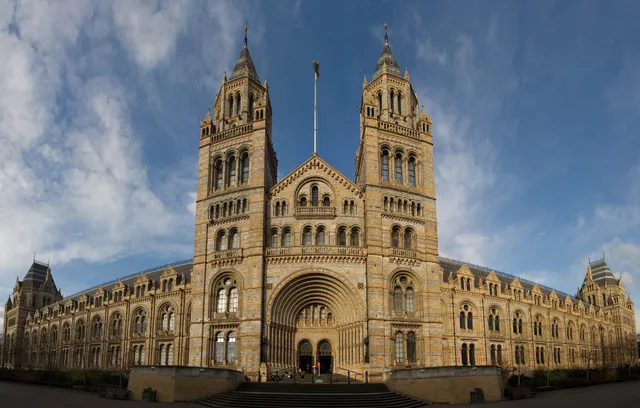
- Natural History Museum — Alfred Waterhouse’s terracotta cathedral of a building, with “Hope” the blue whale skeleton suspended in Hintze Hall. The building itself is as good as the collection, and its ticketed Wildlife Photographer of the Year show typically runs from mid-October to the following July.
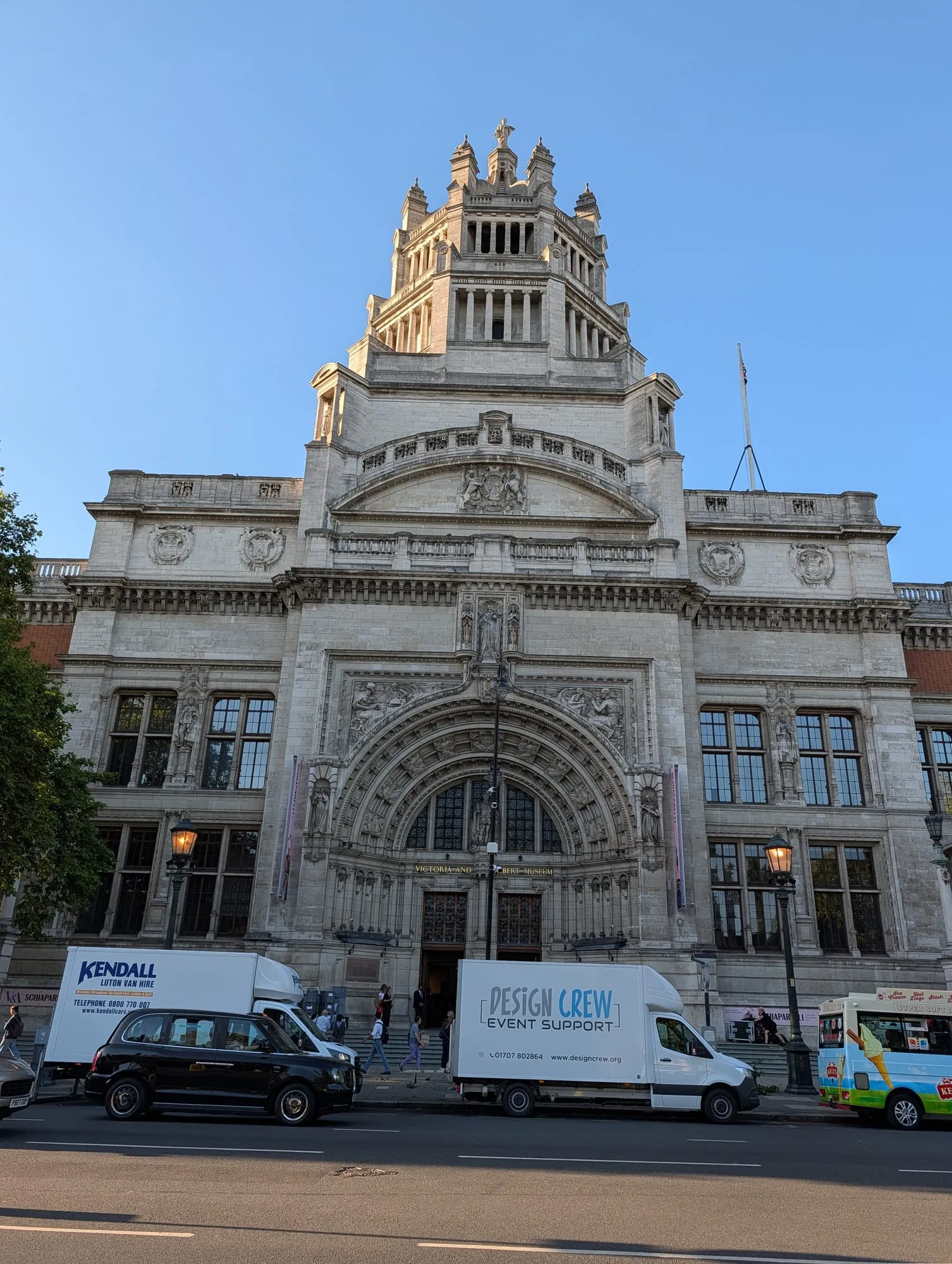
- Victoria and Albert Museum (V&A) — 145 galleries covering 5,000 years of art and design. The John Madejski Garden in the centre is the best courtyard in London to sit in, and the original Victorian refreshment rooms are the world’s first museum cafe.
- Science Museum — Rockets, jet engines and the Apollo 10 command module. Wonderlab upstairs is hands-on and the one part that charges.
- Royal Albert Hall — The circular concert hall at the top of Exhibition Road. Home of the BBC Proms each summer, when standing tickets in the arena go for a few pounds on the day; the Last Night of the Proms ticket routes are set out separately.
- Kensington Gardens and the Albert Memorial — Across the road, with Kensington Palace at the far end and the Serpentine galleries in between.
- Brompton Oratory — An enormous Italianate Catholic church next to the V&A that almost nobody goes into. Free, and startling inside.
Key streets and micro-districts
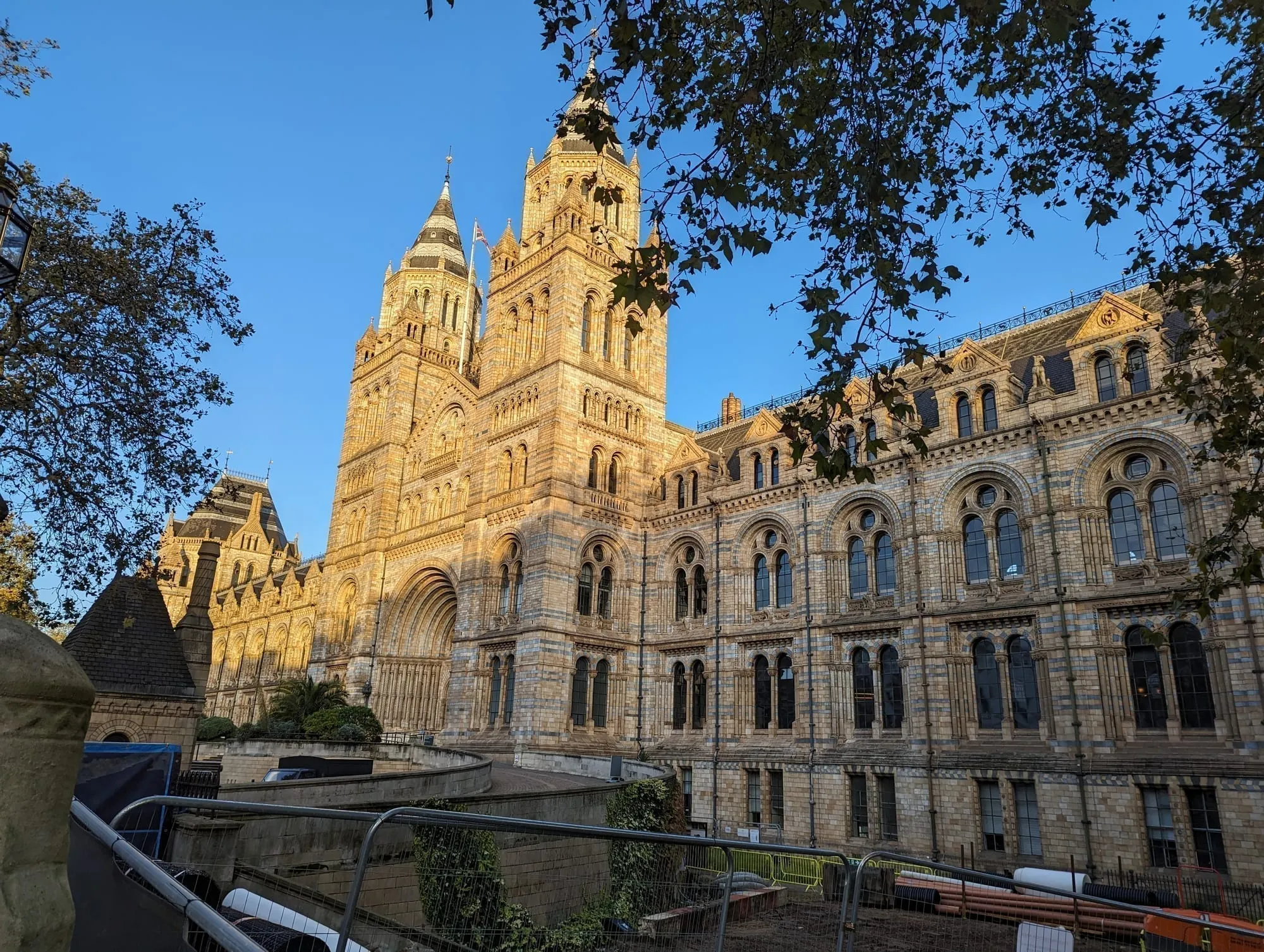
The Natural History Museum.
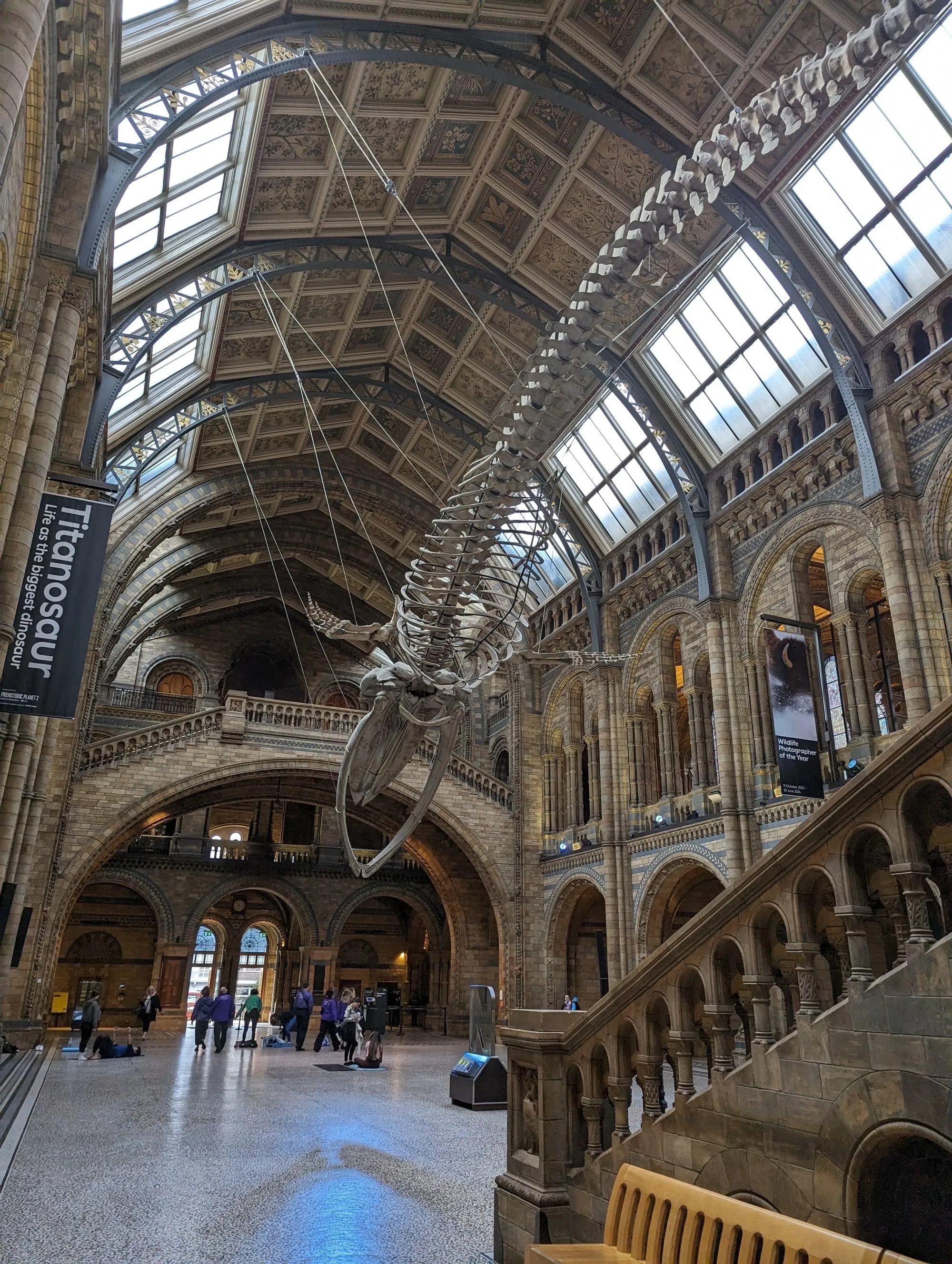
“Hope” the blue whale skeleton.
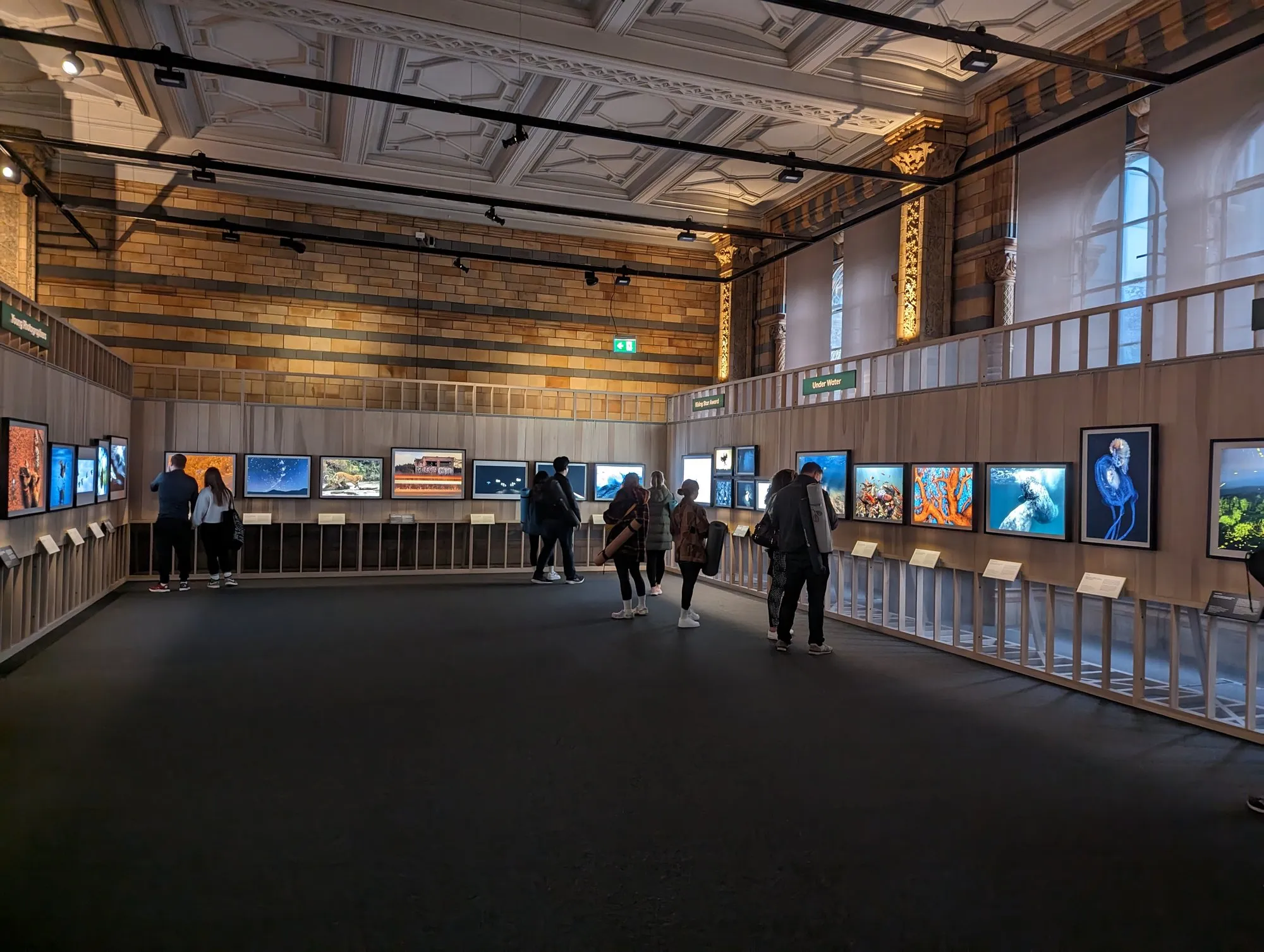
The Wildlife Photographer of the Year exhibition.
Exhibition Road
The spine, resurfaced in 2012 as a shared surface with no kerbs, so pedestrians and traffic share the road — which works better than it sounds and makes the walk up from the station pleasant.
All three museums sit on it: the Natural History Museum and the Science Museum on the western side, the V&A on the eastern, along with Imperial College and the Royal Geographical Society.
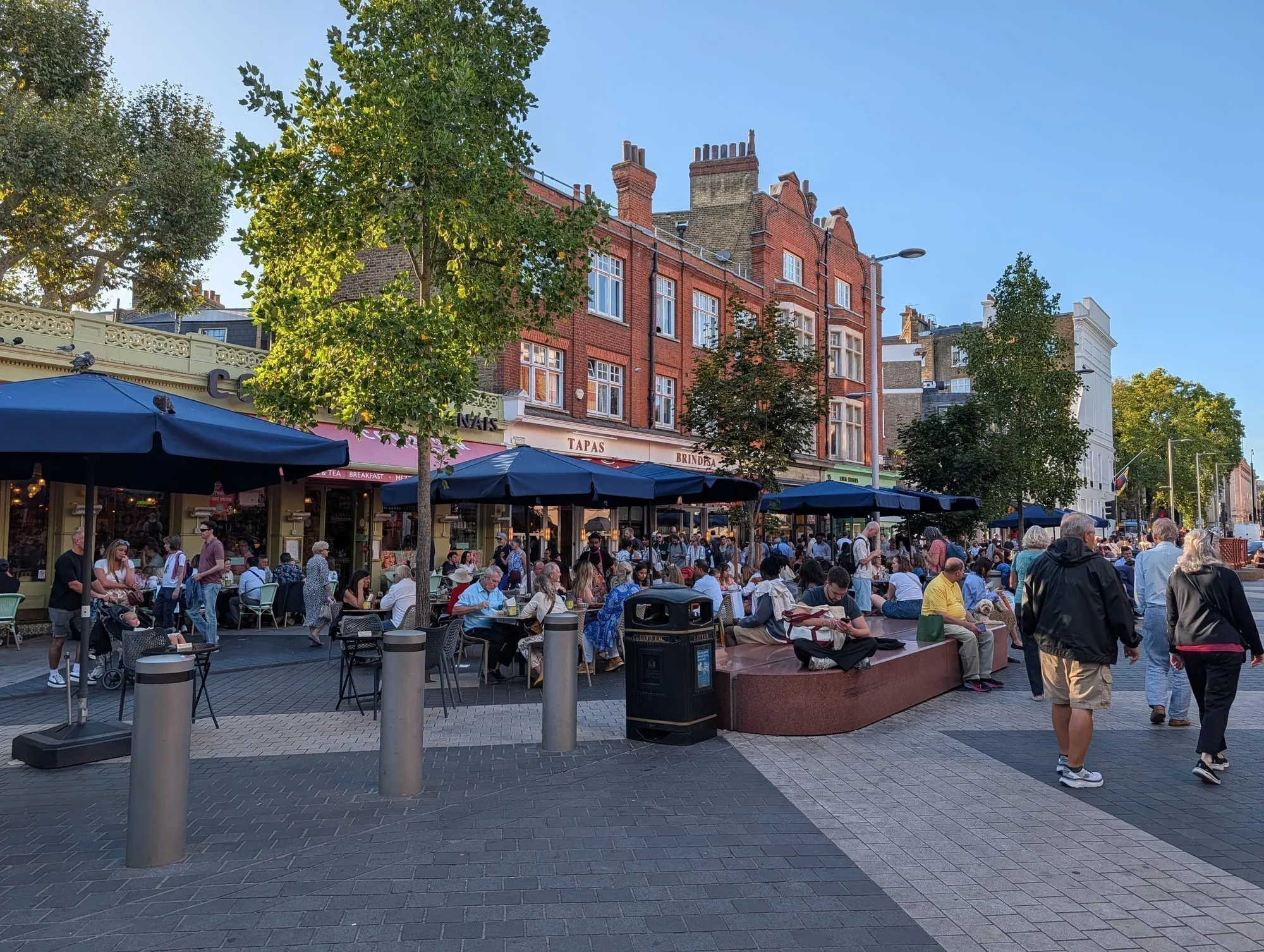
All three are free, and all three charge for their special exhibitions. The road is about eight minutes end to end, uphill from the station towards the Albert Hall.
The Museum Subway
The tiled Victorian tunnel running underground from the station towards the museums, opened in 1885 so that visitors could reach them without crossing Exhibition Road. Cream and yellow-brown glazed brick, Grade II listed, and free since 1908 — there was a penny toll to begin with. The Natural History Museum has a gate directly off it; for the other two you surface on the museums side and walk a short way outside.
It is free, dry and open during station hours, and it comes up inside or beside each of the three museums, not on the street.
This is the most useful fact about South Kensington. In the rain, or in the July queues, it is the difference between a good morning and a bad one — and a great many people walk past the entrance without noticing it.
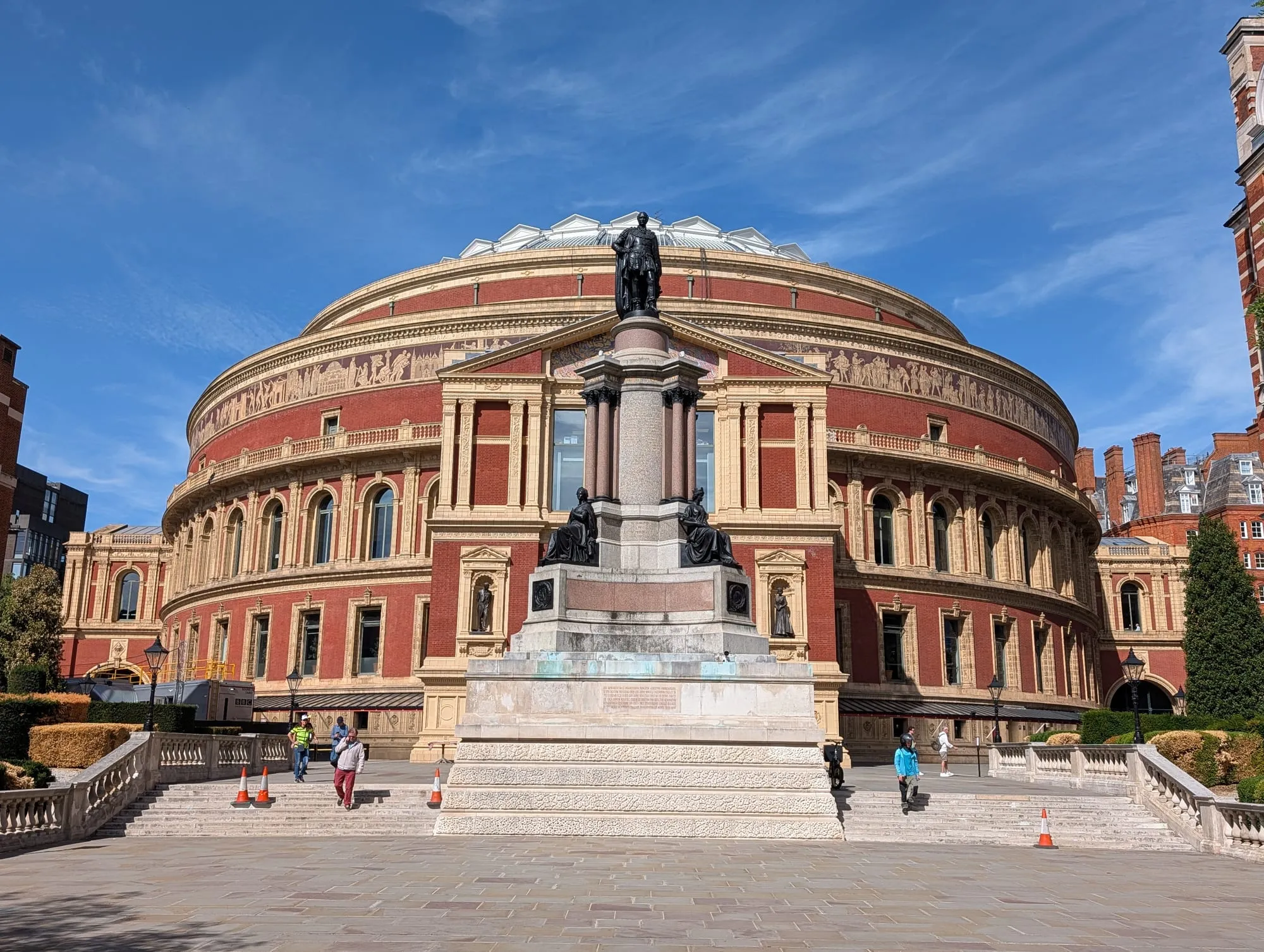
The Royal Albert Hall.
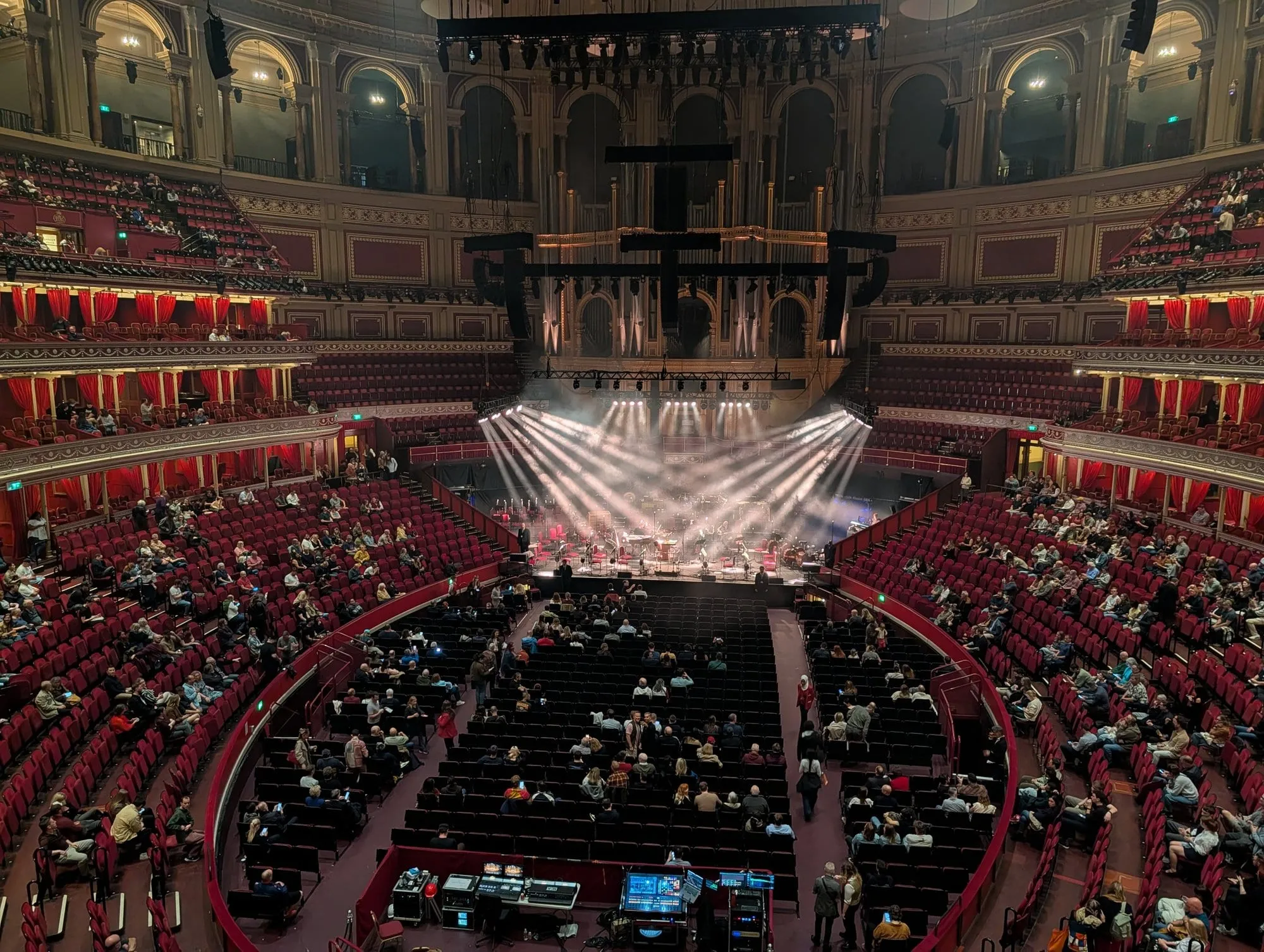
Inside the Royal Albert Hall.
Cromwell Road and Thurloe Square
Grand stucco terraces and private garden squares south of the museums — white-fronted, porticoed, and almost entirely residential.
Thurloe Square holds London’s thinnest house: a wedge about six feet wide at its narrowest, built in 1887 in a strip of land left over when the District line was cut through.
There is nothing to buy and nothing to book here. It is a quiet five minutes between the museums and the Fulham Road, and the best route away from the crowds.
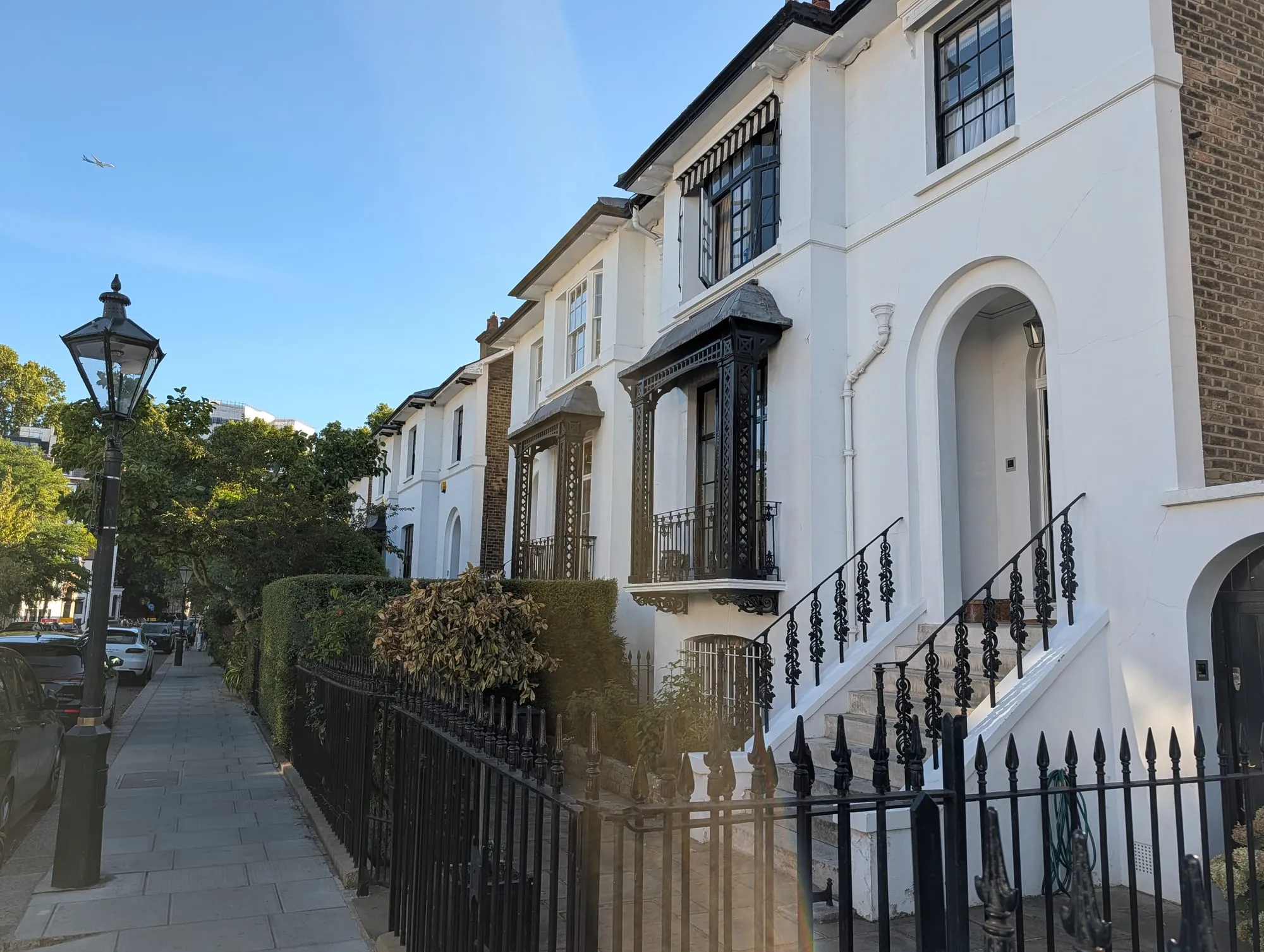
Launceston Place, a few minutes west, is the prettiest of these streets and has a cobbled mews running off it — worth the detour if you like quiet residential London.
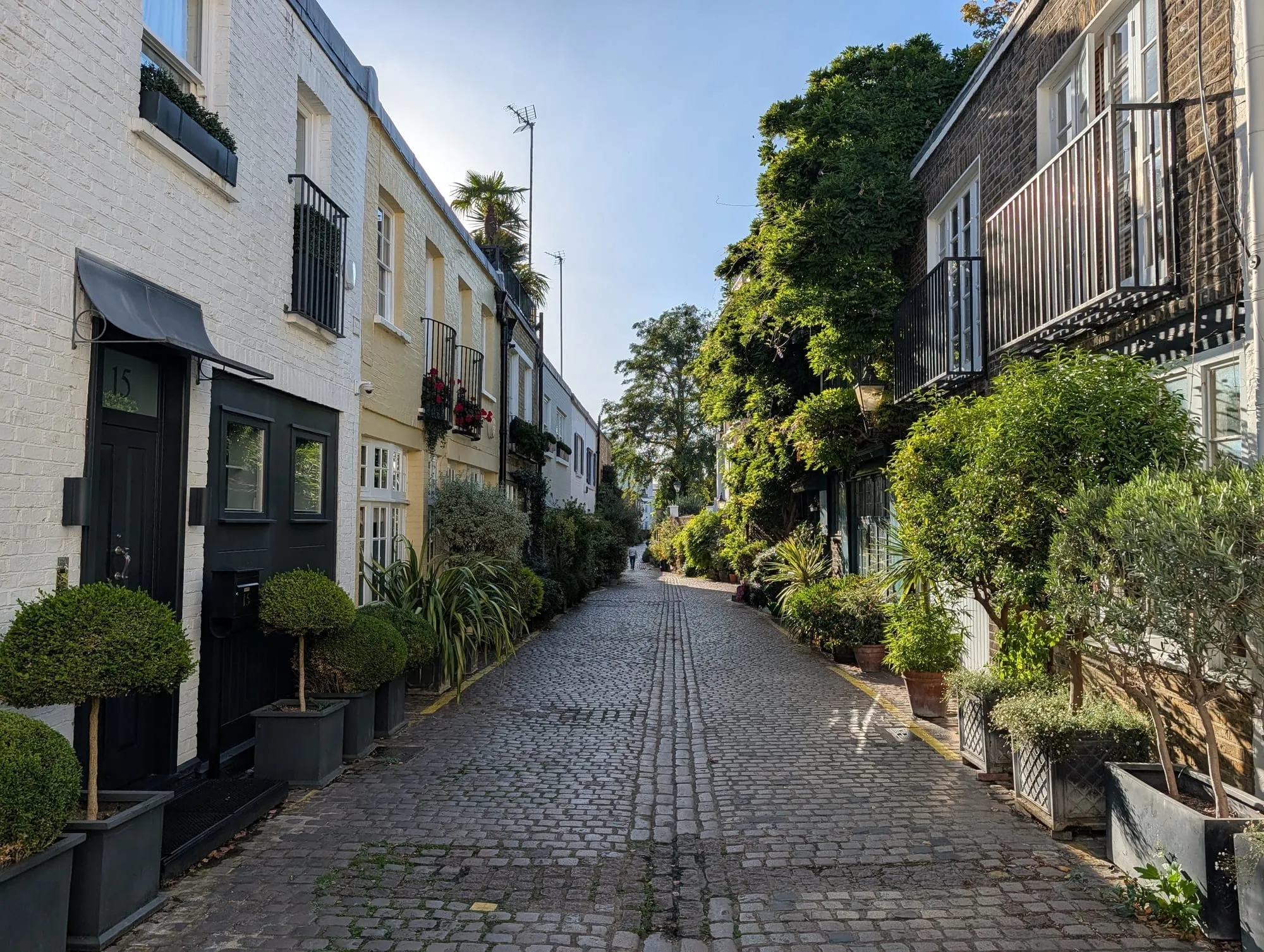
Bute Street and Old Brompton Road
The everyday streets, and the centre of French London — the Lycée Français Charles de Gaulle is here, and the community around it has been established for generations.
That means proper French bakeries, cafés and a bookshop, not the tourist-facing places up by the museums. Bute Street in particular is a short pedestrian run of them.
Best in the morning, when the bakeries are full and the museums have not yet emptied onto the street. Two minutes from the station, and the obvious place to eat before going in.
Knightsbridge and Brompton Road
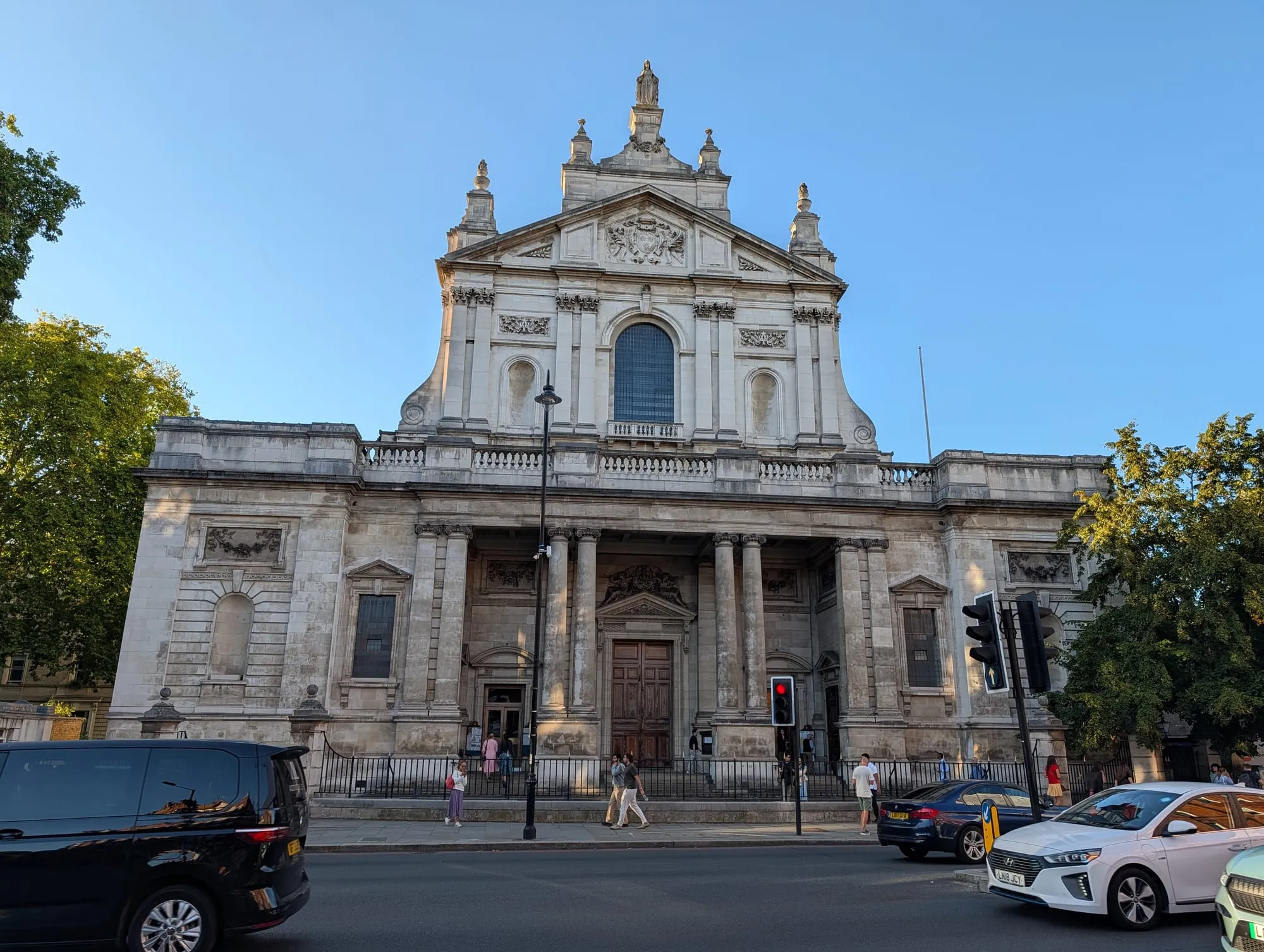
North-east along the Brompton Road towards Harrods and Harvey Nichols — about ten minutes on foot from the museums, and an easy add-on, not a separate trip. The Brompton Oratory stands on the way, next to the V&A: a vast Italianate Catholic church, free to enter and almost always empty compared with the museums either side of it.
Harrods is free to walk into and worth it for the food halls alone, which are the reason most Londoners ever go in.
Ten minutes, and mostly uphill. The 14 and 74 buses run the same route if you would rather not walk it twice.
Go deeper
- The best museums in London — the V&A, the Natural History Museum and the Science Museum compared, with which halls are worth your time and when to book.
Where to eat and drink
| Spot | Style | Price | Why go |
|---|---|---|---|
| V&A Cafe | Museum cafe | ££ | The world’s first museum restaurant, in three Victorian rooms |
| Ognisko | Polish | ££ | Elegant townhouse dining room on Exhibition Road with a terrace |
| The Anglesea Arms | Historic pub | ££ | Proper pub five minutes south, away from the museum crowds |
| Comptoir Libanais | Lebanese | £ | Reliable, quick and good with children |
| Bute Street bakeries | French cafes | £ | The local French quarter; better coffee than anything on Cromwell Road |
| Duke of York Square | Various | ££ | Fifteen minutes towards Chelsea, with a Saturday food market |
See all 8 places to eat and drink in South Kensington
Getting there
By Tube. South Kensington is on the Piccadilly, District and Circle lines. The Piccadilly line runs direct from Heathrow in about 40 minutes for under £6 — one of the best-value airport journeys in London.
Best exit. Follow signs inside the station for the Museum Subway, the pedestrian tunnel that comes up inside the museum precinct. Do not leave by the main street exit unless you want the shops.
On foot. Ten minutes to Knightsbridge, fifteen to Sloane Square, twenty-five through the parks to Notting Hill.
How long to spend, and when to go
| If you have | Do this |
|---|---|
| Two hours | One museum’s highlights — Hintze Hall, or the V&A cast courts |
| Half a day | One museum, plus lunch and Exhibition Road |
| A full day | Two museums, with Kensington Gardens between them |
Best time: Right at opening, usually 10:00. The first hour is dramatically quieter, and it is the only time you will get Hintze Hall without crowds.
Avoid: Weekends and school holidays if you can, particularly at the Natural History Museum, which is the busiest free attraction in the country.
Map of South Kensington
Open the map21 places: 6 places to eat · 7 things to do · 3 hidden spots · 5 places to stay
The map loads when you open this section.
Eat & drinkThings to doHidden LondonStay
What's on in South Kensington
Limited runs and the annual fixtures. Anything already finished is removed automatically.Links marked ad are affiliate links. If you book through one we may earn a commission, at no extra cost to you. It never affects what goes on this list.
Schiaparelli: Fashion Becomes Art
Not open yetThe V&A's headline fashion show of the year, treating Schiaparelli's Dali-era surrealism as art rather than garments on mannequins. Book ahead - it will not have walk-up availability.
Weekday tickets £2 cheaper. Closes 8 November.
Rising Voices: Contemporary Art from Asia, Australia and the Pacific
Not open yetAsia, Australia and the Pacific in one survey - broader than the V&A usually attempts, and £11 cheaper than its Schiaparelli headliner.
Works as the second show on a Schiaparelli visit.
The BBC Proms
Not open yetEight weeks of world-class orchestral music where you can stand in the arena for the price of a pint - the Promming tickets are the whole point and are sold on the day.
PROMMING TICKETS ARE SOLD ON THE DAY and cannot be booked - queue at the hall. Everything else books months ahead. The Last Night is balloted.
Wildlife Photographer of the Year
Not open yetThe longest-running nature photography competition in the world, and consistently the Museum's strongest temporary show - 100 images chosen from tens of thousands of entries, with the conservation story behind each one.
Between editions as of this run - the 2025/26 exhibition closed 12 July 2026 and the next opens in October 2026. Check nhm.ac.uk before planning a visit around it specifically.
Coming up near South Kensington
Gigs, shows and exhibitions in the next fortnight at venues closest toSouth Kensington, Gloucester Road, Knightsbridge. See everything on the What's On page.
Thursday22 October
-
18:00Chamber Rush Hour
Royal College of Music Museum · South Kensington Zone 1
£2–£15 Venue site -
19:30Konstantinos Argiros
Royal Albert Hall · South Kensington Zone 1
Friday23 October
-
12:30Friday Music in the Museum
Royal College of Music Museum · South Kensington Zone 1
£5 Venue site -
20:00Raye - This Symphony May Contain Hope
Royal Albert Hall · South Kensington Zone 1
Sunday25 October
-
11:00Woodwind Festival
Royal College of Music Museum · South Kensington Zone 1
£10–£15 Venue site
Monday26 October
-
18:45Steve Hackett - Best of Genesis & Solo Gems
Royal Albert Hall · South Kensington Zone 1
Things to do in South Kensington
Beyond eating and drinking. Free things are listed first.Links marked ad are affiliate links. If you book through one we may earn a commission, at no extra cost to you. It never affects what goes on this list.
Natural History Museum
FreeEighty million specimens behind a terracotta Romanesque front, with a blue whale skeleton diving through Hintze Hall and the best dinosaur collection in the country.
Free but book a timed slot in school holidays or expect a long queue on Cromwell Road. The Exhibition Road entrance is almost always shorter.
Science Museum
FreeStephenson's Rocket, the Apollo 10 command module and a working section of Babbage's difference engine, plus Wonderlab upstairs where children are meant to touch everything.
The museum is free; Wonderlab and the IMAX are ticketed and worth it with children. Adults-only Lates on the last Wednesday of the month.
Victoria and Albert Museum
FreeRaphael cartoons, the Cast Courts with a full-size Trajan's Column in two halves, and the oldest museum restaurant in the world - all free.
Free, no booking, and far quieter than the two museums either side of it. The John Madejski Garden in the middle has a paddling pool in summer and needs no ticket.
Natural History Museum Ice Rink
Winter onlySkating in the museum's front garden under the terracotta facade and a lit tree - the best-looking of London's winter rinks by a distance.
Late October to January only, and sessions sell out weeks ahead at weekends. Weekday mornings are the quiet slots.
Royal Albert Hall
An 1871 elliptical hall seating over 5,000, and the home of the BBC Proms every summer - where standing tickets in the arena cost less than a cinema seat.
PROMENADING TICKETS are the trick: a few pounds to stand in the arena or gallery, sold on the day, and the same concert as the £70 seats. The daytime tour is a separate ticket and already on this site.
Royal Albert Hall Tour
Gets you into the auditorium, the Royal Retiring Room and the grand tier boxes on a day with no concert - and explains the mushroom-shaped acoustic diffusers hanging from the roof.
Runs most days but cancels when the hall is in use, so check the same week. The tour is the only way in without a ticket to something.
Smithsonian Starstruck
A Smithsonian-built space experience in the museum quarter, which is the obvious place for it and yet the only paid one of its kind on that street.
Ticketed, unlike the three free national museums either side of it.
Book Natural History Museumad
Hidden South Kensington
Free, self-guided and easy to walk past without knowing it's there.
Alfred Hitchcock's South Kensington Home
Blue plaqueAlfred Hitchcock (1899–1980), film director
Hitchcock lived here before his move to Hollywood - a plaque for one of cinema's defining directors on one of South Kensington's busiest roads.
A private/commercial building on a main road - viewable from the street only.
Francis Bacon's Studio
Blue plaqueFrancis Bacon (1909–1992), painter
Bacon's studio here - famously chaotic, now reconstructed in Dublin's Hugh Lane Gallery - is where he painted for the last three decades of his life.
A private mews building - viewable from the street only.
Kynance Mews
Point of interestA wisteria-clad cobbled mews, a village pocket inside South Kensington
Converted stables on a cobbled cul-de-sac, walls thick with wisteria in late spring - the closest South Kensington gets to a country village lane, a few minutes from the museums.
A private residential street; walkable and photographable, but treat it as someone's front door, not an attraction. Wisteria peaks late April to May.
Royal Albert Hall steps
Filming locationThe Ipcress File (1965) - the fight on the steps
The grand entrance steps used for a fight scene, with the Albert Memorial across the road. The hall opened in 1871 and the steps have barely changed.
Free to stand on. The building itself is ticketed by event, with guided tours running most days. South Kensington is ten minutes' walk through the museum tunnel.
Where to stay
Quiet, safe, well connected and good for families, with the trade-off that the area is sleepy after about 20:00.
- South Kensington and Gloucester Road — Townhouse hotels and serviced flats, walkable to the museums, direct to Heathrow.
- Earl’s Court — Ten minutes west, noticeably cheaper, same District and Piccadilly access.
- Knightsbridge — North-east and considerably more expensive, closer to Hyde Park.
Our South Kensington hotel guide compares the hotels by the museums.
Cheapest first. Prices are a typical starting rate per night, not a quote.Links marked ad are affiliate links. If you book through one we may earn a commission, at no extra cost to you. It never affects what goes on this list.
Astor Hyde Park
£HostelBreakfast includedA Victorian townhouse opposite the Royal Albert Hall with cornicing and fireplaces intact - a far better building than a hostel at this price should occupy.
Townhouse stairs and no lift, so not accessible and hard work with a big bag. Walking distance to the three free museums.
Nell Gwynn House Apartments & Rooms
££Serviced apartmentServiced apartments with their own kitchens inside a 1930s Chelsea mansion block, under a kilometre from the V&A and walkable to the three free South Kensington museums - the cooking-for-yourself option in a postcode that otherwise has none.
Not a pod hotel, despite how it is often listed. Hotels.com files it as an entire apartment with a private kitchen. Guest reviews since the January 2026 opening note modern furnishings and reasonable pricing, with some mentions of street noise.
Cheval Gloucester Park
£££AparthotelAccessible roomsTwo minutes from Gloucester Road station and about eight from the three free South Kensington museums, which makes it the obvious base for a family doing them properly over several days.
Quieter than the Cromwell Road addresses nearby because it sits back off it. Full kitchens.
Number Sixteen
£££TownhouseA Kit Kemp townhouse on a residential terrace three minutes' walk from South Kensington station, with a leafy courtyard garden behind it and a ground-floor library and drawing room whose floor-to-ceiling windows look straight out onto Sumner Place.
The name reads like an address, and it is one: a Firmdale house, one of the three the group files as its "London Townhouse Hotels" alongside Dorset Square and Knightsbridge, standing at number 16. Same operator as The Soho Hotel, Ham Yard, Charlotte Street and Covent Garden Hotel, so the design signature and the service standard are the group's.
The Ampersand Hotel
£££BoutiqueAccessible roomsA design-led boutique on a quiet residential street between the three free museums, decorated in themed floors - astronomy, geology, music, botany.
Two minutes from the South Kensington museum tunnel entrance, which most guests do not realise runs directly to the Natural History Museum.
The Exhibitionist Hotel
£££BoutiqueEvery wall carries art - eight gallery-style spaces of rotating and permanent pieces, a deliberately maximalist answer to the neutral boutique hotel, a few minutes from the V&A and South Kensington station.
Rooms are on the small side for the rate, and reviewers are split on 100 Kensington, the in-house restaurant - book the room for the design, not the kitchen.
The Gore London
£££BoutiqueRound the corner from the Royal Albert Hall, and the operator sells it on exactly that - the ground-floor restaurant is named 190 Queen's Gate after the address and pitched for before and after a concert, with Bar 190 next to it.
From the operator's own copy: the entry grade, the Cosy Double, has a compact bathroom, and the house is furnished with antiques throughout rather than refitted.
The Kensington Hotel
£££HotelA row of Regency townhouses on Queen's Gate, a few minutes from the Natural History Museum and the V&A - the museum quarter without being on the Cromwell Road.
Doyle Collection, same group as The Marylebone and The Bloomsbury.
Make a day of it
Combine South Kensington with
Walking times are from the centre of South Kensington. Each of these works as an afternoon once you have finished here.
Chelsea
15 min walkSouth-east down Sloane Street or Pelham Street for King's Road and Sloane Square.
Kensington and Holland Park
25 min walkNorth through Kensington Gardens, then west along Bayswater Road.
Knightsbridge and Harrods
10 min walkNorth-east along Brompton Road for the department stores.
Westminster
35 min walkEast through Hyde Park and Green Park to Buckingham Palace and Whitehall.
Suggested three-hour route
- Start: South Kensington station, via the Museum Subway.
- Natural History Museum: Hintze Hall and the dinosaur gallery. Book a slot.
- Exhibition Road: North past Imperial College to the Royal Albert Hall.
- Kensington Gardens: Cross to the Albert Memorial and into the park.
- Finish: Back down for the V&A courtyard, or east to Harrods.
Common mistakes to avoid
- Trying to do all three museums in a morning. You will see corridors. One per half day.
- Queuing outside in the rain. The Museum Subway from inside the station is undercover and free.
- Not booking free timed entry. It costs nothing and skips a 45-minute weekend queue.
- Eating on Cromwell Road. The cafes immediately around the station are poor value. Walk to Bute Street or Duke of York Square.
- Paying for a taxi from Heathrow. The Piccadilly line comes here directly.
- Assuming Wonderlab is included. The Science Museum is free; Wonderlab is ticketed.
Common questions
Are the South Kensington museums free?
Yes. The Natural History Museum, Science Museum and V&A all have free general admission, as do most UK national museums. Only special exhibitions are ticketed. Donations are invited but entirely optional.
Do I need to book the Natural History Museum in advance?
Booking is not required but is strongly recommended, and it is free. Standby queues at weekends and in school holidays regularly run to 45 minutes or more, while booked visitors walk in. Book a morning slot online before you travel.
Is there a tunnel from South Kensington station to the museums?
Yes, and most visitors miss it. A tiled Victorian pedestrian subway runs from inside the station north under Exhibition Road, free and signposted from the ticket hall. The Natural History Museum has its own gate straight off it, so you can walk in without going outside at all. For the Science Museum and the V&A you come up at street level on the museums side of the road and walk the last few metres in the open — still far better than the walk round, and it keeps you out of the traffic.
Can you visit all three museums in one day?
You can enter all three, but you will not see much. The V&A alone has 145 galleries. One museum per half day is the realistic pace; two in a day is a long day. Pick by interest; do not try to complete the set.
Which museum is best for young children?
The Natural History Museum for dinosaurs and the blue whale skeleton, or the Science Museum's Wonderlab, which is hands-on and the only ticketed part of that museum. The V&A is the least child-focused of the three, though its garden courtyard is a good place to let children run.