One of 20 self-guided London walks on this site. See every walk, from the South Bank to Hampstead Heath.
In this guide
There are two good half-days here and almost nobody joins them up. Canary Wharf gets an hour from people waiting for a train; Greenwich gets a day trip that arrives by boat and leaves by boat. They face each other across the same reach of river, and the crossing between them is free and takes five minutes.
This walk uses it. Eleven stops, about 6.5km and three to four hours, with the 1902 Greenwich Foot Tunnel in the middle. Eight of the stops are free, and the route has a spine most people miss: the Prime Meridian runs through both ends of it. The Greenwich end, the line in the Royal Observatory’s courtyard, is closed from 2 November 2026.
For where to stay and eat at either end, see the Canary Wharf and Greenwich area guides.
💡 The Short Version: Walk north to south, from the free Crossrail Place Roof Garden to Greenwich hill. The foot tunnel is free and open around the clock. Greenwich Market is open daily. Do the free London Museum Docklands and National Maritime Museum before paying for anything.
The route
Map of the walk, numbered in walking order
Loading the map…
Open the whole route in Google Maps → — all eleven stops, set to walking directions, including the tunnel.
| # | Stop | Cost | Open |
|---|---|---|---|
| 1 | Crossrail Place Roof Garden | Free | Daily |
| 2 | London Museum Docklands | Free | Daily 10am–5pm |
| 3 | Cabot Square and the docks | Free | Always |
| 4 | Mudchute Park and Farm | Free | Farm 9am–4pm, park dawn–dusk |
| 5 | Island Gardens | Free | Always |
| 6 | Greenwich Foot Tunnel | Free | Around the clock |
| 7 | Cutty Sark | Ticket | Daily 10am–5pm |
| 8 | Greenwich Market | Free | Daily 10am–5.30pm |
| 9 | Old Royal Naval College | Grounds free | Daily; Painted Hall ticketed |
| 10 | National Maritime Museum | Free | Daily 10am–5pm |
| 11 | Greenwich Park (the Royal Observatory is closed from 2 November 2026) | Park free | Gates 6am–8pm |
| + | Wood Wharf and Eden Dock | Free | Always |
| + | The Trafalgar Tavern | Free to look | Pub hours |
1. Crossrail Place Roof Garden
Crossrail Place Roof Garden.
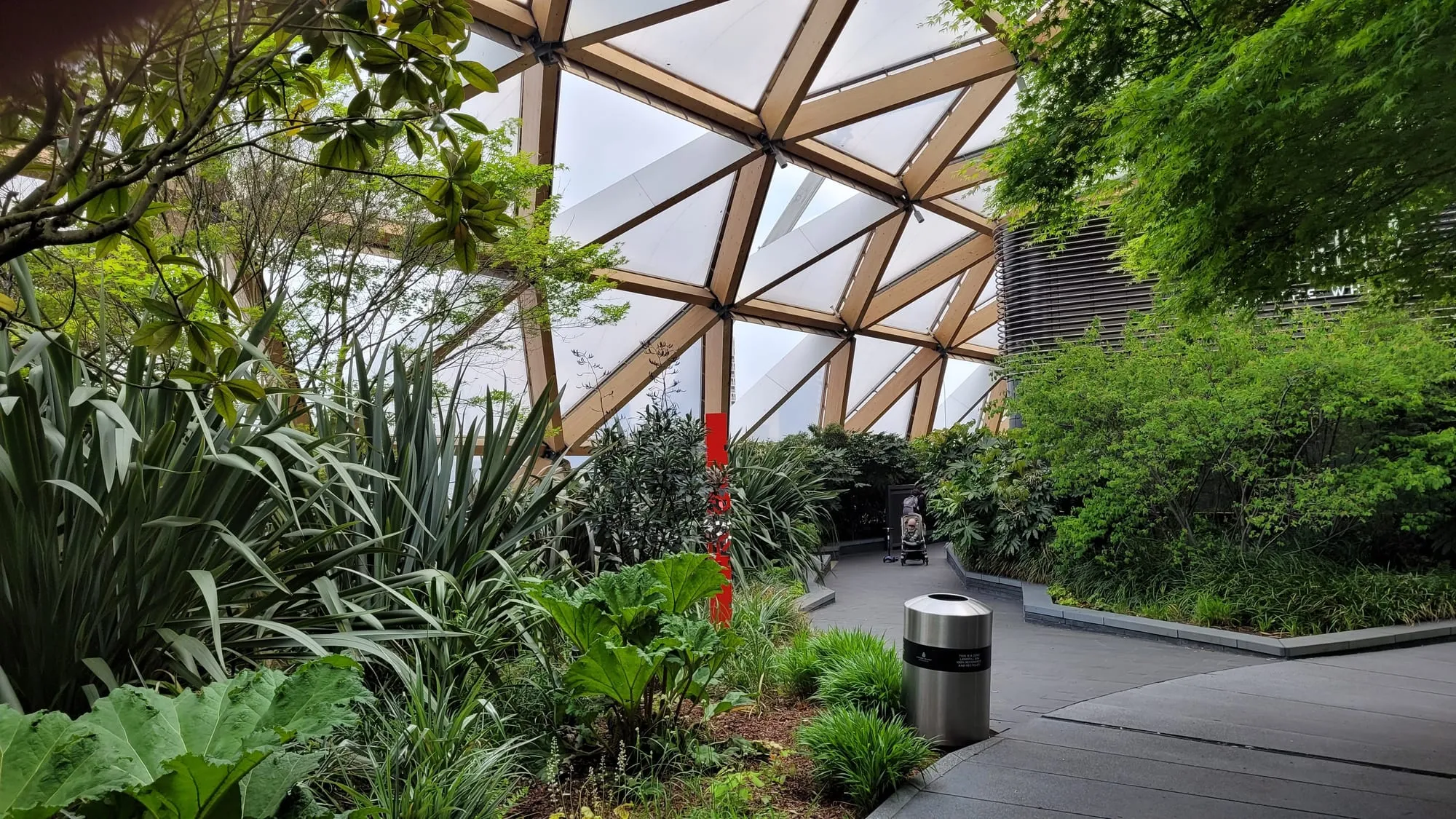
Free and open daily, until 9pm or sunset in summer. Crossrail Place is a timber lattice hull built into the old North Dock, so the whole building sits in water, and the garden on its roof is one of the largest in London.
It is also the right place to start this walk. The building sits almost exactly on the Prime Meridian, and the garden is planted by hemisphere: bamboos and other Asian plants to the east of the line, ferns and plants from the Americas to the west. You start on longitude zero and finish on the hill above where it was drawn; the Observatory itself is closed from 2 November 2026.
Signs from the Elizabeth line, Jubilee and DLR platforms lead straight up to it, so in the rain this stop and the next are indoors.
2. London Museum Docklands
The Museum of London Docklands. Photo: ell brown, CC BY 2.0.
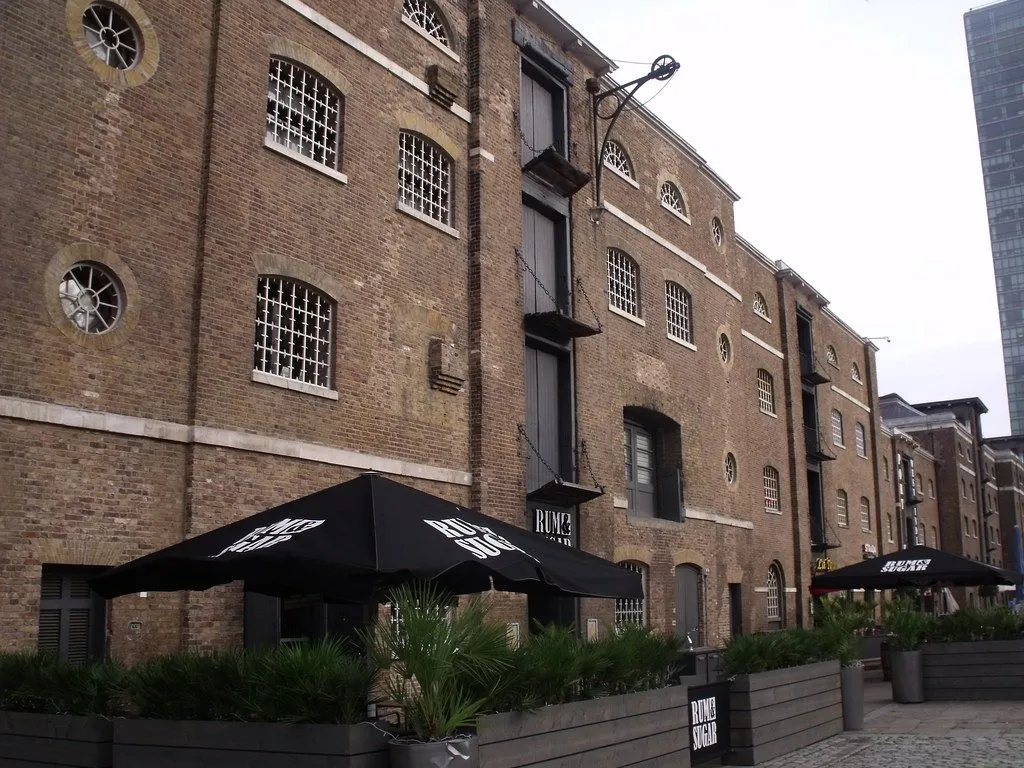
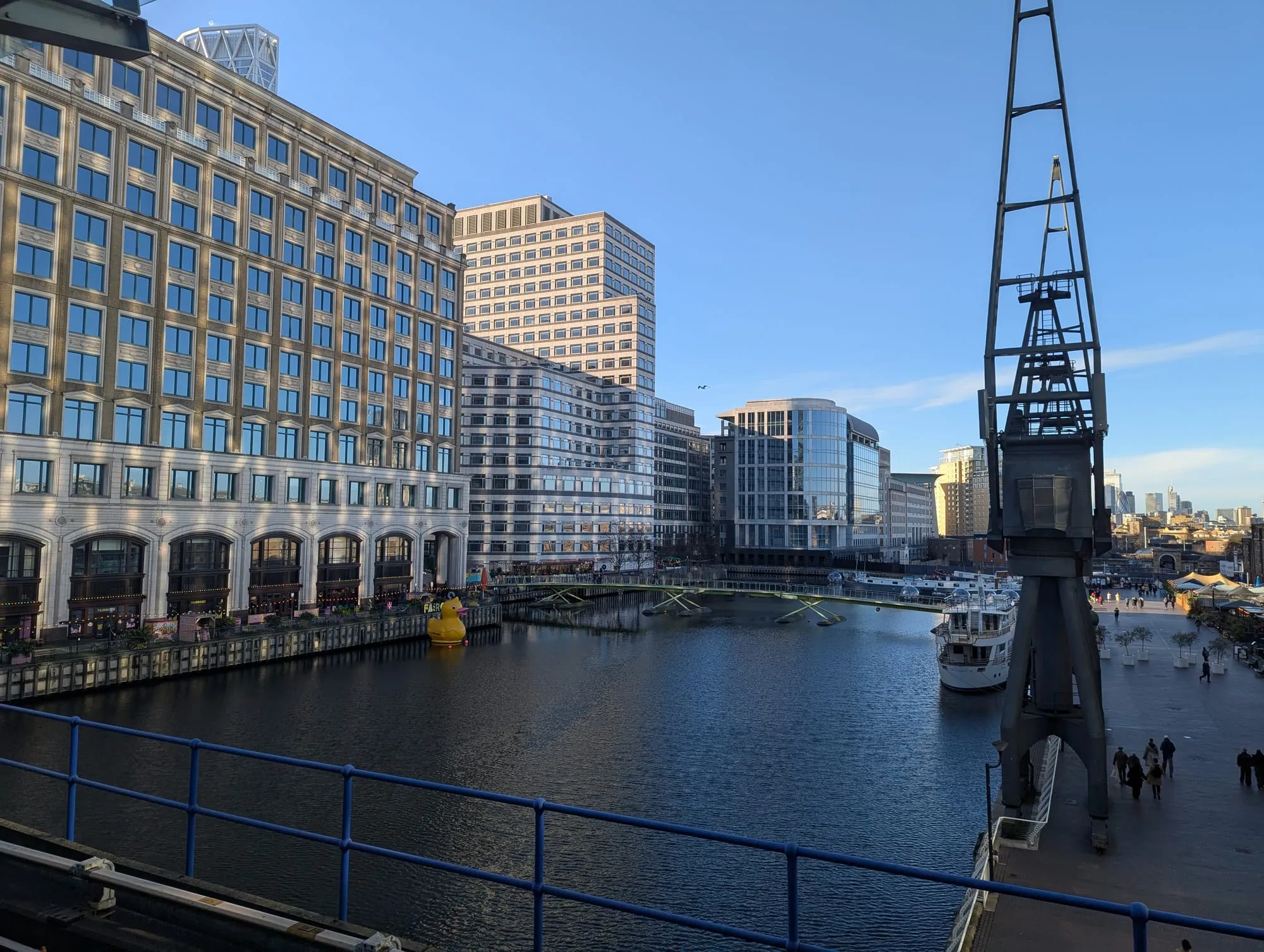
Free, no booking, open 10am to 5pm every day, and the best hour on the north bank. It fills No. 1 Warehouse on West India Quay, one of the few buildings here older than the 1980s, and covers four hundred years of the river and the port across three floors, including London’s part in the transatlantic slave trade.
It is rarely busy, which is remarkable for a free museum this good.
West India Quay.
3. Cabot Square and the docks
Canary Wharf’s docks, at sunset.
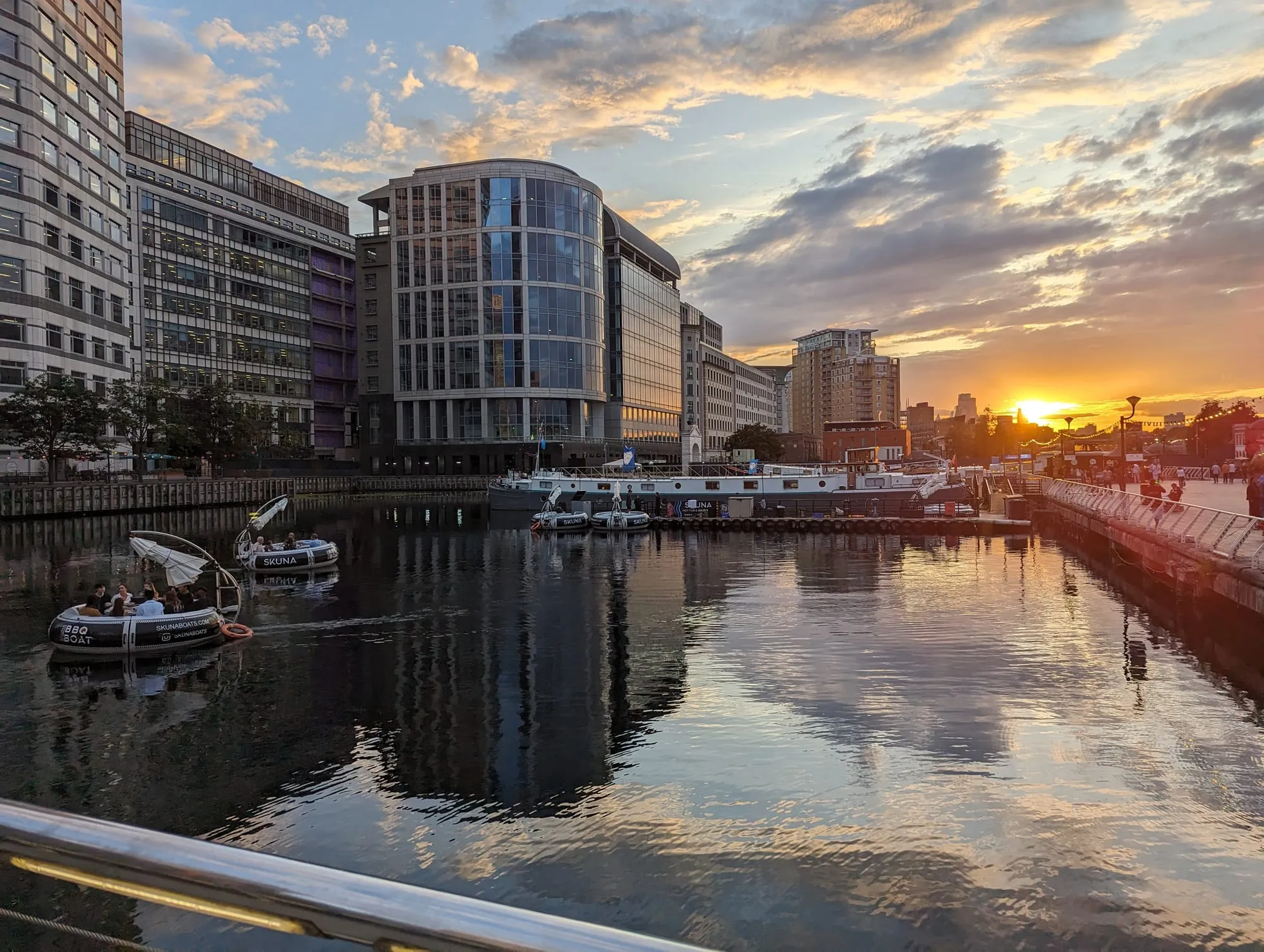
Twenty minutes beside water, which is the whole argument for walking rather than taking the DLR. Canary Wharf is built on the West India Docks, which handled sugar and rum from the 1800s until they closed in 1980, and the water was kept. Cabot Square is the formal centre, and almost every walkway off it runs along a dock edge.
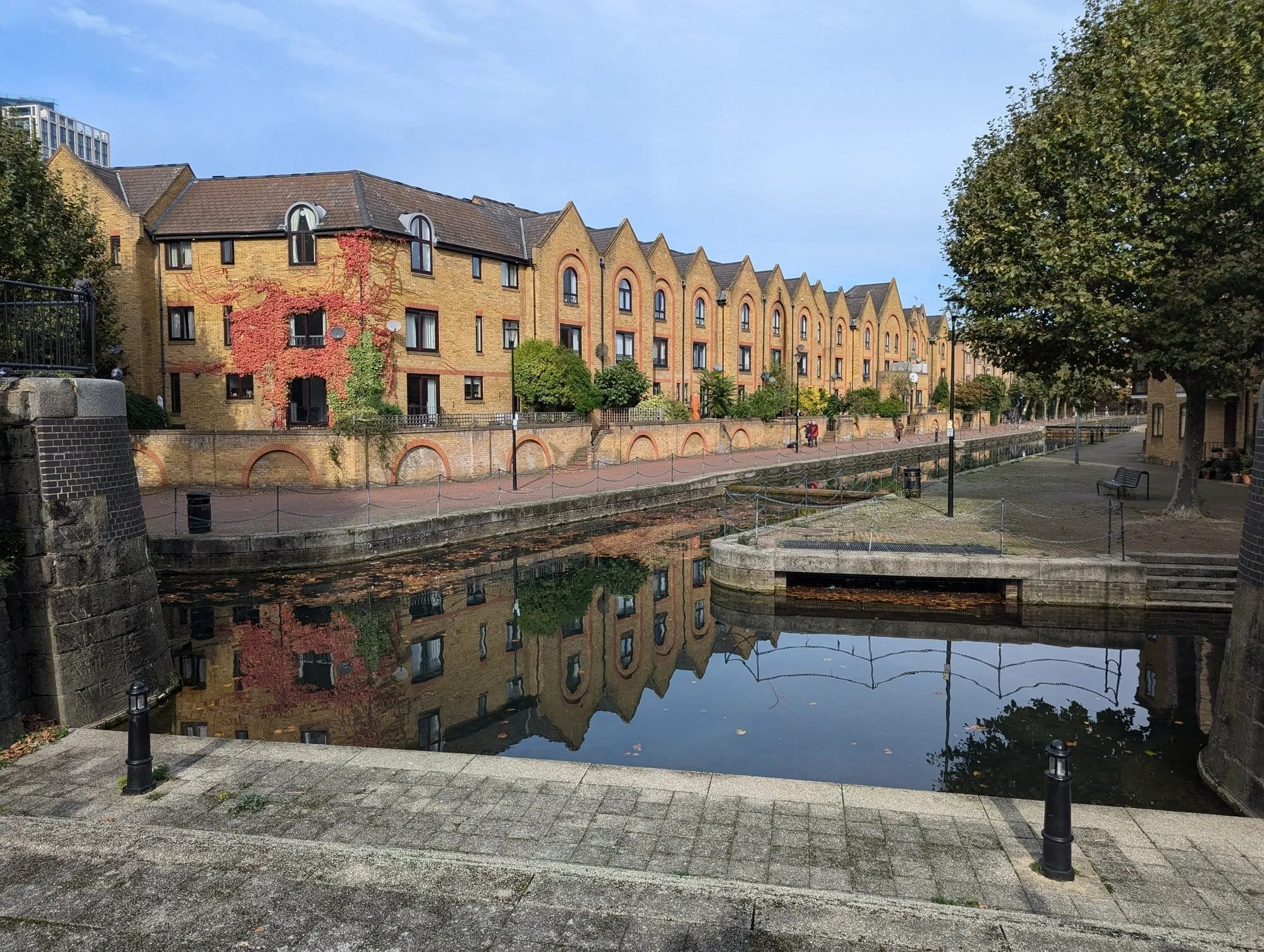
Head south across South Dock and the towers fall away fast. Within ten minutes the buildings drop to four storeys and you are on the Isle of Dogs proper.
💡 Detour: Wood Wharf and Eden Dock. Ten minutes east: a waterside restaurant strip with a Hawksmoor floating on the dock, and Eden Dock’s planted floating islands. Free, and busiest at weekends.
4. Mudchute Park and Farm
Working farmland in Zone 2, with the towers still visible over the fence. This is the surprise of the walk: 32 acres and over a hundred animals, free, run by a community charity. The farm is open 9am to 4pm (the animals go in from 3pm) and the park dawn to dusk. The courtyard café opens Tuesday to Sunday.
The name tells you what the ground is. The land was made from mud dredged out of Millwall Dock and then left alone for decades. In 1974 the Greater London Council earmarked it for a high-rise estate; the islanders campaigned, the estate was never built, and the Mudchute Association was formed in 1977 to keep it.
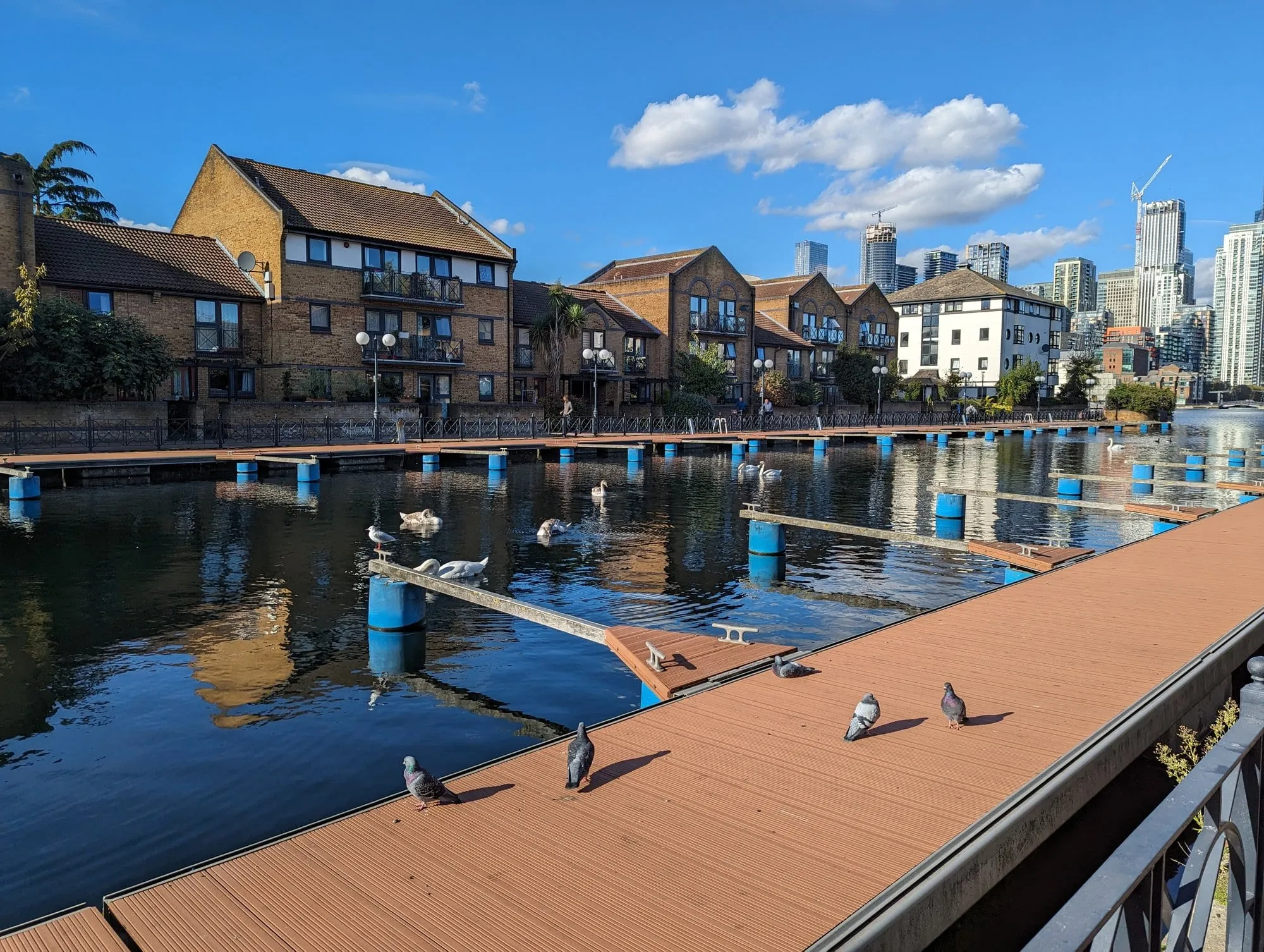
A marina on the Isle of Dogs.
5. Island Gardens
The best free view on the north bank. You come out of the trees onto the river wall and Maritime Greenwich is laid out directly opposite: the two wings of the Old Royal Naval College, the Queen’s House framed dead centre in the gap between them, and the Observatory on the hill behind. None of that composition is accidental.
Canaletto painted it from about here in 1751, and it is protected in planning law as a designated view. There is a bench.
The round brick building with the glass dome, a minute west along the river wall, is the way across.
6. The Greenwich Foot Tunnel
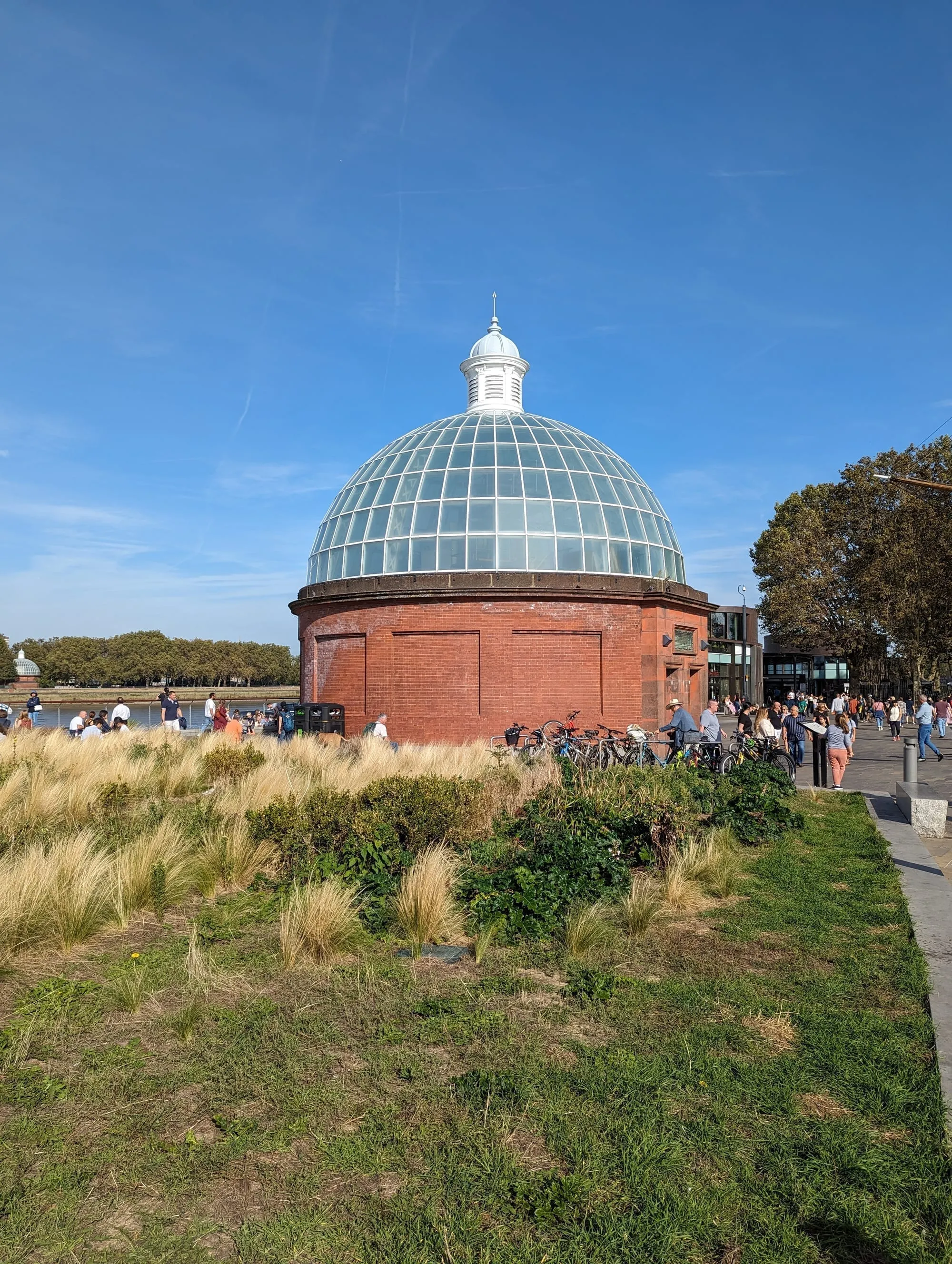
The Greenwich Foot Tunnel’s rotunda.
The hinge of the walk. You go down through a glazed rotunda on the Isle of Dogs, walk five minutes under the Thames through white tile, and come up in a World Heritage Site beside the Cutty Sark. It is free and open around the clock. There are spiral stairs at each end, and lifts if you need them.
The London County Council built it in 1902 so that workers living south of the river could reach the docks and shipyards on the north bank in any weather. The Woolwich tunnel followed in 1912.
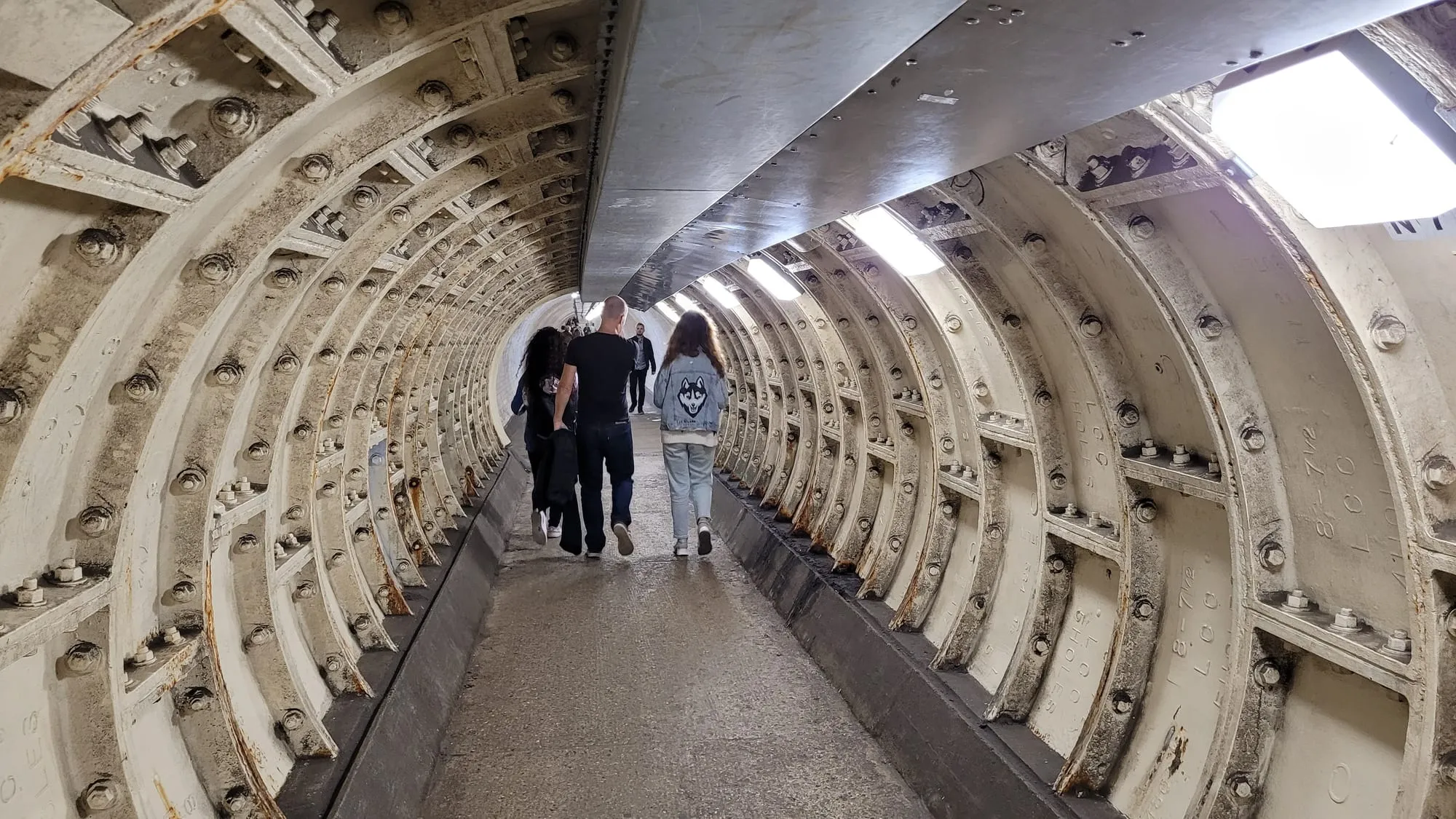
Inside the Greenwich Foot Tunnel.
7. The Cutty Sark
You come up and it is directly in front of you: the last surviving tea clipper, raised in a dry dock so you can walk underneath the hull, which is the part of the ticket worth the money. £22 adult, £11 child, daily 10am to 5pm (last entry 4.15pm). Until the Observatory closes on 2 November 2026, a day pass with it is £38 adult, £19 child.
If you are not going in, the ship is free to look at from the street, and the Gipsy Moth next to it has a big beer garden.
8. Greenwich Market
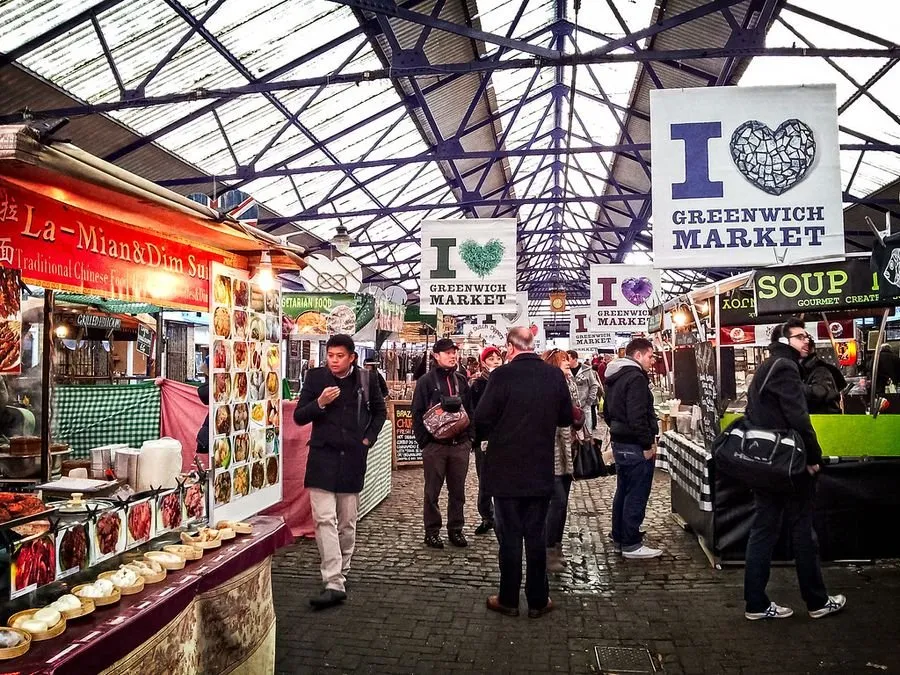
Greenwich Market.
Two minutes inland, and the lunch stop. Covered, open daily 10am to 5.30pm, and unusual for London in mixing crafts, antiques and makers with street food rather than being one or the other. It closes only on Christmas Day and the first six Mondays of the year.
Goddards has sold pie and mash a few doors away since 1890, to recipes it says have not changed. It is the most Greenwich lunch there is. Weekends are shoulder to shoulder; weekdays have room.
9. The Old Royal Naval College
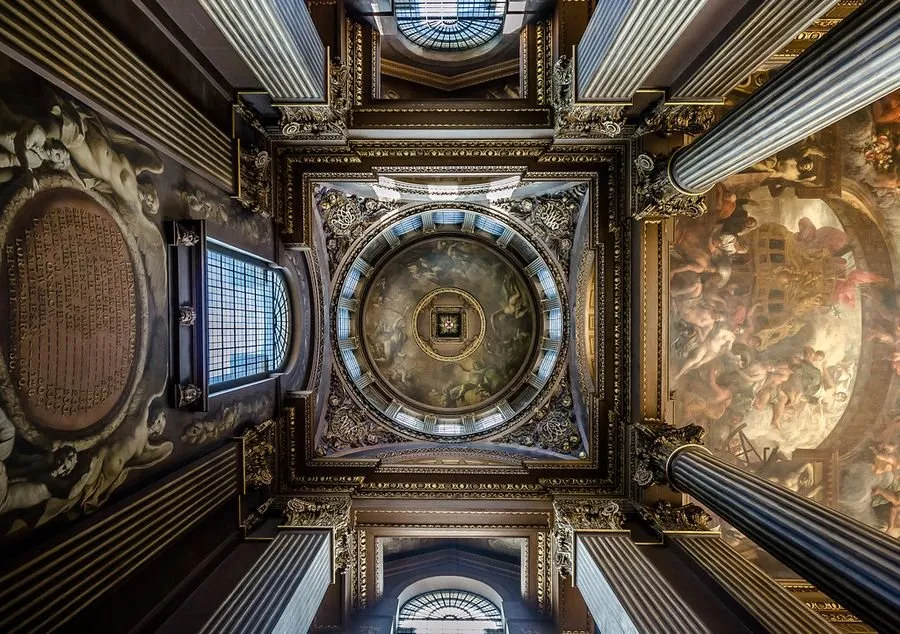
The Painted Hall ceiling. Photo: Maciek Lulko, CC BY 2.0.
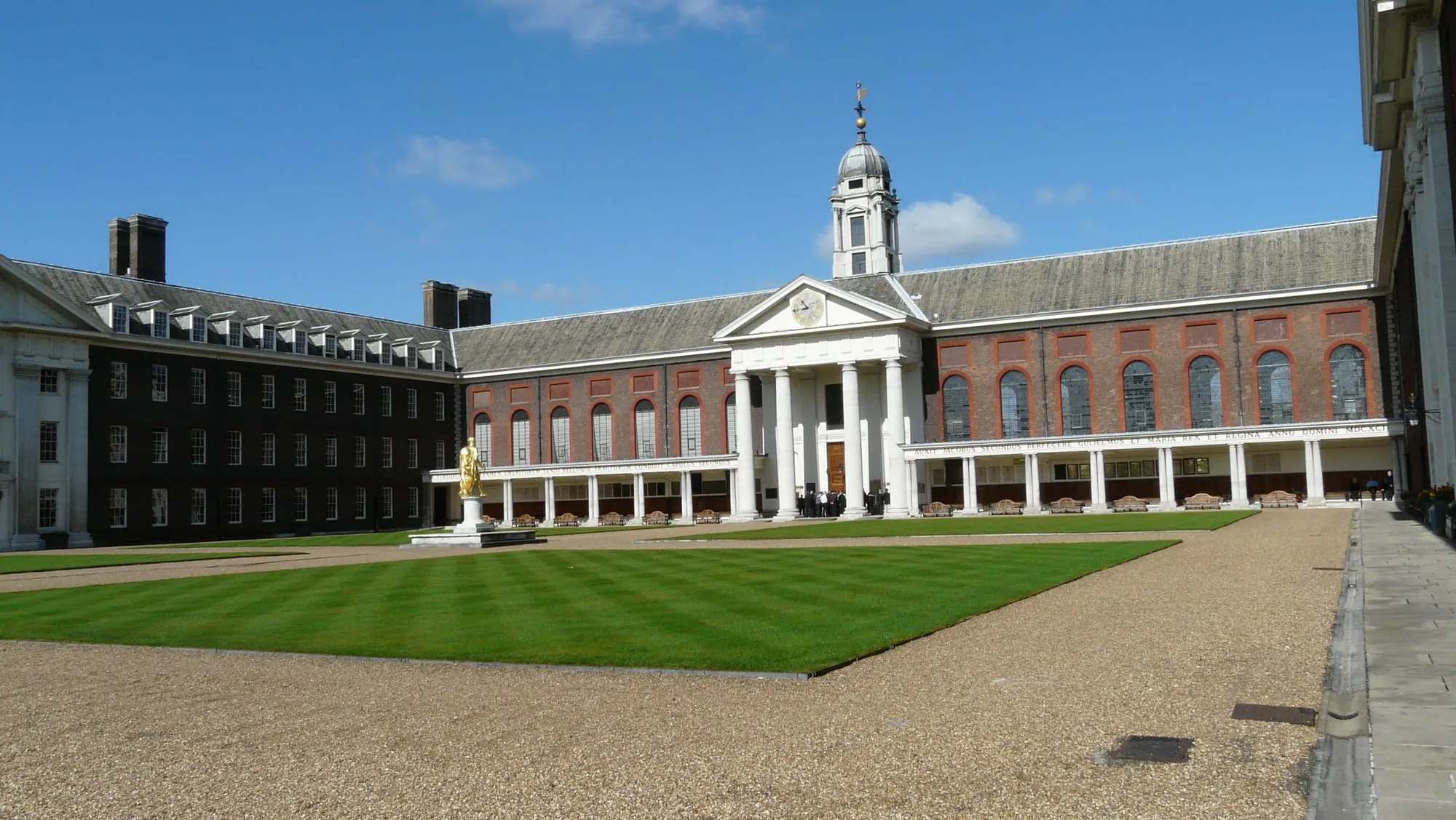
Wren’s hospital for seamen, and the grandest set of buildings on the river. Three things here, three answers on cost:
- The grounds are free and open daily 8am to 11pm, much later than anything else on the walk.
- The Chapel is free, 10am to 5pm. Built to Wren’s design, it burned and was rebuilt in 1779 by James “Athenian” Stuart, and it is one of the finest rooms in London that most visitors walk straight past.
- The Painted Hall is £19, and children go free. James Thornhill spent nineteen years on it, and the ticket works as an annual pass, which almost nobody mentions. There are talks about the ceiling every half hour from 11am to 4pm. Buy tickets at the Visitor Centre by the Cutty Sark.
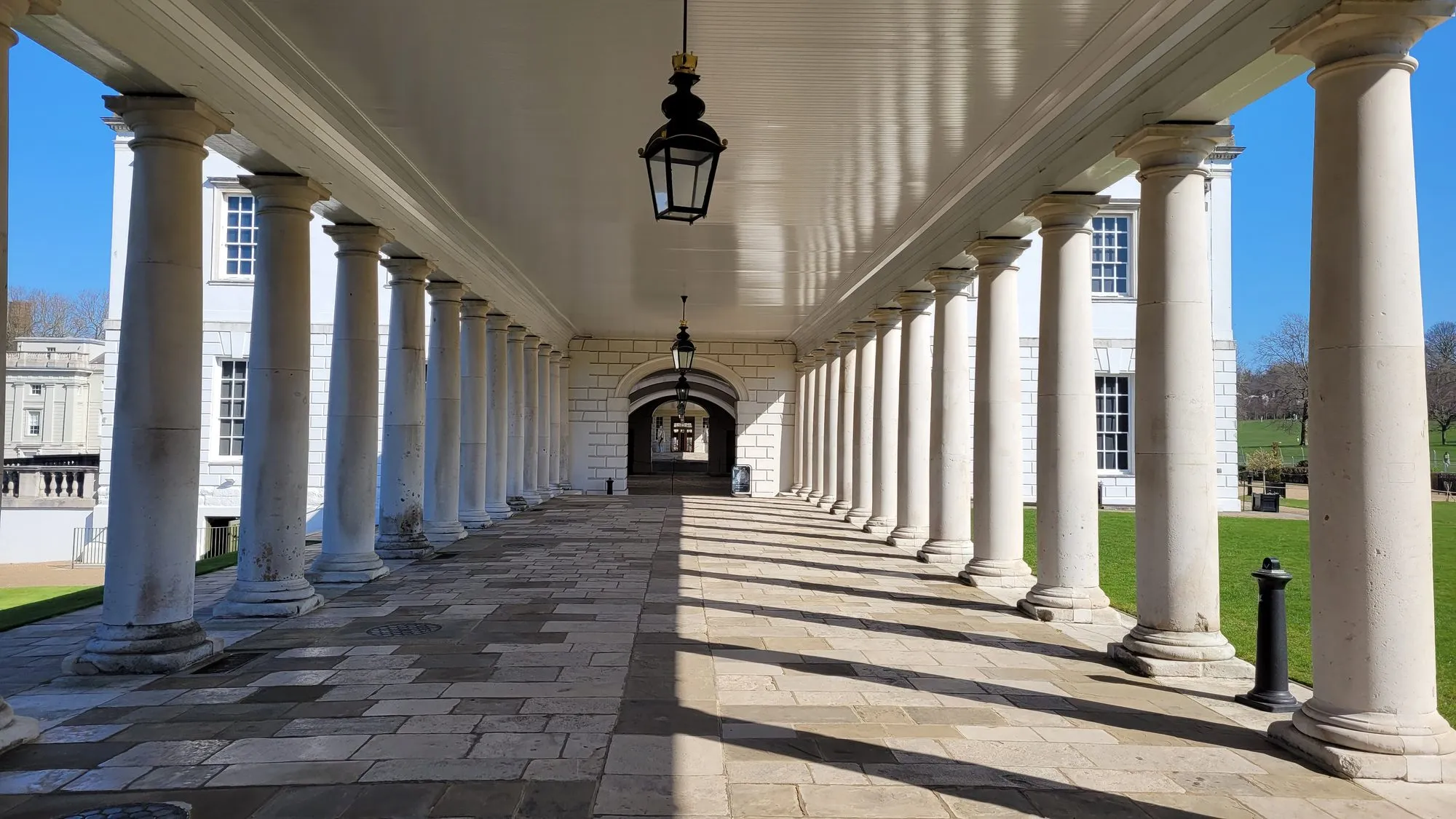
The colonnade to the Queen’s House.
💡 Detour: the Trafalgar Tavern. Five minutes east along the river, a pub from 1837 that Dickens used for a wedding breakfast in Our Mutual Friend. Order the whitebait, which made it famous. It closed in 1915 and only reopened in 1965, when craftsmen from Pinewood Studios remodelled the interior, so the Regency grandeur is largely a film set.
10. The National Maritime Museum and the Queen’s House
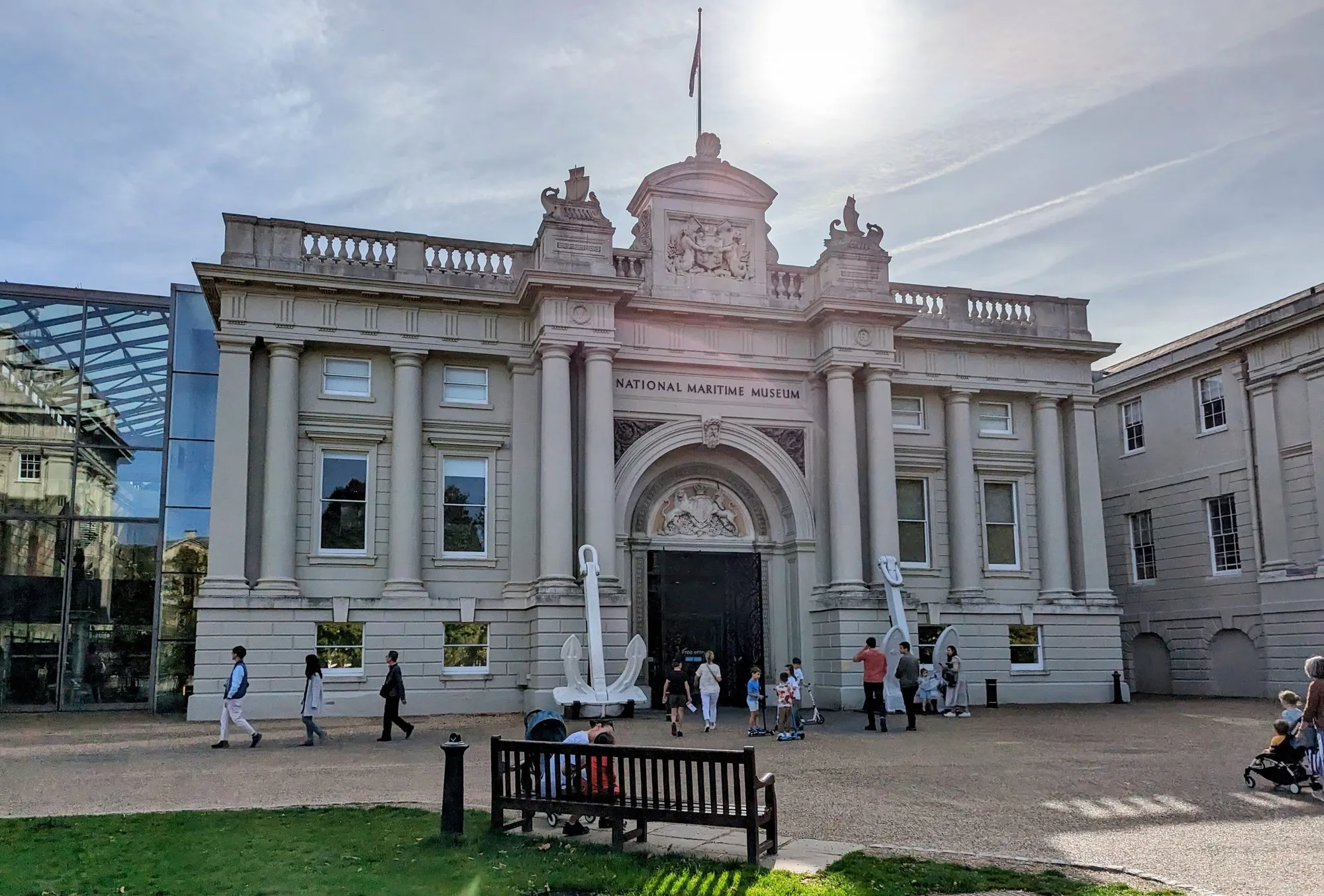
The National Maritime Museum.
Both free, daily 10am to 5pm (last entry 4.15pm).
The National Maritime Museum is the largest maritime museum in the world. The object people come out talking about is Nelson’s Trafalgar coat, with the bullet hole in the left shoulder still visible. The children’s galleries are good.
The Queen’s House is the building you saw framed in the gap from Island Gardens: Inigo Jones’s villa, with the Armada Portrait of Elizabeth I and the Tulip Stairs, the first self-supporting spiral stair in Britain. Walking up them costs nothing.
Do these before the hill, not after. By the time you have climbed it you will not want to come back down.
11. Greenwich Park and the Royal Observatory
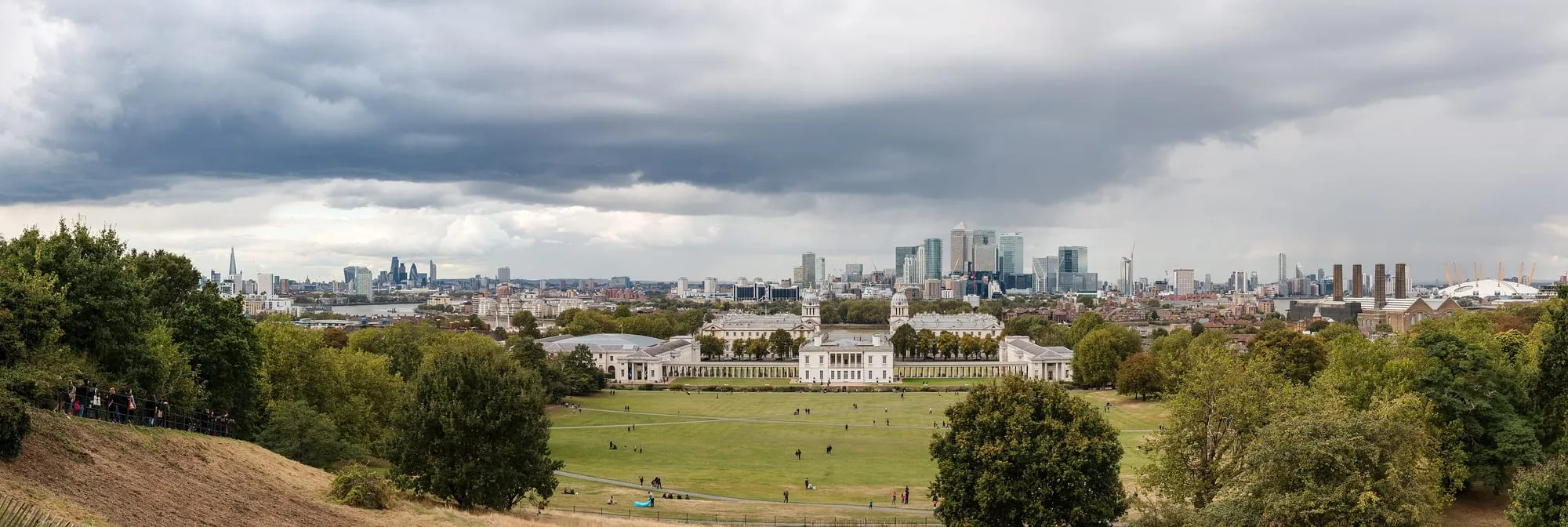
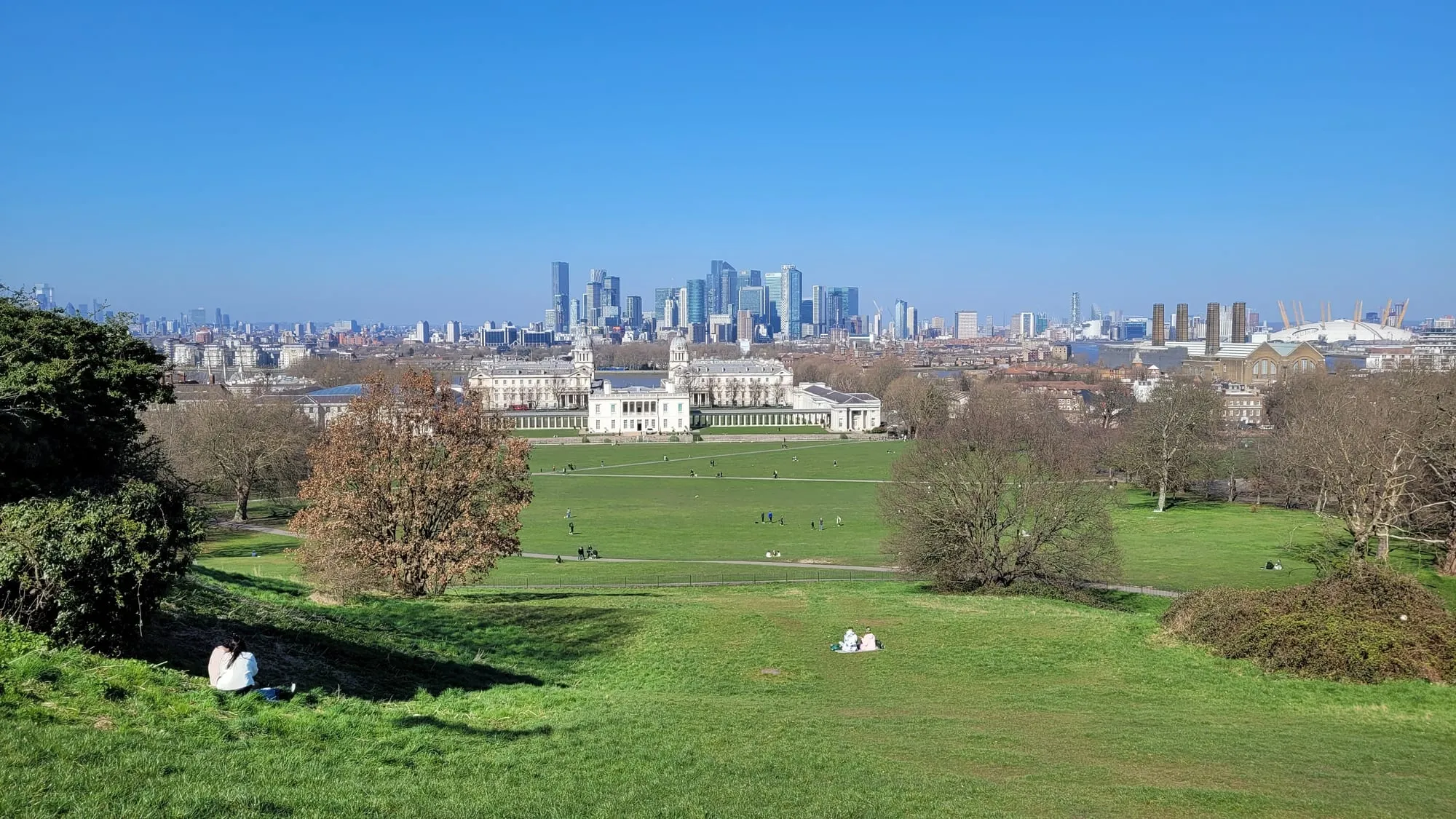
The view from Greenwich Park.
The climb is steeper than it looks: ten minutes from the museum, and almost all of the walk’s height is in it. Greenwich Park is the oldest enclosed royal park in London, deer have lived in The Wilderness since the 1600s, and the gates are open 6am to 8pm.
At the top, the view is free: the Naval College and Queen’s House below, the river, Canary Wharf opposite and the O2 to the right. The Royal Observatory at the top, with the Prime Meridian line in the courtyard and Wren’s Octagon Room, is closed from 2 November 2026 for the First Light refurbishment. Royal Museums Greenwich says the Meridian Courtyard reopens in summer 2027, with tickets on sale in January (Royal Museums Greenwich). Until 2 November it is £24 adult, £12 child, 10am to 5pm.
You do not have to pay to finish well. After eleven stops and a river crossing, standing on the hill looking back at where you started is the better ending.
Where to eat
- Greenwich Market (£) at stop 8 — the best lunch on the route, with Goddards pie and mash nearby.
- Wood Wharf (££–£££) — on the stop 3 detour, the best sit-down food on the north bank.
- Mudchute Kitchen (£) at stop 4 — a farm café, and the only food in the middle third, Tuesday to Sunday.
- The Old Brewery (££) — inside the Naval College grounds.
- The Trafalgar Tavern or the Gipsy Moth (££) — for a pint at the end.
The best day to go
Any day, which is unusual for a London walk. Nothing on the route closes weekly.
| Day | What you get |
|---|---|
| Tue–Thu | The quietest: room at Greenwich Market |
| Monday | Everything open except the Mudchute café |
| Weekend | Greenwich packed; Wood Wharf and Eden Dock at their best |
Start around 10am and you reach the market for lunch and the hill in the late afternoon, with the light behind you looking back at the City. In winter, start before midday or you will climb the hill in the dark. With two indoor museums and a covered market, it is a better wet-day walk than it sounds.
Getting there and back
Start: Canary Wharf (Elizabeth line, Jubilee, DLR), six minutes from Liverpool Street on the Elizabeth line.
Finish: Greenwich or Cutty Sark (DLR; National Rail at Greenwich), or Greenwich Pier for the Uber Boat back into town, which is the best way to leave.
Cutting it short: the DLR runs the length of the Isle of Dogs, so you are never far from a station before the tunnel.
Step-free: flat from stop 1 to stop 10, using the tunnel lifts. The hill to the Observatory has no lift, so finish at stop 10 for a step-free walk.
Carry on walking
- Wapping to Canary Wharf — ends at Crossrail Place, where this one starts, so walk it first.
What to do with the rest of the day
- The Greenwich area guide — the O2, the river boats and where to eat.
- Where to stay in Greenwich — hotels by the Cutty Sark, in Blackheath and at Deptford Bridge, for a night at the walk’s end.
- The Canary Wharf area guide — swimming, Eden Dock and Winter Lights.
- Walks along the Thames — more river stretches, including Rotherhithe to Greenwich.
- Free things to do in London — eight of these eleven stops cost nothing.
Common questions
Can you walk from Canary Wharf to Greenwich?
Yes, and without crossing a bridge. Walk south down the Isle of Dogs to Island Gardens, go under the Thames through the Greenwich Foot Tunnel, and come up beside the Cutty Sark. It is about 6.5km with eleven stops: an hour and a half of walking, three to four hours with stops.
Is Greenwich Market closed on Mondays?
No. It is open daily, 10am to 5.30pm. It closes only on Christmas Day and the first six Mondays of the year.
What does the Canary Wharf to Greenwich walk cost?
Nothing, if you want. Eight of the eleven stops are free. The ticketed ones are the Cutty Sark (£22 adult, £11 child), the Painted Hall (£19, children free) and, until it closes on 2 November 2026, the Royal Observatory (£24 adult, £12 child).
Which direction should you walk it?
North to south. You spend the first half among towers and dock water, come up out of a Victorian tunnel into a World Heritage Site, and finish on Greenwich hill looking back at everything you walked past.