In this guide
At a glance
- Vibe
- Affluent, low-rise and quietly residential once you leave the main road
- Time needed
- Half a day
- Best day
- Weekday afternoons; Saturdays on King's Road are busy
- Travel zone
- 1–2
- Walkability
- 4/5
- Typical spend
- £££
Best for
Nearest stations
- Sloane SquareDistrictCircle
- South KensingtonPiccadillyDistrictCircle
- Imperial WharfLondon Overground
Chelsea is a low-rise, well-kept stretch between the King’s Road and the Thames, and it is more interesting for walking than for shopping. The King’s Road made its name in the 1960s and again with punk in the 1970s; most of that has been replaced by chains, and the reasons to come now are the side streets, the river and two very good gardens.
Chelsea has its own share of the commemorative plaques marking where notable people lived or worked - see them on our interactive map.
Why visit — and who should skip it
Come here if you like walking through good architecture, or you want a garden, a gallery and a riverside afternoon without queuing for anything. The stretch from Sloane Square down to Cheyne Walk is one of the most pleasant hours’ walking in London.
Skip it if you came for the King’s Road you have read about. That version is gone. Also skip it if you are on a budget — this is one of the most expensive postcodes in the country and everyday things cost accordingly.
Top sights and activities
- Chelsea Physic Garden — London’s oldest botanic garden, walled and founded in 1673 to grow medicinal plants. Four acres, easy to miss from the road, and the best thing in Chelsea. Check opening days. Its ticketed Christmas Fair, 26 to 29 November 2026, is in our London Christmas markets guide.
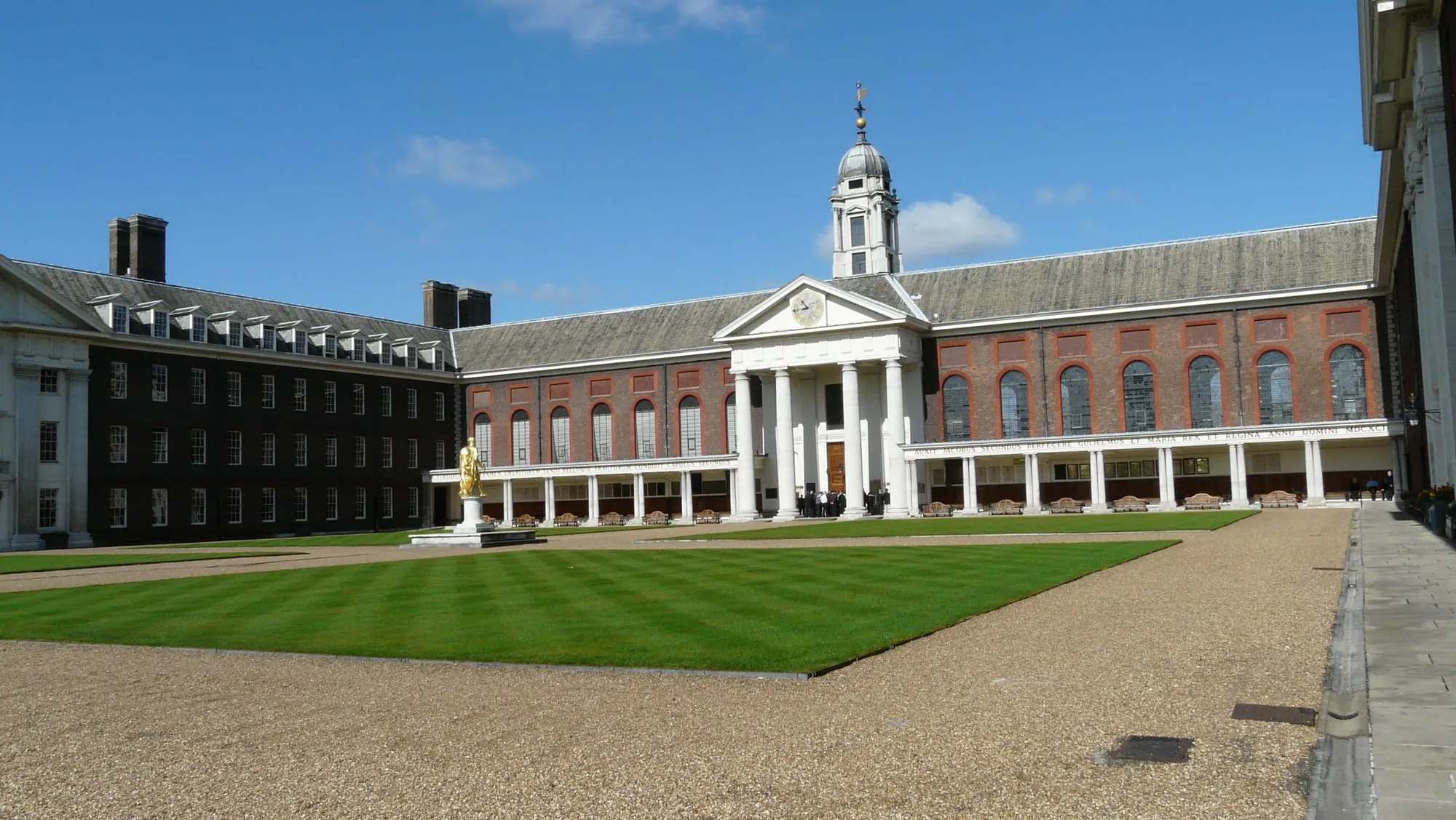
- Royal Hospital Chelsea — Wren’s 1682 veterans’ home, still housing around 300 Chelsea Pensioners. The grounds are open and host the Flower Show each May.
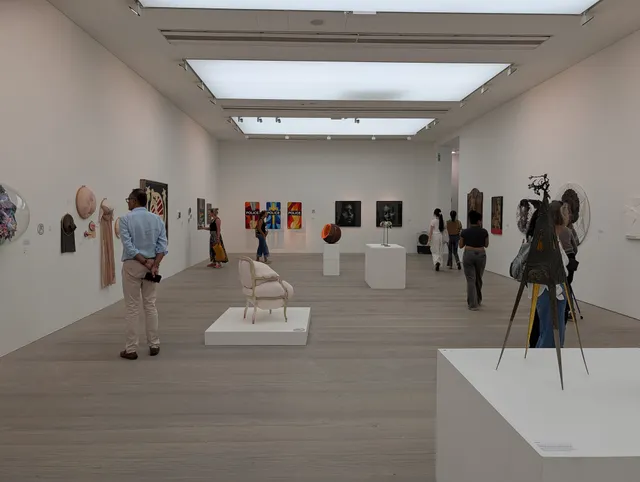
- Saatchi Gallery — Free contemporary art in a former barracks at Duke of York Square. Reliably worth an hour.
- King’s Road — The two-mile spine. Best at the western end past World’s End, where the independents survive.
- Cheyne Walk and the Chelsea Embankment — Riverside Georgian houses with blue plaques on half of them: Turner, Whistler, Rossetti, Elizabeth Gaskell. The walk between Albert Bridge and Battersea Bridge is the prettiest in the area.
- Albert Bridge — Cast-iron, painted pink and green, and lit by 4,000 bulbs at night. Still signed to ask troops to break step when crossing.
- Duke of York Square — A pedestrian square off the King’s Road with a Saturday fine food market and the Saatchi Gallery behind it.
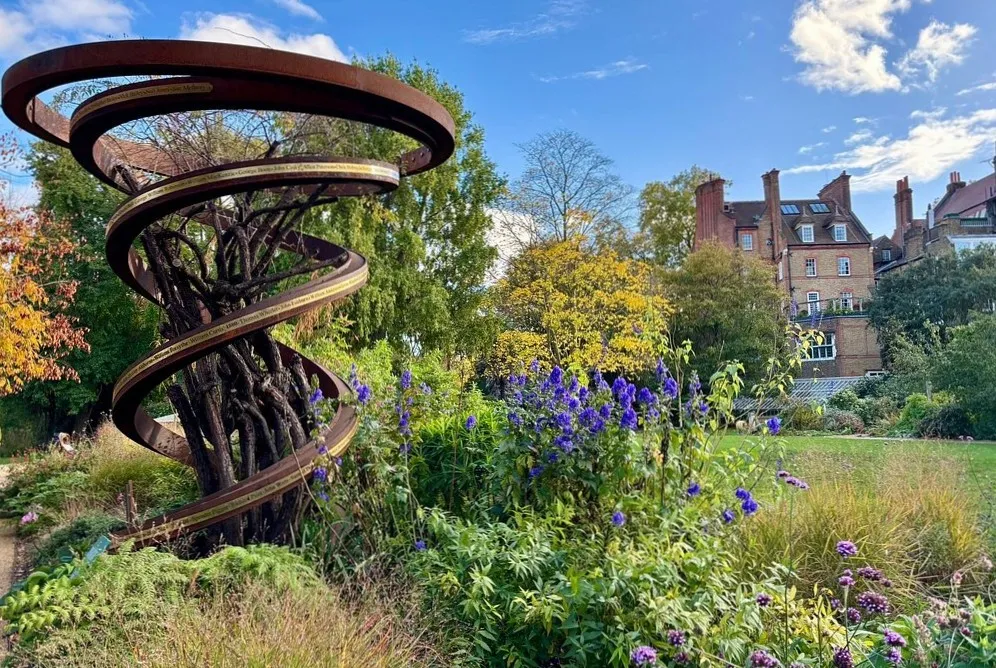
Chelsea Physic Garden.
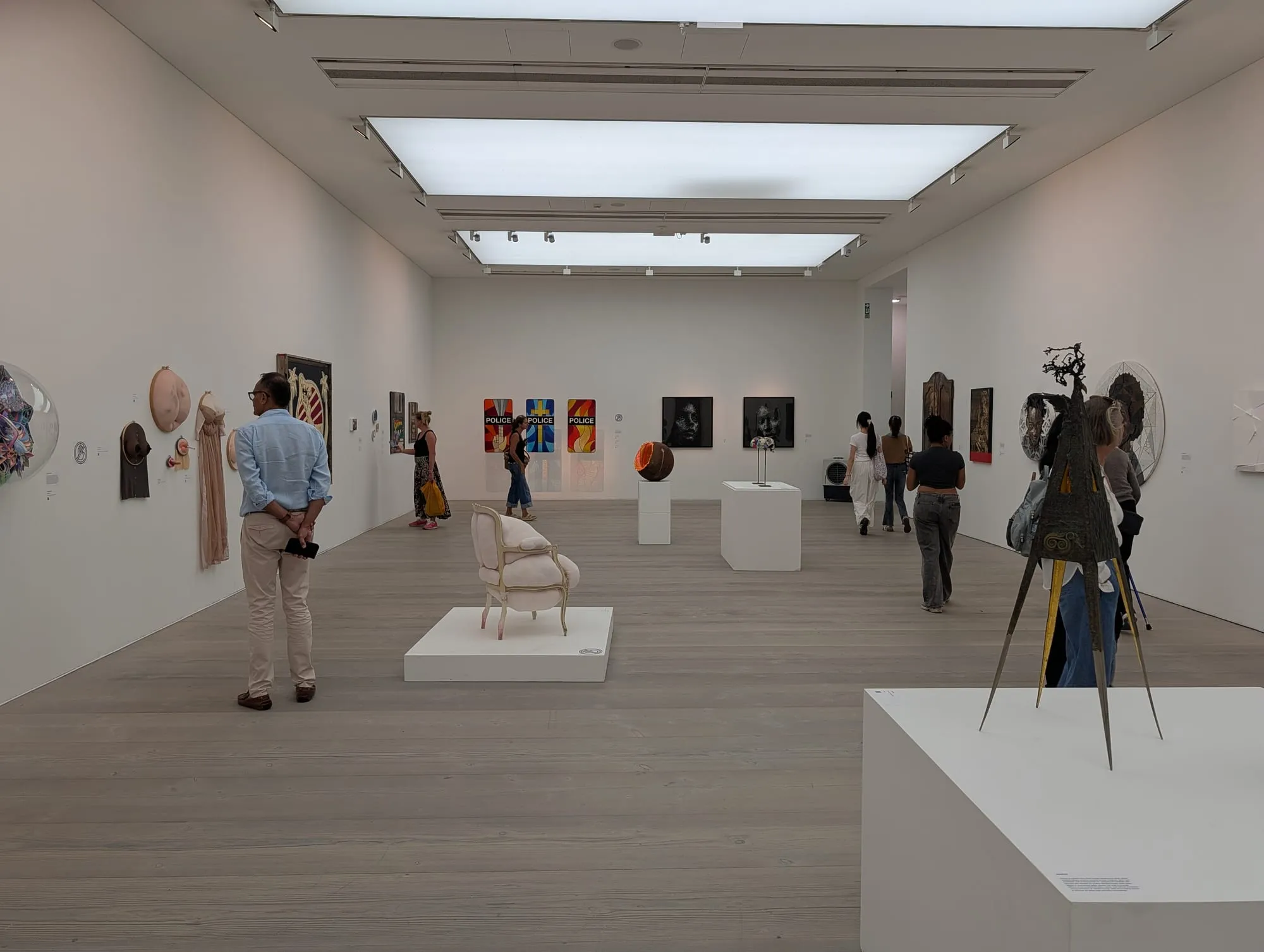
The Saatchi Gallery.
Key streets and micro-districts
The pastel streets off the King’s Road
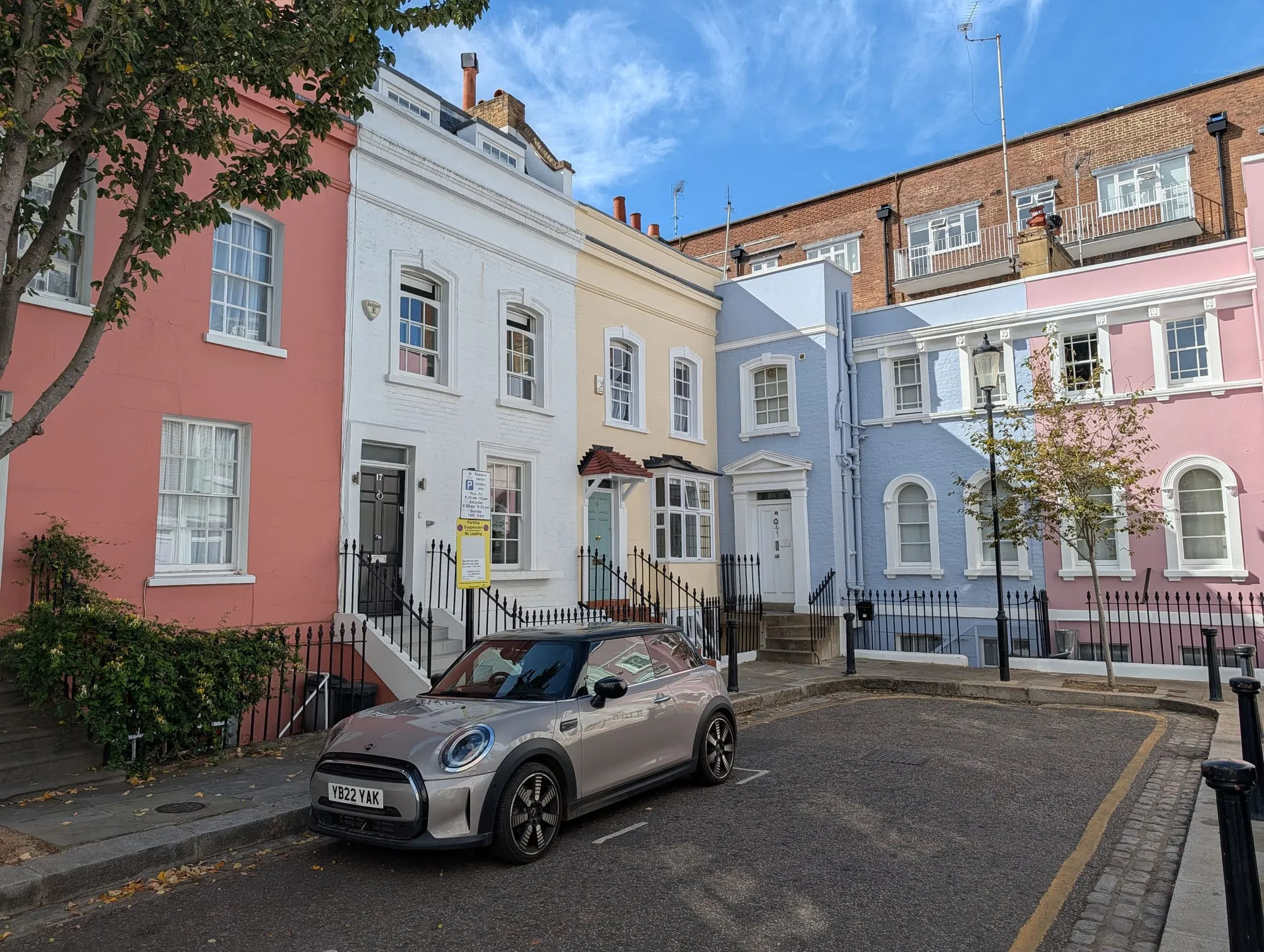
Bywater Street is the one people photograph, and it earns it — a cul-de-sac off the King’s Road in blues, pinks and lilac, with basement railings and shutters. Being a dead end, there is no traffic passing through your picture.
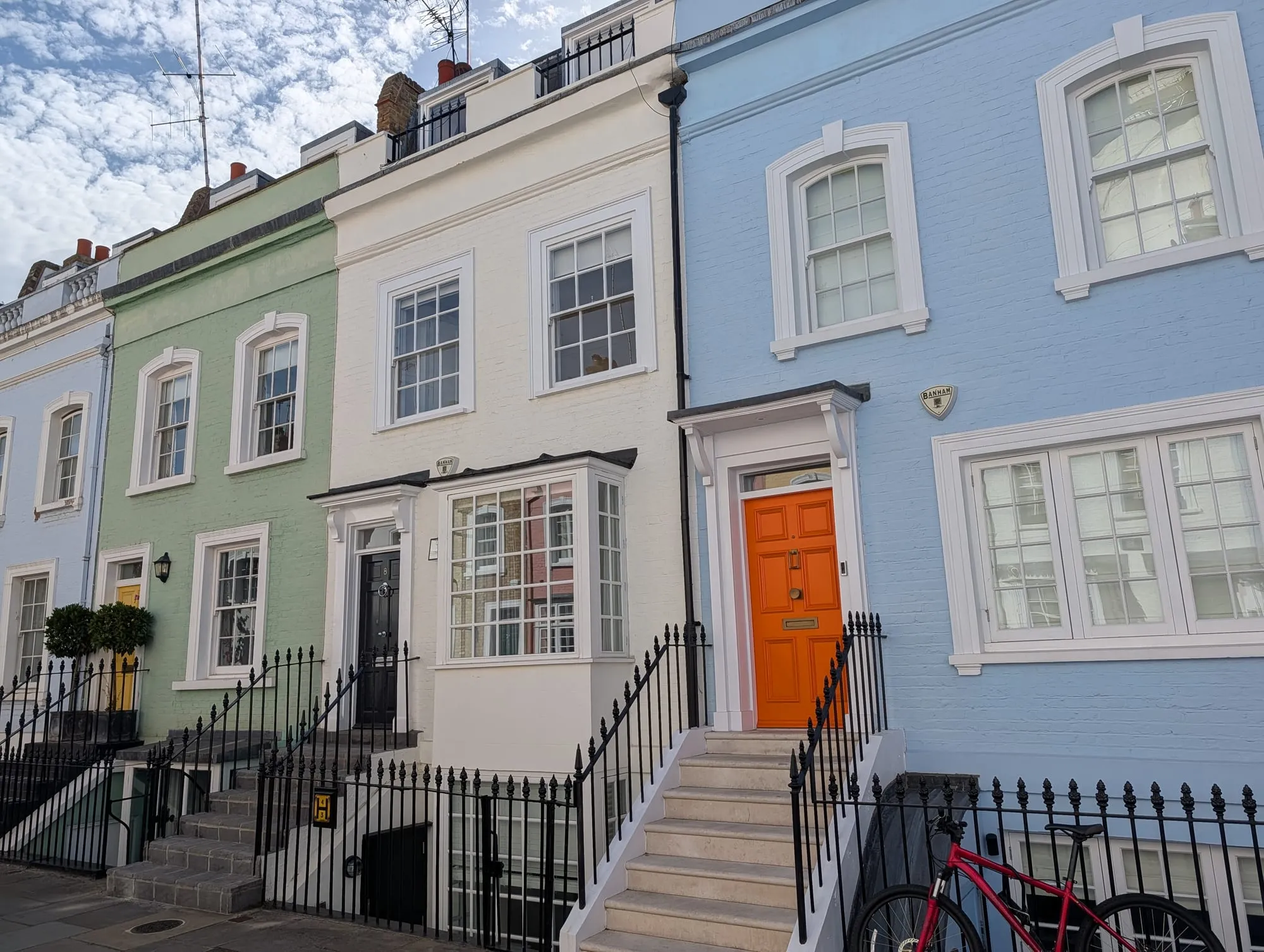
Godfrey Street, Burnsall Street and Smith Terrace are the same idea with fewer people on them, and Markham Square is thirty seconds away. All four sit inside one block, so the whole thing is a twenty-minute walk, not a route — the opposite of Notting Hill, where the pastel streets are scattered over a mile.
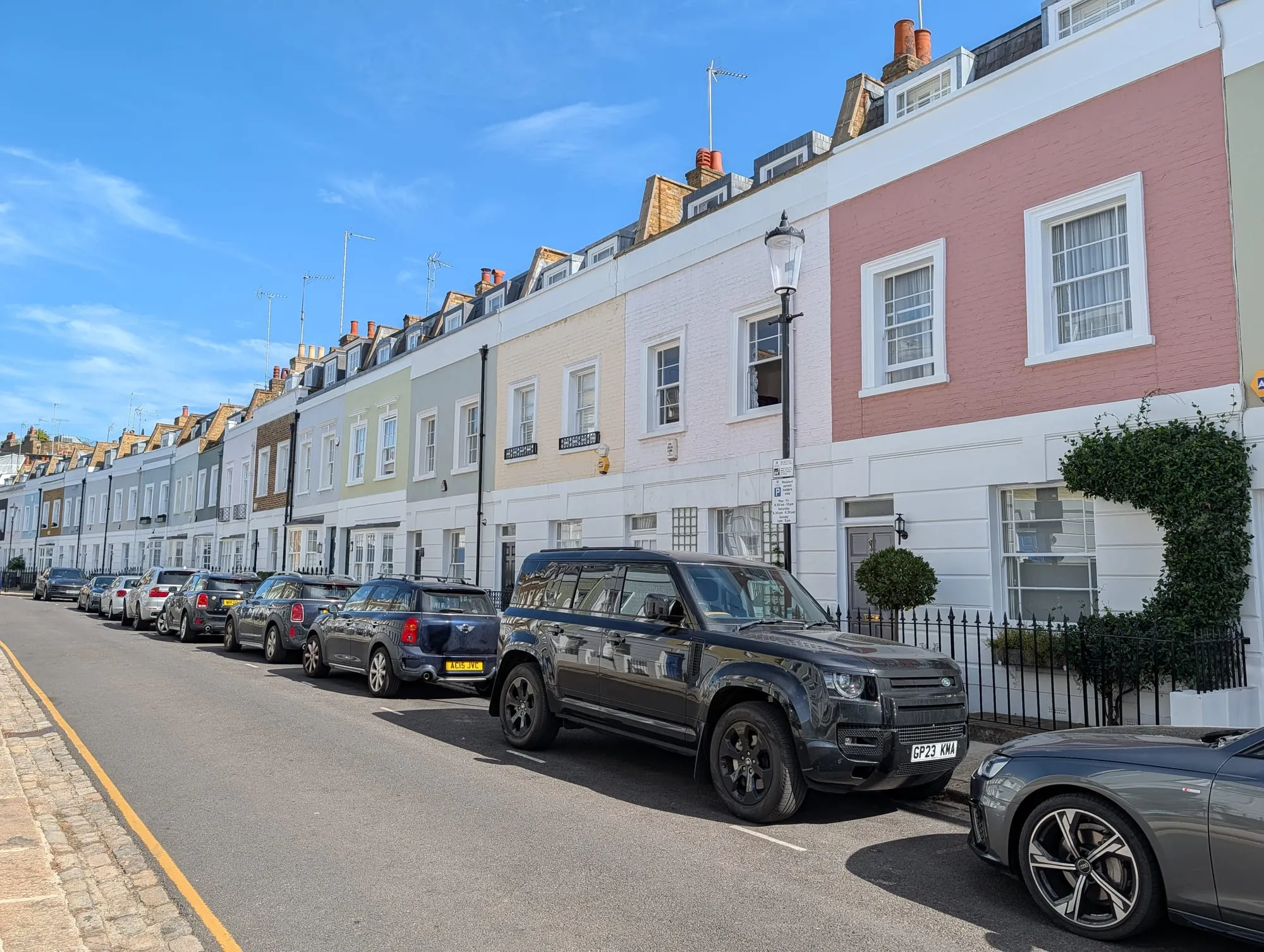
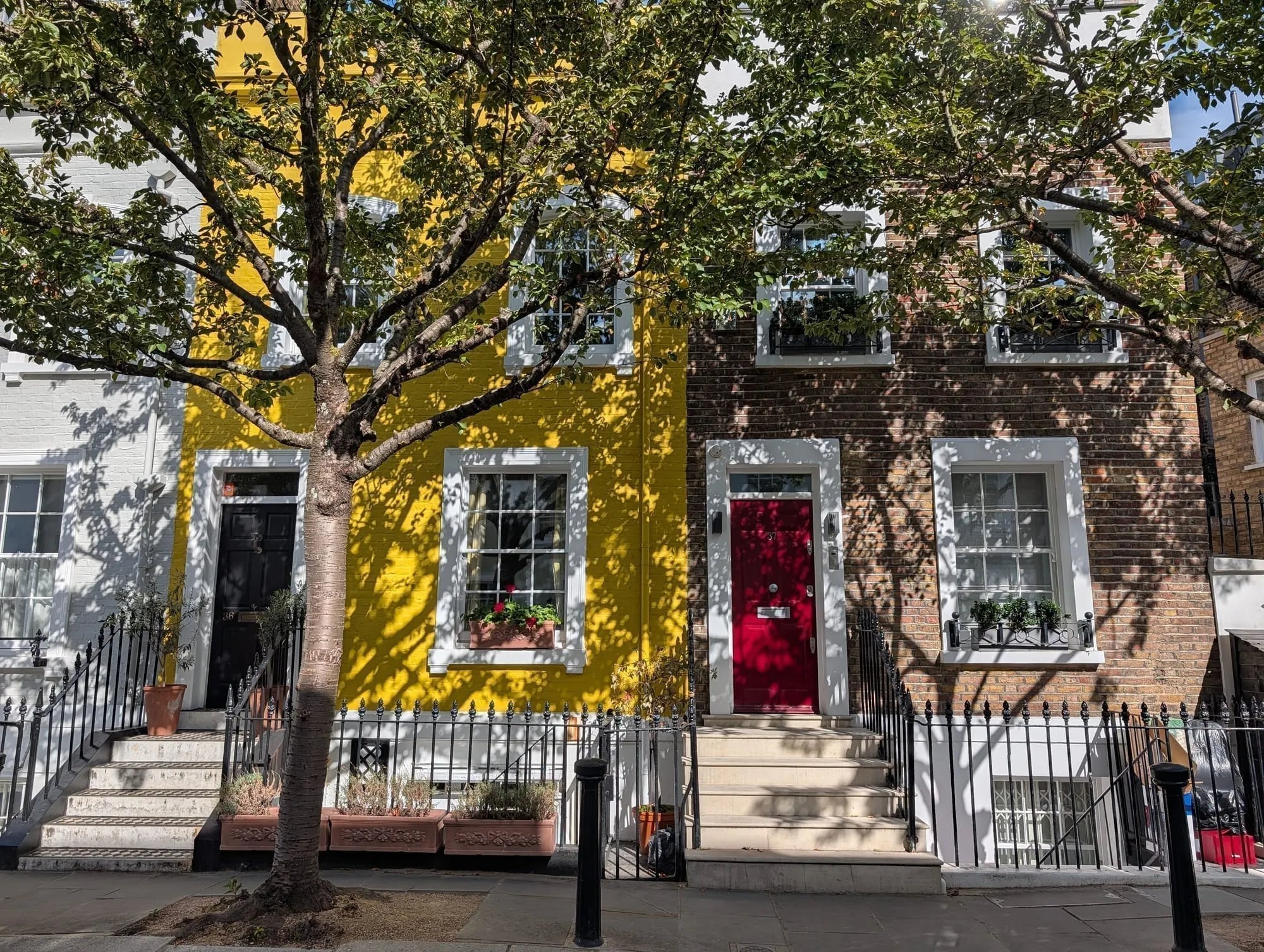
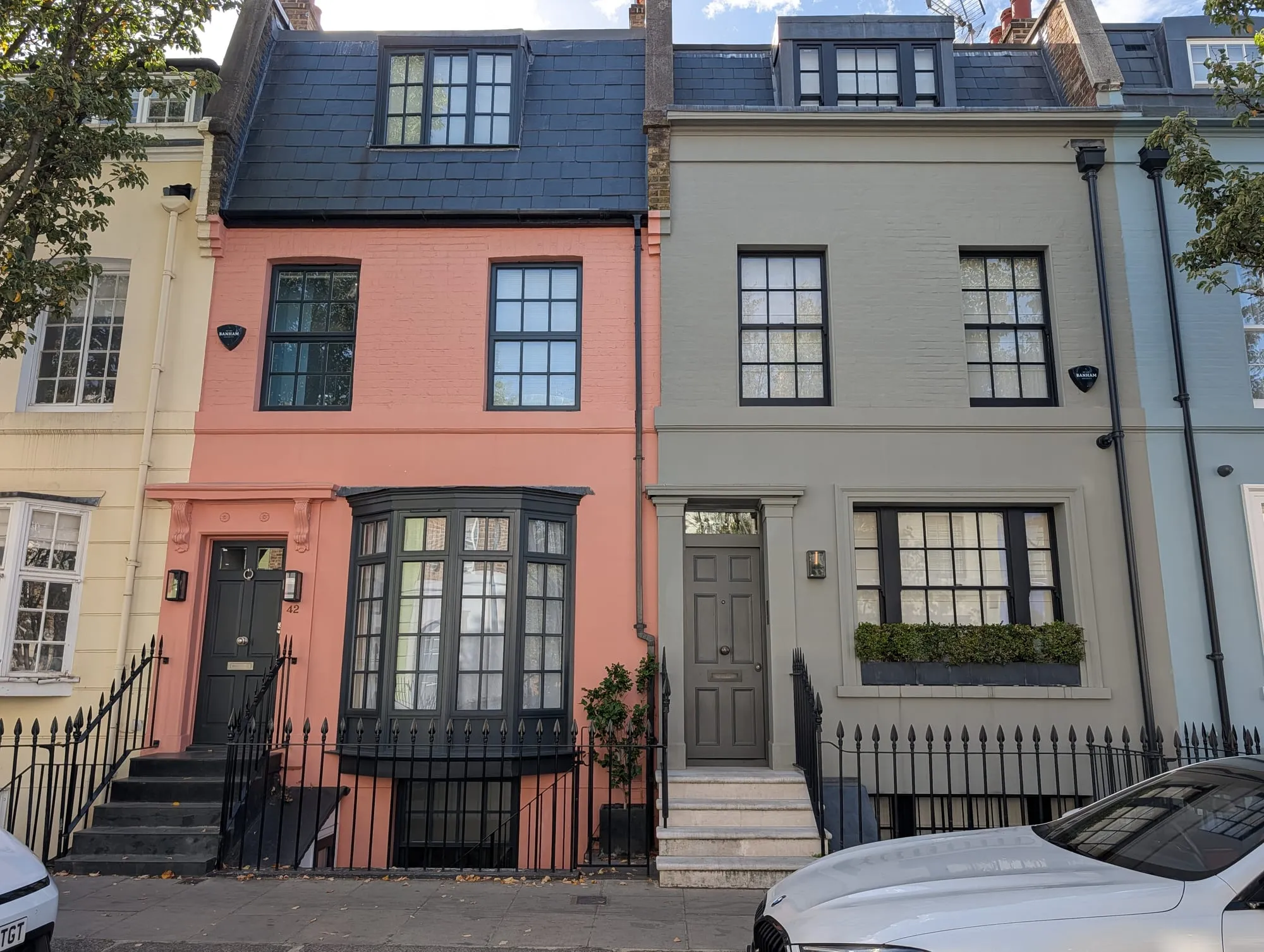
These are people’s homes, and Bywater Street being a cul-de-sac means anyone photographing is visible from every window on it. Shoot from the pavement and keep off the steps.
Sloane Square and the eastern King’s Road
The entrance to Chelsea, and the stretch most visitors mistake for the whole of it. The Royal Court Theatre sits on the square — the theatre that premiered Look Back in Anger in 1956 and still runs new writing, with cheap seats worth checking before anything in the West End.
Peter Jones, the John Lewis department store, occupies the west side behind a curved 1930s glass curtain wall that was radical when it went up and still looks it.
The first few hundred metres of the King’s Road are chain retail, and the least interesting part of the street. The independents start after Duke of York Square and get better the further west you go.
Sloane Square station is on the District and Circle lines, and the whole of this guide is walkable from it — the King’s Road runs a mile and a half west, so decide how far you are going before you start.
Duke of York Square
Off the north side of the road, a hundred metres in, and the best place to sit down in Chelsea. A pedestrianised square of paving, fountains and benches in front of the former Duke of York’s military headquarters.
The Saatchi Gallery occupies the building, seventy thousand square feet over three floors, open daily 10am to 6pm. Some shows are free and some are individually ticketed, with their own separate last-entry times — check which before you turn up.
The food market runs on Saturdays, roughly 10am to 4pm, and is the one day this square is busy. Partridges, the grocer on the square, is open the rest of the week.
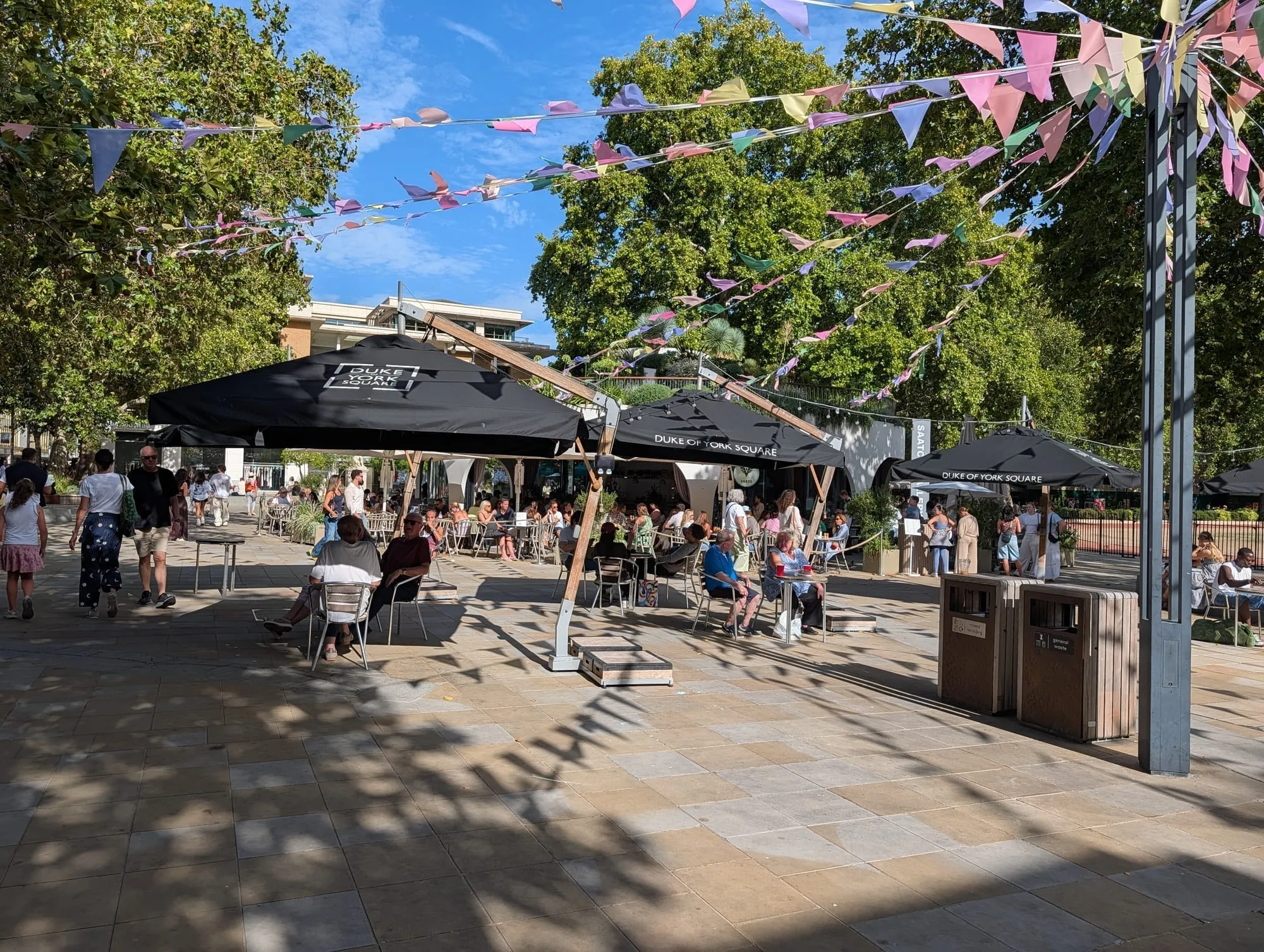
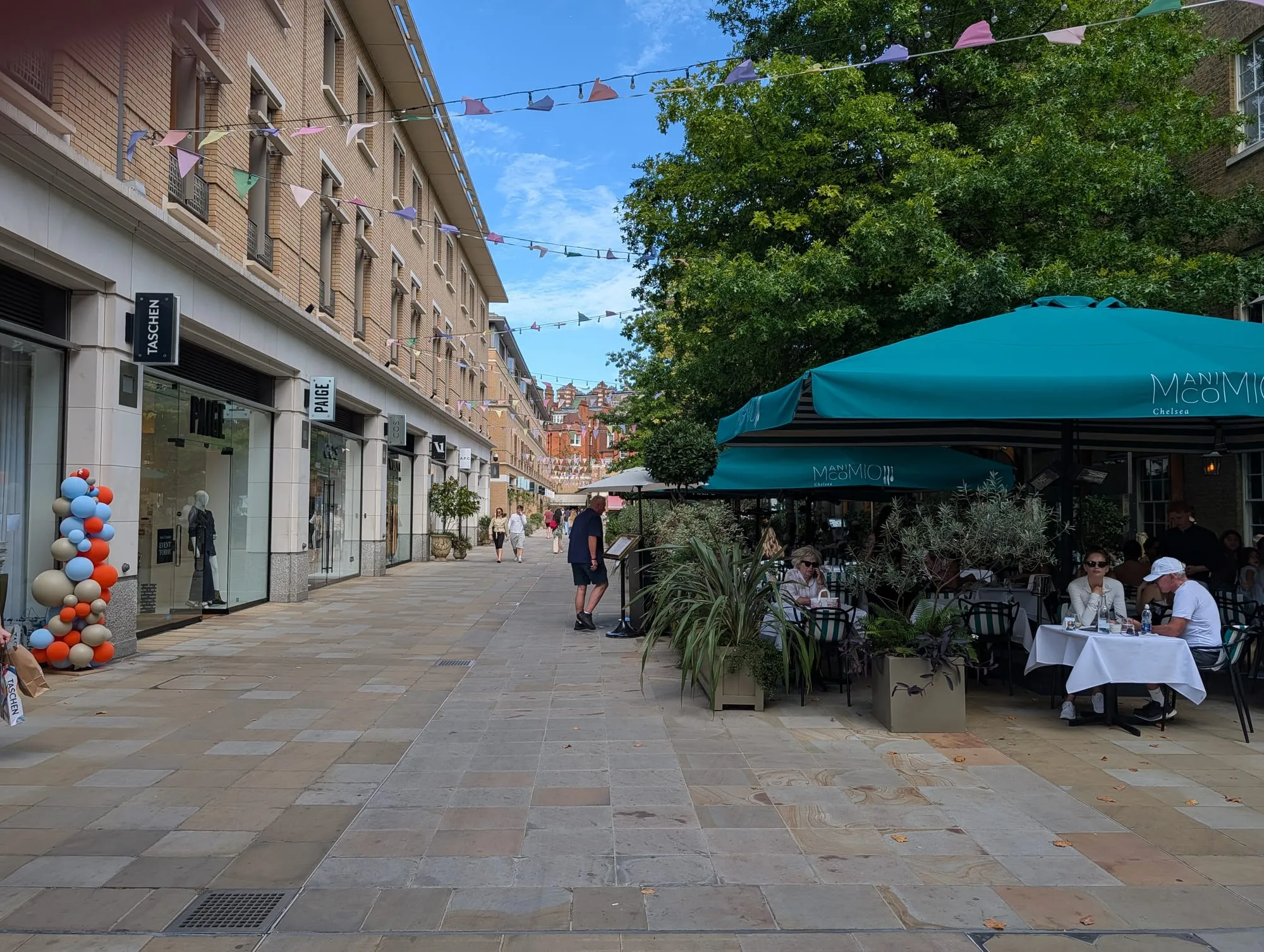
Pavilion Road runs north from here — a converted mews of independent food shops, butcher, baker, cheesemonger, with The Sea, The Sea at 243 doing seafood at the top of it. It is the most concentrated good food in Chelsea and almost nobody walking the King’s Road turns up it.
Cheyne Walk and Chelsea Embankment
The riverfront, and the quietest handsome walk in this part of London. Georgian terraces facing the water, more blue plaques per hundred metres than almost any street in Britain — Turner, Whistler, Rossetti, Elizabeth Gaskell, Mick Jagger and Keith Richards all at various points — and houseboats moored west of Battersea Bridge.
Albert Bridge is the set piece. Pink and green, lit by around four thousand bulbs after dark, and the crossing where Bridget Jones is carried between Mark and Jack in Bridget Jones’s Baby. Free, open to pedestrians at all hours, and best after sunset when the bulbs are on.
Restaurant Gordon Ramsay is at 68 Royal Hospital Road, one street back — three Michelin stars since 2001, and booked months ahead.
It is a walk, not a destination, about fifteen minutes end to end, and there is very little to buy along it. Come for the plaques and the bridge, and eat elsewhere.
World’s End and the western King’s Road
Past the bend, where the road narrows and the chains give out. This is where the independent shops still are, and where Chelsea’s actual history happened.
Vivienne Westwood’s shop at 430 King’s Road is the one with the backwards-running clock over the door — the same address that was SEX in 1974 and where the Sex Pistols were assembled. It still trades.
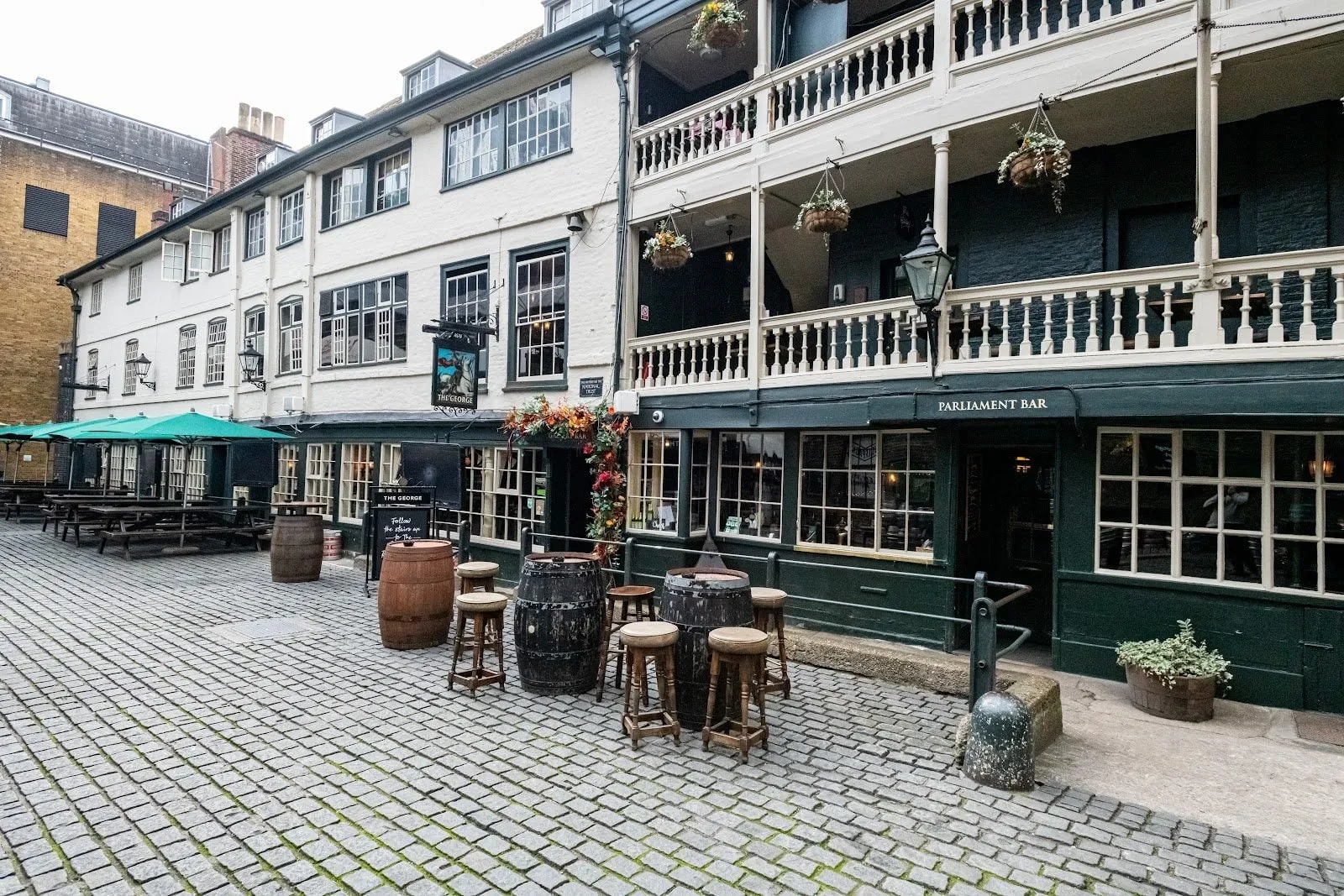
The World’s End Distillery on the corner is the Victorian pub the district takes its name from, and the stretch around it is what people mean by punk-era Chelsea.
Eat here rather than at the Sloane Square end. Mucci’s at 442 does modern Italian a few doors from Westwood’s, and Made in Italy at 249 has been doing Neapolitan pizza by the metre on the way down for decades.
It is a solid twenty-five-minute walk from Sloane Square, and there is no station at this end — the 11, 19 and 22 buses run the length of the King’s Road, which is the sensible way to do it in one direction and walk the other.
The Chelsea backstreets
Between the King’s Road and the river, and the reason to stop looking at shops. Bywater Street is the cul-de-sac of painted stucco houses that gets photographed most; St Leonard’s Terrace faces the Royal Hospital’s grounds; Margaretta Terrace is the pastel one.
There is almost no traffic and nothing to buy, which is the appeal. These are residential streets and people live in them — look, do not linger on doorsteps.
Three good restaurants hide in here, all of which need booking and none of which you would find by accident: Daphne’s at 112 Draycott Avenue, Kutir at 10 Lincoln Street for modern Indian, and Dinings SW3 in a mews off Walton Street for Japanese small plates.
The Royal Hospital Chelsea is the anchor — Wren’s home for army veterans since 1692, its grounds free and open on weekdays, and the site of the Chelsea Flower Show every May, when the whole area is impassable and hotel prices double.
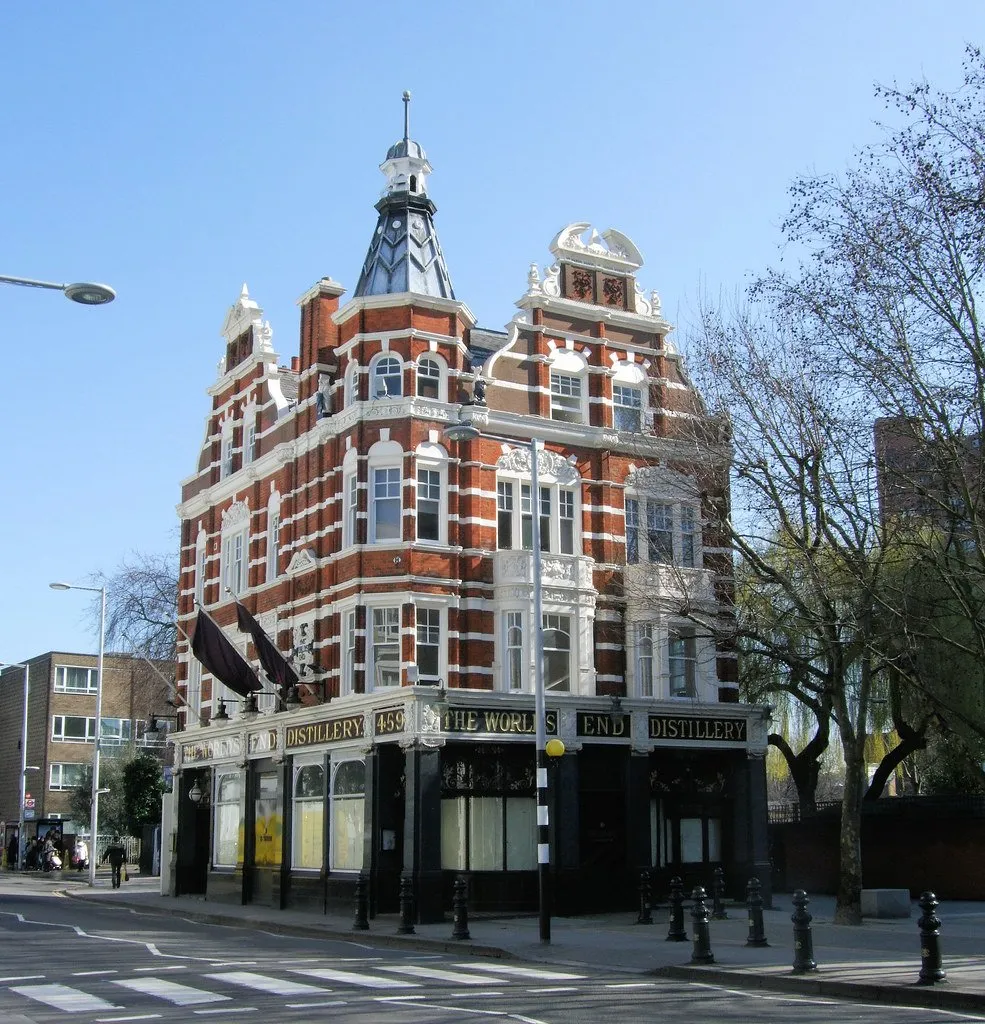
The World’s End Distillery, King’s Road. Photo: Jim Linwood, CC BY 2.0.
Go deeper
- London’s historic houses — including the Royal Hospital Chelsea, whose grounds are more visitable than most people realise.
Where to eat and drink
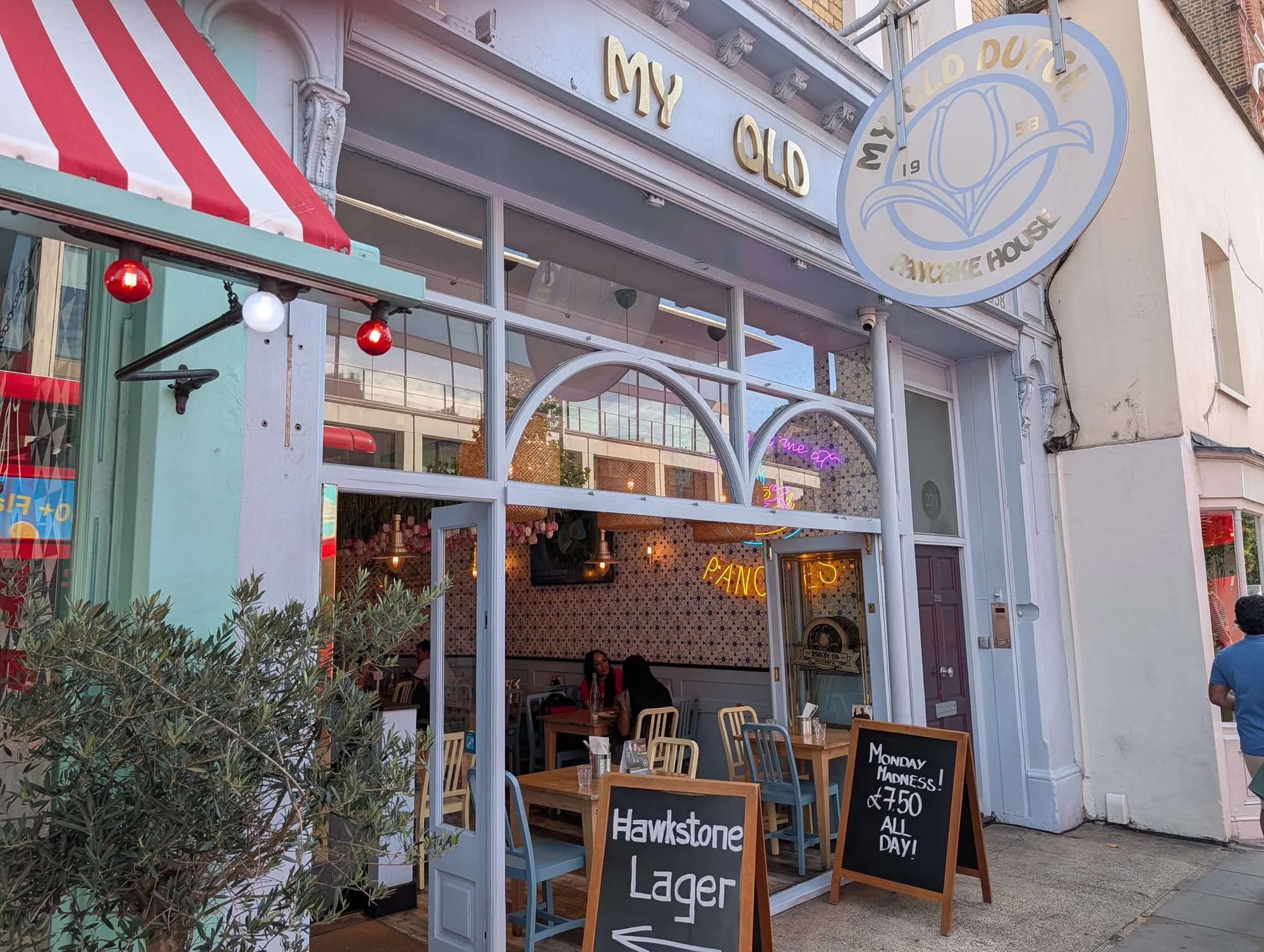
My Old Dutch, King’s Road.
| Spot | Style | Price | Why go |
|---|---|---|---|
| Duke of York Square Market | Fine food market | ££ | Saturdays only; the best value eating in Chelsea |
| Colbert | French brasserie | ££ | Sloane Square corner spot built for watching the square |
| The Cross Keys | Historic pub | ££ | Chelsea’s oldest pub, on Lawrence Street since 1708 |
| Bluebird | Modern British | £££ | In a 1923 art deco garage on the King’s Road |
| The Pig’s Ear | Gastropub | ££ | Backstreet pub off the river end, popular with locals |
| Chelsea Physic Garden Cafe | Garden cafe | ££ | Requires garden admission, but you are sitting in it |
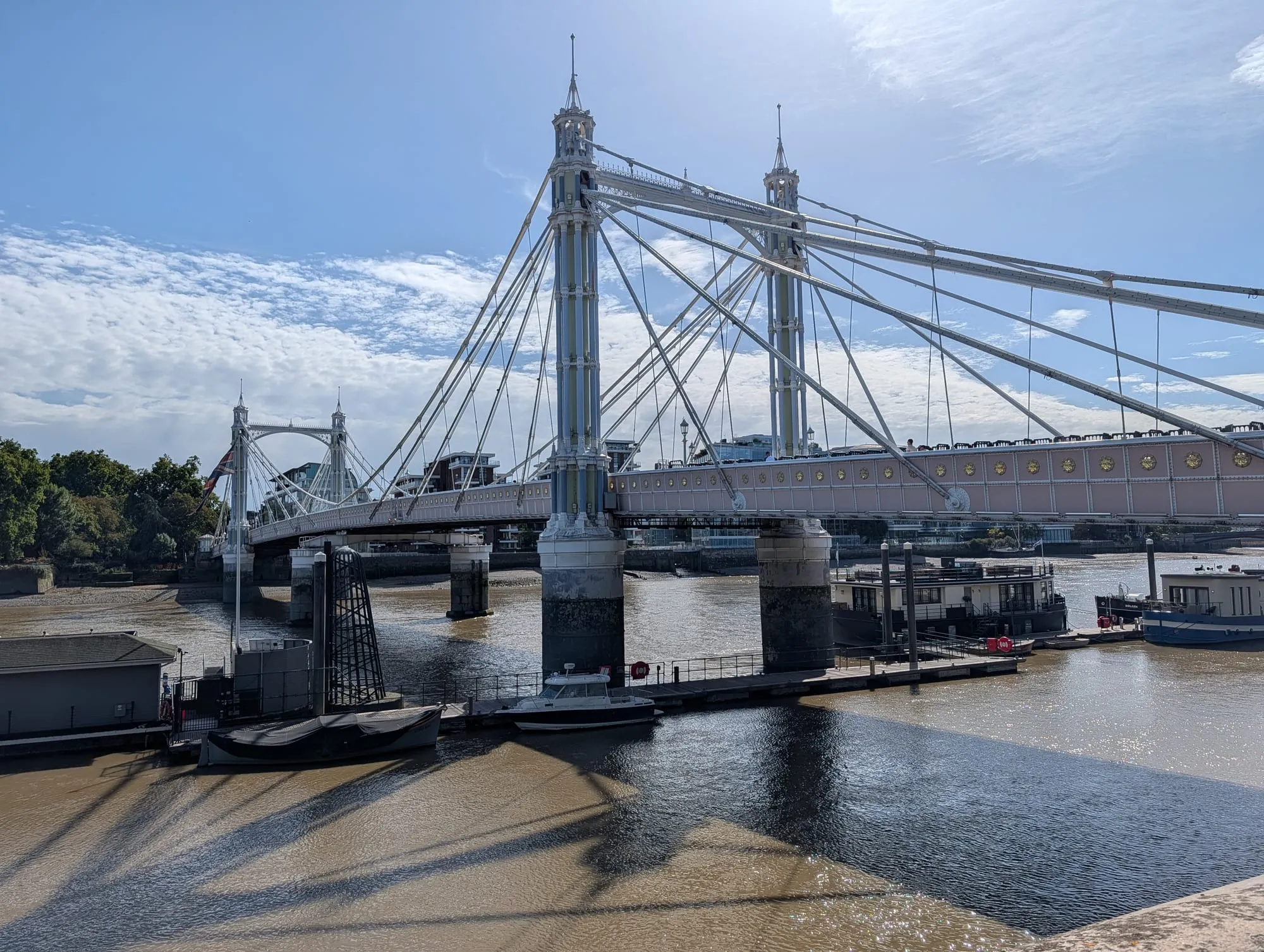
Albert Bridge.
The 606 Club on Lots Road serves dinner through two jazz sets every night, from £18 a head for the music. Dinner and a Show in London has it beside the other jazz suppers.
Barts, a 1920s speakeasy behind an unmarked black door at Chelsea Cloisters on Sloane Avenue, asks for a password at the door. The Best Speakeasy Bars in London covers it and the rest of London’s hidden bars.
See all 14 places to eat and drink in Chelsea
Getting there
By Tube. Sloane Square (District, Circle) is the eastern entrance and the only Tube station actually in Chelsea. The western end has no Tube at all.
Getting to the western end. Take the 11, 19, 22 or 49 bus along the King’s Road, or walk from Sloane Square (25 minutes end to end). Imperial Wharf on the Overground serves the far south-west.
Best exit. From Sloane Square there is one exit; turn right for the King’s Road, left for Sloane Street and Knightsbridge.
On foot. Fifteen minutes to South Kensington, fifteen across Albert Bridge to Battersea Park.
How long to spend, and when to go
| If you have | Do this |
|---|---|
| Two hours | Sloane Square, Duke of York Square, Saatchi Gallery |
| Half a day | Add the Physic Garden and the Cheyne Walk river stretch |
| A full day | Add Royal Hospital, the backstreets and Battersea Park over the bridge |
Best time: Weekday afternoons. Saturday brings the food market but also the crowds.
Avoid: Chelsea Flower Show week in late May unless you have tickets — the whole area is congested and Sloane Square station struggles.
Map of Chelsea
Open the map28 places: 11 places to eat · 4 things to do · 9 hidden spots · 4 places to stay
The map loads when you open this section.
Eat & drinkThings to doHidden LondonStay
What's on in Chelsea
Limited runs and the annual fixtures. Anything already finished is removed automatically.Links marked ad are affiliate links. If you book through one we may earn a commission, at no extra cost to you. It never affects what goes on this list.
RHS Chelsea Flower Show
Not open yetAn 11-acre site built from nothing every spring, shown for five days and dismantled within a week - about 157,000 people see it. Monday and Tuesday are members-only, which catches out anyone trying to book blind.
Book months ahead; the Friday and Saturday sell out first. The Sell-Off on the final afternoon, when exhibitors sell the actual plants, is the insider hour.
Coming up near Chelsea
Gigs, shows and exhibitions in the next fortnight at venues closest toSloane Square, South Kensington, Imperial Wharf. See everything on the What's On page.
Thursday22 October
-
14:30Man to Man
Royal Court Theatre · Sloane Square Zone 1
£0.10–£74.50 Venue site -
15:00Blood of my Blood
Royal Court Theatre · Sloane Square Zone 1
£15–£20 Venue site -
18:00Chamber Rush Hour
Royal College of Music Museum · South Kensington Zone 1
£2–£15 Venue site -
19:30Alastair Campbell and Mishal Husain
Cadogan Hall · Sloane Square Zone 1
£35–£90 Venue site -
19:30Konstantinos Argiros
Royal Albert Hall · South Kensington Zone 1
Friday23 October
-
12:30Friday Music in the Museum
Royal College of Music Museum · South Kensington Zone 1
£5 Venue site -
19:30The Simon and Garfunkel Story
Cadogan Hall · Sloane Square Zone 1
£33–£46 Venue site -
20:00Raye - This Symphony May Contain Hope
Royal Albert Hall · South Kensington Zone 1
Saturday24 October
-
17:00Touch Tour - TEST
Royal Court Theatre · Sloane Square Zone 1
-
18:00Carrie Hope Fletcher: Meet & Greet
Cadogan Hall · Sloane Square Zone 1
£60 Venue site
Things to do in Chelsea
Beyond eating and drinking. Free things are listed first.Links marked ad are affiliate links. If you book through one we may earn a commission, at no extra cost to you. It never affects what goes on this list.
National Army Museum
FreeThe Army's own museum next to the Royal Hospital Chelsea - free, and a genuinely different, quieter kind of military history to the Imperial War Museum's.
Considerably smaller and quieter than IWM - pairs naturally with a Chelsea Pensioners visit or the Chelsea Flower Show grounds next door.
Royal Hospital Chelsea
FreeChristopher Wren's 1692 hospital, still home to the Chelsea Pensioners in their scarlet coats, with Figure Court and the grounds open to walk into.
The grounds, Figure Court and the small museum are free. The Chelsea Flower Show takes over the whole site for a week each May and the grounds shut.
Saatchi Gallery
FreeSeventy thousand square feet of white gallery in a former military headquarters, showing artists nobody has heard of yet - and most of it is free.
Most exhibitions are free, though the big ticketed shows are not. The sculpture court outside on the King's Road is free and open to anyone.
The King's Road
FreeMary Quant opened Bazaar here in 1955 and Vivienne Westwood and McLaren ran SEX at 430 in the seventies - two separate fashion revolutions on one road.
Free to walk and about a mile end to end. Number 430 at the World's End end still has the backwards-running clock on the front.
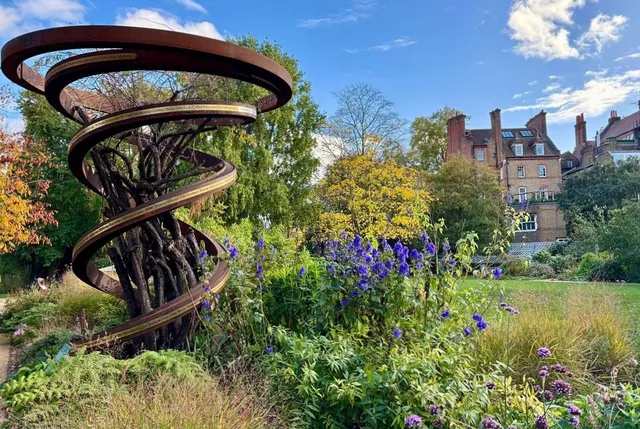
Chelsea Physic Garden
Founded by the Apothecaries in 1673 to grow medicinal plants, and still growing 5,000 of them behind a high wall - with a microclimate warm enough for the northernmost outdoor grapefruit in Britain.
Ticketed and walled, so it stays quiet even in summer. Closed for part of the winter - check before travelling. Best from April to July.
Hidden Chelsea
Free, self-guided and easy to walk past without knowing it's there.
Albert Bridge
Filming locationBridget Jones's Baby (2016) - carried across the bridge in labour
The pink-and-green suspension bridge where Mark and Jack carry Bridget between them after her waters break. It is lit by four thousand bulbs at night and is the prettiest crossing in London by some distance.
Free, open to pedestrians at all hours, best after dark when the bulbs are lit. Fifteen minutes from Sloane Square, or the 170 bus.
Alexander Fleming's Chelsea Home
Blue plaqueAlexander Fleming (1881–1955), discoverer of penicillin
Fleming's discovery of penicillin is one of the most consequential moments in modern medicine - his home plaque sits a short walk from where he worked at St Mary's.
A private residential building - viewable from the street only.
Banksy's Elephants
Street artTwo elephant heads reaching toward each other from blocked windows
Two elephant heads stencilled reaching toward one another from a pair of bricked-up windows - one of the more visually striking and best-preserved pieces still on a public street.
Street-level, out in the open on a residential corner.
Bob Marley's Chelsea Flat
Blue plaqueBob Marley (1945–1981), singer and songwriter
One of English Heritage's more recent plaques (2019) and a rare popular-music honouree on a street otherwise dense with 19th-century names.
A private residential building - viewable from the street only.
George Eliot's Last Home
Blue plaqueGeorge Eliot (1819–1880), novelist (Mary Ann Evans)
Eliot died here weeks after moving in - one of several literary plaques along Cheyne Walk's riverside stretch.
A private residential building - viewable from the street only.
Mark Twain's Chelsea Home
Blue plaqueMark Twain (Samuel Langhorne Clemens, 1835–1910), writer
Twain lived here during one of his London periods, by then already the author of Tom Sawyer and Huckleberry Finn.
A private residential building - viewable from the street only.
Oscar Wilde's Chelsea Home
Blue plaqueOscar Wilde (1854–1900), writer and wit
Wilde lived here with his wife Constance while writing The Picture of Dorian Gray and his best-known plays, before his 1895 trials and imprisonment.
A private residential building - viewable from the street only.
Rosalind Franklin's Home
Blue plaqueRosalind Franklin (1920–1958), X-ray crystallographer, DNA structure pioneer
Franklin's X-ray diffraction images were essential to identifying the structure of DNA - a scientist whose contribution went under-credited for decades.
A private residential building - viewable from the street only.
Samuel Beckett's Chelsea Home
Blue plaqueSamuel Beckett (1906–1989), playwright and novelist
Beckett lived here before Waiting for Godot - a Nobel laureate's London address shared with Patrick Blackett, another plaque at the same number.
A private residential building - viewable from the street only.
Sylvia Pankhurst's Chelsea Home
Blue plaqueSylvia Pankhurst (1882–1960), suffragette and campaigner
Pankhurst's plaque sits on the same riverside street as George Eliot's - two very different kinds of significance a few doors apart.
A private residential building - viewable from the street only.
Where to stay
Quiet, attractive and expensive, with limited Tube access — a good base if you value calm over convenience.
- Sloane Square — The only part with direct Tube access. Boutique hotels and townhouses.
- South Kensington — Fifteen minutes north-west, better connected, and next to the museums.
- Earl’s Court and Fulham — West and considerably cheaper, with District line access.
Our Chelsea and Knightsbridge hotel guide compares the hotels from Sloane Square to Hyde Park Corner.
Cheapest first. Prices are a typical starting rate per night, not a quote.Links marked ad are affiliate links. If you book through one we may earn a commission, at no extra cost to you. It never affects what goes on this list.
San Domenico House
£££BoutiqueA small, Italian-furnished townhouse just off Sloane Square, run more like a private house than a hotel, with balconies on some rooms and an honesty bar on the fourth floor.
Small - nineteen rooms - so it books out well ahead.
The Chelsea Townhouse
£££TownhouseA Victorian townhouse of 36 individually decorated rooms with Edwardian antiques, on a residential garden square two minutes off the King's Road.
Renamed from The Draycott in 2022 - older reviews and articles still use the old name; do not treat them as a different hotel.
At Sloane
££££HotelThirty bedrooms off Sloane Square done by the French architect-decorator Francois-Joseph Graf for the Costes group, so it reads as a Parisian private house rather than a London hotel. The dining room is on the sixth floor and serves 24/7, and there is a 'secret bar' open late.
The operator styles the name with a leading ellipsis, '...At Sloane', so it sorts oddly in lists.
Beaverbrook Town House
££££TownhouseTwo restored Georgian houses on Sloane Street run as one hotel of fourteen suites, each named for a London theatre and hung with vintage posters, looking out over Cadogan Gardens. The Fuji Grill does Japanese downstairs and Sir Frank's is the bar.
Deluxe rooms of 26 to 32 square metres below the suites. The country sister is Beaverbrook in Leatherhead and the group sells a two-centre 'Town to Country' stay between them.
Cheval Phoenix House
££££AparthotelAccessible roomsOne street back from Sloane Square, which puts the King's Road, Belgravia and the Royal Court all within a few minutes' walk.
A residential street rather than a hotel strip, and priced as Chelsea. Full kitchens and a concierge.
The Cadogan, A Belmond Hotel
££££HotelAccessible roomsA Sloane Street address with a genuine history of hosting dignitaries and celebrities, restored by Belmond and consistently one of the best-reviewed hotels in the city.
One of the highest guest-rating scores of any hotel in London - 97% in the surveys collected. On Sloane Street itself, so the King's Road shops are a short walk.
Make a day of it
Combine Chelsea with
Walking times are from the centre of Chelsea. Each of these works as an afternoon once you have finished here.
South Kensington
15 min walkNorth-west for the three free museums and the Royal Albert Hall.
Westminster
30 min walkEast along the river or through Green Park to Parliament.
Battersea Park
15 min walkAcross Albert Bridge for the park, the Peace Pagoda and Battersea Power Station.
Belgravia
12 min walkEast from Sloane Square along Pont Street for Elizabeth Street and the blue plaques.
Walking routes
Chelsea to Belgravia: a blue plaque walk →
Our full route for this area: eleven numbered stops over about 4km and two to three hours, with a map, a Google Maps walking link and a day-by-day breakdown of what is open. It runs through the densest concentration of blue plaques in London — 184 inside the square between Cheyne Walk and Belgrave Square — taking in Oscar Wilde, Mark Twain, Bram Stoker and George Eliot, who all lived within ten minutes of one another. It also settles which day to come: Wednesday is the only one on which all three ticketed stops open.
The short version, if you only have two hours
- Start: Sloane Square station. Cross to the Royal Court Theatre.
- Duke of York Square: West off the King’s Road for the Saatchi Gallery.
- Royal Hospital: South down Franklin’s Row to the Royal Hospital Chelsea grounds.
- Physic Garden: West along Royal Hospital Road — the entrance is easy to miss.
- Cheyne Walk: Continue to the river and turn west past the blue plaques.
- Finish: Albert Bridge, and either cross to Battersea Park or head back up to the King’s Road.
Common mistakes to avoid
- Expecting the 1960s King’s Road. It is mostly chains now. The side streets and the river are the reason to come.
- Walking the whole King’s Road for the shops. It is two miles. Take a bus west and walk back.
- Turning up at the Physic Garden unannounced. It is closed on some days and the entrance on Royal Hospital Road is hard to spot.
- Assuming there is a Tube at the western end. There is not. Sloane Square is the only one, at the far eastern edge.
- Eating on the King’s Road itself. You pay a premium for the address. Duke of York Square on a Saturday is far better value.
- Visiting during Flower Show week without a plan. Late May is the one time to avoid.
Common questions
Is King's Road still worth visiting?
Yes, but manage expectations. The 1960s and punk-era King's Road is long gone and much of the street is now the same chains you find on any high street. What survives is the Saatchi Gallery, Duke of York Square, some good independent shops at the western end, and a very pleasant walk. Come for the street and the side roads rather than the shopping.
What is the Chelsea Physic Garden?
London's oldest botanic garden, founded in 1673 by the Society of Apothecaries to grow medicinal plants. It is walled, about four acres, and hidden behind Royal Hospital Road with an easily missed entrance. It charges admission and closes on some days of the week, so check before going.
Where do the Chelsea Pensioners live?
The Royal Hospital Chelsea, a Christopher Wren building of 1682 that is still a working retirement home for around 300 army veterans. The grounds host the Chelsea Flower Show each May. Parts are open to visitors, and the Pensioners in their scarlet coats are a common sight around the area.
When is the Chelsea Flower Show?
Late May, over five days in the Royal Hospital grounds. Tickets sell out months ahead and the first two days are RHS members only. The whole area gets extremely busy that week, and Sloane Square station in particular is heaving.
Is Chelsea expensive?
Yes, among the most expensive parts of London. Eating and shopping here costs noticeably more than a mile north or east. The free things — the river walk, Royal Hospital grounds, the Saatchi Gallery, the residential streets — are the best of it.