In this guide
At a glance
- Vibe
- Palace, parkland and stucco terraces — grand and unhurried
- Time needed
- Half a day
- Best day
- Weekdays; Holland Park is quietest first thing
- Travel zone
- 1–2
- Walkability
- 5/5
- Typical spend
- ££
Best for
Nearest stations
- High Street KensingtonDistrictCircle
- Holland ParkCentral
- QueenswayCentral
Kensington is the stretch between Notting Hill and the museums: a royal palace, two very different parks, and a high street that is calmer than anything comparable in central London.
It is also where several of London’s best-known sights actually sit — Kensington Palace, the Albert Memorial and the Serpentine galleries are all here, in Kensington Gardens, not Hyde Park, which is the adjoining park to the east.
Kensington has its own share of the commemorative plaques marking where notable people lived or worked - see them on our interactive map.
Why visit — and who should skip it
Come here if you want gardens. Between Kensington Gardens, Holland Park and the Kyoto Garden, this is the greenest walkable district in central London, and almost all of it is free.
Skip it if you are short on time and already doing South Kensington’s museums. The two adjoin and cover similar ground for a visitor — if you only have one afternoon in west London, the free museums will give you more.
Top sights and activities
- Kensington Palace — A royal residence since 1689 and the birthplace of Queen Victoria. The State Apartments are ticketed; the Sunken Garden beside it is free and one of the best formal gardens in the city.
- Kensington Gardens — 265 acres. The Albert Memorial, the Italian Gardens at the north end, the Peter Pan statue and the Diana Memorial Playground.
- Holland Park and the Kyoto Garden — A Japanese garden given by Kyoto in 1991, with a tiered waterfall, koi and peacocks. Free, small, and the best twenty minutes in the area.
- The Design Museum — In the former Commonwealth Institute, under a swooping 1962 roof. The permanent gallery is free.
- Leighton House — The purpose-built studio-home of the Victorian painter Frederic Leighton, with an Arab Hall lined in Damascus tiles. Small, ticketed and extraordinary.
- Serpentine Galleries — Two free contemporary art spaces in Kensington Gardens, with the annual summer Pavilion commissioned from a different architect each year.
- Opera Holland Park — Summer opera under canvas in the ruins of Holland House, cheaper and far less formal than the major houses.
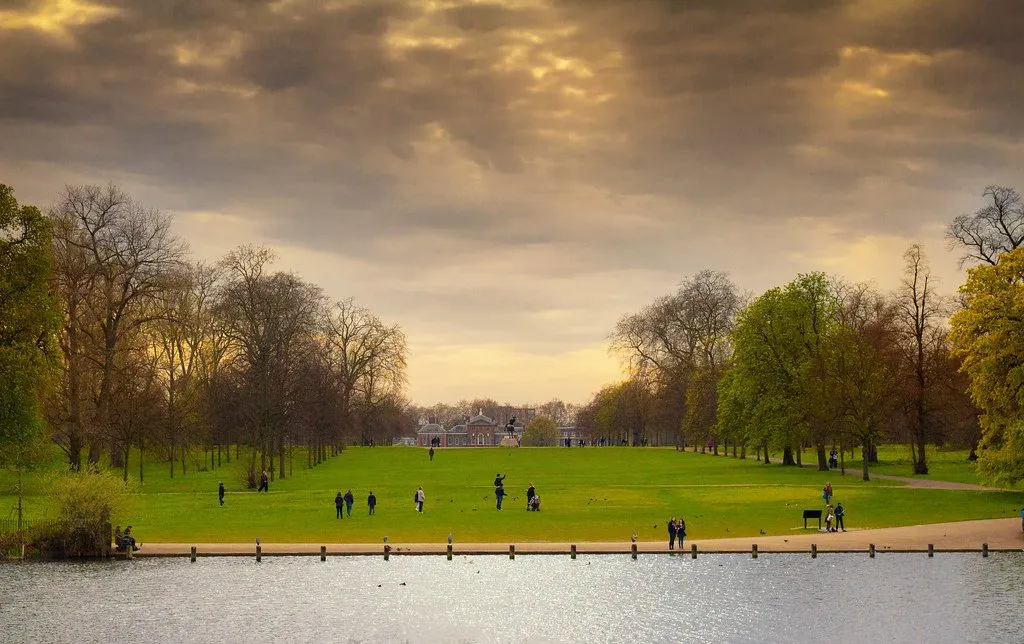
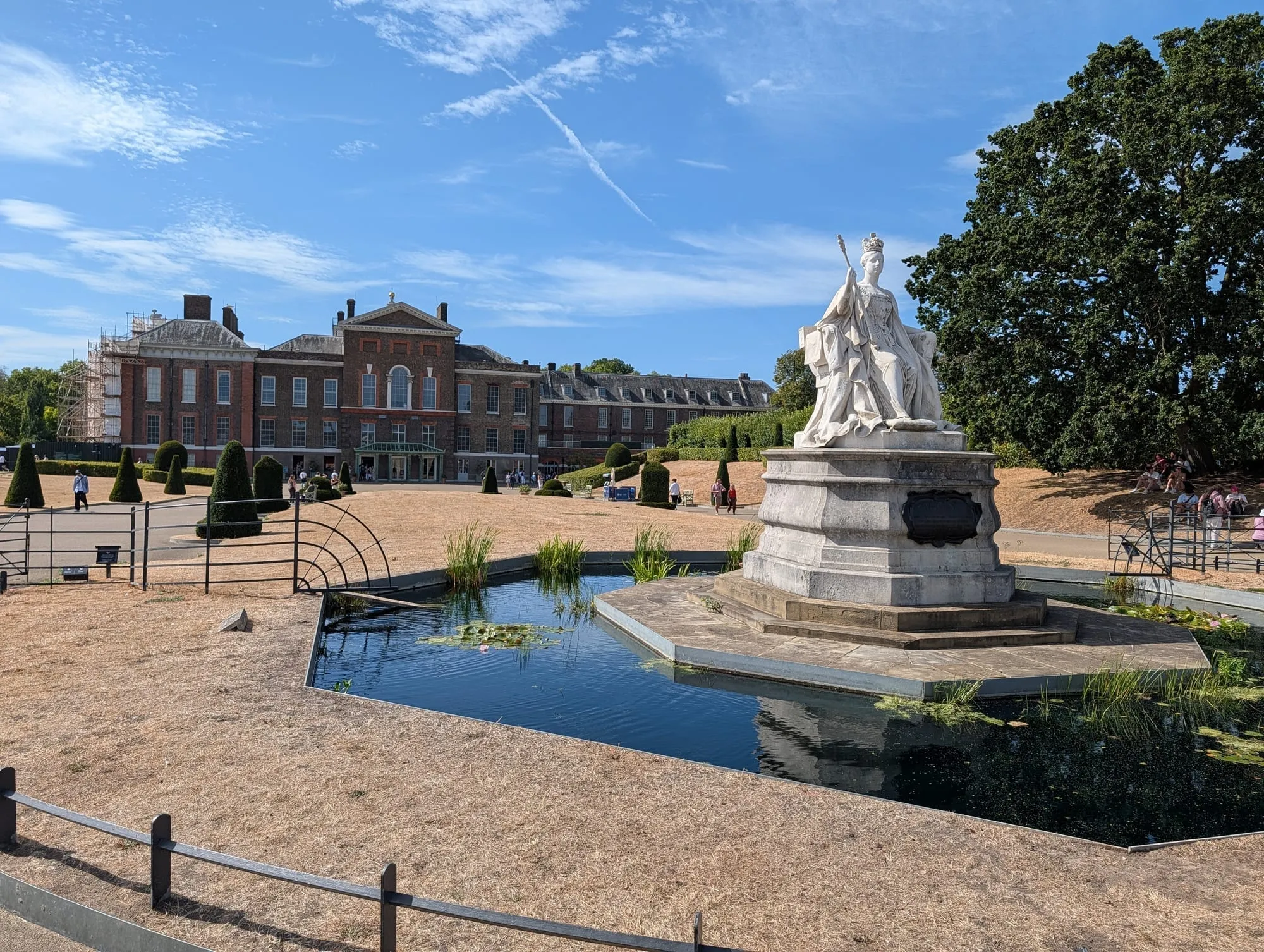
Kensington Palace, across the Round Pond.
Key streets and micro-districts
Kensington High Street
The main road, and a high street that was once a genuine rival to Oxford Street before the department stores went. What survives is the chains, and one thing that is unlike anywhere else in London.
Kensington Roof Gardens sit a hundred feet up on top of the old Derry & Toms building — an acre and a half laid out in 1938 as a Spanish garden, a Tudor garden and an English woodland, with mature trees growing in rooftop soil and flamingos that have lived up there for decades.
Access has never been reliable. The gardens have opened and closed with successive owners and are not a public park, so check before you build an afternoon around them. The street itself is a five-minute walk end to end from High Street Kensington station.
South of the high street, Olympia London runs a year-round programme of exhibitions and conventions, from AnimeCon to the Ideal Home Show — our exhibitions and conventions guide has the full calendar and how to reach the venue.
Kensington Gardens and the palace
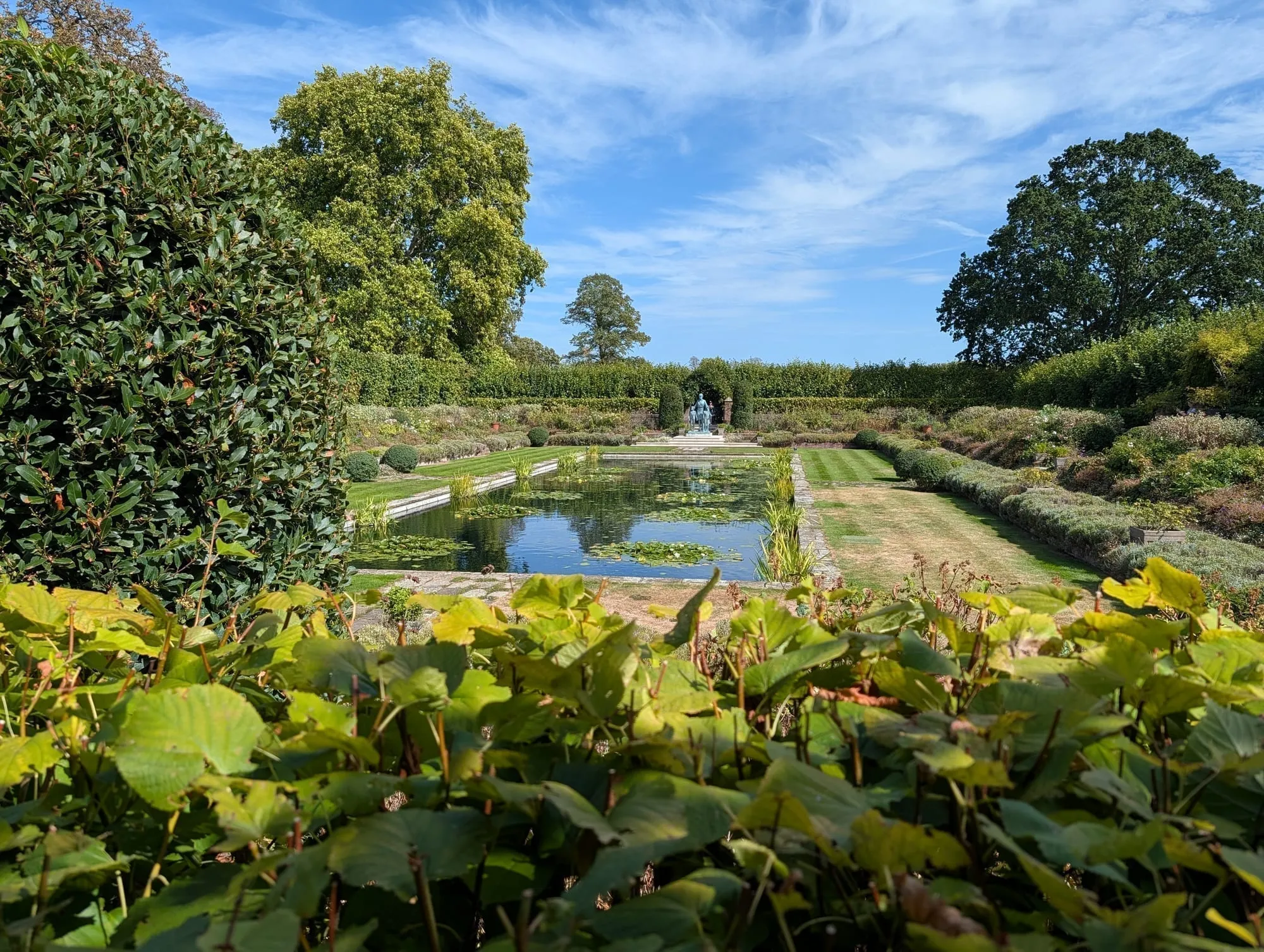
The Sunken Garden, Kensington Palace.
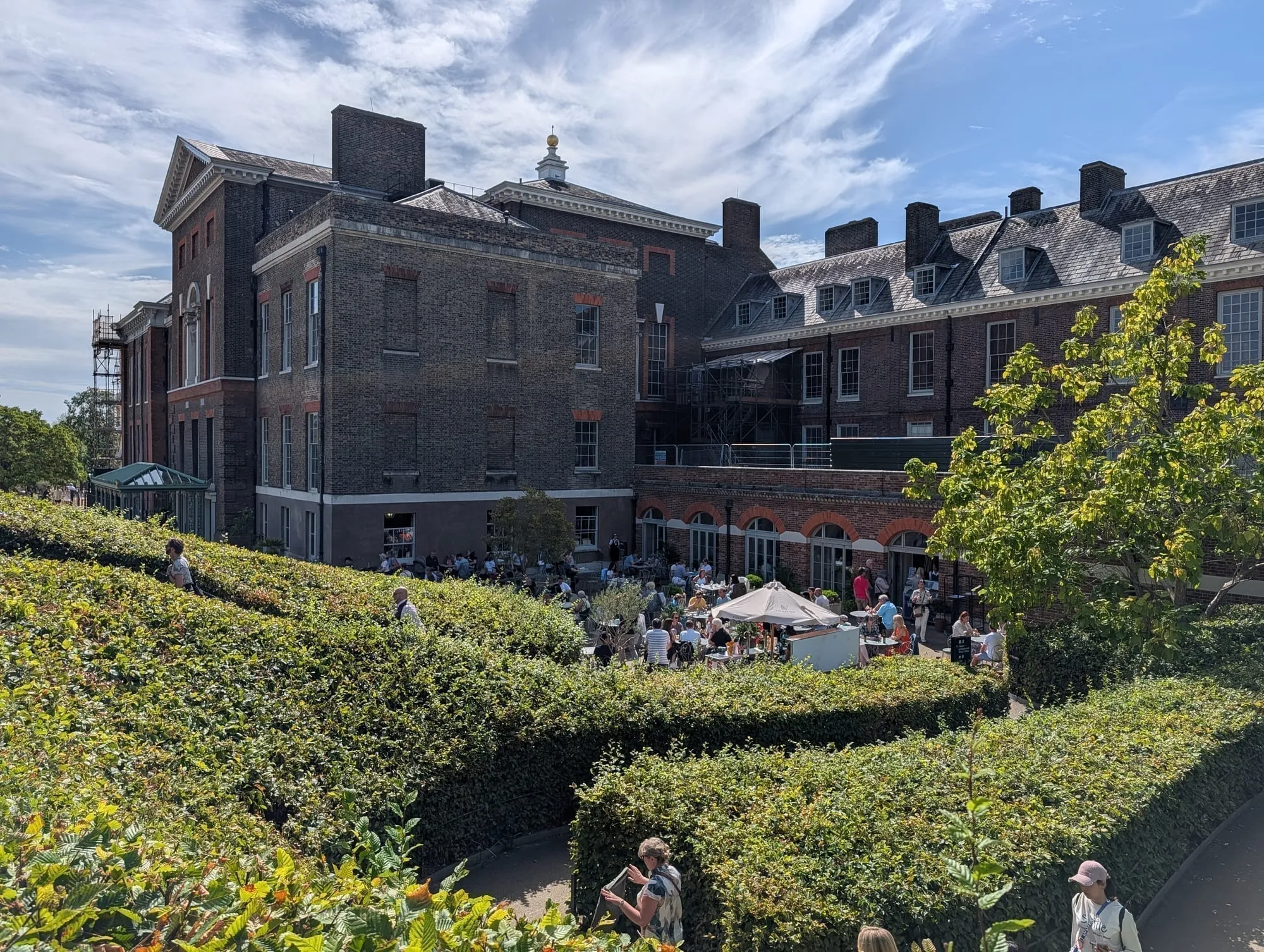
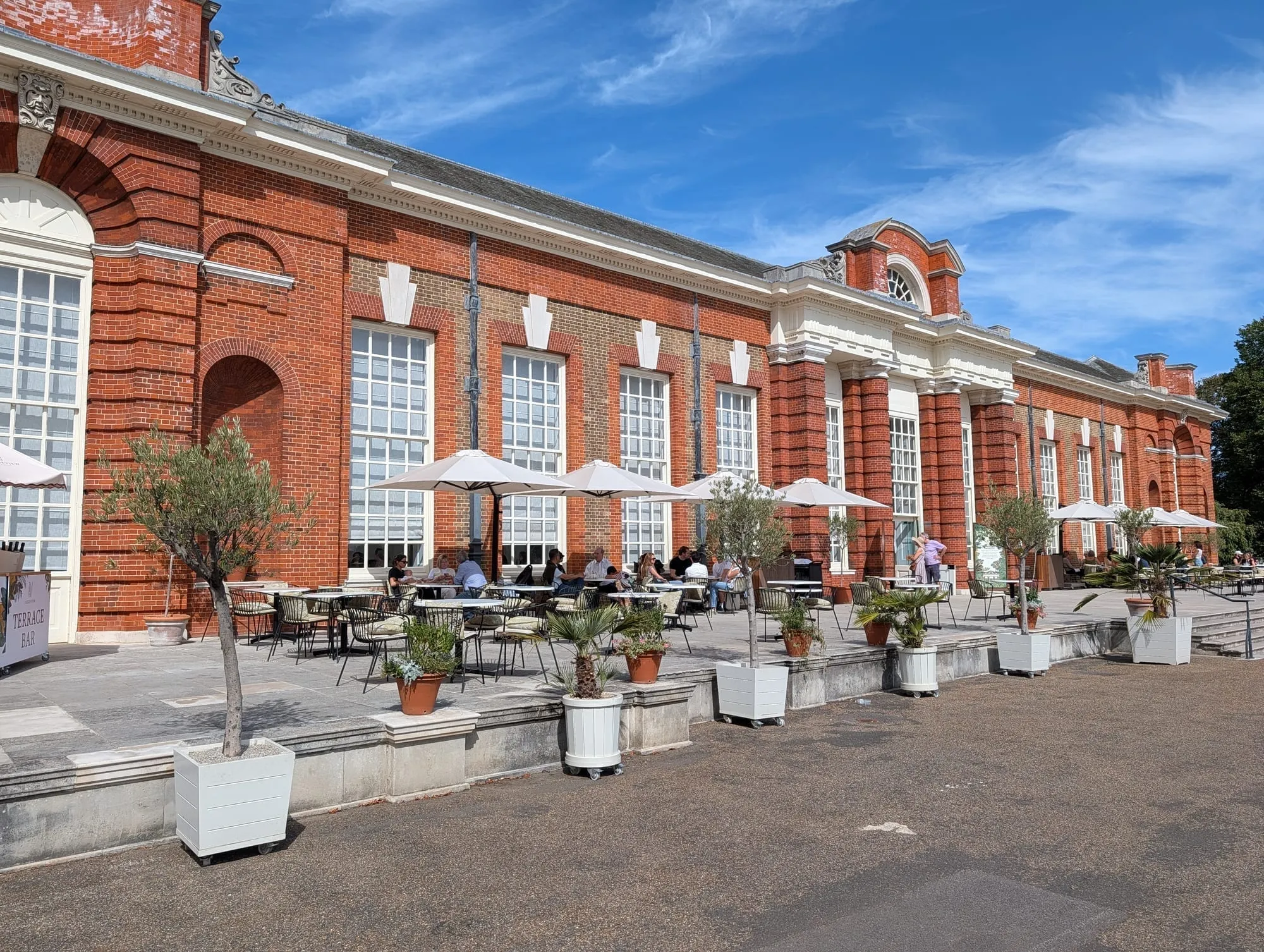
The Pavilion cafe, Kensington Palace. North-east, and the reason most people come. Kensington Palace is ticketed; the gardens around it are free, which is the distinction that catches people out.
Free and worth the walk: the Sunken Garden, the Albert Memorial, the two Serpentine galleries — which run free contemporary art shows and a new architectural pavilion each summer — the Italian Gardens at the Lancaster Gate end, and the Diana Memorial Playground.
The gardens open at 6am and close at dusk, and are considerably quieter than Hyde Park next door despite being continuous with it — Hyde Park itself stays open later.
Holland Park
North-west, and the best park in this part of London by a distance — twenty-two hectares, half of it genuine woodland, not mown grass, which is rare this far in.
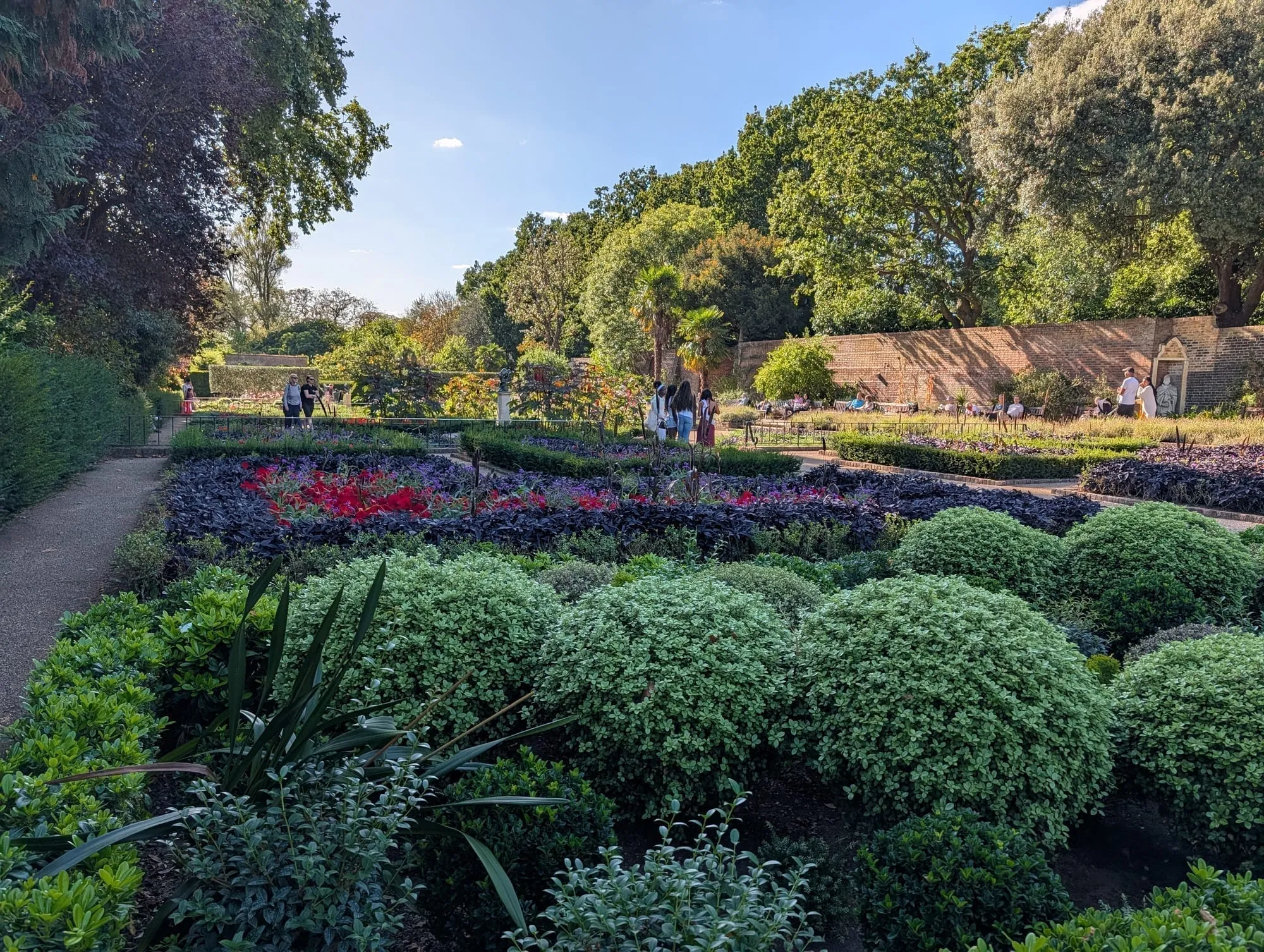
The Kyoto Garden is the one people photograph: a Japanese garden given to the borough in 1991, with a tiered waterfall, koi, and peacocks that wander through it and are entirely unbothered by anyone. The Dutch Garden has formal beds in front of the surviving wing of Holland House, and an opera canopy stands over the ruins for a summer season.
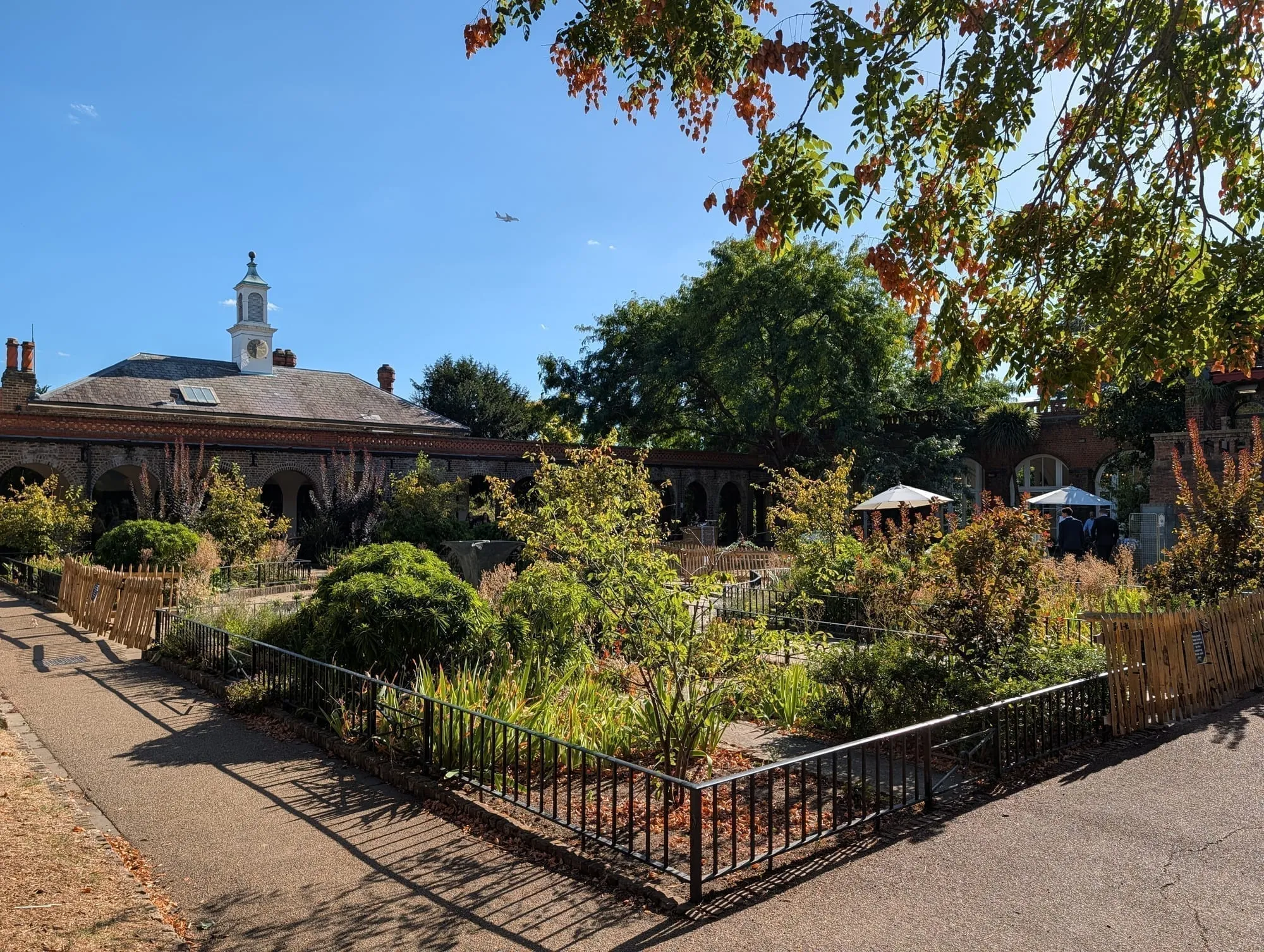
Free and open daily. Come on a weekday morning if you want the Kyoto Garden without a queue for the same photograph.
Kensington Church Street
Running north towards Notting Hill, and the antiques street of west London — dealers in furniture, ceramics and Asian art, most of them by appointment or looking as though they would prefer to be.
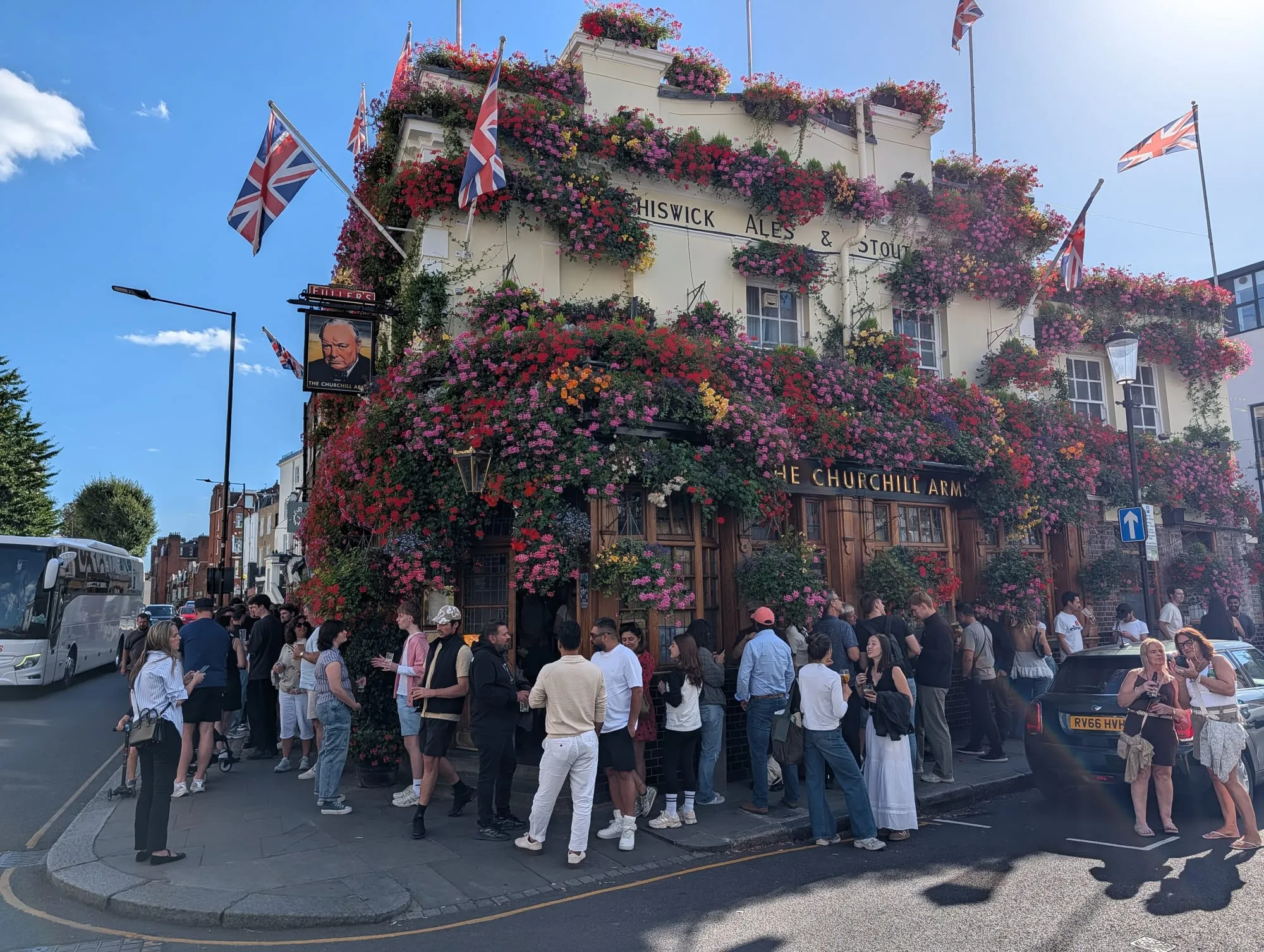
At the top stands the Churchill Arms, buried under thousands of flowers in summer and around ninety Christmas trees in December, with a Thai kitchen in the conservatory at the back. The flowers peak in high summer and the crowd outside is year-round.
It is a steady uphill walk, about ten minutes from High Street Kensington to Notting Hill Gate, and the shops keep their own hours, not a high street’s — expect a good number shut on a Monday.
Holland Park Avenue and Campden Hill
The stucco terraces and private garden squares between the two parks — among the most expensive residential streets in Britain, and almost entirely without shops, cafés or anything to do.
That is the appeal, and the limit. It is a lovely twenty minutes on foot between Holland Park and Notting Hill Gate, past white-fronted houses and communal gardens you cannot enter, and there is nothing at the end of it but another main road.
Walk it as a link between the two parks rather than as a destination.
Go deeper
- London’s historic houses — Kensington Palace and Leighton House, the second of which almost nobody visits.
- The best afternoon tea in London — the Kensington hotels do several of the better ones, at less than Mayfair prices.
- HYPER JAPAN Festival — the UK’s biggest Japanese culture event fills Olympia’s Grand Hall for a weekend most summers, a short walk beyond Holland Park.
Where to eat and drink
| Spot | Style | Price | Why go |
|---|---|---|---|
| The Belvedere | Modern British | £££ | In Holland Park itself, in a former ballroom |
| The Churchill Arms | Historic pub, Thai kitchen | ££ | Kensington Church Street; buried in flowers in summer |
| Kensington Palace Pavilion | Cafe | ££ | Beside the palace, with garden seating |
| The Ivy Kensington Brasserie | Modern European | £££ | High Street; reliable and good for a long lunch |
| Holland Park Cafe | Park cafe | £ | Beside the Kyoto Garden and the sports pitches |
| Whole Foods Kensington | Food hall | £ | The practical option; large hot counter upstairs |
See all 8 places to eat and drink in Kensington
Getting there
By Tube. High Street Kensington (District, Circle) is central to everything. Holland Park (Central) is closest to the Kyoto Garden. Queensway (Central) serves the north side of Kensington Gardens.
Best exit. From High Street Kensington, turn right for Holland Park and the Design Museum, or left and north up Kensington Church Street for Notting Hill.
On foot. Fifteen minutes to Notting Hill, fifteen to South Kensington, twenty across the gardens to Paddington.
Note: Kensington Gardens closes at dusk and Holland Park gates shut at nightfall. Both open at first light.
How long to spend, and when to go
| If you have | Do this |
|---|---|
| Two hours | Holland Park, the Kyoto Garden and the Design Museum |
| Half a day | Add Kensington Gardens, the Sunken Garden and the Albert Memorial |
| A full day | Add Kensington Palace and Leighton House |
Best time: First thing. The Kyoto Garden is small and gets busy from mid-morning, and the peacocks are most active early.
Seasonal: The Serpentine Pavilion runs June to October. Opera Holland Park runs June to August. The Sunken Garden is at its best in late spring.
Map of Kensington
Open the map21 places: 5 places to eat · 8 things to do · 7 hidden spots · 1 places to stay
The map loads when you open this section.
Eat & drinkThings to doHidden LondonStay
What's on in Kensington
Limited runs and the annual fixtures. Anything already finished is removed automatically.Links marked ad are affiliate links. If you book through one we may earn a commission, at no extra cost to you. It never affects what goes on this list.
Serpentine Pavilion 2026
Not open yetEach year's Pavilion is demolished at the end of October and never rebuilt - see it or miss it permanently. Free, outdoors, and a natural stop on a Kensington Gardens walk.
The Soto walk-through sculpture nearby closes the same day, so the two make one outdoor stop.
Jesus Rafael Soto: Penetrable BBL Jaune
Not open yetPhysically walk-through rather than look-at - hanging yellow strands you push into and disappear inside - which makes it the most child-friendly thing on the autumn art calendar.
Outdoors by Serpentine South; closes with the Pavilion on 25 October.
Hyde Park Winter Wonderland
Not open yetA hundred and fifty-odd rides, bars and market stalls across Hyde Park, plus the largest outdoor ice rink in the city - the biggest Christmas thing London does.
Entry is free at quiet times and ticketed at peak, but the RIDES AND RINK ARE PAID SEPARATELY and it adds up fast. Weekday afternoons are the only calm slots.
Justin Caguiat: Change Ringing
Not open yetA first UK institutional show spanning painting, sculpture, print, sound and film - genuine discovery rather than greatest hits, and free.
Amar Kanwar runs at Serpentine North across the bridge; one visit covers both.
Amar Kanwar
Not open yetFree and built to be sat with rather than lapped - the counterweight to a day of blockbuster queues.
Across the bridge from the Caguiat show; one visit covers both galleries.
PLATFORM: Simone Brewster
Not open yetThe museum's free PLATFORM slot, given to a single contemporary designer - a lower-commitment stop than the ticketed shows upstairs.
Museum publishes the close only as January 2027; the exact day here is provisional.
Coming up at Olympia London
Limited runs and the annual fixtures. Anything already finished is removed automatically.Links marked ad are affiliate links. If you book through one we may earn a commission, at no extra cost to you. It never affects what goes on this list.
AnimeCon London
Not open yetBilled by its organiser, the Oakham Group, as the UK's biggest anime and manga convention.
In the Grand Hall.
London Snow Show
Not open yetA ski and snowsports consumer show in the National Hall, the same October weekend as the National Wedding Show and Musical Con at ExCeL.
Ticket price not published on the organiser's own listing.
AI LIVE
Not open yetLabelled a trade show on Olympia's own listing, but openly ticketed with no business-email gate found on the organiser's site.
The Baby Show
Not open yetPregnancy through to toddler care in one hall, running the same weekend as MCM Comic Con at ExCeL across town.
The Luxury Travel Fair
Not open yetHigh-end tour operators and destinations under one roof, in the National Hall rather than Olympia's larger main floor.
Spirit of Christmas Fair
Not open yetFestive shopping, independent businesses and food, in the Grand Hall well ahead of the Christmas rush.
What University? & What Career? Live
Not open yetFree entry to a university and careers fair for school leavers, in the National Hall.
Collectors Showcase
Not open yetA low-priced, single-focus fair for rare cards, comics and memorabilia, in the smaller National Hall rather than Olympia's main show floor.
In the National Hall.
The Ideal Christmas Show
Not open yetRuns in the same hall alongside The Cake & Bake Show, so one ticket covers both.
The Cake & Bake Show's own dates for this run are not yet announced.
Agentic Expo
Not open yetThe organiser's own billing calls it the world's first trade exhibition for market-ready AI agents, with tickets on open sale rather than gated to trade badges.
Ideal Home Show
Not open yetA long-running annual fixture at Olympia, and the UK's biggest consumer show for the home, garden and lifestyle by its own billing.
The 2026 edition ran 10-19 April; 2027 dates are confirmed directly on the organiser's own site.
Coming up near Kensington
Gigs, shows and exhibitions in the next fortnight at venues closest toHigh Street Kensington, Holland Park, Queensway. See everything on the What's On page.
Friday30 October
-
19:30Hayao Miyazaki's Dreams by Mystery Ensemble
Kensington United Reformed Church · High Street Kensington Zone 1
Saturday31 October
-
18:30Tim Burton's Universe by Mystery Ensemble
Kensington United Reformed Church · High Street Kensington Zone 1
Things to do in Kensington
Beyond eating and drinking. Free things are listed first.Links marked ad are affiliate links. If you book through one we may earn a commission, at no extra cost to you. It never affects what goes on this list.
Diana Memorial Playground
FreeA wooden pirate ship in a sand pit, a teepee camp and a musical garden, built where Barrie set Peter Pan - and free.
Free. ADULTS ARE ONLY ADMITTED WITH A CHILD, which is the rule people most often arrive not knowing. Gets very busy after school and in holidays.
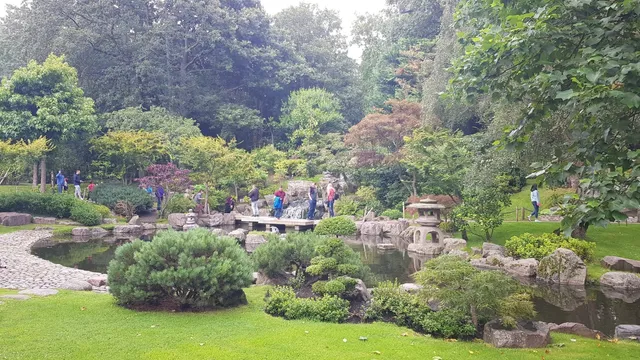
Kyoto Garden, Holland Park
FreeA tiered Japanese garden given by Kyoto in 1991, with a waterfall, a koi pond and peacocks that wander in from the rest of Holland Park.
Free, no ticket, open from 7.30am until half an hour before dusk. Tiny and very popular - early morning is the only time it is quiet.
Serpentine Galleries
FreeTwo free contemporary art galleries five minutes apart across the Serpentine bridge, plus the summer Pavilion - a new one commissioned from a different architect every year.
Free, Tuesday to Sunday. The Pavilion stands from roughly June to October and is the reason to come in summer; there is nothing to see of it the rest of the year.
Boating on the Serpentine
SeasonalRowing boats and pedalos on the lake in the middle of Hyde Park, hired by the half hour, with the Serpentine bar at the end of it.
Daily from late March to October, then weekends only and weather-dependent through winter. Boats take four adults and are hired per boat, not per head.
Gorilla Circus Flying Trapeze School
Summer onlyThe same trapeze rig and the same two-hour beginners' lesson as Regent's Park, pitched in Kensington Gardens a few minutes from the Albert Memorial.
A SHORTER SEASON than Regent's Park - 23 May to 6 September in 2026, against April to late September in Regent's Park. Check which rig is standing before planning a trip. Age 8+, no experience needed.
Kensington Palace
Where Victoria was born and grew up, with the King's and Queen's State Apartments and a dress collection that runs from court mantuas to Diana's wardrobe.
Ticketed, but the Sunken Garden outside is free and is the bit most people photograph. Historic Royal Palaces membership pays for itself in two visits.
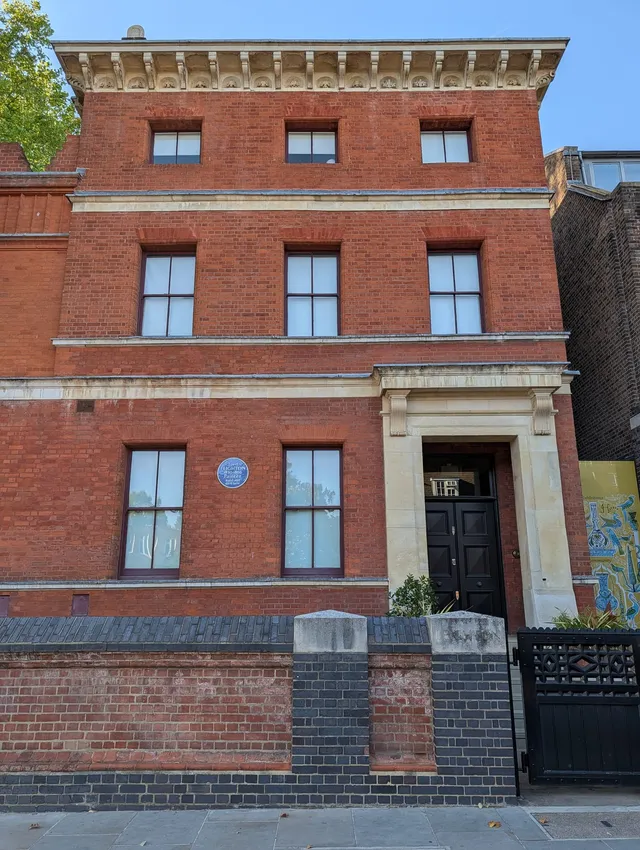
Leighton House
Frederic Leighton built himself a house around an Arab Hall lined with Iznik tiles, a gilded dome and a fountain in the floor. There is nothing else like it in London.
Small, ticketed and closed on Tuesdays. The Arab Hall is the whole reason to come and it is the first room you reach.
The Design Museum
The former Commonwealth Institute, gutted and rebuilt under its listed swooping concrete roof, with a permanent design collection that costs nothing.
The permanent Designer Maker User gallery is FREE; the temporary exhibitions are ticketed. Walk into the atrium just to look up at the roof, even if you do nothing else.
Book Kensington Palacead
Hidden Kensington
Free, self-guided and easy to walk past without knowing it's there.
Agatha Christie's Home
Blue plaqueAgatha Christie (1890–1976), novelist and playwright
Christie lived here while writing some of her best-known Poirot and Marple novels - a quiet Holland Park backstreet a world away from the murders on the page.
A private residential building - viewable from the street only.
Brompton Cemetery
Filming locationSherlock Holmes (2009) - Blackwood rises from his tomb
One of the Magnificent Seven Victorian cemeteries, its catacombs and colonnade used for the resurrection scene. Thirty-five thousand monuments over forty acres, with a domed chapel at the end of a formal avenue.
Free and open daily, roughly dawn to dusk with hours shifting by season. West Brompton is at the north gate. The catacombs are normally closed and only open on occasional guided tours.
Henry James's Kensington Home
Blue plaqueHenry James (1843–1916), writer
James wrote several of his major novels while living on this street - part of a dense cluster of literary Kensington plaques worth combining on one walk.
A private residential building - viewable from the street only.
James Joyce's Kensington Home
Blue plaqueJames Joyce (1882–1941), author
One of the less-expected London addresses for Joyce, better known for Dublin and Trieste - the plaque marks a brief but real London chapter.
A private residential building - viewable from the street only.
Layer Cake's Flat (Daniel Craig)
Filming locationLayer Cake (2004) - the unnamed protagonist's flat, played by Daniel Craig
Daniel Craig's character lives here in Guy Ritchie's Layer Cake, a year before Craig was cast as Bond - a nice bit of casting trivia hiding on an ordinary Kensington mews.
A private residential mews - viewable from the street only.
Rudolf Nureyev's Kensington Home
Blue plaqueRudolf Nureyev (1938–1993), ballet dancer
Nureyev's 1961 defection from the Soviet Union made global headlines - his London home plaque sits in one of Kensington's quieter residential streets.
A private residential building - viewable from the street only.
T.S. Eliot's Kensington Home
Blue plaqueT.S. Eliot (1888–1965), poet
Eliot lived here in his later years, having already written The Waste Land and Four Quartets - one of Kensington's several literary plaques.
A private residential building - viewable from the street only.
Winston Churchill's Last Home
Blue plaqueWinston Churchill (1874–1965), Prime Minister
Churchill's home for the last years of his life, a short walk from the Kensington museums.
A private residential building - viewable from the street only.
Where to stay
Quiet, green and well connected, with prices to match the postcode.
- Kensington High Street — Larger hotels on the District and Circle lines, walkable to both parks.
- Holland Park and Campden Hill — Townhouse hotels in the quietest streets, at a premium.
- Earl’s Court — Ten minutes south, considerably cheaper, same District line access.
Our Kensington and Earl’s Court hotel guide compares the hotels, from Kensington High Street to Olympia.
In Olympia for a show? Our Ideal Home Show guide covers tickets, getting to Kensington (Olympia) station and where to stay right on the site.
Cheapest first. Prices are a typical starting rate per night, not a quote.Links marked ad are affiliate links. If you book through one we may earn a commission, at no extra cost to you. It never affects what goes on this list.
Safestay London Kensington Holland Park
£HostelA listed building standing inside Holland Park - you walk out of the dorm into the park rather than onto a main road, which nothing else at hostel money in London can offer.
Renamed: Safestay lists it as Kensington Holland Park; it was Safestay London Holland Park. One of only two Safestay properties left in London, the other being Elephant and Castle. Four minutes' walk from Holland Park station, but the park itself is the point.
Ember Locke Kensington
££AparthotelAccessible roomsThe most designed of the group - a deliberately seventies palette - on Cromwell Road between Earl's Court and Gloucester Road, which puts the three free South Kensington museums within a walk.
Cromwell Road is a main artery and the rooms facing it get traffic noise; ask for a rear studio. District, Circle and Piccadilly lines all within five minutes.
London Lodge Hotel
££TownhouseTwo Victorian houses built in 1880 and knocked together, run by the same couple since 1996, on a quiet Kensington street a turn from Lexham Mews and Stratford Road, with its own bar and breakfast room, Stephanie's, open to non-residents.
This is 134-136 Lexham Gardens, W8, a small owner-run Kensington townhouse hotel. There are steps up to the front door, but the hotel states a lift to every floor inside and walk-in showers in the Superior Single, Double and Twin rooms. Singles and triples are both sold, which is unusual at this size.
The Milestone Hotel
££££HotelAccessible roomsA Victorian Gothic townhouse directly facing Kensington Palace and the Royal Gardens, with suites converted from the original carriage mews.
Each suite is individually themed and priced differently - the Stables suite, built from the original mews, is the one worth asking for by name.
Make a day of it
Combine Kensington with
Walking times are from the centre of Kensington. Each of these works as an afternoon once you have finished here.
Notting Hill
15 min walkNorth for Portobello Road, the antique arcades and the pastel terraces.
South Kensington
15 min walkSouth-east for the three free museums and the Royal Albert Hall.
Paddington
20 min walkNorth-east across Kensington Gardens for Little Venice and the canal.
Chelsea
25 min walkSouth for King's Road, the Physic Garden and the river.
Suggested half-day route
- Start: Holland Park station. South into Holland Park.
- Kyoto Garden: The waterfall, the koi pond and the peacocks.
- Design Museum: At the park’s southern edge; the free gallery.
- Kensington High Street: East, with a detour up Kensington Church Street for the Churchill Arms.
- Kensington Gardens: North-east to Kensington Palace and the Sunken Garden.
- Finish: The Albert Memorial and the Serpentine galleries, or south into South Kensington.
Common mistakes to avoid
- Thinking Kensington Palace is in Hyde Park. It is in Kensington Gardens, the adjoining park to the west.
- Allowing an afternoon for the Kyoto Garden. It is small. Twenty minutes, then the rest of Holland Park.
- Paying for the Design Museum’s free gallery. The permanent collection is free; only temporary shows are ticketed.
- Arriving after dusk. Both parks close their gates at nightfall.
- Missing Leighton House. It is ten minutes west of Holland Park and unlike anything else in London.
- Doing this and South Kensington on the same afternoon. They adjoin, but both deserve their own half day.
Common questions
Is Kensington Gardens the same as Hyde Park?
They adjoin and most people walk between them without noticing, but they are separate parks with separate managers. Kensington Gardens is the western half, containing Kensington Palace, the Albert Memorial, the Serpentine galleries and the Italian Gardens. Hyde Park is the eastern half, with Speakers' Corner and the Serpentine lake. The boundary runs roughly along the West Carriage Drive.
Do you have to pay to enter Kensington Palace?
To go inside the State Apartments, yes — it is a Historic Royal Palaces site with an admission charge, and booking ahead is cheaper. The surrounding Kensington Gardens are free and open daily, as is the Sunken Garden beside the palace, which is one of the prettiest formal gardens in London.
Where is the Kyoto Garden?
Inside Holland Park, about ten minutes north-west of High Street Kensington. It is a Japanese garden given by the Chamber of Commerce of Kyoto in 1991, with a tiered waterfall, a koi pond and resident peacocks. It is free and open during park hours, and it is small — allow twenty minutes rather than an afternoon.
Is the Design Museum free?
The permanent Designer Maker User gallery is free; temporary exhibitions are ticketed. It sits on the southern edge of Holland Park in the former Commonwealth Institute, a 1962 building with a dramatic hyperbolic paraboloid roof that is worth seeing in its own right.
What is Opera Holland Park?
A summer opera season staged under a temporary canopy in the grounds of the ruined Holland House, running roughly June to August. It is open-air in feel, considerably less formal than the major houses, and tickets are far cheaper. Peacocks have been known to wander across during performances.