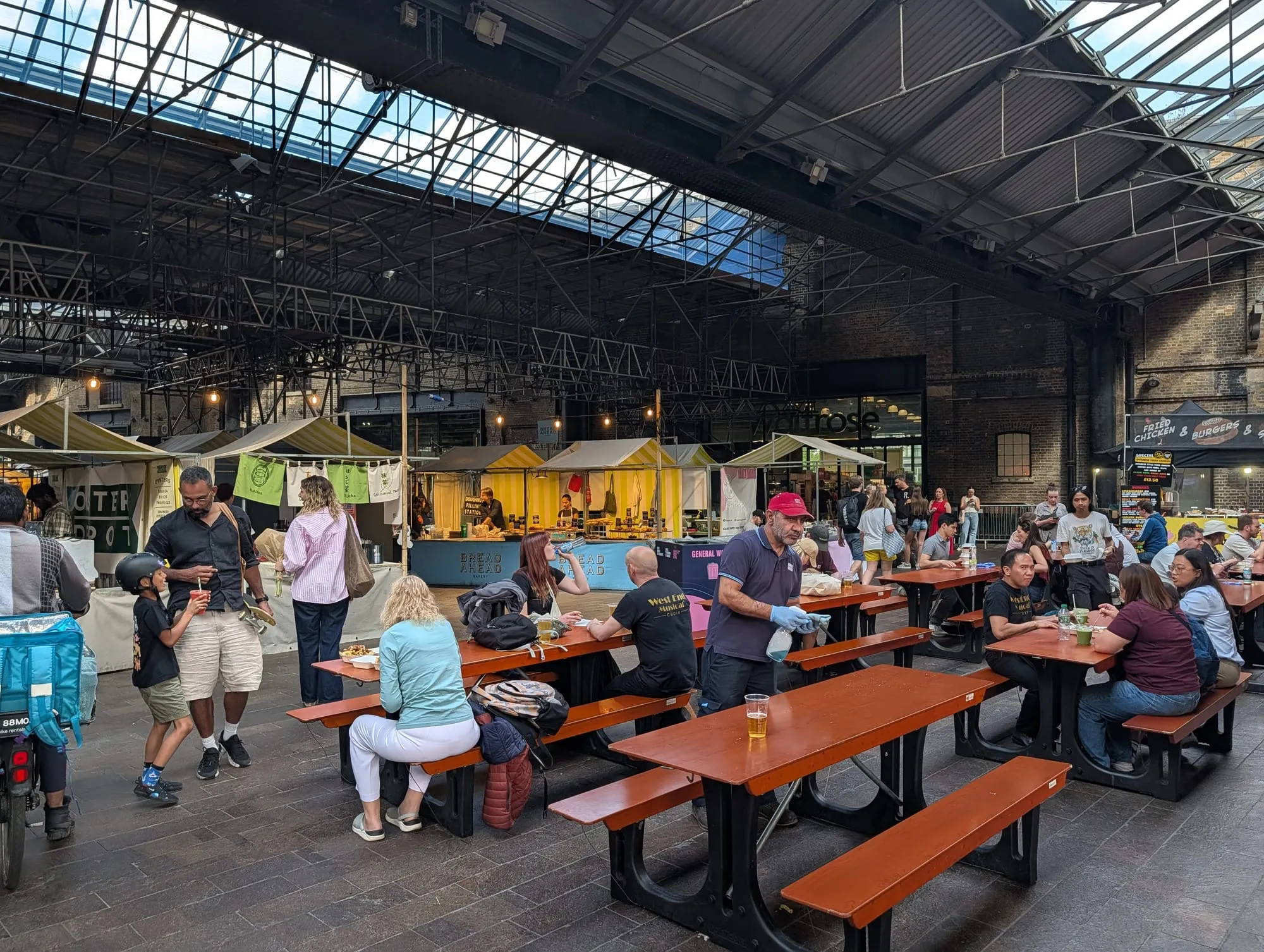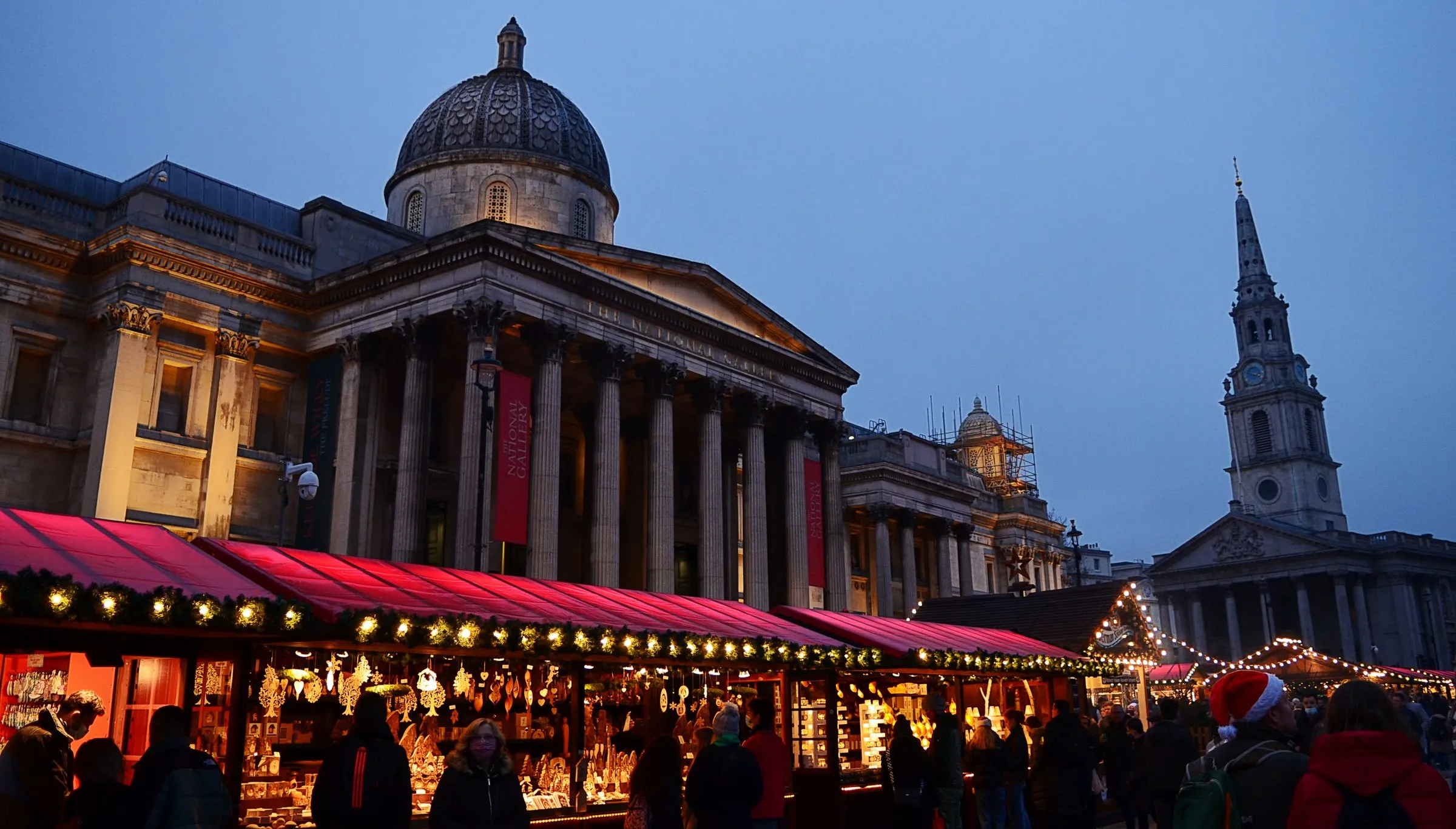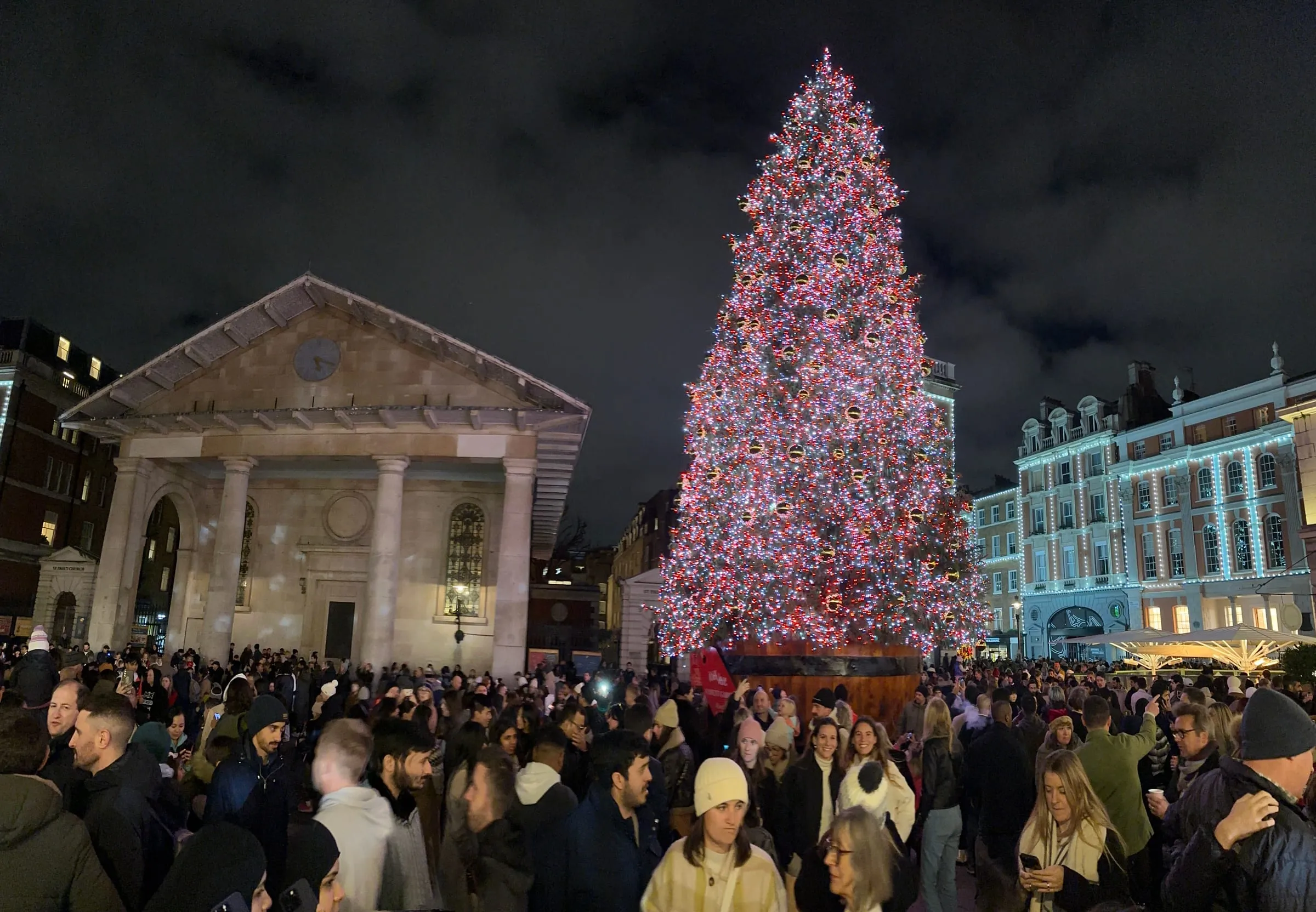
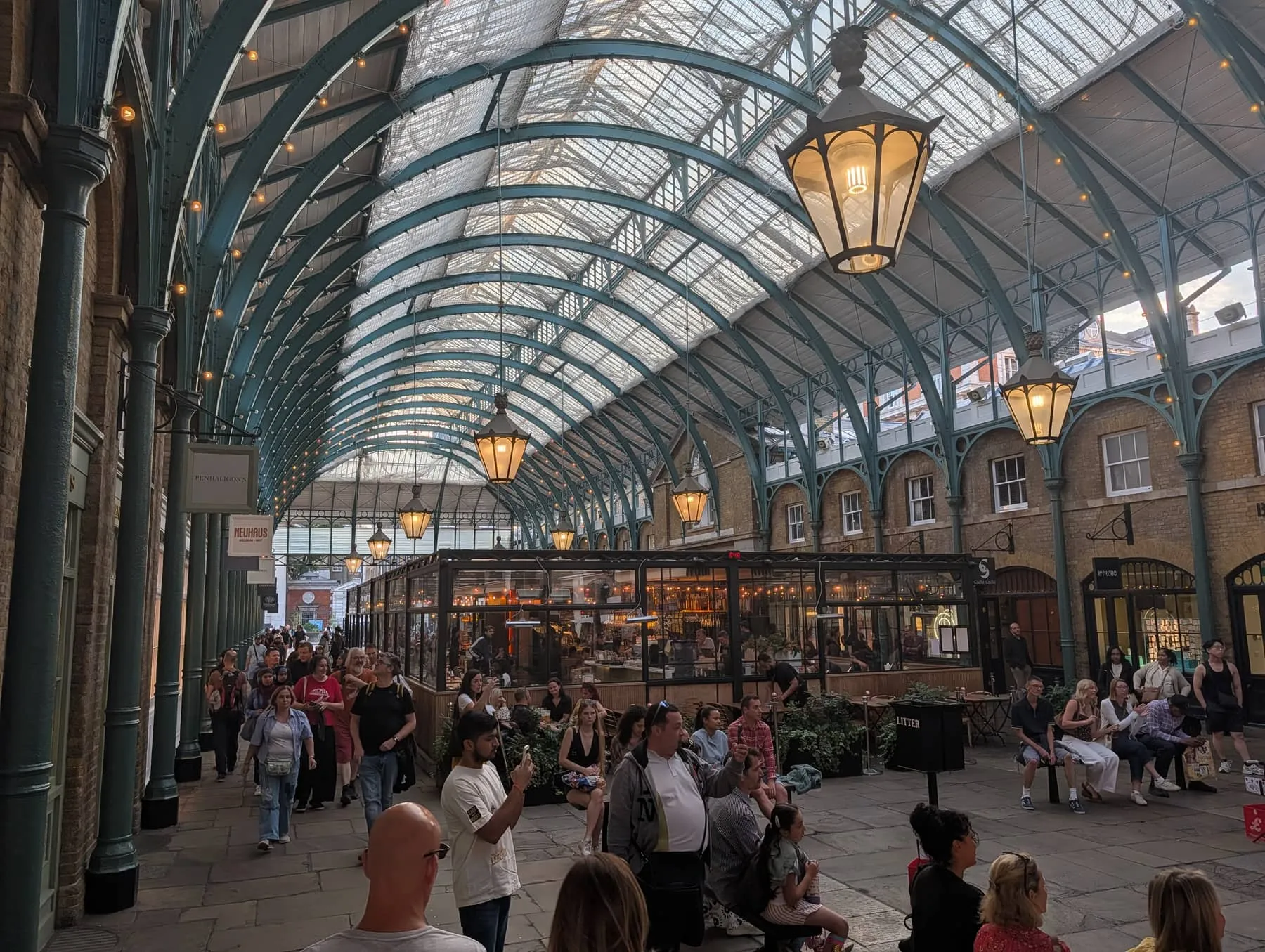
In this guide
London has more good shopping than any visitor can use. This guide is arranged by what you are actually trying to buy — because someone after a wedding outfit, someone after vintage denim and someone after edible gifts to take home should not be sent to the same postcode.
Two things first, because both catch people out and neither is obvious.
⚠️ You cannot claim the VAT back. The UK abolished tax-free shopping for visitors in January 2021 and has not brought it back. Unlike Paris, Milan or Madrid, there is no refund desk at the airport and no reclaiming the 20% on anything you carry home in your luggage. The one workaround: if the shop ships it directly to an overseas address, VAT comes off at the till. On a £2,000 purchase that is a £333 difference, so ask.
⏰ Sunday is a six-hour day, by law. The Sunday Trading Act restricts any shop over 280 square metres to six hours between 10am and 6pm. In practice most of Oxford Street trades noon to 6pm, with some department stores open from 11.30am for browsing only — you can look, you cannot pay. Small independents and markets are exempt, which is exactly why Sunday is the best market day and the worst department store day.
💡 The Short Version: Oxford Street is a sight more than a shopping trip. Regent Street and Bond Street are the architecture and the luxury. Marylebone High Street is the best of the independent streets. Camden and Brick Lane are vintage. Portobello is antiques, but only on Saturday. Westfield London is everything indoors. And food is the best souvenir, by a distance.
Where to go for what
| If you want | Go to | Best day |
|---|---|---|
| High street chains, all of them | Oxford Street | Any weekday |
| Mid-range brands, grand buildings | Regent Street | Any |
| Luxury and jewellery | Bond Street and Mayfair | Weekday |
| Independents and a village feel | Marylebone High Street | Saturday |
| Vintage clothing | Camden or Brick Lane | Sunday |
| Antiques | Portobello Road | Saturday only |
| Everything under one roof | Westfield or Battersea | Any |
| Books and records | Charing Cross Road, Soho | Any |
| Gifts to take home | Food halls and markets | Any |
The streets
Oxford Street, and the big three
A mile and a half, about 300 shops, and half a million people a day. Every British high street chain has a flagship here, and if you want to see them all in one walk this is the only place to do it.
Know what it is, though. The chains are identical to the ones in every other British city and quieter everywhere else. What Oxford Street has is scale — the flagship department stores at the western end, each the largest branch in the country:
- Selfridges — the best of them for actual shopping. Vast, well-curated, and the food hall and Duke Street entrance are worth it alone.
- John Lewis — where Londoners buy things they intend to keep. Famously price-matches.
- Marks & Spencer — the Marble Arch flagship.
Practical: Bond Street and Tottenham Court Road stations sit at either end and both are on the Elizabeth line, which is the fastest way in and out. Avoid Oxford Circus on a Saturday afternoon if you can — TfL periodically closes the station entrances when crowds build.
Regent Street and Piccadilly
The most beautiful shopping street in London, curving from Piccadilly Circus to Oxford Circus in one continuous Nash-designed sweep — and unusually, the whole street is owned by the Crown Estate, which is why the shopfronts are coherent, not a jumble.
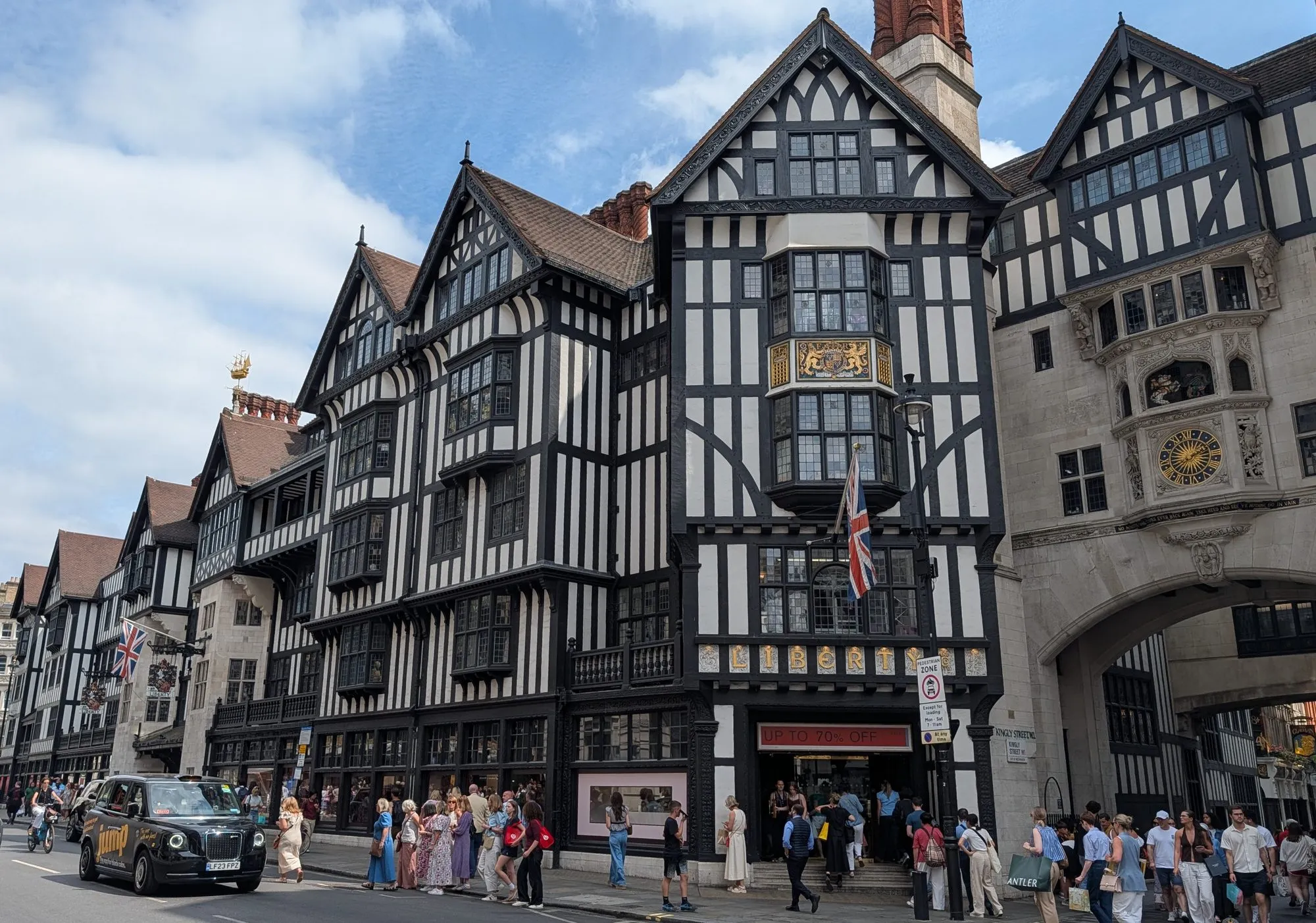
Mid-to-premium, not luxury: Liberty just off it on Great Marlborough Street is the essential stop — a mock-Tudor building made from two ships’ timbers, and the best haberdashery, fabric and scarf departments in the country. Hamleys for toys, seven floors of it. Apple, Burberry, & Other Stories, Lululemon along the street itself.
Just south, Piccadilly has Fortnum & Mason (below) and Waterstones Piccadilly, the largest bookshop in Europe.
Bond Street, Mayfair and the arcades
Old and New Bond Street are the luxury spine — Cartier, Tiffany, Chanel, Louis Vuitton, Hermès — plus the auction houses, Sotheby’s on New Bond Street, whose viewing exhibitions are free to walk into and considerably more interesting than the shops.
The arcades are the part people miss, and they are the loveliest shopping in London:
- Burlington Arcade, off Piccadilly — opened 1819, the oldest of them, still patrolled by Beadles in top hats. Watches, jewellery, Manolo Blahnik, Globe-Trotter luggage.
- Piccadilly Arcade, Princes Arcade and the Royal Arcade nearby.
- Jermyn Street, one street south — the shirt street, and the place to buy a proper British shirt or shoe: Turnbull & Asser, New & Lingwood, Bates the hatter.
You can walk all of the above in forty minutes, and it costs nothing to look.
The independent streets
This is where Londoners actually shop.
- Marylebone High Street — the best of them. Daunt Books in its galleried Edwardian room, La Fromagerie, Cadenhead’s whisky, and a Sunday farmers’ market behind it.
- Columbia Road, Sunday only — flowers, but the shops behind the stalls are the real find: ceramics, prints, vintage.
- Redchurch Street, Shoreditch — design, denim, skincare.
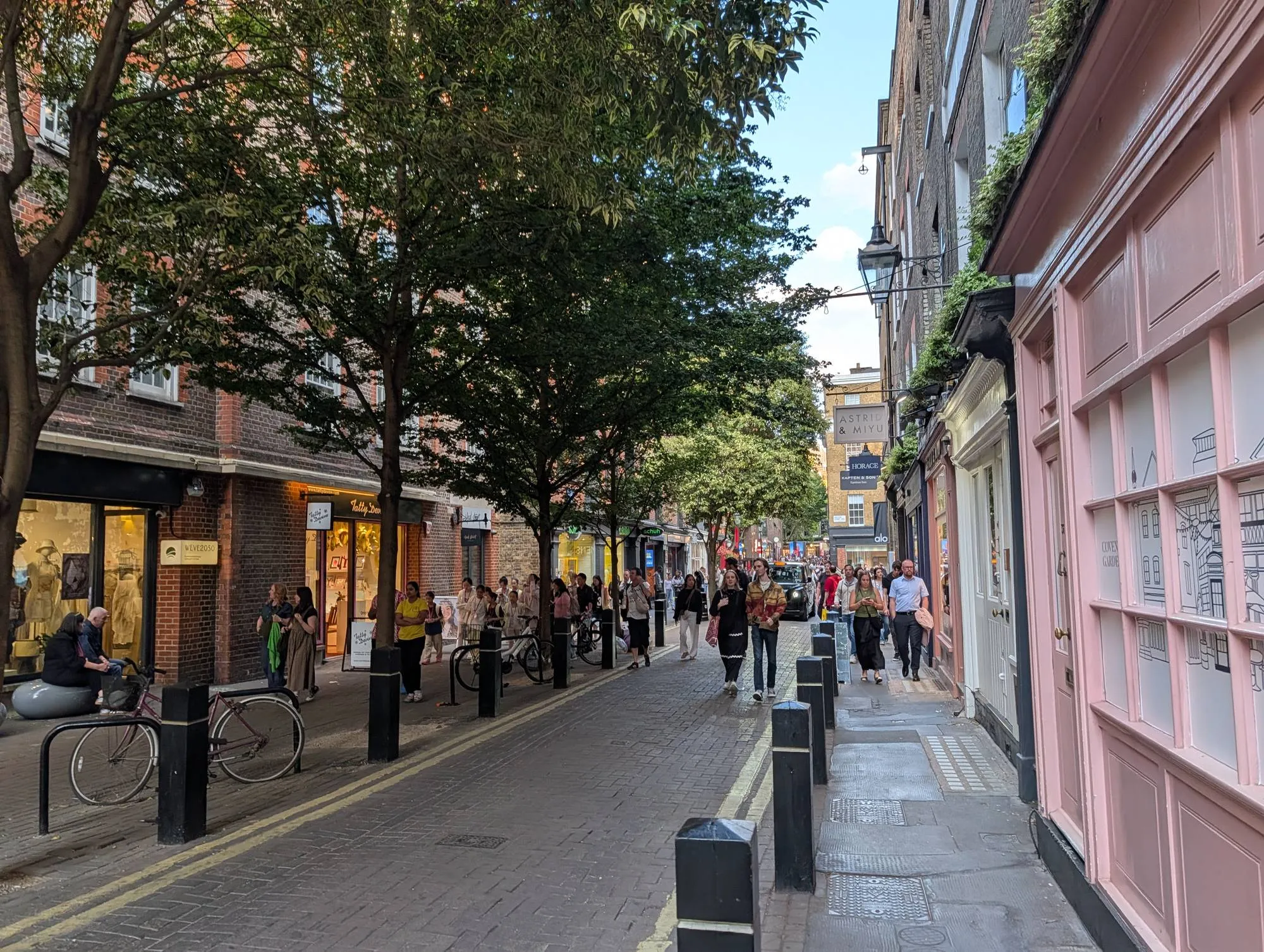
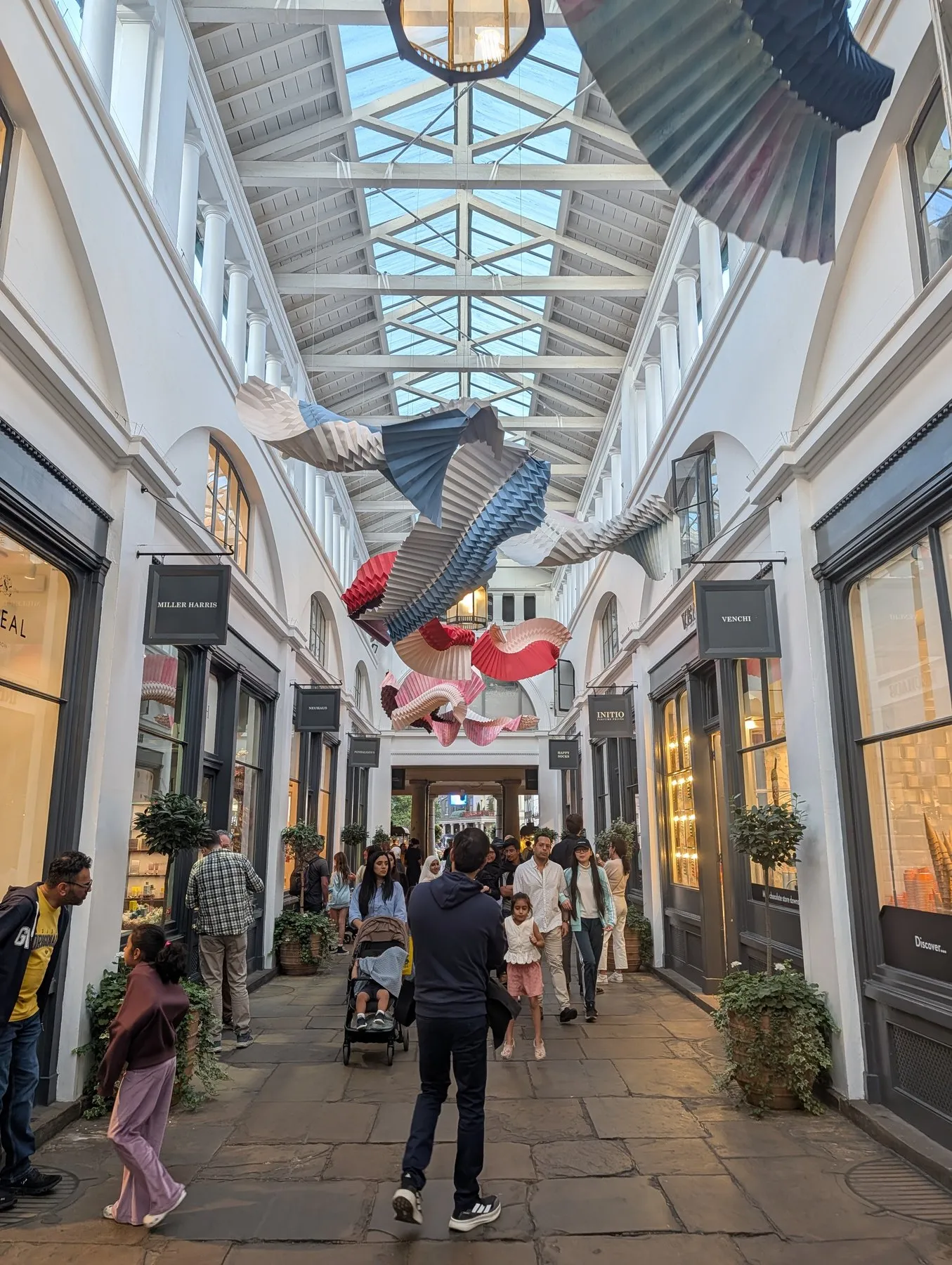
- Seven Dials and Neal Street, Covent Garden — small brands in seven radiating streets, and Neal’s Yard Dairy is the best cheese shop in London.
- King’s Road, Chelsea — less punk, more homeware, and the Saatchi Gallery at the end is free.
- Broadway Market, Hackney — Saturday.
- Church Street, Marylebone — antiques, and Alfies Antique Market, five floors of twentieth-century design, Tuesday to Saturday.
Carnaby and Soho
Carnaby Street is fourteen pedestrian streets rather than one, aimed squarely at independent and mid-market brands, and good for gifts. Kingly Court behind it is three galleried floors of food.
Soho proper is for records, instruments (Denmark Street) and books.
💷 Visitors often ask about VAT refunds. The rules changed after Brexit and the answer surprises people — our tax-free shopping guide explains what you can and cannot reclaim, and where the exceptions still apply.
The department stores
| Store | What it is really for | Price feel |
|---|---|---|
| Selfridges, Oxford Street | The best all-rounder. Fashion, beauty, food hall | ££–££££ |
| Liberty, Great Marlborough Street | Fabric, scarves, haberdashery, the building itself | £££ |
| Fortnum & Mason, Piccadilly | Food and edible gifts. The best souvenir shop in London | ££–£££ |
| Harrods, Knightsbridge | The food halls. Go for those and the building | £££–££££ |
| Harvey Nichols, Knightsbridge | Fashion-led, less crowded than Harrods | £££–££££ |
| John Lewis, Oxford Street | Where Londoners buy things to keep | ££ |
| Peter Jones, Sloane Square | John Lewis with a nicer view | ££ |
On Harrods specifically: it is the one most visitors go to and the one most likely to disappoint as a shop — it is enormous, crowded, and the fashion floors are priced for a different customer. Go for the food halls, which are magnificent. There is a dress code of sorts, enforced loosely: no visible sportswear or ripped clothing.
Fortnum & Mason is the one to save for last, because it solves presents for everybody in one building.
Markets, and what day they actually run
The day counts for more than anything else in this section. Turning up on the wrong one is the commonest London shopping mistake.
| Market | What for | Days |
|---|---|---|
| Portobello Road | Antiques | Antiques Saturday only. General market Mon–Wed and Fri; Thursday half day, closes 1pm; no street market Sunday |
| Camden Market | Vintage, gifts, food | Daily, 10am–7pm |
| Old Spitalfields | Design, prints, vintage | Daily; themed days, busiest Sunday |
| Brick Lane / Truman Brewery | Vintage, records | Sunday is full strength |
| Columbia Road | Flowers, and the shops behind | Sunday only, 8am–3pm |
| Broadway Market | Food, makers | Saturday |
| Greenwich Market | Crafts, makers | Wed–Sun |
| Borough Market | Food | Closed Monday |
| Leadenhall Market | The building, mostly | Weekdays |
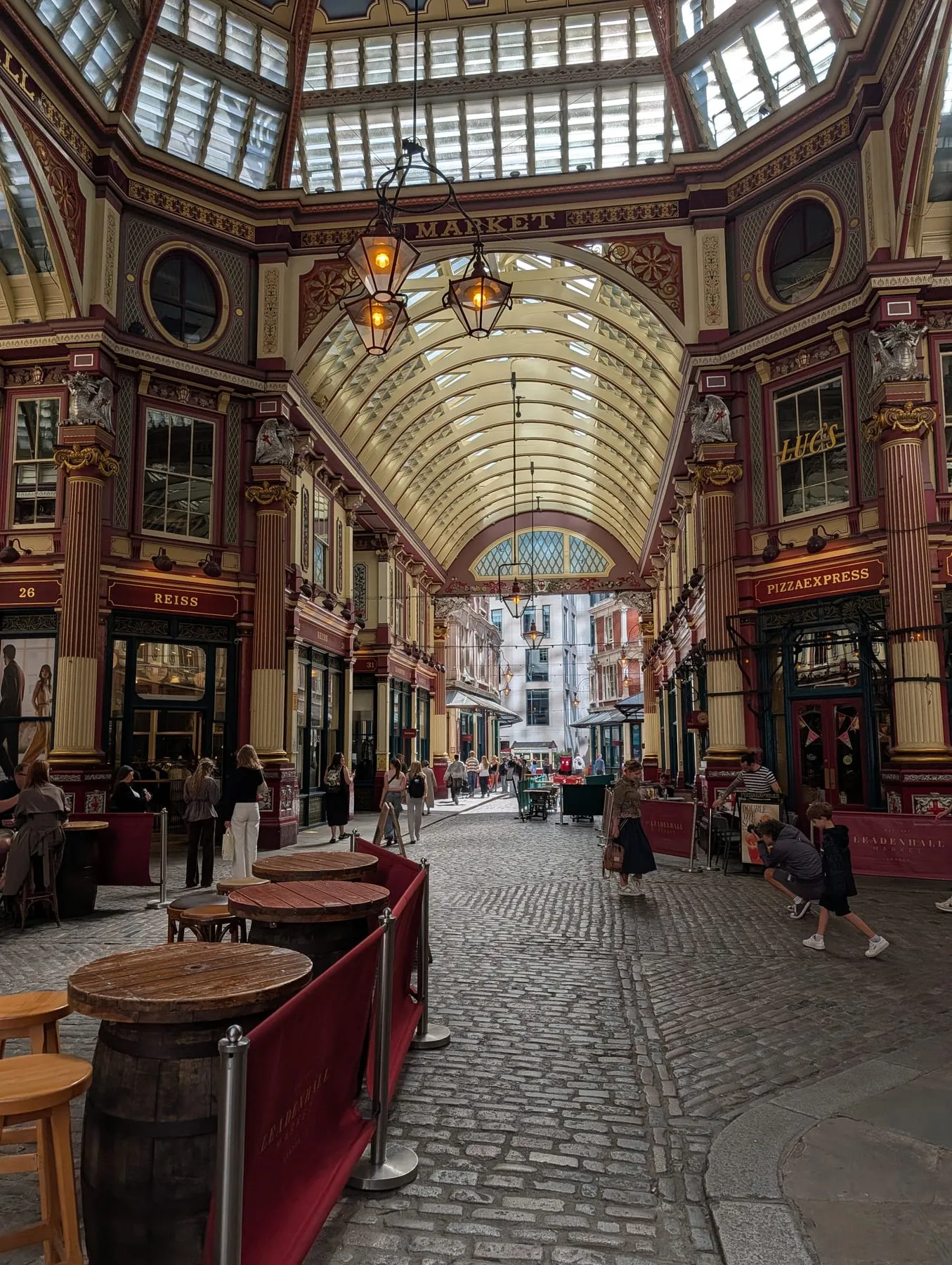
Leadenhall Market.
Portobello deserves the warning in bold. It is famous for antiques and the antiques are Saturday only. Arrive before 10am — by midday the northern end is impassable. The rest of the week it is a good general market and a poor antiques one.
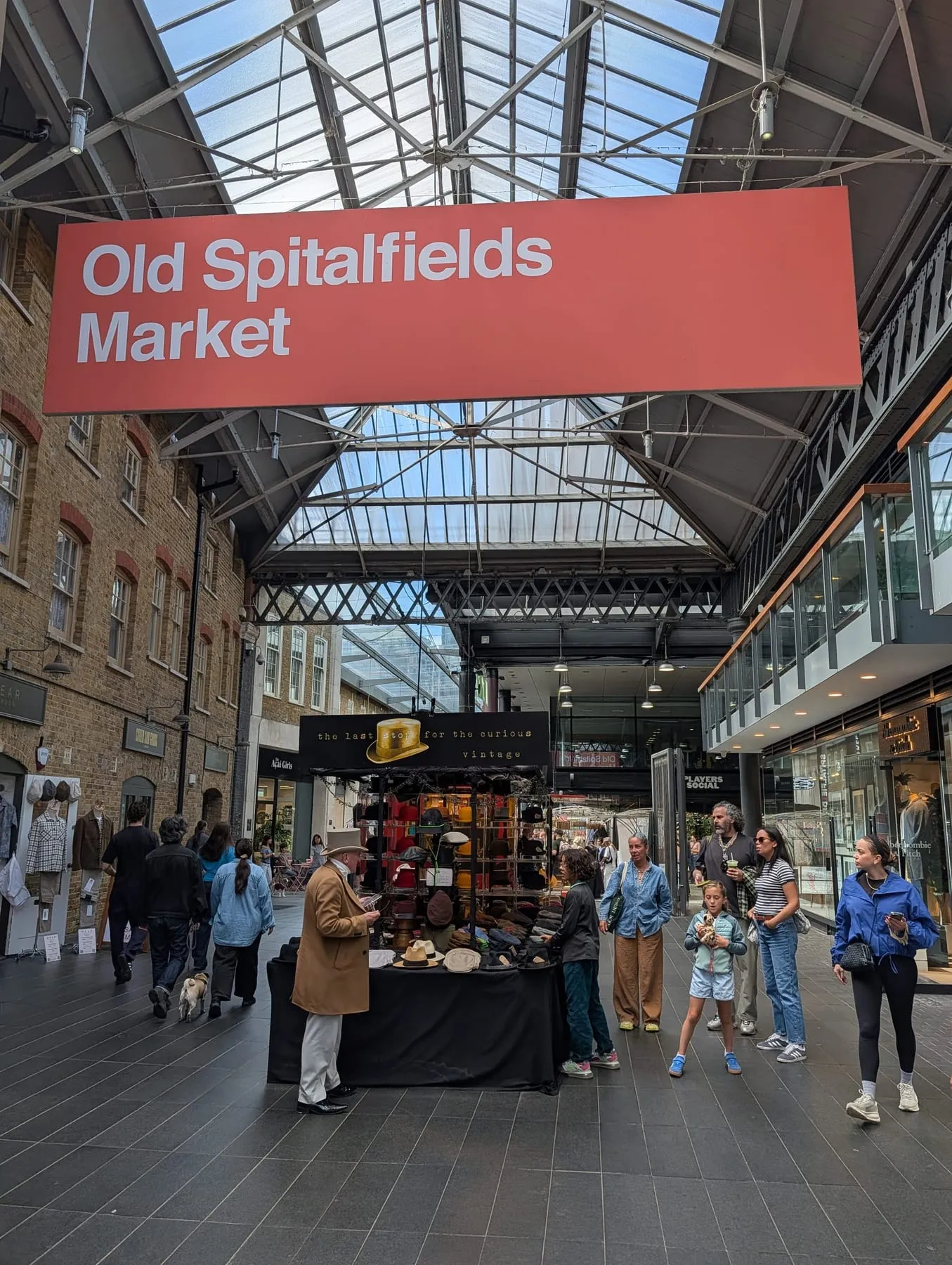
Old Spitalfields Market.
Vintage and second-hand
London is one of the best cities in Europe for this, and prices span an enormous range.
- Camden — the biggest concentration. Stables Market is the serious end; expect £15–£60 for a decent piece, more for branded denim or leather. Go on a weekday if you want to actually look at things — weekends are packed.
- Brick Lane Vintage Market — the biggest vintage market in London, in the basement of the Old Truman Brewery at F Block, 85 Brick Lane. Dozens of independent traders under one roof, covering the 1920s through to the 1990s: denim, leather, men’s suits, fur coats, bridal, vinyl and accessories. Open seven days a week — Mon–Fri 11am–6.30pm, Sat 11am–6pm, Sun 10am–6pm — which makes it the one vintage stop you can do on a weekday, when it is far calmer.
- Brick Lane on a Sunday — the wider stretch adds Upmarket, Backyard Market and the Truman yards, and kilo sales (buy by weight) run regularly. Cheapest way in, and busiest by a distance.
- Beyond Retro, Rokit and Blitz — the reliable chains, Dalston and Shoreditch.
- Charity shops in wealthy postcodes. Chelsea, Marylebone, Hampstead and Primrose Hill are where the good donations land.
- Alfies Antique Market, Marylebone — twentieth-century design and vintage fashion, five floors, Tuesday to Saturday and far calmer than Portobello.
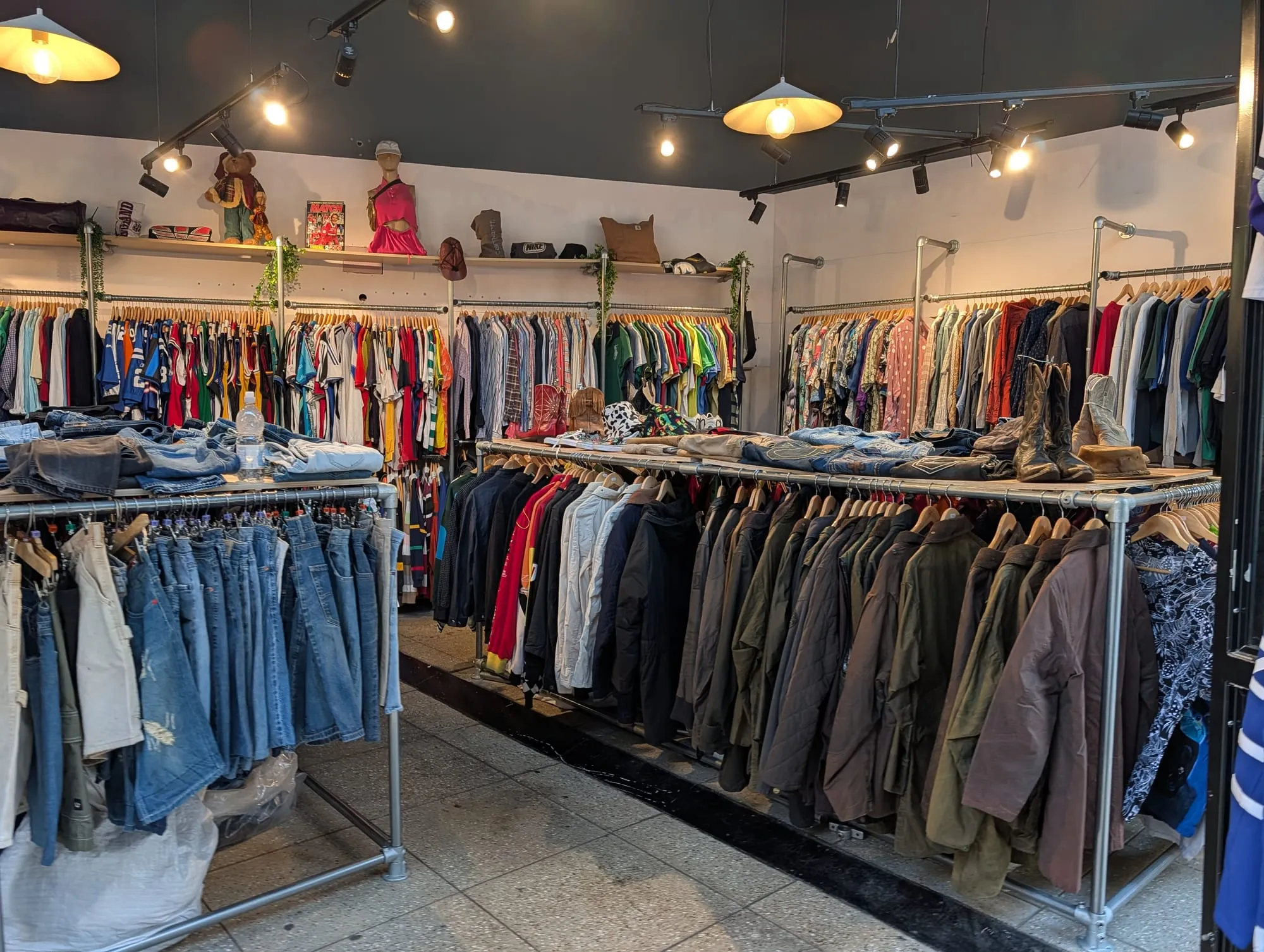
Camden Market.
Malls and centres
For when it is raining, or you want everything in one building.
- Westfield London, Shepherd’s Bush — the largest shopping centre in Europe. Everything from Primark to Louis Vuitton, plus The Village for luxury. Typically 10am–9pm, and the Sunday six-hour rule applies to the big units.
- Westfield Stratford City — nearly as large, next to the Olympic Park, and generally less crowded.
- Battersea Power Station — the newest, and worth going to for the building whether or not you buy anything. Direct on the Northern line.
- Coal Drops Yard, King’s Cross — small, design-led, in restored Victorian coal warehouses. The best-looking of them.
- One New Change, by St Paul’s — mid-market shops, but the free roof terrace has the best close view of the cathedral in London.
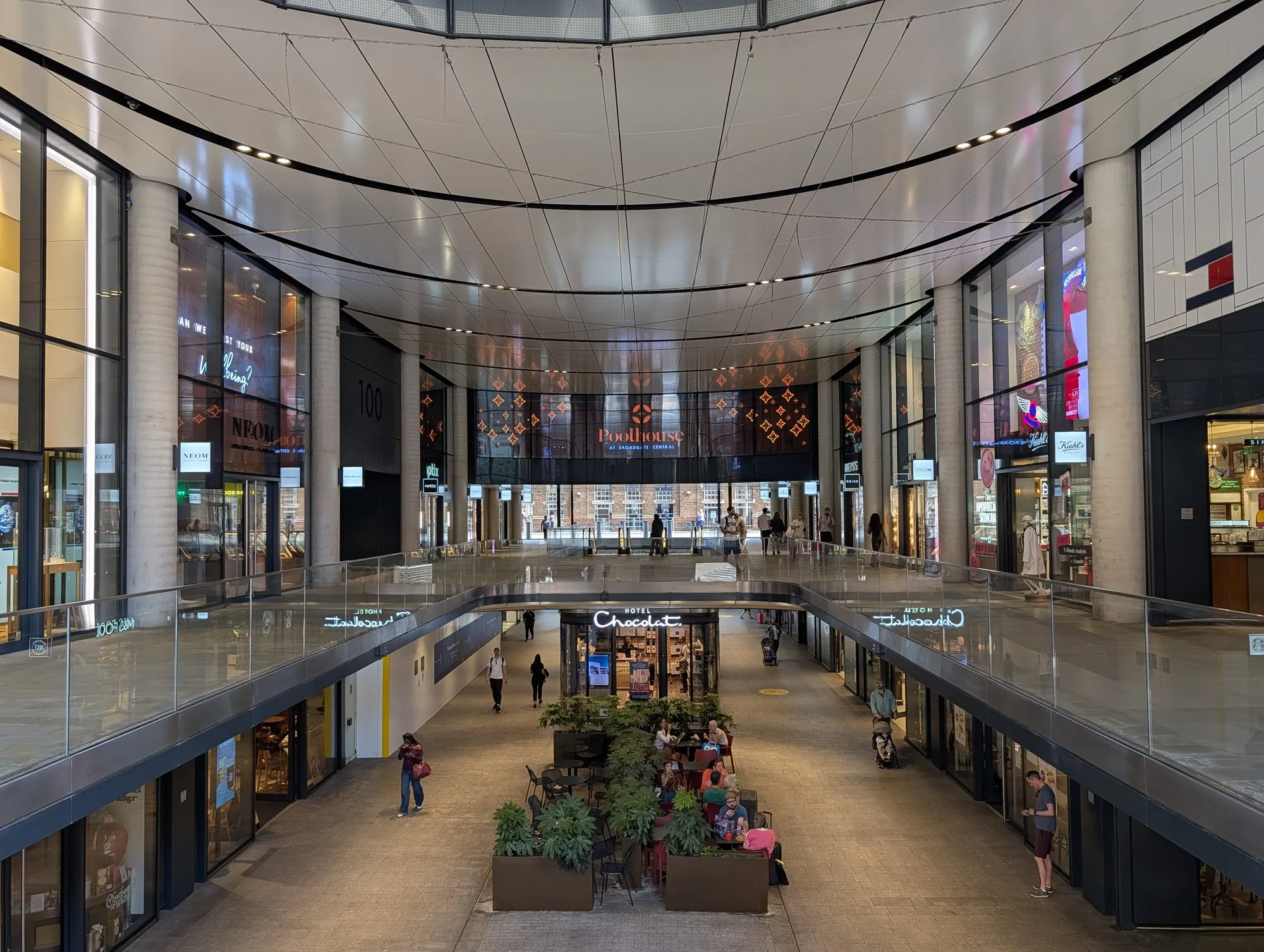
- Broadgate, by Liverpool Street — shops and restaurants around a covered circle in the middle of the City’s offices. Convenient if you are already there, but it works to office hours: busiest at lunchtime on a weekday and very quiet at the weekend.
- Brent Cross and Bluewater — big, out of town, for serious volume shopping.
The two outlets
Different proposition from the malls above: last season’s stock at a discount, in a purpose-built centre rather than a high street. Both of London’s are attached to a major venue, so plan around that venue.
London Designer Outlet, Wembley Park — around 50 stores at 30–70% off list price, and the larger of the two. Nike, adidas, Levi’s, Tommy Hilfiger, Boss, Calvin Klein, Kurt Geiger, Clarks, The North Face and M&S, plus about twenty places to eat, a nine-screen Cineworld and a free covered play park that makes it workable with children.
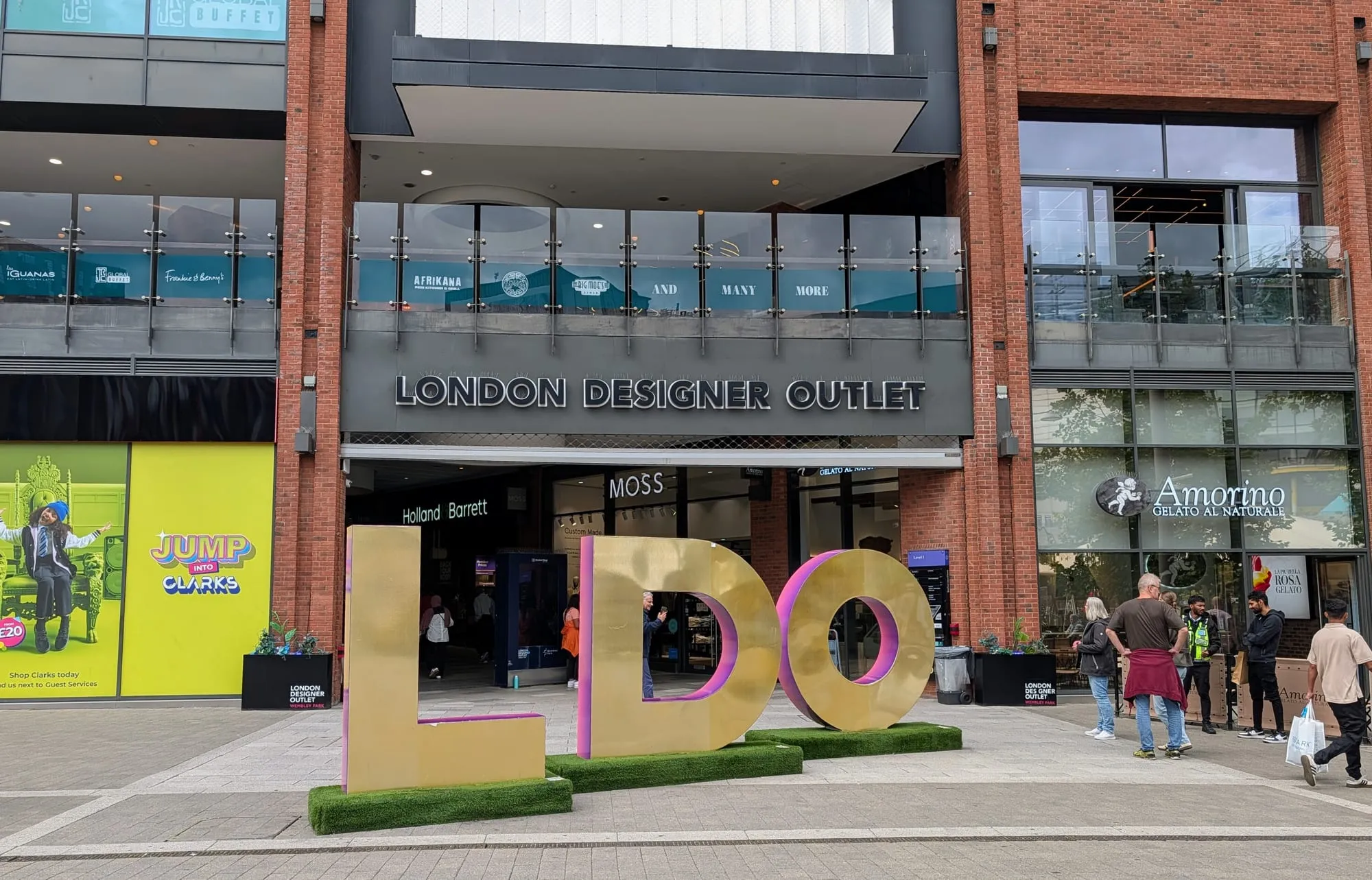
The London Designer Outlet, Wembley Park.
Icon Outlet at The O2, North Greenwich — smaller and more central-feeling, wrapped around the inside of the O2 alongside the bars and restaurants. Ted Baker, Hackett, Gap, Levi’s and Dune among others, open daily 10am–8pm, and a straight run on the Jubilee line to North Greenwich.
⚠️ Check what is on at the venue before you go to either. Both share a site with a major arena or stadium, and on a concert or match day the shops themselves are fine but the station, the food and the walk out are not.
Be realistic about outlet pricing. The percentages are off list price rather than off what the item last sold for, and the stock is previous-season by definition. For genuine bargains they are good; for a specific thing in your size, they are a gamble.
Books, records and specialists
- Books: Waterstones Piccadilly (Europe’s largest), Daunt Marylebone, Foyles Charing Cross Road, Hatchards on Piccadilly (London’s oldest bookshop, 1797), Cecil Court for antiquarian, and the South Bank Book Market under Waterloo Bridge — second-hand books outdoors, daily.
- Records: Sister Ray and Reckless in Soho, Rough Trade East on Brick Lane, Honest Jon’s in Ladbroke Grove, and the Berwick Street stretch.
- Instruments: Denmark Street, though it is much reduced from what it was.
- Art supplies: Cass Art, Islington.
- Maps and travel: Stanfords, Covent Garden.
- Tea: Postcard Teas in Mayfair, Fortnum’s for gifting.
What to actually take home
Food is the best souvenir from London — it is cheaper than fashion, more distinctive than a keyring, and it survives the flight.
| What | Where | Rough price |
|---|---|---|
| Tea | Fortnum & Mason, Postcard Teas | from ~£6 a caddy |
| Cheese | Neal’s Yard Dairy, Borough Market | ~£8–£20 a wedge |
| Marmalade and preserves | Fortnum’s, Borough | £5–£12 |
| Gin | The distilleries, Gerry’s in Soho | £30–£45 |
| Biscuits and shortbread | Fortnum’s, M&S | £5–£15 |
| Liberty print scarf or fabric | Liberty | £40+ |
| Prints and art | Spitalfields, Columbia Road, Greenwich | £15–£60 |
| Vintage clothing | Camden, Brick Lane | £15–£60 |
| A proper British shirt | Jermyn Street | £90–£200 |
| British-made shoes | Jermyn Street, Northampton brands | £150–£400 |
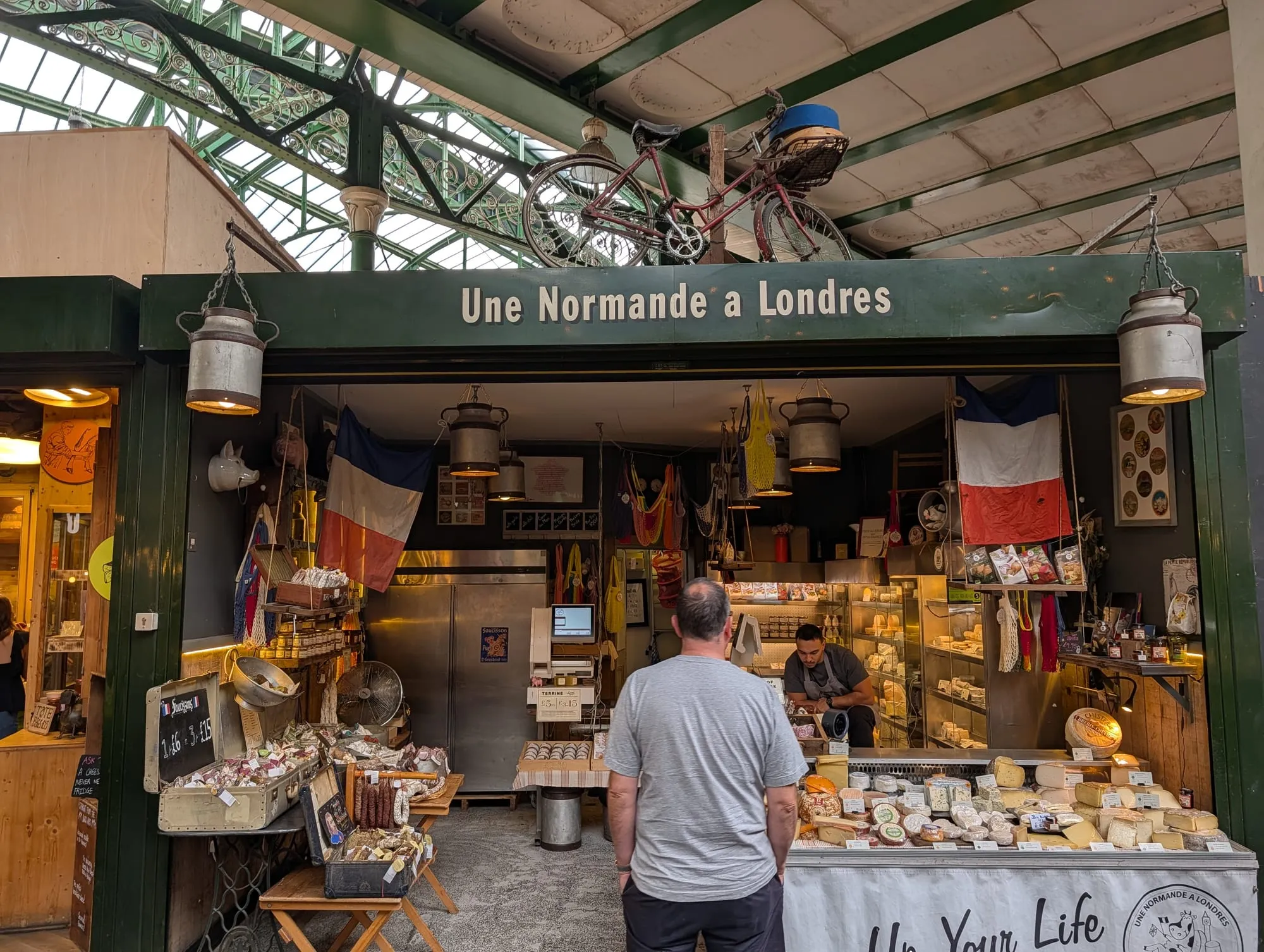
Borough Market’s cheese counter.
⚠️ Check what you can take home. Meat and dairy have restrictions entering many countries, including the EU and the US. Cheese is fine for most of Europe and not permitted into the United States in many forms. Neal’s Yard and Borough will vacuum-pack cheese for travel if you ask — say you are flying. Ask the stall, and check your own country’s rules before you buy £40 of Stilton.
What things actually cost
Rough bands for planning:
- High street outfit: £60–£150
- Designer handbag: £900 upwards, and Bond Street is the same price as everywhere else
- Cashmere jumper: from £120 at John Lewis, £250+ at the specialists
- Vintage jacket: £40–£120
- A record: £20–£35 new, £5–£15 second-hand
- A book: £9–£20 paperback
- Lunch while shopping: £8–£15 at a market, £20+ sitting down
Sales: the big ones are late December to January and late June to July. Bicester Village an hour out is the outlet option, and it is extremely busy at weekends.
Practicalities
Cards everywhere. Contactless is universal; many places no longer take cash at all. You do not need to carry notes.
Opening hours, broadly: Mon–Sat 10am–7pm (later on Thursdays in the West End), Sunday 12–6pm for anything large. Markets are their own thing — see the table above.
Left luggage exists at the big stations if you are shopping on a travel day, and Selfridges and Harrods will hold bags for customers — see our luggage storage guide for prices at every station and the storage apps that undercut them.
The best time to shop is a weekday morning. Saturday afternoon on Oxford Street is unpleasant, and it is not better shopping — it is the same shops with more people in them.
Continue planning your London trip
- 🏪 The Best Markets in London — every market, and what day it runs
- 🍽️ The Best Street Food in London — the food halls, compared
- 💷 London on a Budget — including a day that costs nothing
- 🧭 Best Areas to Visit in London — where the shopping streets actually sit
- ☔ London in the Rain — for when the malls become the plan
Common questions
Can tourists claim VAT back in the UK?
No — not on anything you carry home yourself. The UK abolished the VAT Retail Export Scheme in January 2021 and has not reinstated it, so unlike Paris, Milan or Madrid you cannot reclaim the 20% at the airport. The one exception is if the shop ships your purchase directly to an overseas address, in which case VAT comes off at the till.
What time do shops open on Sunday in London?
Late, and it is the law, not the shop's choice. The Sunday Trading Act limits any shop over 280 square metres to six hours between 10am and 6pm, so most of Oxford Street trades noon to 6pm, with some department stores opening from 11.30am for browsing only. Small independent shops and markets are not restricted.
Where is the best shopping in London?
It depends what you want. Oxford Street for high street chains, Regent Street for mid-to-premium brands in one architectural sweep, Bond Street for luxury, Marylebone High Street and Columbia Road for independents, Camden and Brick Lane for vintage, and Westfield London if you want everything indoors in one building.
Which London market is best for antiques?
Portobello Road on a Saturday, and only on a Saturday — that is the antiques day and the rest of the week is general market and food. Get there before 10am. For twentieth-century design rather than antiques, Alfies Antique Market in Marylebone is open Tuesday to Saturday and far calmer.
How much should I budget for shopping in London?
A high-street outfit runs £60–£150, a decent pair of British-made shoes £150–£400, and cashmere from £120. Vintage at Camden or Brick Lane runs £15–£60 a piece. Edible gifts are the best value souvenir — Fortnum's tea from about £6, Borough Market cheese from around £8 a wedge.
Is Oxford Street worth visiting?
For the scale and the department stores at the Selfridges end, yes. For actual shopping, the same chains are everywhere and quieter, and one street back — Marylebone, Bond Street, Carnaby, Seven Dials — is more interesting in every direction. Treat it as a sight, not a shopping trip.