In this guide
At a glance
- Vibe
- Bohemian, village-like and relentlessly photogenic
- Time needed
- Half a day, or a full day on a Saturday
- Best day
- Saturday for the full market; Friday for antiques without the crush
- Travel zone
- 1–2
- Walkability
- 5/5
- Typical spend
- ££
Best for
Nearest stations
- Notting Hill GateCentralDistrictCircle
- Ladbroke GroveCircleHammersmith & City
- Westbourne ParkCircleHammersmith & City
Notting Hill is a west London village of pastel terraces, antique arcades and a market that stretches for over a mile. It is also one of the most misunderstood areas in the city: most visitors turn up on the wrong day, photograph the wrong streets, and leave wondering what the fuss was about.
This guide covers what is actually open when, which streets have the houses you have seen online, and how to combine Notting Hill with the canal walk east that most people miss entirely.
Notting Hill has its own share of the commemorative plaques marking where notable people lived or worked - see them on our interactive map.
Why visit — and who should skip it
Come here if you like browsing more than ticking off landmarks. Notting Hill rewards slow wandering: antique arcades, secondhand bookshops, independent boutiques on Westbourne Grove and an excellent pub scene. It is the best area in London for vintage and antiques by a wide margin, and one of the prettiest to walk through in good weather.
Skip it if you are on a short trip built around major sights. There is no museum here, no cathedral, no palace. Notting Hill is atmosphere and shopping. On a three-day first visit, Westminster, the South Bank and the British Museum will serve you better — save this for a return trip or a spare Saturday.
One warning: the pastel houses are private homes. Residents on Lancaster Road and St Luke’s Mews deal with photographers on their doorsteps every single day, and some have put up signs asking people to stop. Photograph from the pavement, keep off the steps, and do not block front doors.
Top sights and activities
- Portobello Road Market — Over a mile of stalls, and the largest antiques market in the world by number of dealers. The character changes completely as you walk north: antique arcades at the southern end near Notting Hill Gate, then fruit and veg, then vintage clothing under the Westway flyover, then a flea market towards Ladbroke Grove.
- The antique arcades — The real find, and most visitors walk straight past them. Admiral Vernon, Portobello Studios and Roger’s Arcade are indoor warrens of dealer stalls selling silver, jewellery, maps and militaria. Open Fridays and Saturdays only.
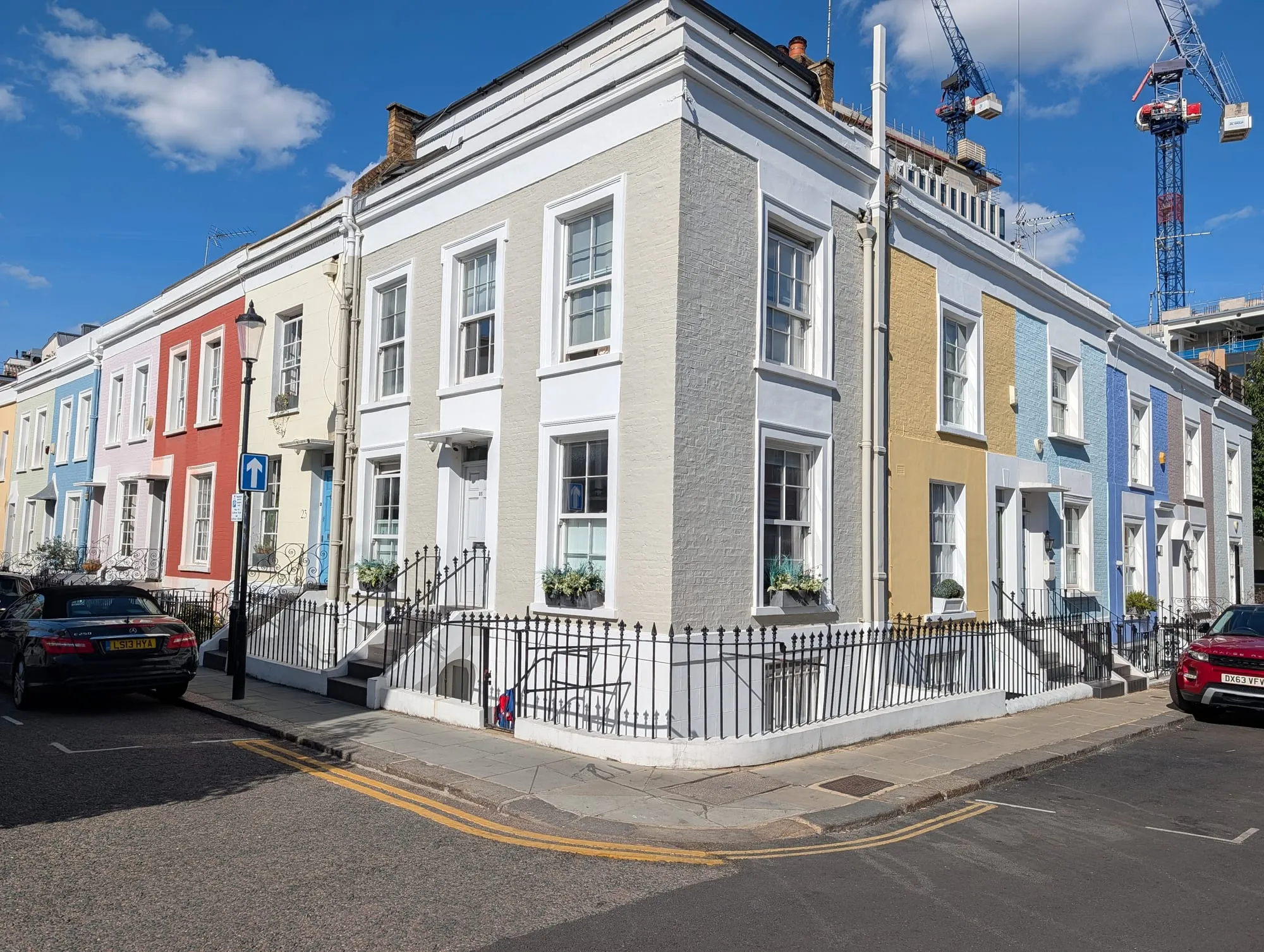
- The colourful houses — Not on Portobello Road, which is where most people look for them. Lancaster Road, just north of Ladbroke Grove station, is the rainbow row from the postcards and the easiest to combine with the market. Hillgate Village, by Notting Hill Gate at the opposite end, is better and almost empty. Our colourful houses walking route covers all eleven streets.
- The Churchill Arms — An 18th-century pub buried under thousands of flowers in summer and around 90 Christmas trees in December, serving Thai food in its back conservatory. Worth the detour on Kensington Church Street.
- Holland Park and the Kyoto Garden — Fifteen minutes south, and the quietest good park in west London. The Japanese garden has koi ponds, a waterfall and resident peacocks.
- Notting Hill Bookshop — The Blenheim Crescent shop that inspired the film. Small, busy, and a working bookshop, not a museum piece.
- Golborne Road — The far northern end, past the flea market. Portuguese cafes, Moroccan grocers and far fewer visitors. This is where locals actually shop.
- Notting Hill Carnival — Europe’s biggest street carnival, over the August bank holiday weekend. Sound systems, mas bands and steel pan through the streets of W11, led by London’s Caribbean communities since 1966. Not a normal sightseeing day — shops board up and stations near the route go exit-only or close entirely.
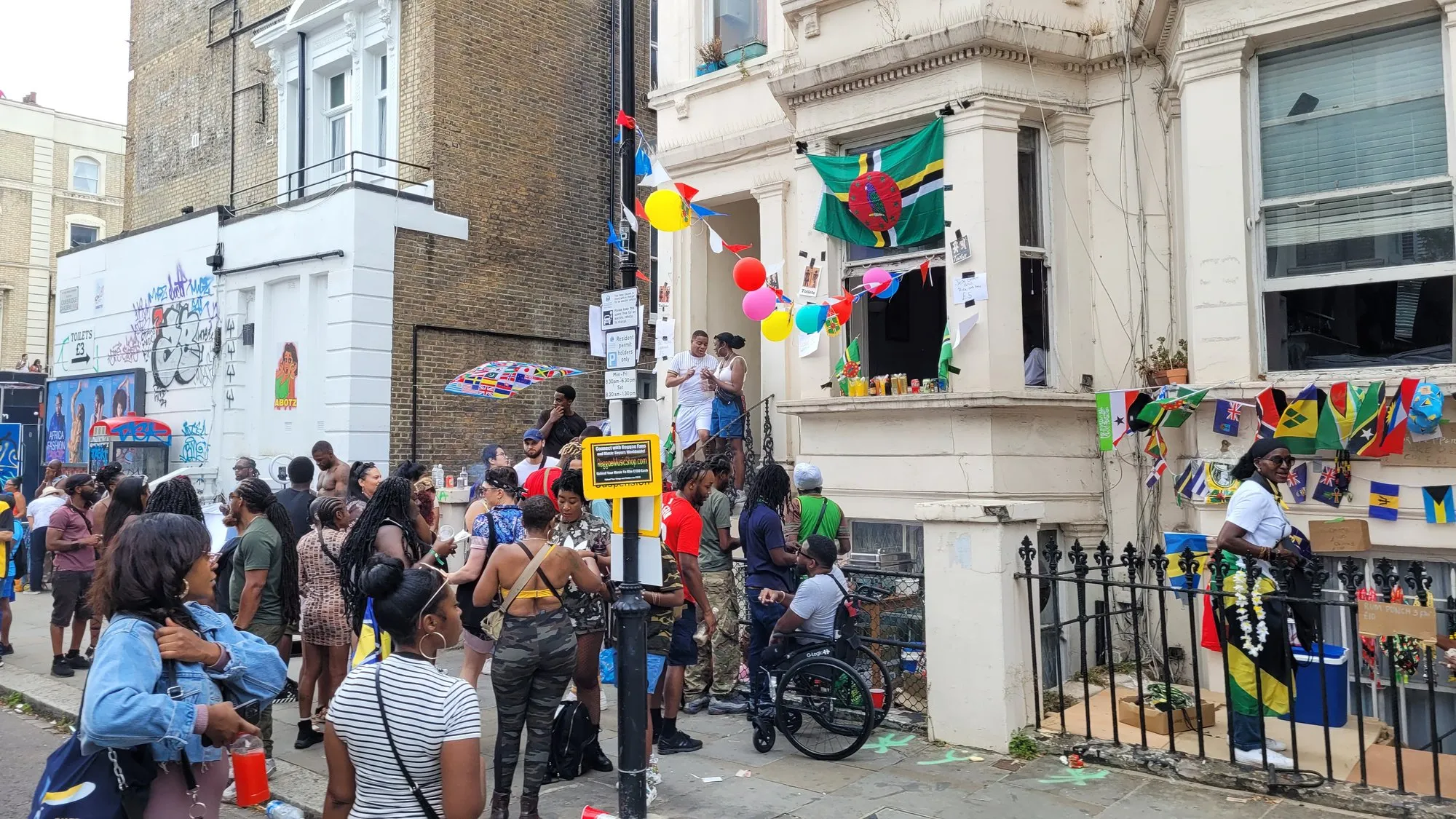
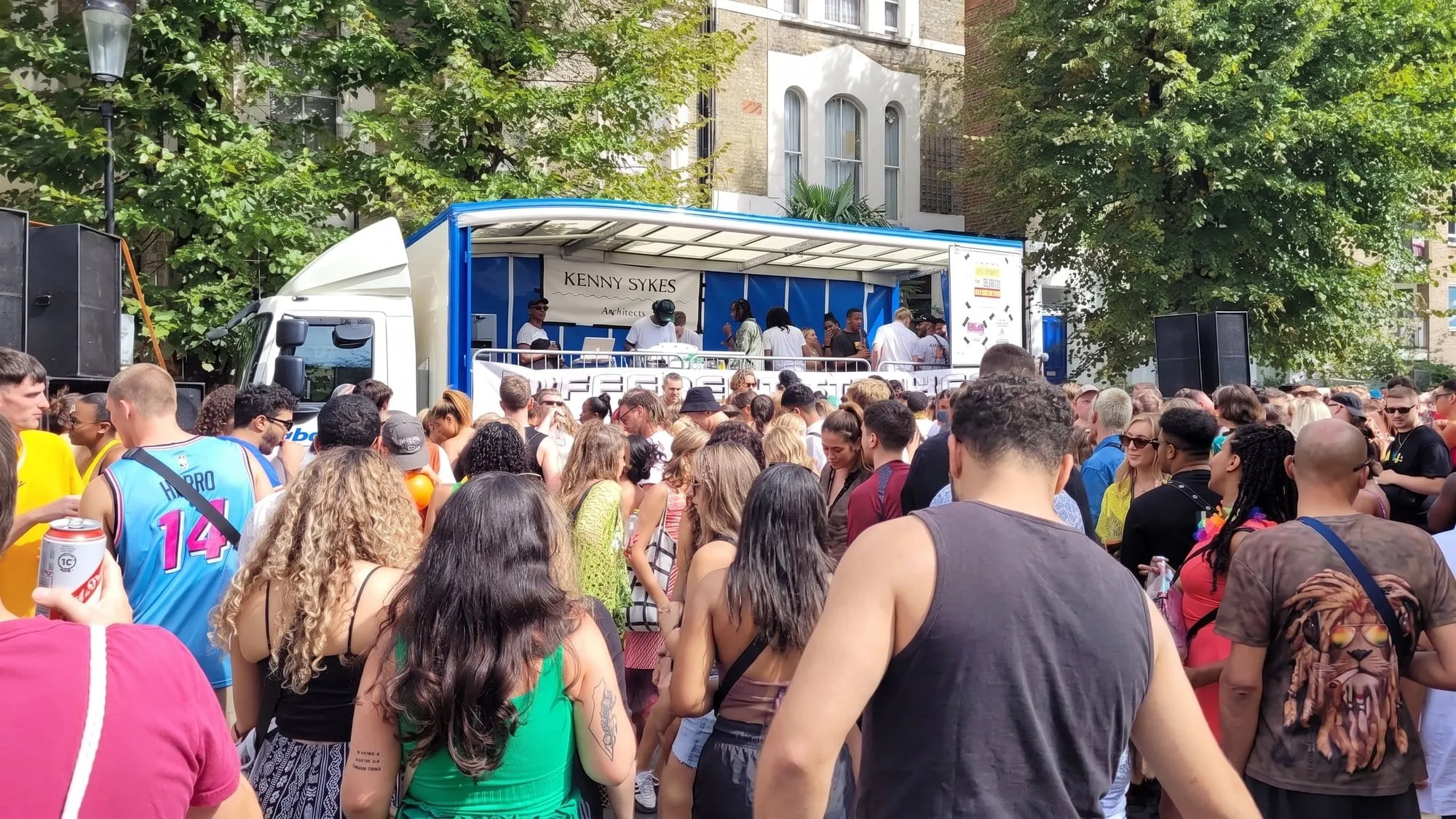
One of Carnival’s sound systems.
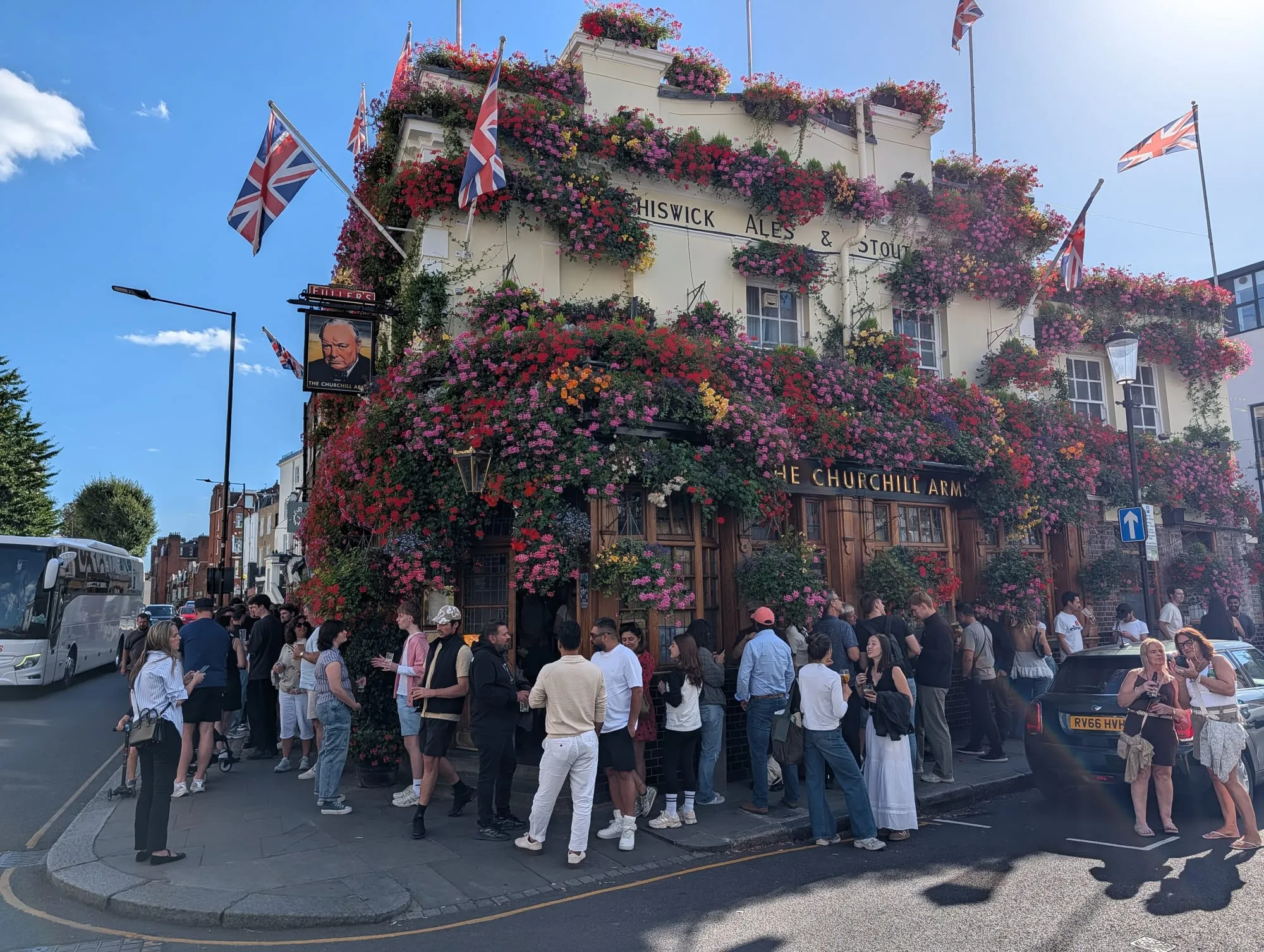
The Churchill Arms.
Key streets and micro-districts
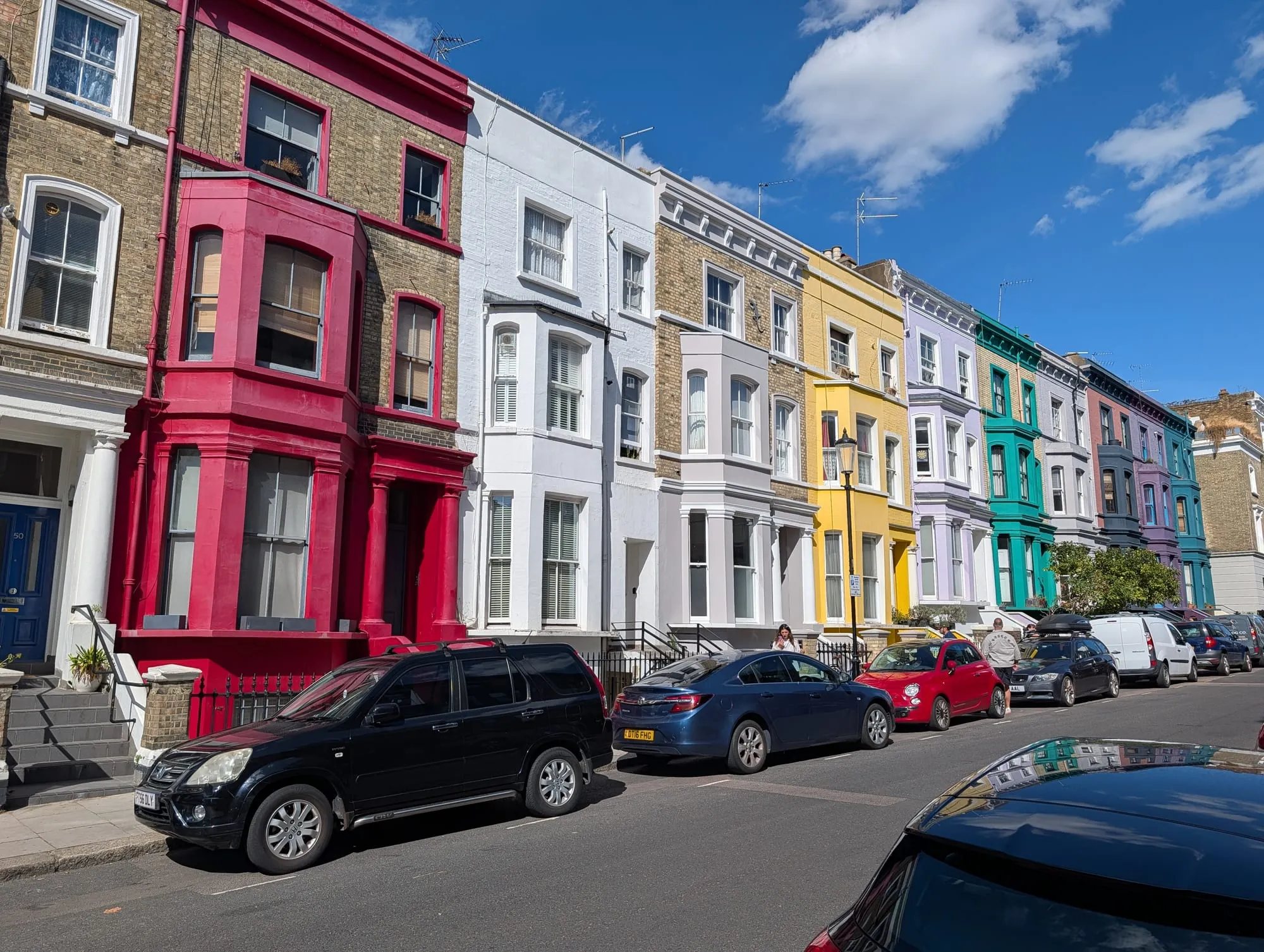
Lancaster Road, the postcard row.
Portobello Road (south) — antiques
From Chepstow Villas down to Elgin Crescent, and the antiques end that made Portobello famous — permanent shops plus a series of indoor arcades holding dozens of small dealers each, in silver, jewellery, prints and militaria.
Saturday is the antiques day and effectively the only one. Friday is a partial trading day; the rest of the week the arcades are shuttered and the street is residential and quiet, which surprises a great many people who arrive on a Tuesday.
Get there before 10am if you want to look at anything. Free, and Notting Hill Gate station is five minutes from the top.
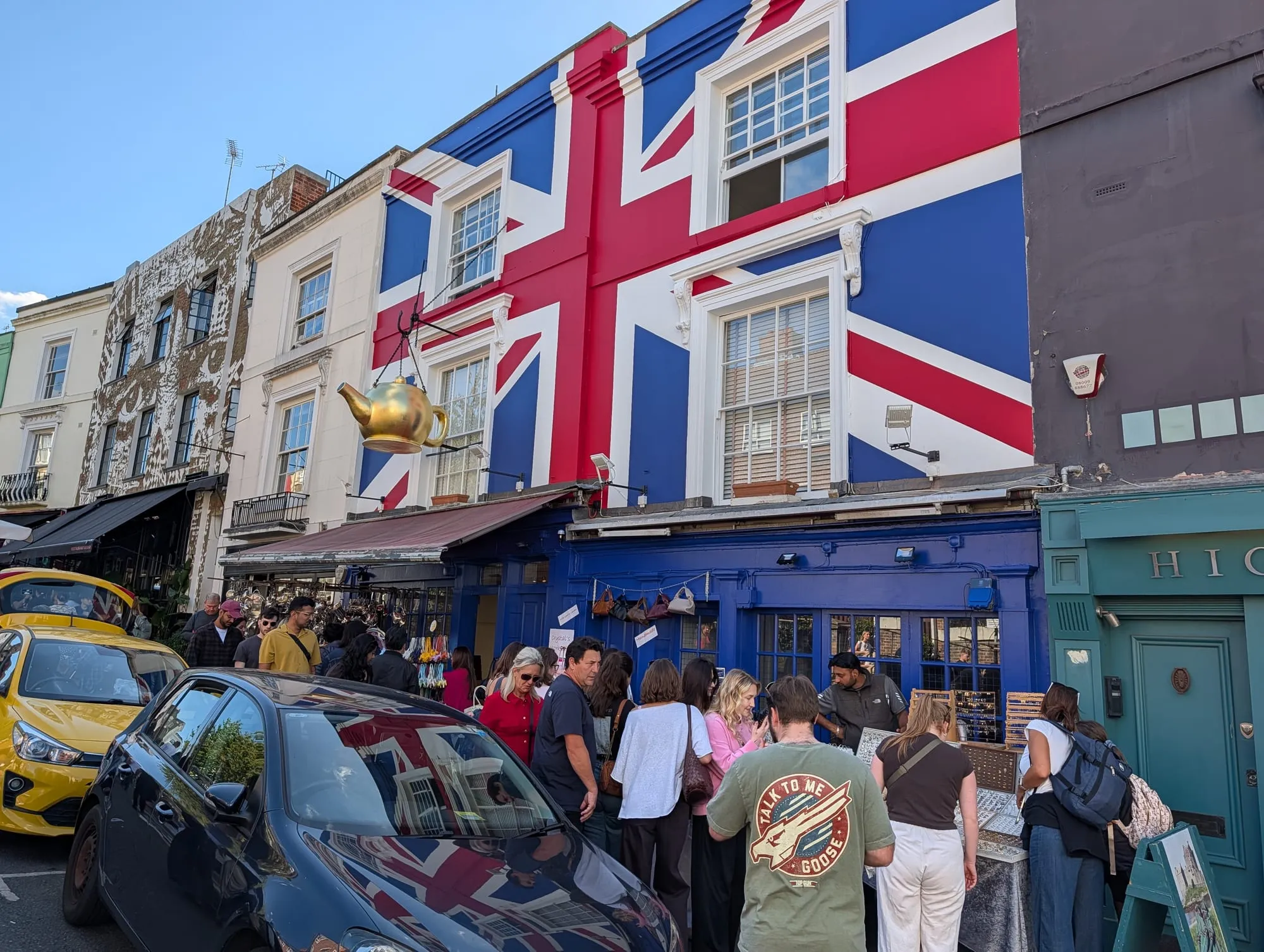
The Union Jack frontage about halfway down is the landmark for finding your way back to the arcades.
Portobello Road (north) and the Westway — vintage
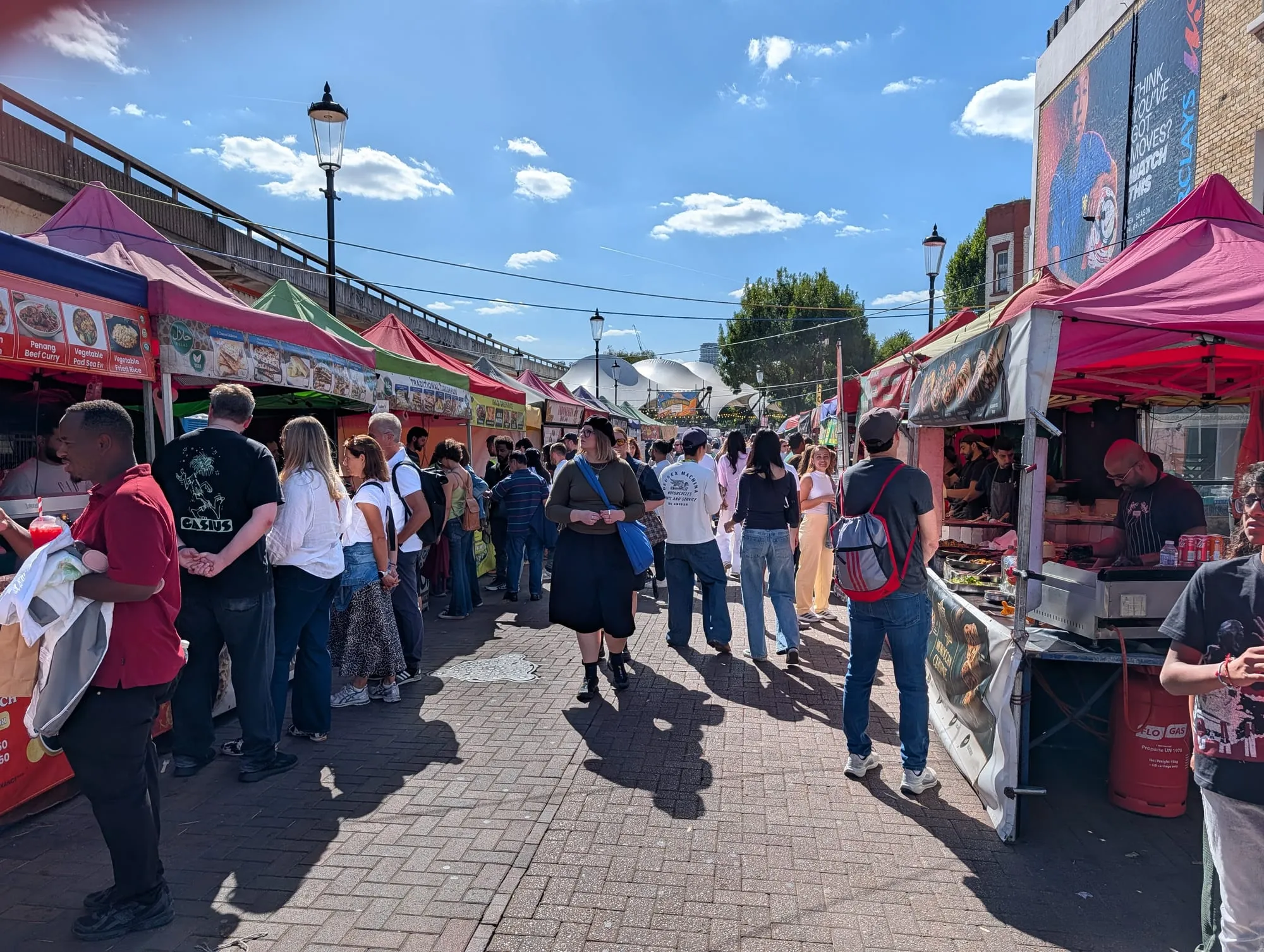
Past Lancaster Road and on under the Westway flyover, where the market changes character completely — vintage clothing, records and street food, not antiques, and a younger crowd.
The stalls under and beyond the flyover run on Friday, Saturday and Sunday, with Friday the best combination of trading and space.
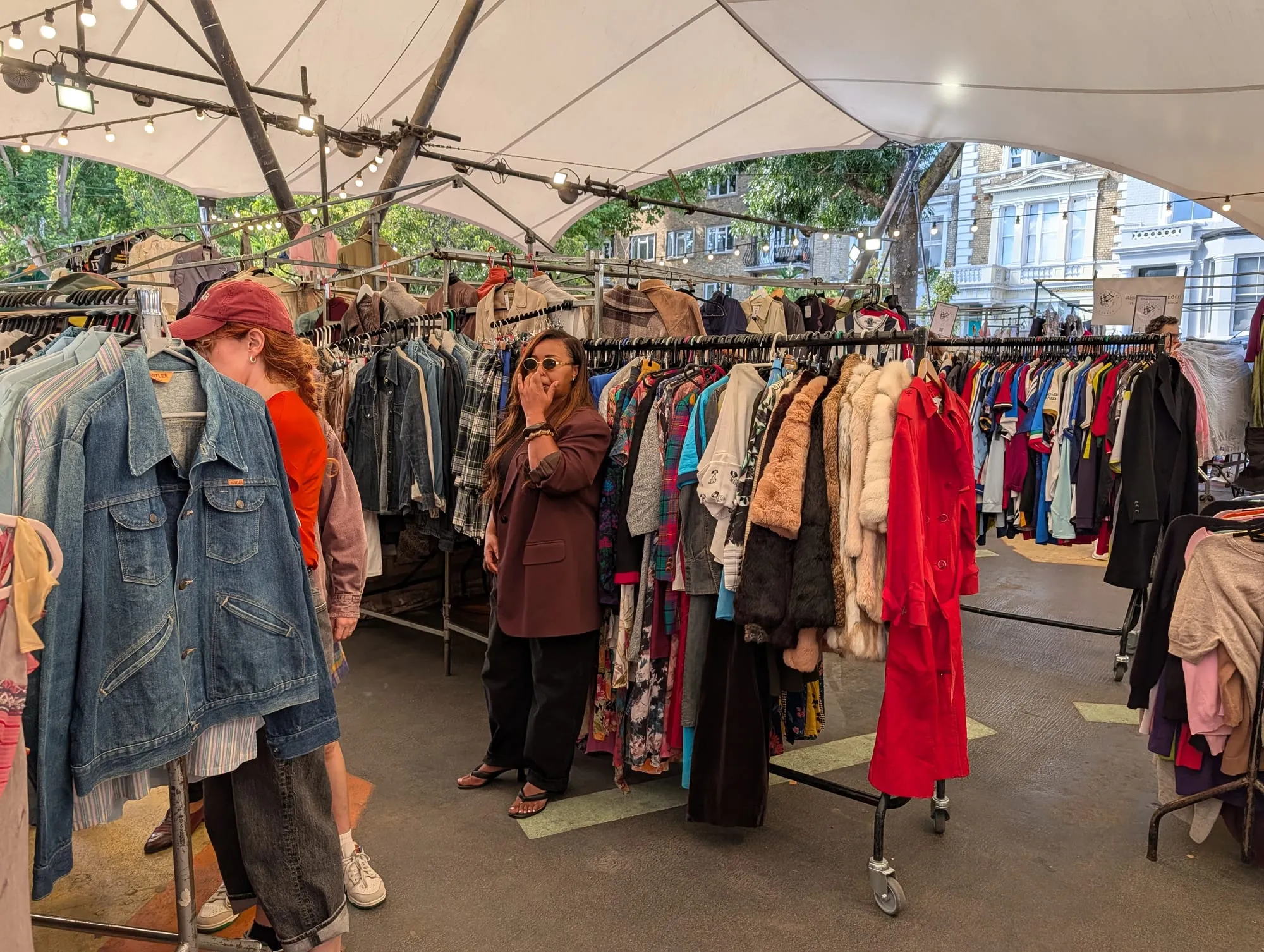
This is the most crowded stretch in the whole area on a Saturday afternoon — shoulder to shoulder between about noon and 4pm. Come Friday if you can.
Westbourne Grove — boutiques and brunch
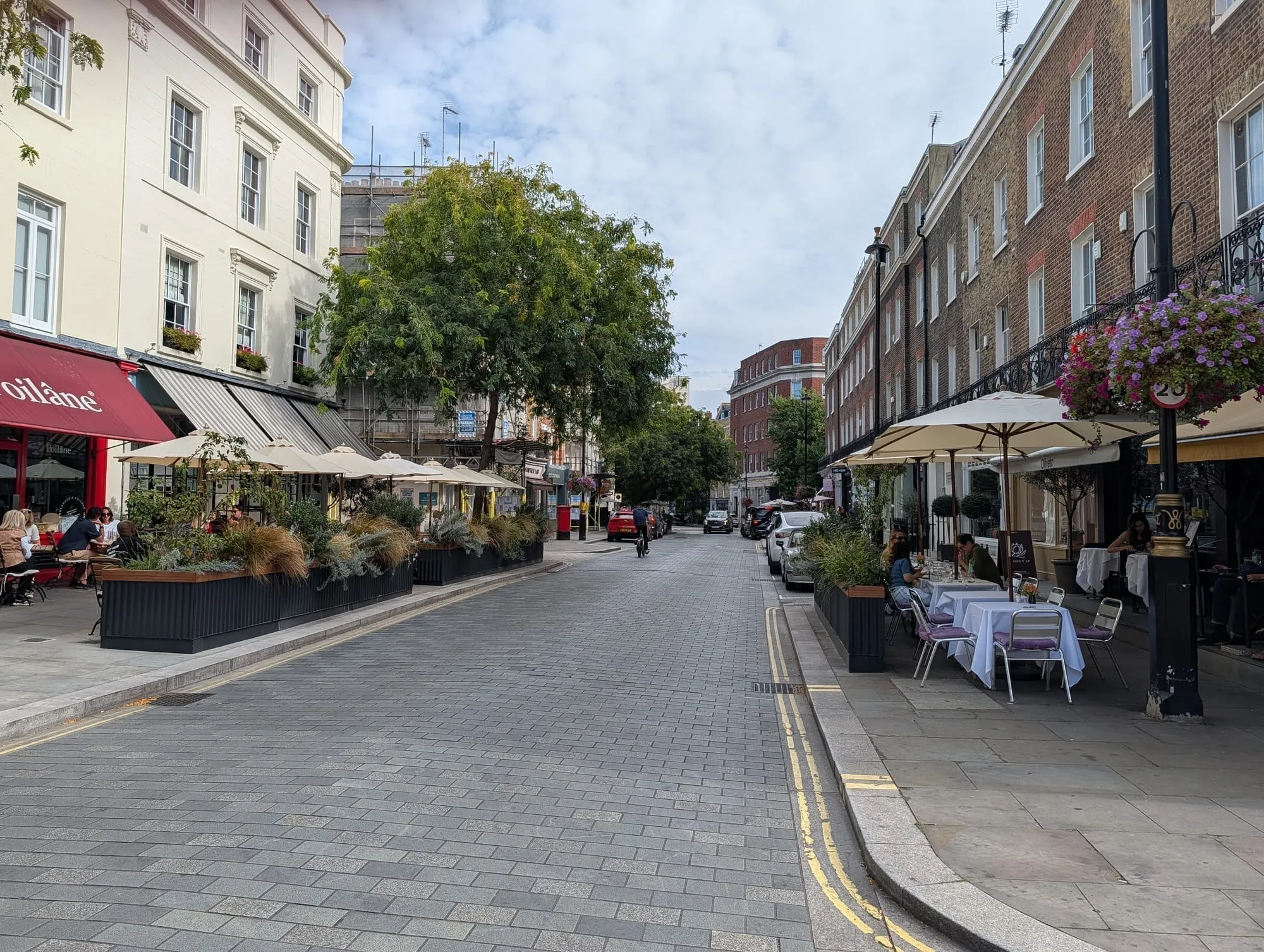
The east–west shopping street, and the reliable answer on any day the market is not running — independent fashion, homeware, and the brunch cafés the area is known for.
It crosses Portobello Road about halfway along, which makes it the natural pivot point for a walk around the area.
Open all week, ordinary shop hours, and considerably calmer than Portobello. This is where to come on a Sunday or a Tuesday, when the market end has nothing on.
Golborne Road — the local end
North of the Westway, and the local end of Portobello — a Portuguese and Moroccan neighbourhood with pastelarias selling custard tarts, a handful of antique dealers at markedly lower prices, and almost nobody visiting.
The market here runs Friday and Saturday and is a genuine second-hand market rather than a curated one.
Ten minutes north of the busy stretch and worth every one of them. Westbourne Park is the nearest station, and the walk up is the fastest way to leave the crowds behind.
St Luke’s Mews and Lancaster Road — the convenient colour
Two short residential streets that appear constantly on social media — St Luke’s Mews for its pastel-painted cottages, one of which was the cue-card doorstep in Love Actually, and Lancaster Road for its run of brightly coloured terraces.
These are not the best colourful streets in Notting Hill. They are the closest ones to Portobello, which is a different thing and the reason everyone ends up at them. If you are already walking the market you will pass within a couple of minutes of both, and on that basis they are worth the detour.
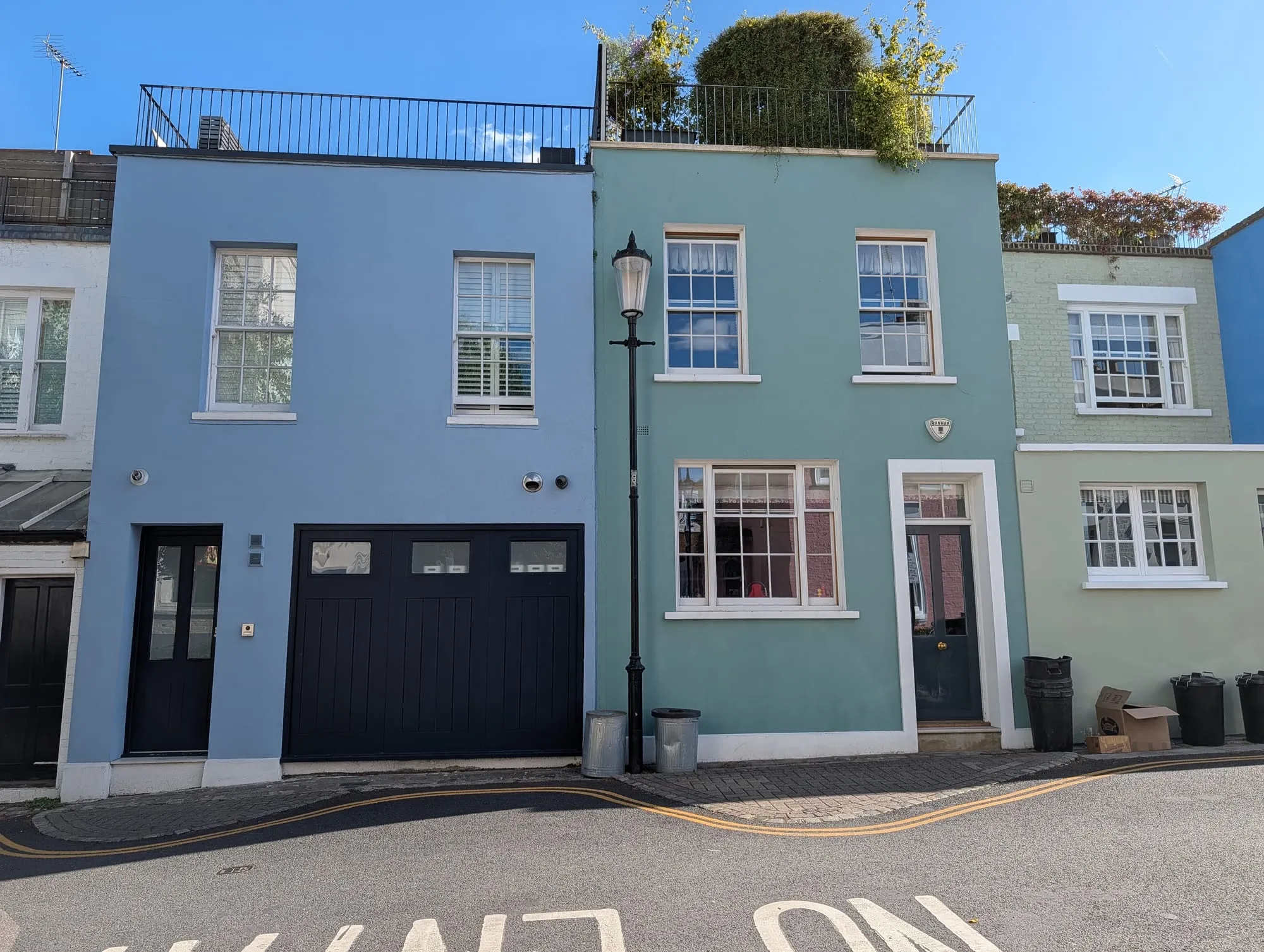
The best run of colour is at the other end of the area. Hillgate Village — four short streets four minutes from Notting Hill Gate station — has the strongest, most concentrated pastel terraces in Notting Hill and a fraction of the visitors, because almost everyone walks north to Portobello instead. On one September afternoon there were two people photographing in Hillgate Village and about thirty on Lancaster Road.
If the houses are why you came, do not plan your day around Portobello. Our Notting Hill colourful houses route maps all eleven streets that actually have the colour, in walking order, from Notting Hill Gate to Ladbroke Grove — about two hours at a photographing pace.
⚠️ These are people’s homes, and the residents have had enough. Both streets are permanently busy with photographers, some of whom sit on doorsteps and block the pavement. Look, take a picture from the road, and keep the noise down — several London mews have started putting up signs about exactly this.
Where to eat and drink
| Spot | Style | Price | Why go |
|---|---|---|---|
| The Churchill Arms | Historic pub, Thai kitchen | ££ | Flower-covered exterior; book the conservatory at weekends |
| The Pelican | Refined pub dining | £££ | The area’s best Sunday roast; reserve well ahead |
| Granger & Co. | Australian all-day cafe | ££ | Ricotta hotcakes; expect a queue after 10am at weekends |
| Layla | Bakery | £ | Excellent pastries on Golborne Road, away from the crush |
| Lisboa Patisserie | Portuguese cafe | £ | Pastéis de nata on Golborne Road since 1985 |
| Electric Diner | American diner | ££ | Next to the Electric Cinema; good for a late lunch |
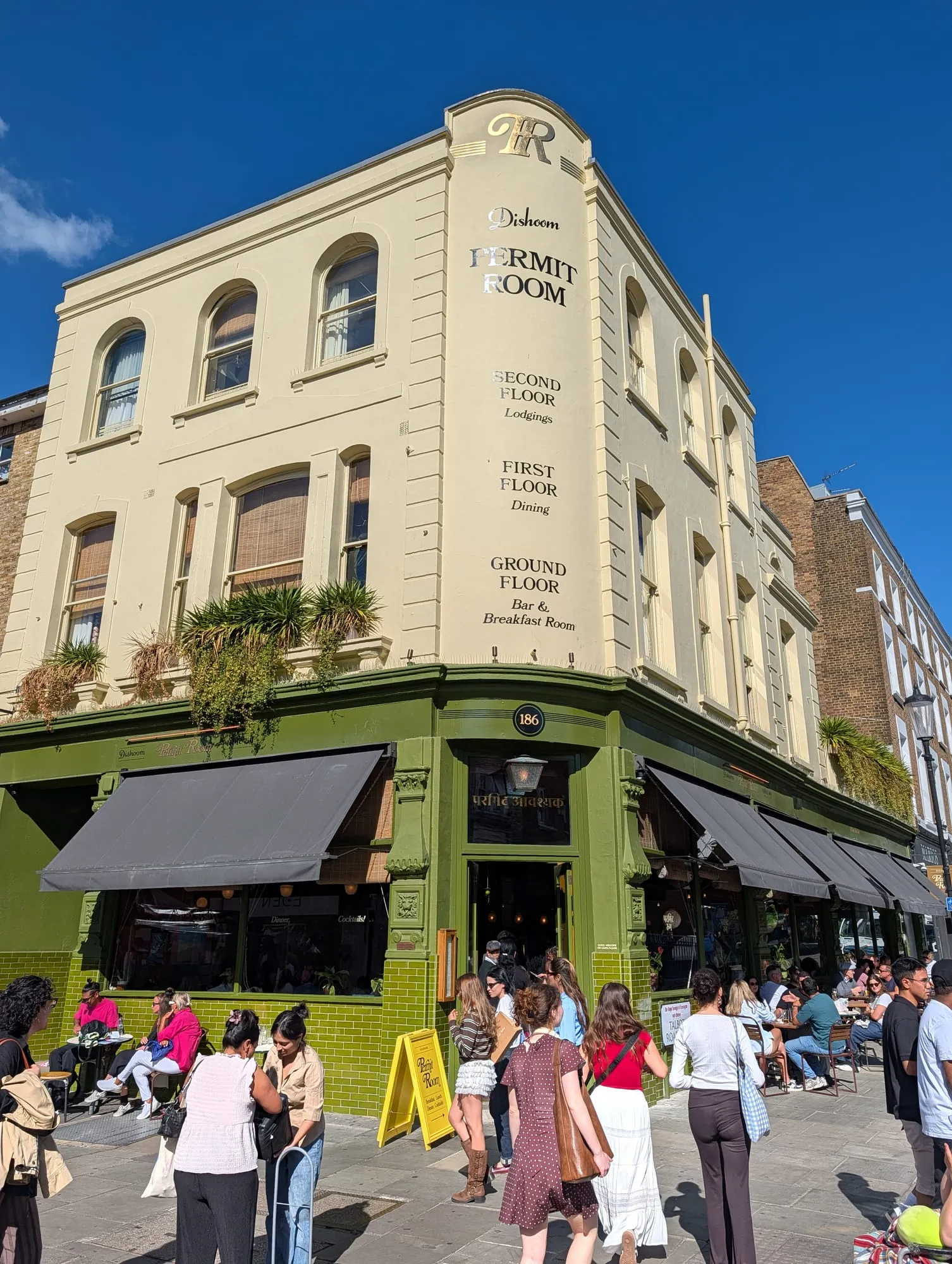
The Distillery, Portobello Road.
Los Mochis on Farmer Street pairs Mexican and Japanese food, and Fan on Chepstow Road serves a Japanese-Peruvian-Cantonese tasting menu. Both are in our fusion restaurants guide.
Mazi and Suzi Tros share Hillgate Street, Zephyr is on Portobello Road, and Aphrodite Taverna has been on Hereford Road since 1988; all four are in our Greek restaurants guide.
See all 22 places to eat and drink in Notting Hill
Getting there
By Tube. Notting Hill Gate sits on the Central, District and Circle lines. The Central line is the fastest from the West End — about eight minutes from Oxford Circus. For the northern end of the market, stay on to Ladbroke Grove (Circle and Hammersmith & City) instead and walk south down Portobello Road, which puts you at the vintage end first and lets the crowds thin as you go.
Best exit. From Notting Hill Gate, take Exit 3 for Portobello Road and follow Pembridge Road north. The market entrance is a five-minute walk.
From Heathrow. Take the Elizabeth line or Heathrow Express to Paddington, then the Circle or Hammersmith & City line two stops to Ladbroke Grove. See the Heathrow Airport transport guide for fares and terminal detail.
On foot. Twenty minutes from Kensington Gardens, twenty-five from Little Venice along the canal. See which lines serve the area in the London Tube and Rail Lines Guide.
How long to spend, and when to go
| If you have | Do this |
|---|---|
| Two hours | Portobello Road from Notting Hill Gate to Lancaster Road, then back |
| Half a day | The full market walk to Golborne Road, lunch, and the pastel streets |
| A full day | Add Holland Park and the Kyoto Garden, or walk the canal to Little Venice |
Best day: Saturday for the complete market, Friday for antiques with room to browse.
Best time: Before 10am. Portobello Road on a Saturday afternoon is shoulder-to-shoulder from the Westway southwards, and the arcades become difficult to browse.
Avoid: Sunday, when the market does not run and much of the road is shut. Also the August bank holiday weekend unless you are specifically coming for Carnival.
Map of Notting Hill
Open the map34 places: 20 places to eat · 4 things to do · 7 hidden spots · 3 places to stay
The map loads when you open this section.
Eat & drinkThings to doHidden LondonStay
What's on in Notting Hill
Limited runs and the annual fixtures. Anything already finished is removed automatically.Links marked ad are affiliate links. If you book through one we may earn a commission, at no extra cost to you. It never affects what goes on this list.
Notting Hill Carnival
Not open yetTwo million people, Europe's biggest street carnival, led by London's Caribbean communities since 1966 - sound systems, mas bands and steel pan through the streets of W11, and free.
SUNDAY IS FAMILY DAY and much calmer than Monday. Ladbroke Grove and Westbourne Park stations go exit-only or shut entirely - plan the walk out before you go in.
Things to do in Notting Hill
Beyond eating and drinking. Free things are listed first.Links marked ad are affiliate links. If you book through one we may earn a commission, at no extra cost to you. It never affects what goes on this list.
Golborne Road
FreeThe far end past the Westway, where the antiques give way to midcentury furniture, Moroccan groceries and Portuguese cafes - and the prices drop with the tourist numbers.
Friday and Saturday for the stalls. Ten minutes further than most Portobello visitors walk, which is exactly why it is worth doing.
Portobello Road Market
FreeTwo miles of stalls running from antiques at the Notting Hill end through fruit and veg to vintage under the Westway - the largest antiques market in Britain.
SATURDAY is the antiques day and the only day the full market runs; the rest of the week is a fraction of it. Go before ten or accept you will be shuffling.
Biscuiteers Icing Cafe
A two-hour icing class in a shop got up like a sweet shop, where you decorate biscuits badly, drink something, and take the results home in a box.
Booked classes rather than walk-in, and they run for adults as well as children - the adult evening ones come with a drink.
Electric Cinema
One of the oldest working cinemas in Britain, open since 1910, with 83 leather armchairs, footstools, and six double beds in the front row.
The room is entirely the point - this is the venue the cinema rule on this tab was written around. Book the beds or the back-row sofas well ahead; in-seat service runs throughout.
Museum of Brands
A Time Tunnel of twelve thousand everyday objects - biscuit tins, cereal boxes, magazines - running from the Victorians to now. Everyone finds their own childhood in it.
Small, indoor and genuinely different from anything else in west London. There is a garden and a cafe at the back that you do not need a ticket for.
Notting Hill Arts Club
18+ in the eveningDescribed as west London's answer to CBGB - a basement bar, gallery and club since the 1990s that has hosted DJs and bands well before they were famous.
Small and basement-level - arrive early for a seat on a busy night.
Hidden Notting Hill
Free, self-guided and easy to walk past without knowing it's there.
201 Portobello Road
Filming locationNotting Hill (1999) - Spike's tattoo parlour
The shopfront used as the tattoo parlour where Spike acquires his ill-advised declaration of love. Portobello Road is full of Notting Hill locations and this is the one nobody photographs, which is its main appeal.
A working street with a market on Saturdays. Free and always visible; go early on a Saturday or on a weekday if you want the street to yourself. Ladbroke Grove is the nearest station.
Banksy's Graffiti Painter (after Velázquez)
Street artA 2008 piece riffing on Velázquez, on Portobello Road
A 2008 piece at the junction of Acklam Road and Portobello Road, riffing on a Velázquez composition with a figure caught mid-graffiti - one of the better-known survivors from Banksy's most prolific Notting Hill years.
Street-level on a well-known corner - worth combining with a Portobello Market visit.
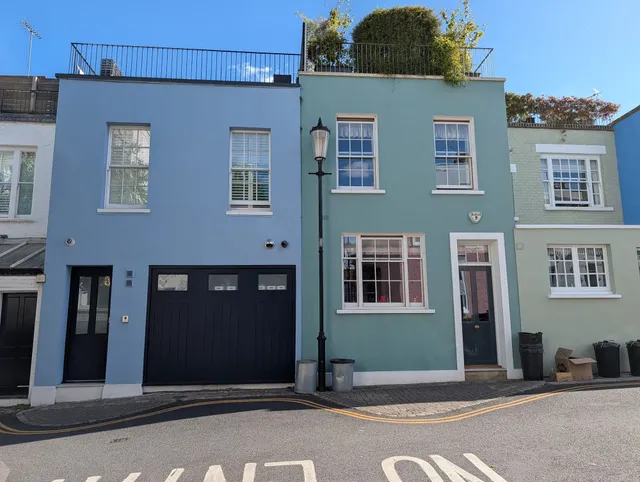
Hillgate Village
Point of interestThe pastel streets behind Notting Hill Gate
Four short streets of small early-Victorian cottages painted in flat pastel blocks - pink, sage, butter, powder blue - and almost nobody on them, because the crowds are four minutes north on Portobello Road. Built as workers' housing for the nearby potteries and brickfields, which is why the houses are so much smaller than the stucco terraces around them.
Residential streets, free and always open. People live here: no tripods, no doorstep posing, and keep the noise down.
Love Actually's Cue-Card Doorstep
Filming locationLove Actually (2003) - Mark's silent declaration
The doorstep where Mark holds up handwritten cue cards to declare his love for Juliet without saying a word - one of the most quoted scenes of the film, on a genuinely pretty pastel mews.
A private residential mews - viewable from the street only.
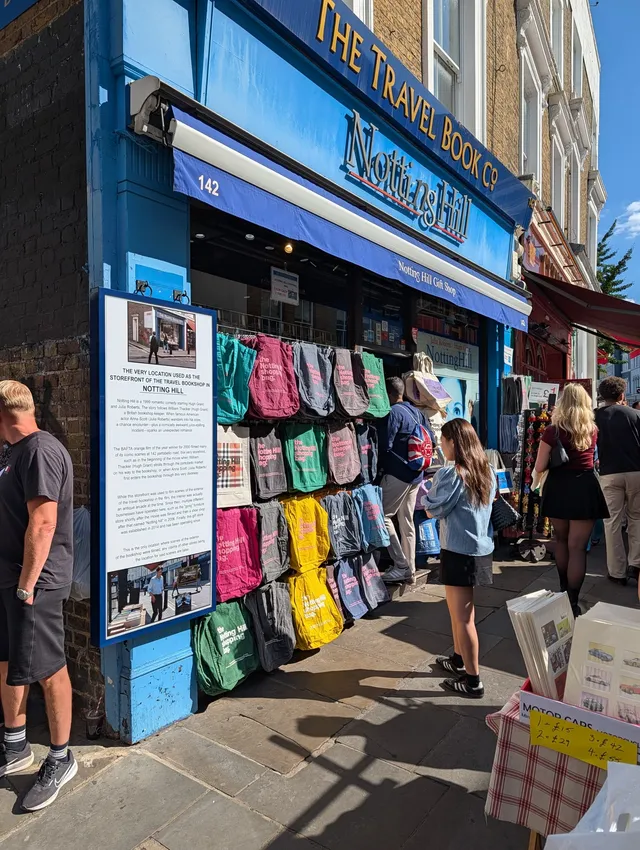
Notting Hill's "Travel Bookshop"
Filming locationNotting Hill (1999) - the exterior of William's bookshop
The shopfront in the film, and an antiques arcade at the time it was shot - the interior was built elsewhere. It has been a shoe shop, a store called Notting Hill from 2006 and a gift shop since 2014, which now paints THE TRAVEL BOOK Co over the door and posts a board explaining the history. Not to be confused with the Notting Hill Bookshop on Blenheim Crescent, which is a different address and a different claim.
A gift shop at street level, open daily and busiest on Saturdays. Photographed constantly from the pavement opposite.
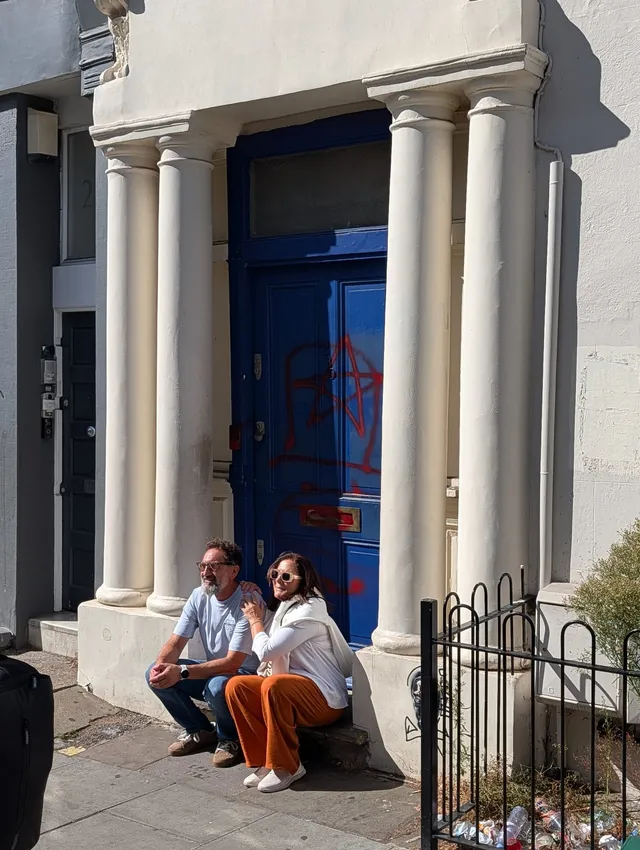
Notting Hill's Blue Door
Filming locationNotting Hill (1999) - William Thacker's flat
The most photographed front door in west London. Screenwriter Richard Curtis owned the real house; when the door was auctioned for charity the new owners repainted it a different colour, but tourists were so confused they painted it blue again.
A private residential building - viewable from the street only. Be considerate; people live here. As of 5 September 2026 the door has been sprayed with red paint and not yet cleaned, so it does not currently look like the photographs.
Notting Hill's Coronet Theatre
Filming locationNotting Hill (1999) - William's cinema scene
A former cinema, now a theatre, where William watches a sci-fi film early in the story - a handsome Victorian building on Notting Hill Gate itself.
Now a working theatre with its own programme and box office hours.
Paddington's Mr Gruber's Shop (Alice's Antiques)
Filming locationPaddington (2014) - Mr Gruber's antique shop
A real, long-running antiques shop that played Mr Gruber's shop in the Paddington films - genuinely worth a browse in its own right, film connection aside.
A working antiques shop with normal daytime hours.
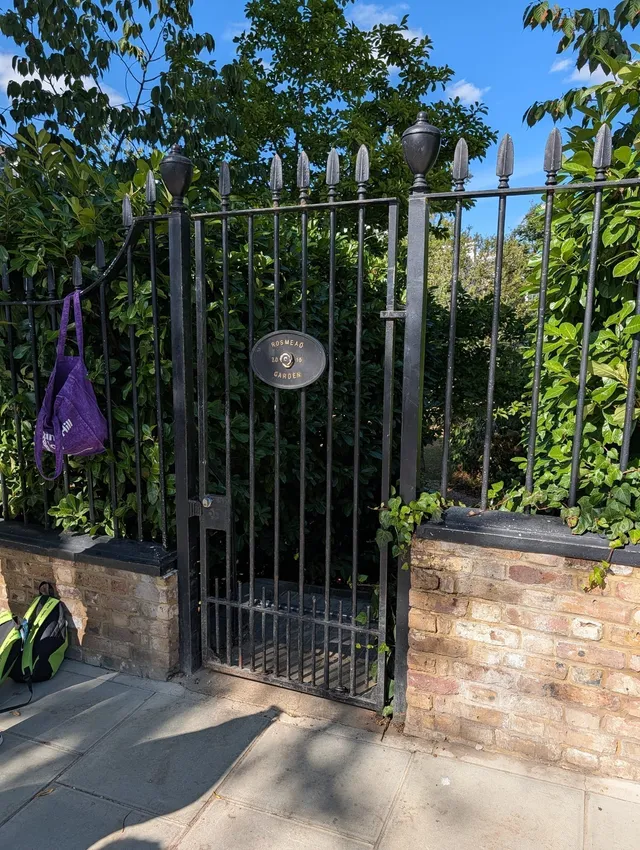
Rosmead Garden
Filming locationNotting Hill (1999) - the private garden William and Anna climb into
The communal garden behind the railings in the whoops-a-daisy scene, and the one Notting Hill location you genuinely cannot visit - it is a private garden square for the surrounding houses, locked, with the name on a small plaque on the gate. Worth the walk anyway for Rosmead Road itself.
PRIVATE - keyholders only, no public access. Visible through the railings from the street.
Stanley Gardens
Filming locationSpectre (2015) - the exterior of Bond's own London flat
The stucco terrace used for where James Bond actually lives, which the films almost never show. Notting Hill rather than Chelsea or Mayfair, which surprised a lot of people at the time.
A residential street - people live here. Free to walk down, always open, five minutes from Notting Hill Gate. Look, do not linger at doorways.
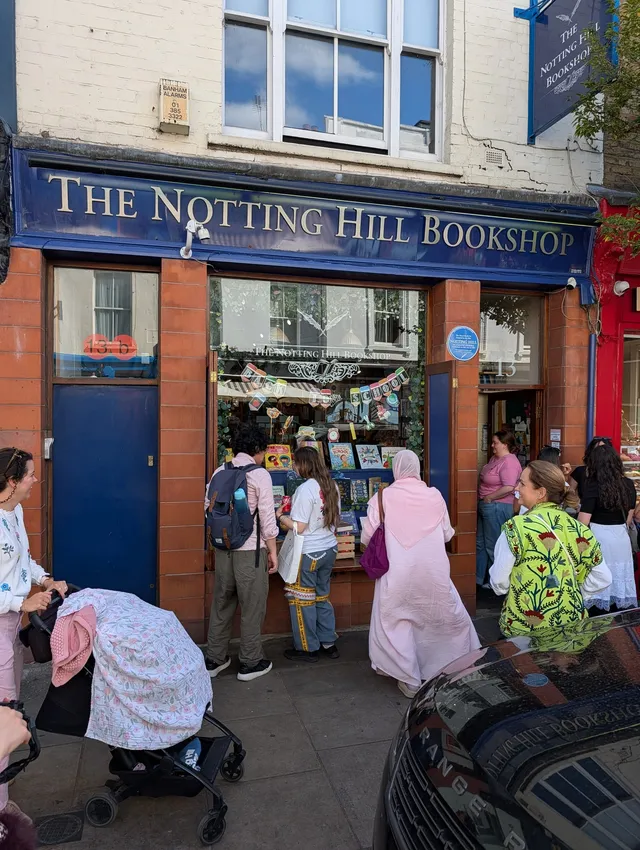
The Notting Hill Bookshop
Filming locationNotting Hill (1999) - the real shop that inspired William's
The Travel Bookshop that gave Richard Curtis the idea traded here for thirty years and closed in 2011; it reopened as The Notting Hill Bookshop and is a working independent bookshop rather than a memorial to a film. Nothing was filmed here, which does not stop the queue outside.
A real bookshop, open daily - you can go in and buy a book. Two minutes from Ladbroke Grove.
The Pankhursts' Notting Hill Home
Blue plaqueEmmeline and Christabel Pankhurst, suffragette leaders
A mother-and-daughter plaque for two of the central figures of the British suffragette movement, on a residential street off Holland Park Avenue.
A private residential building - viewable from the street only.
Where to stay
Notting Hill is a pleasant, quiet base with good Central line access, though it is residential and prices reflect the postcode.
- Portobello and Ladbroke Grove — Small boutique hotels and townhouse conversions. Quiet at night, walkable to the market.
- Bayswater and Queensway — Ten minutes east, noticeably cheaper, and well connected via Paddington for Heathrow arrivals.
- Holland Park — The most expensive and the quietest, with good access south to Kensington’s museums.
Our Notting Hill and Bayswater hotel guide compares the hotels, including Carnival weekend.
If you are arriving from Heathrow and want to avoid changing lines with luggage, staying near Paddington and travelling in each day is often the easier choice.
Cheapest first. Prices are a typical starting rate per night, not a quote.Links marked ad are affiliate links. If you book through one we may earn a commission, at no extra cost to you. It never affects what goes on this list.
Onefam Notting Hill
£HostelOnefam runs its hostels around a shared dinner rather than a bar crawl, which is why solo travellers keep naming it - and Notting Hill is a far calmer base than the party hostels around King's Cross.
Named in 55 posts across 17 Reddit threads, for the free nightly dinner, the pub crawls, the WhatsApp group and quiet hours that are enforced after 10pm. It is the party pick, and that cuts both ways: one solo female traveller wrote that she "personally hated Onefam Notting Hill... It was like 90% men, so when I joined the night activities I felt very uncomfortable".
Ruby Zoe Hotel London
££HotelRuby's format is deliberate: the room is small and the money goes on the bed, the shower and the ground floor. In Notting Hill that trade buys a postcode most budget rooms cannot reach.
Now sold through IHG, so IHG One Rewards applies.
The Laslett
£££BoutiqueAccessible roomsFive listed townhouses on Pembridge Gardens, with work by local artists in the rooms and Portobello Road at the top of the street.
A minute from Notting Hill Gate station, so it is the most convenient of the area's boutiques for the Central and Circle lines.
The Lost Poet
£££TownhouseFour individually decorated rooms in a Victorian townhouse at the very top of Portobello Road, done out with bold wallpapers, modern art and reclaimed panelling from old school science labs - the antiques market starts at the door.
It is a guest house, not an apartment let - it sells four rooms nightly through its own booking engine, with a 3pm check-in and an 11am check-out. There is no 24-hour desk: check-in is online with keyless entry, staff are on site 8am to 6pm and it is phone support outside those hours.
The Pelican
£££Rooms above a pubRooms above one of the better gastropubs in west London, on All Saints Road a few minutes off Portobello.
A small pub with rooms rather than a hotel - no lift, no reception desk in the hotel sense. The dining room is the draw and books ahead.
The Portobello Hotel
£££BoutiqueBreakfast includedA 21-room Victorian townhouse on a quiet garden square, favoured by musicians and actors since the 1970s for exactly the reason it still works - nobody bothers you.
A townhouse with no lift, so upper rooms mean stairs with luggage. Some of the more theatrical rooms - round beds, claw-foot baths in the room itself - are not for everyone; ask before booking.
The Princess Royal
£££Rooms above a pubFour bedrooms named after princesses above a Cubitt House pub, with a light-flooded conservatory, two terraces planted by the garden designer Jinny Blom and a seasonal British and modern European kitchen downstairs.
A pub with rooms, not a hotel - four bedrooms only, over a working pub that also runs two private feasting rooms, so book early and expect noise from below at weekends. The address is W2, on the Bayswater side of Notting Hill a few minutes from Westbourne Grove, although the operator and both guides call it Notting Hill.
Make a day of it
Combine Notting Hill with
Walking times are from the centre of Notting Hill. Each of these works as an afternoon once you have finished here.
Paddington and Little Venice
25 min walkFollow the canal east from Westbourne Park to the Little Venice basin and its narrowboat cafes.
Holland Park and Kensington
15 min walkSouth down Portland Road for the quietest park in west London and its Japanese garden.
Kensington Gardens
20 min walkEast along Bayswater Road for Kensington Palace and the Serpentine galleries.
Shepherd's Bush and Westfield
30 min walkTwo stops west on the Central line when the weather turns and you want cover.
Walking routes
Notting Hill’s Colourful Houses: the eleven streets that actually have them →
Our full route for this area: eleven numbered streets from Notting Hill Gate to Ladbroke Grove, about 3.5km and two hours at a photographing pace, with a Google Maps walking link for your phone. It exists because the pastel terraces are not on Portobello Road, which is where almost everyone goes to look for them. It also covers where the cherry blossom is, if you are here in spring.
The short version, if you want the market too
- Start: Ladbroke Grove station. Walk south to Lancaster Road for the pastel terraces in morning light.
- Portobello Road north: Turn onto Portobello and walk under the Westway through the vintage stalls.
- Golborne Road detour (add 20 minutes): North for a pastel de nata at Lisboa before doubling back.
- The arcades: South past Blenheim Crescent — stop at the Notting Hill Bookshop — and into Admiral Vernon arcade.
- Westbourne Grove: East for boutiques and coffee.
- Finish: The Churchill Arms on Kensington Church Street, or continue south to Holland Park.
Common mistakes to avoid
- Coming on a Sunday. The market does not run. This is the most common Notting Hill mistake — plan for Friday or Saturday.
- Starting at Notting Hill Gate on a Saturday. You arrive at the busiest end and walk against the flow. Start at Ladbroke Grove and walk south instead.
- Missing the indoor arcades. Most people walk the street and never step inside, which is where the serious antique dealers actually are.
- Treating residential streets as a film set. Lancaster Road and St Luke’s Mews are people’s homes. Shoot from the pavement.
- Only walking the southern half. Golborne Road is fifteen minutes further and a completely different, far less touristed neighbourhood.
- Assuming Carnival is a normal visit. Over the August bank holiday the area is closed to ordinary sightseeing entirely.
Common questions
What days is Portobello Road Market open?
The market runs Monday to Saturday, but the sections vary. Saturday is the full market with roughly 1,000 stalls including all the antique arcades. Friday is the second antiques day and is considerably quieter. Monday to Wednesday you will find mostly fruit, vegetables and a handful of general stalls. Thursday is a half day. The market does not run on Sundays, when the road is largely shuttered.
Where exactly are the colourful houses in Notting Hill?
Not on Portobello Road, which is painted shopfronts, not houses. The best-known row is Lancaster Road, just north of Ladbroke Grove station, and St Luke's Mews off All Saints Road has the pink house from Love Actually — those two are the convenient ones if you are already at the market. The best is Hillgate Village, four short streets by Notting Hill Gate station at the opposite end of the area, which almost nobody visits. All eleven streets worth walking are mapped in our colourful houses route. All are private homes on ordinary residential streets.
Is Notting Hill worth visiting if the market is closed?
Yes, but plan differently. Sunday and early-week visits are better for the streets, the architecture and Holland Park than for shopping. If markets are your main reason for coming, go on a Friday or Saturday instead.
How long should I spend in Notting Hill?
Half a day covers Portobello Road, the pastel streets and a meal. A Saturday needs a full day if you want to browse the antique arcades, and you should arrive before 10am to beat the worst of the crowds.
When is Notting Hill Carnival and should I visit then?
Carnival runs over the August bank holiday weekend, on the Sunday and Monday. It draws around a million people. It is a genuine spectacle, but ordinary sightseeing is impossible: shops board up, streets close, and stations near the route become exit-only or shut entirely. Treat it as a separate trip with its own plan, not as a day of area exploring.
Can you walk from Notting Hill to Little Venice?
Yes. It is about 25 minutes. Walk north to Westbourne Park, join the Grand Union Canal towpath and follow it east to the Little Venice basin. From there you can pick up a narrowboat waterbus to Camden.