In this guide
The Underground is the rail network visitors arrive knowing about, but the Elizabeth line, the Overground, the DLR, Thameslink and the trams all take the same Oyster card or bank card, and several of them are the better ride.
The short answer: London’s rail lines are not interchangeable. The Elizabeth line, the sub-surface Tube lines and the London Overground are air-conditioned and comfortable; the deep-level Tube lines are faster through the centre but hot and crowded. This guide rates every line for crowding and comfort, and lists which attractions sit at which station — including the exit to use when you get there.
Oyster and contactless work on every line covered here. For the National Rail exceptions and the Elizabeth line boundary at West Drayton, see the Oyster card and contactless guide. If you are new to the network, How to Use the London Underground explains touching in and out, fare zones, interchanges and common first-time mistakes. For what a journey costs, see the 2026 fares guide.
Official London rail and Tube map
The Elizabeth line runs west–east through central London, linking Paddington, Bond Street, Tottenham Court Road, Farringdon, Liverpool Street and Canary Wharf. The DLR mainly serves Docklands, Greenwich and London City Airport, while the London Overground connects areas around and beyond central London. The map below shows Zones 1 and 2, and the full official map is linked below.
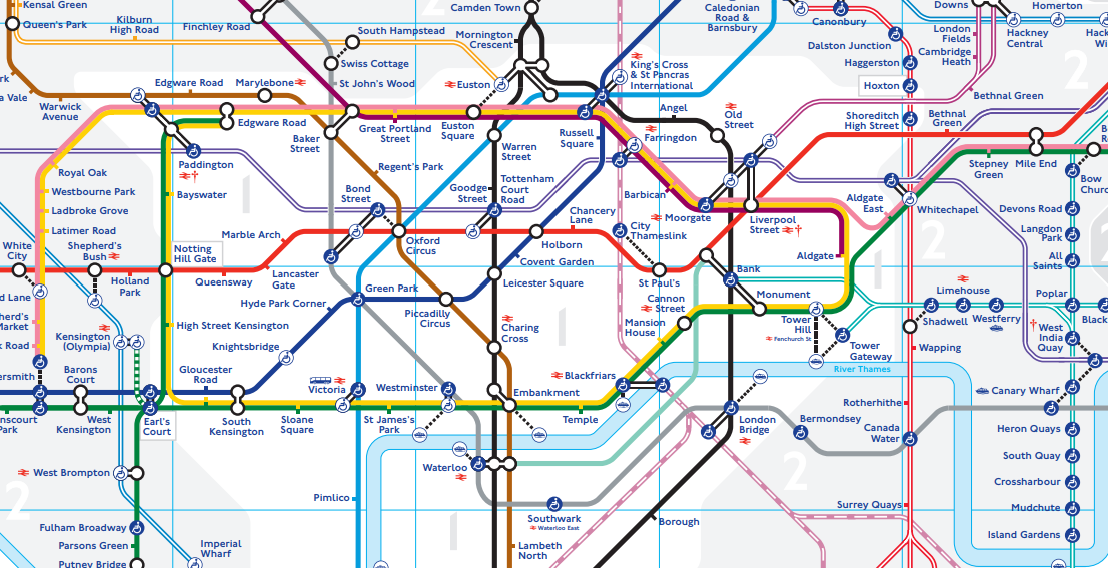
Open or download the official TfL map.
London Underground
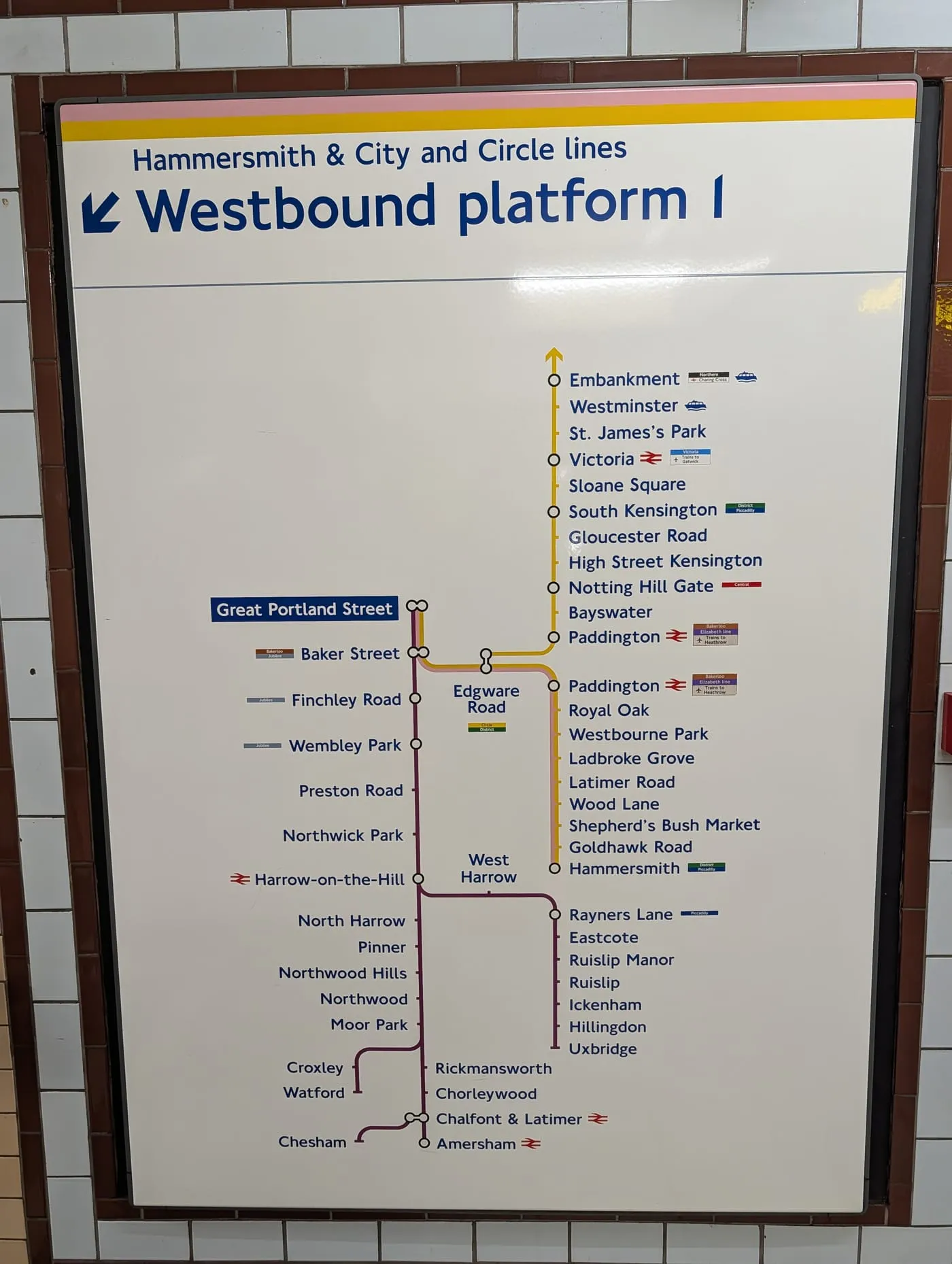
All 11 Tube lines are rated below — tap any line to open it. Checking the platform diagram before boarding is the simplest way to avoid taking the wrong branch. The Elizabeth line, DLR and London Overground are covered after this section.
Rating key:
- Crowding: one red star is usually quieter; five red stars are usually very busy.
- Comfort: one gold star is less comfortable; five gold stars are more comfortable.
- Ease of use: how easy the line is to navigate — branches, interchanges and how often you have to check which train you are boarding.
- Night Tube: whether the line runs through the night on Friday and Saturday.
📶 Phone signal is not a per-line thing, with one exception. Station WiFi is free and near-universal across the network, but mobile coverage in the tunnels is being fitted section by section, not line by line — so a line is rarely all-or-nothing, and that is why there is no signal rating below. The Elizabeth line is the exception: it is complete end to end and the only line with genuine onboard WiFi, so route through it if you need to be reachable. The full picture is in the Underground guide.
Piccadilly
- Crowding
- 5/5
- Comfort
- 2/5
- Air-conditioning
- Existing fleet: no. New fleet: yes
- Night Tube
- Yes
- Ease of use
- 3/5
- Visitor likelihood
- Very likely — Heathrow, the Museum Quarter and the West End.
Attractions and areas
| Attraction / area | Station | Best exit |
|---|---|---|
| Natural History Museum, Science Museum and V&A Museum | South Kensington | Museum Subway pedestrian tunnel |
| Harrods, Harvey Nichols and Hyde Park | Knightsbridge | Brompton Road for Harrods; Sloane Street for Harvey Nichols |
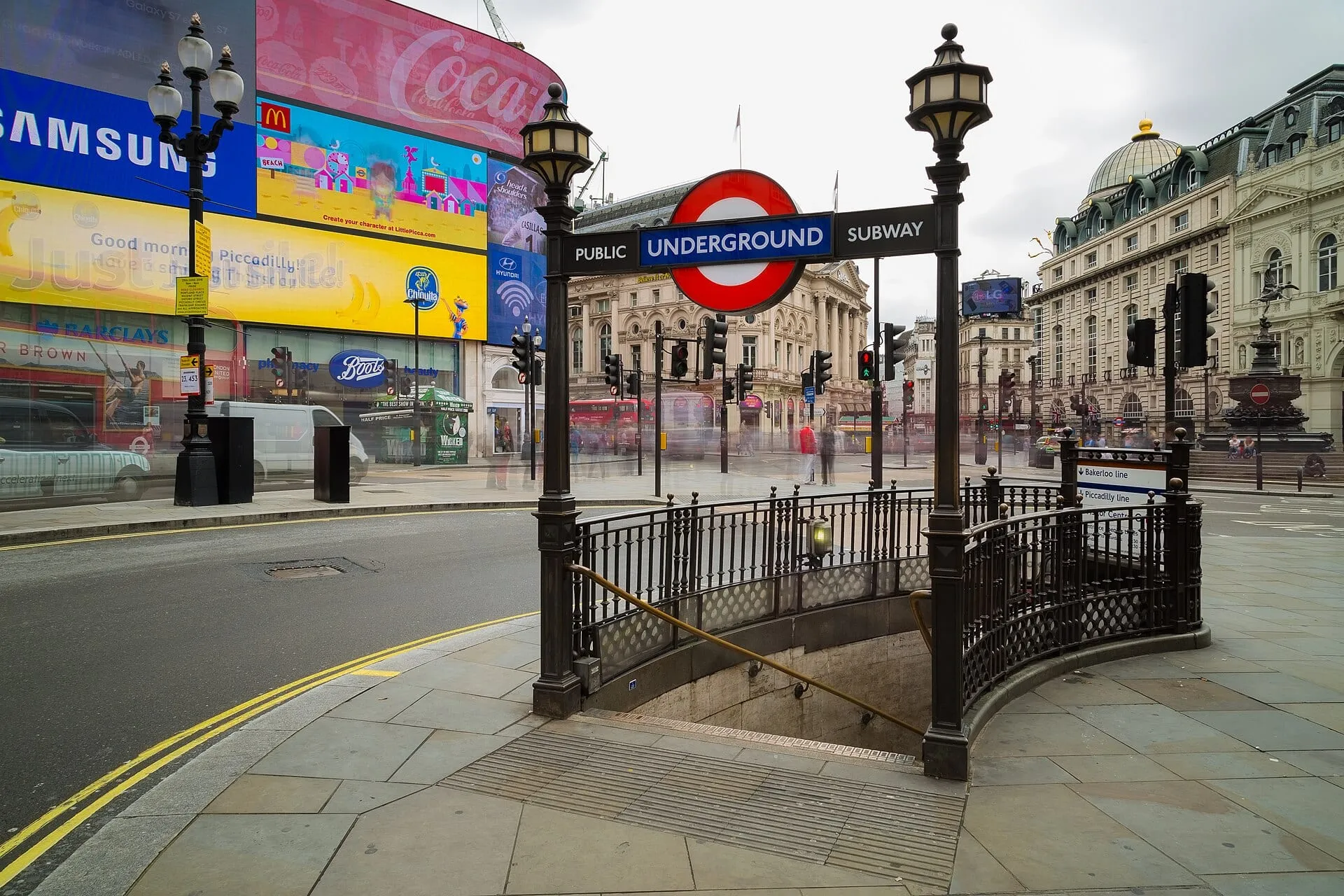
| Piccadilly Circus lights, Shaftesbury Avenue and Soho | Piccadilly Circus | Exit 1 or 3 |
| Chinatown, Leicester Square and West End shows | Leicester Square | Exit 1 or 3 |
| Covent Garden Piazza, Royal Opera House and London Transport Museum | Covent Garden | James Street exit; lifts/stairs only, no escalators |
Useful to know
Direct to Heathrow but awkward with luggage at busy times.
Watch out for
Check whether a Heathrow train is for Terminal 4 or Terminal 5.
Navigating it
Essential tourist line connecting Heathrow Airport directly to the West End. Deep-level, hot in summer, and gets crowded with airport luggage. Western trains split between Heathrow Airport (Terminal 4 vs. Terminal 5) and Uxbridge.
Jubilee
- Crowding
- 5/5
- Comfort
- 3/5
- Air-conditioning
- No
- Night Tube
- Yes
- Ease of use
- 5/5
- Visitor likelihood
- Very likely — South Bank, Westminster and major interchanges.
Attractions and areas
| Attraction / area | Station | Best exit |
|---|---|---|
| Wembley Stadium, OVO Arena Wembley and London Designer Outlet | Wembley Park | Olympic Way (Wembley Way) main exit |
| Buckingham Palace, Green Park and Mayfair | Green Park | Buckingham Palace exit; ramp access into Green Park |
| Big Ben, Houses of Parliament and London Eye | Westminster | Exit 4 for Big Ben; Exit 1 for the London Eye walk |
| Southbank Centre, London Eye and London Aquarium | Waterloo | South Bank exit |
| The O2 Arena and IFS Cloud Cable Car | North Greenwich | Exit 1 for The O2 main entrance |
Useful to know
Fast and frequent; the modern eastern stations are roomy, but trains get very busy.
Watch out for
Allow extra time at busy interchange stations, especially Waterloo and London Bridge.
Navigating it
Exceptionally straightforward single line running directly between Stanmore and Stratford with zero central branches to worry about. Features modern glass platform edge safety doors east of Westminster.
Victoria
- Crowding
- 5/5
- Comfort
- 2/5
- Air-conditioning
- No
- Night Tube
- Yes
- Ease of use
- 5/5
- Visitor likelihood
- Very likely — Buckingham Palace, Victoria station and a central north-south route.
Attractions and areas
| Attraction / area | Station | Best exit |
|---|---|---|
| Brixton Market, Electric Brixton, O2 Academy and Pop Brixton | Brixton | Main exit onto Brixton Road |
| Buckingham Palace and Victoria theatres | Victoria | Station concourse / Buckingham Palace Road |
| Buckingham Palace and Mayfair | Green Park | South exit into Green Park |
| Oxford Street and Regent Street shopping | Oxford Circus | Exit 1 or 2 |
| Platform 9¾, British Library and St Pancras International | King's Cross St Pancras | Euston Road or Pancras Road exits |
Useful to know
Extremely frequent and usually fast, but hot and intensely busy at peak times.
Watch out for
Victoria is a large interchange: follow signs carefully for the right line and exit.
Navigating it
Perfect for visitors. Simple direct line between Walthamstow Central and Brixton with zero branches and hyper-frequent trains (every 100 seconds during peak hours). Deep-level and warm in summer.
Central
- Crowding
- 5/5
- Comfort
- 2/5
- Air-conditioning
- No
- Night Tube
- Yes
- Ease of use
- 3/5
- Visitor likelihood
- Very likely — Oxford Street, the West End and fast east-west travel.
Attractions and areas
| Attraction / area | Station | Best exit |
|---|---|---|
| Portobello Road Market and Notting Hill | Notting Hill Gate | Exit 3 for Portobello Road |
| Hyde Park, Speakers' Corner and west Oxford Street | Marble Arch | Exit 1 for Hyde Park; Exit 2 for Oxford Street |
| Selfridges, Mayfair and Oxford Street shopping | Bond Street | Oxford Street for shopping; Marylebone Lane for St Christopher's Place |
| British Museum, Dominion Theatre, Soho and Outernet | Tottenham Court Road | Exit 1 for British Museum; Charing Cross Road for Soho |
| St Paul's Cathedral, One New Change and Millennium Bridge | St Paul's | Exit 2 for St Paul's Cathedral |
Useful to know
Very fast east-west route, but frequently hot and crowded through Zone 1.
Watch out for
Some trains use the Hainault branch; check the destination on the front and platform displays.
Navigating it
Straightforward central east-west corridor, but check westbound terminal displays (Ealing Broadway vs. West Ruislip) and eastern branches (Epping vs. Hainault loop). High speed, deep-level, and gets very hot during summer rush hours.
District
- Crowding
- 4/5
- Comfort
- 4/5
- Air-conditioning
- Yes
- Night Tube
- No
- Ease of use
- 1/5
- Visitor likelihood
- Likely — South Kensington, Westminster and the Tower of London.
Attractions and areas
| Attraction / area | Station | Best exit |
|---|---|---|
| Royal Botanic Gardens, Kew | Kew Gardens | Victoria Gate; follow signs through the village |
| Stamford Bridge (Chelsea FC) | Fulham Broadway | Main exit through Fulham Broadway shopping centre |
| V&A, Natural History Museum and Science Museum | South Kensington | Museum Subway tunnel |
| Big Ben, Houses of Parliament and Westminster Abbey | Westminster | Exit 4 for Big Ben |
| Tower of London and Tower Bridge | Tower Hill | Main exit |
Useful to know
Spacious, air-conditioned trains. The line has branches to Richmond, Ealing Broadway, Wimbledon and Kensington (Olympia), alongside its main eastern route to Upminster.
Watch out for
Check both the platform display and the train destination before boarding: District services branch, and shared sections can be served by more than one line.
Navigating it
Tricky for first-time visitors! The line splits into 5 distinct branches (Richmond, Wimbledon, Ealing Broadway, Kensington Olympia, Edgware Road). Always read the front destination sign on the train before boarding. Features modern, spacious, air-conditioned walk-through trains.
Circle
- Crowding
- 3/5
- Comfort
- 4/5
- Air-conditioning
- Yes
- Night Tube
- No
- Ease of use
- 2/5
- Visitor likelihood
- Likely — a useful orbit of central sights and key interchanges.
Attractions and areas
| Attraction / area | Station | Best exit |
|---|---|---|
| Natural History Museum, Science Museum and V&A Museum | South Kensington | Subterranean museum pedestrian subway |
| Duke of York Square, Saatchi Gallery and King's Road | Sloane Square | Main exit onto Sloane Square |
| Victoria theatres and Buckingham Palace | Victoria | Buckingham Palace Road for theatres; Wilton Road for the palace walk |
| Big Ben, Houses of Parliament and Westminster Abbey | Westminster | Exit 4 (Bridge Street) |
| Tower of London, Tower Bridge and HMS Belfast | Tower Hill | Main exit; left for the Tower, right for Tower Bridge |
Useful to know
Modern walk-through trains.
Watch out for
The Circle line shares tracks with District, Hammersmith & City and Metropolitan services. Check the platform display and the train destination; busy stations such as Edgware Road have several platforms.
Navigating it
Despite its name, it is no longer a continuous loop—it operates in a spiral from Hammersmith to Edgware Road! Shares tracks and platforms with the District and Hammersmith & City lines, making it easy to hop on the wrong train if you don't read the platform displays.
Northern
- Crowding
- 5/5
- Comfort
- 2/5
- Air-conditioning
- No
- Night Tube
- Yes
- Ease of use
- 1/5
- Visitor likelihood
- Likely — Camden, Leicester Square and central north-south journeys.
Attractions and areas
| Attraction / area | Station | Best exit |
|---|---|---|
| Camden Market, Camden Lock and Electric Ballroom | Camden Town | Main exit; turn right for Camden Market |
| British Library and Coal Drops Yard | King's Cross St Pancras | Euston Road exit |
| West End theatres, Covent Garden and Chinatown | Leicester Square | Exit 1 for Chinatown; Exit 2 for Covent Garden |
| Borough Market, The Shard and HMS Belfast | London Bridge | Borough High Street for the market; Joiner Street for The Shard |
| Battersea Power Station, Lift 109 and Battersea Park | Battersea Power Station | Main concourse exit into the Power Station plaza |
Useful to know
Useful for central north-south journeys.
Watch out for
Check both the central route and final destination: the line has several branches.
Navigating it
Notoriously confusing in Zone 1! The line splits into the Charing Cross branch (West End) and Bank branch (The City), plus southern splits to Battersea Power Station vs. Morden. Always check platform displays carefully!
Bakerloo
- Crowding
- 3/5
- Comfort
- 2/5
- Air-conditioning
- No
- Night Tube
- No
- Ease of use
- 4/5
- Visitor likelihood
- Likely — Paddington, the West End and Waterloo.
Attractions and areas
| Attraction / area | Station | Best exit |
|---|---|---|
| Sherlock Holmes Museum, Madame Tussauds and Regent's Park | Baker Street | Marylebone Road for Tussauds; Baker Street for the museum |
| Oxford Street and Regent Street shopping | Oxford Circus | Exit 1 or 2 for Regent Street; Exit 3 or 8 for Oxford Street |
| West End theatres, Chinatown, Shaftesbury Avenue and Soho | Piccadilly Circus | Exit 1 (Sherwood Street) or Exit 2 (Covent Street) |
| Trafalgar Square, National Gallery and The Mall | Charing Cross | Exit 1 for Trafalgar Square |
| Southbank Centre, London Eye and National Theatre | Waterloo | South Bank exit |
Useful to know
Useful between Paddington, the West End and Waterloo.
Watch out for
It can get hot through central London.
Navigating it
Very simple continuous line with no complex branches in Central London. Uses older 1972-vintage deep-level trains that can get warm during summer peak hours.
Metropolitan
- Crowding
- 3/5
- Comfort
- 4/5
- Air-conditioning
- Yes
- Night Tube
- No
- Ease of use
- 3/5
- Visitor likelihood
- Less likely — useful for Baker Street, the Barbican and outer north-west London.
Attractions and areas
| Attraction / area | Station | Best exit |
|---|---|---|
| Wembley Stadium and OVO Arena Wembley | Wembley Park | Olympic Way exit |
| Madame Tussauds and Sherlock Holmes Museum | Baker Street | Marylebone Road exit |
| British Library and Coal Drops Yard | King's Cross St Pancras | Euston Road exit |
| Fabric Nightclub and Smithfield Market | Farringdon | Cowcross Street exit |
| Whitechapel Gallery and south Brick Lane | Aldgate | Main exit onto Aldgate High Street |
Useful to know
Comfortable trains and faster outer-London services. Between Finchley Road and Harrow-on-the-Hill, there are fast and slow tracks in each direction.
Watch out for
Check the platform display and the train destination, as well as whether it is fast, semi-fast or all-stations. The line shares tracks with Circle and Hammersmith & City services in central London.
Navigating it
Fast suburban express line. Easy between Aldgate and Baker Street, but outer suburban services operate All-Stations, Semi-Fast, and Fast train patterns. Features spacious, air-conditioned trains.
Hammersmith & City
- Crowding
- 3/5
- Comfort
- 4/5
- Air-conditioning
- Yes
- Night Tube
- No
- Ease of use
- 4/5
- Visitor likelihood
- Less likely — useful for the Barbican and parts of the City.
Attractions and areas
| Attraction / area | Station | Best exit |
|---|---|---|
| Eventim Apollo | Hammersmith | Broadway Shopping Centre exit |
| Madame Tussauds and Regent's Park | Baker Street | Marylebone Road exit |
| Platform 9¾, British Library and Coal Drops Yard | King's Cross St Pancras | Euston Road / Regent Quarter for British Library; Pancras Road for Coal Drops Yard |
| Barbican Centre | Barbican | Main exit onto Aldersgate Street; follow the yellow floor line |
Useful to know
Modern walk-through trains; useful across the northern edge of central London.
Watch out for
It shares tracks with Circle and Metropolitan services for part of its route. Check the platform display and train destination before boarding.
Navigating it
Simple linear route between Hammersmith and Barking. Shares platforms with the Circle and Metropolitan lines through Central London. Features modern, air-conditioned trains.
Waterloo & City
- Crowding
- 5/5 at peak
- Comfort
- 2/5
- Air-conditioning
- No
- Night Tube
- No
- Ease of use
- 5/5
- Visitor likelihood
- Less likely — it runs only between Waterloo and Bank, and there is no service on Saturdays, Sundays and on bank/public holidays.
Attractions and areas
| Attraction / area | Station | Best exit |
|---|---|---|
| South Bank and London Eye | Waterloo | South Bank exit |
| Financial District, Guildhall and Royal Exchange | Bank | Exit 9 for Bank of England / Royal Exchange |
Useful to know
A two-stop commuter shuttle between Waterloo and Bank.
Watch out for
No service on Saturdays, Sundays or bank/public holidays.
Navigating it
Ultra-simple 2-station commuter shuttle between Waterloo and Bank. Impossible to get lost! Operates Monday to Friday only (closed Saturdays, Sundays, and Public/Bank Holidays).
The Circle, District, Hammersmith & City and Metropolitan lines use modern S-stock trains with walk-through carriages and air-conditioning. The deep-level lines generally use forced ventilation, not passenger air-conditioning. Piccadilly line fleet replacement is beginning in 2026, so the train you receive will depend on the rollout.
Elizabeth line
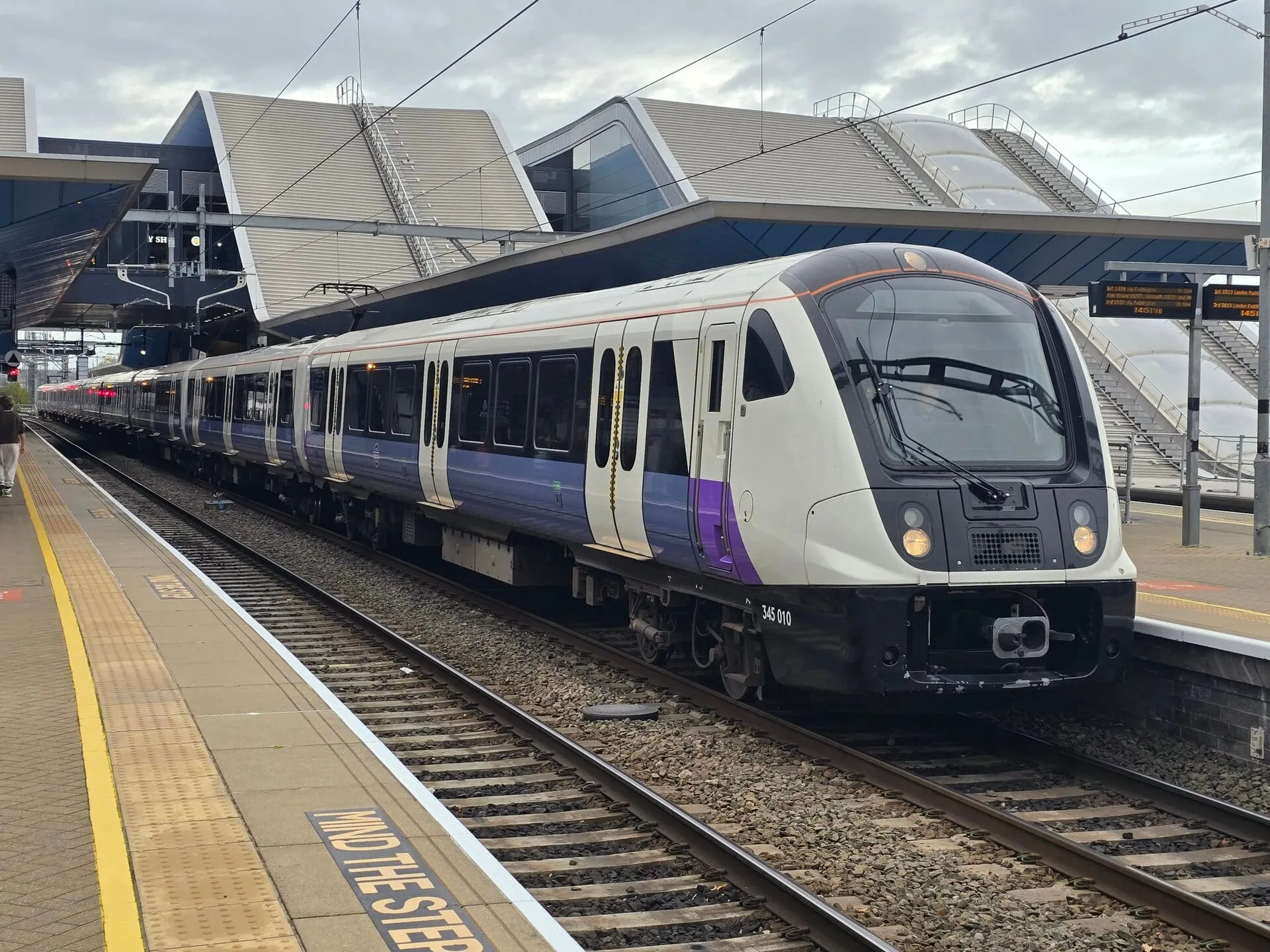
The Elizabeth line is shown in purple. It crosses London from Shenfield and Abbey Wood in the east through the central tunnels to Heathrow and Reading in the west.
- Crowding
- 4/5 overall; 5/5 peak
- Comfort
- 5/5
- Air-conditioning
- Yes
Attractions and areas
| Attraction / area | Station | Best exit |
|---|---|---|
| Little Venice and canal walks | Paddington | Praed Street or Canal Walk exit |
| Selfridges, Oxford Street and Mayfair | Bond Street | Davies Street for Mayfair; Hanover Square for Regent Street |
| Soho, British Museum and Outernet London | Tottenham Court Road | Dean Street for Soho; Oxford Street / Plaza for Outernet and British Museum |
| Spitalfields Market, Brick Lane and Horizon 22 | Liverpool Street | Bishopsgate / Octagon exit for Spitalfields |
| Crossrail Place Roof Garden and Museum of London Docklands | Canary Wharf | Crossrail Place exit |
The central section is especially busy at peak times. Long walk-through trains, generous luggage space and step-free access from street to platform at every Elizabeth line station make this a particularly convenient route for airport travel. Boarding is level at the new central stations and Heathrow.
If you are travelling to Heathrow, Elizabeth line and Piccadilly line fares and journey times differ, so use the complete Heathrow Airport transport guide alongside TfL’s Single Fare Finder.
East of central London, the line has two branches. Services to Abbey Wood run via Canary Wharf and Woolwich, while services to Shenfield run via Stratford and Romford. Always check the destination display before boarding.
Docklands Light Railway
The DLR serves the City, Canary Wharf, the Royal Docks, London City Airport, Stratford, Woolwich and Lewisham. Its trains are automated, although a passenger service agent is normally on board.
Most DLR stations do not have ticket gates. Instead, tap your Oyster card, contactless card or device on a yellow reader when you enter and leave the station. It is easy to walk straight to the platform, so make a point of tapping in and out: ticket inspectors sometimes check for valid payment on the train.
- Crowding
- 3/5 overall; 4/5 peak
- Comfort
- 3/5
- Air-conditioning
- Older trains: no. New B23 trains: yes
Attractions and areas
| Attraction / area | Station | Best exit |
|---|---|---|
| Tower of London and Tower Bridge | Tower Gateway | Main exit; around three minutes' walk to Tower Hill |
| Cutty Sark, National Maritime Museum, Greenwich Market and Greenwich Park (the Royal Observatory is closed from 2 November 2026) | Cutty Sark for Maritime Greenwich | Main street exit onto Cutty Sark Gardens / Greenwich Church Street |
| ExCeL London | Custom House | Direct covered walkway into the main entrance |
| ABBA Voyage / ABBA Arena | Pudding Mill Lane | Single exit directly opposite the arena entrance |
| London City Airport terminal | London City Airport | Escalators lead directly into the check-in hall |
At commuter times, services around Canary Wharf are busier. Every DLR station has step-free access from street to platform. The front seats give an excellent driver’s-eye view when available.
TfL is replacing the older fleet with spacious, walk-through B23 trains. The new trains have air-conditioning and charging points, but the proportion in service will vary during the rollout.
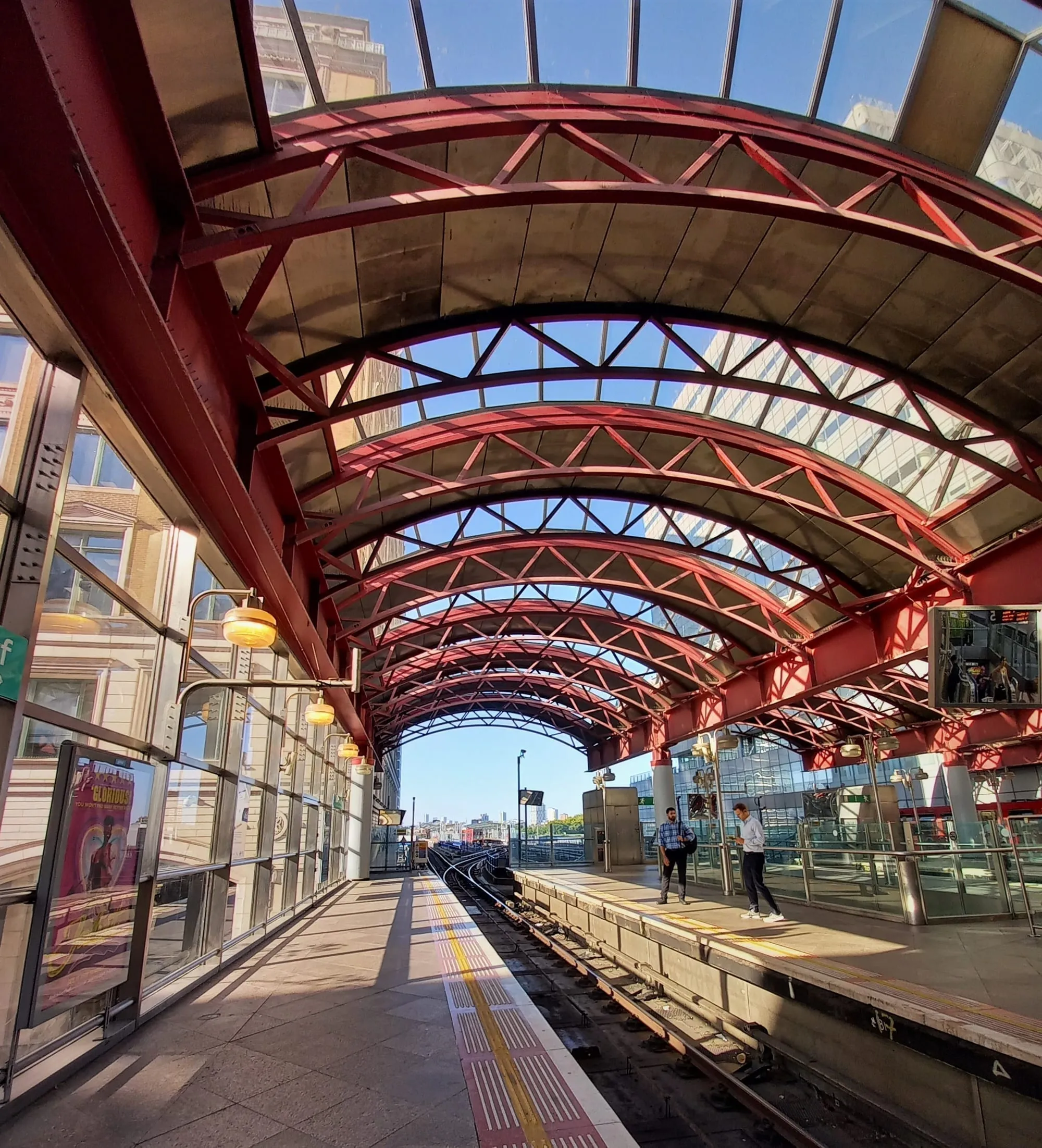
Canary Wharf DLR station. Photo: It’s No Game, CC BY 2.0.
London Overground
London Overground is the orange network that circles and crosses inner and outer London. Its six routes now have individual names.
| Overground line | Main route | Typical crowding | Comfort | Air-conditioning |
|---|---|---|---|---|
| Liberty | Romford–Upminster | 2/5 | 4/5 | Yes |
| Lioness | Euston–Watford Junction | 4/5 | 4/5 | Yes |
| Mildmay | Stratford–Richmond or Clapham Junction | 4/5 | 4/5 | Yes |
| Suffragette | Gospel Oak–Barking Riverside | 3/5 | 4/5 | Yes |
| Weaver | Liverpool Street–Enfield Town, Cheshunt or Chingford | 4/5 | 4/5 | Yes |
| Windrush | Highbury & Islington–New Cross, Clapham Junction, Crystal Palace or West Croydon | 5/5 | 4/5 | Yes |
All London Overground trains are walk-through and air-conditioned. Several lines divide into branches, so the new line name does not remove the need to check the train’s destination.
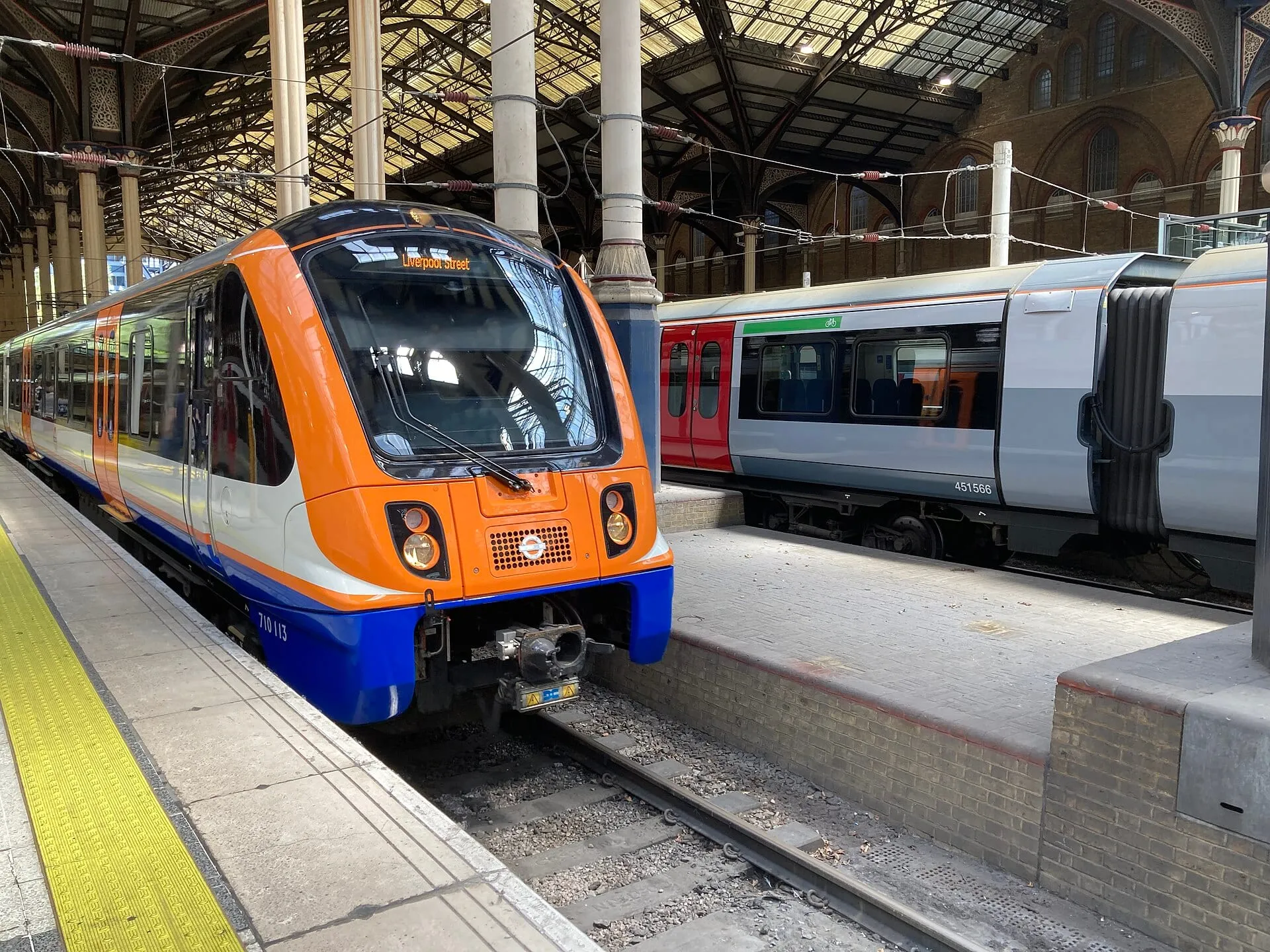
London Overground at Liverpool Street. Photo: Matt Brown, CC BY 2.0.
Best choices for comfort
Where a visitor can choose between routes:
- Elizabeth line is generally the most comfortable option for longer east-west journeys and airport luggage.
- Sub-surface Tube lines are cooler than the deep Tube because their modern trains have air-conditioning.
Examples:
- Circle
- District
- Hammersmith & City
- Metropolitan
- London Overground is comfortable and air-conditioned, but the Windrush and Mildmay lines can be exceptionally busy.
- DLR is scenic and accessible; seek the front seats outside peak time.
- Deep-level Tube lines are often fastest for central journeys, but can be hot and crowded in summer.
Speed, step-free access and interchange walking time can count for more than the train itself. Consider the whole journey, not just the ratings above.
When walking between stations is simpler
In central London, stations that look separate on the Tube map can be close together at street level. A short walk can be quicker or simply easier than changing lines once you allow for finding the interchange, stairs or escalators, long passageways and waiting for the next train. TfL’s station-to-station walking map is a useful starting point.
Useful walking alternatives for visitors include:
- Covent Garden and Leicester Square — Roughly 400 metres apart on foot, or around five minutes. Leicester Square is on the Piccadilly line, so getting off there for Covent Garden can be the simpler choice, particularly when a change of line would be involved.
- Waterloo and Southwark — about four minutes on foot. This can be handy between the South Bank, Waterloo and the Tate Modern side of the river.
- Monument and London Bridge — about five minutes on foot. It is a practical option when moving between the City and London Bridge or Borough Market.
- Embankment and Waterloo — about eight minutes on foot along the river. Consider it for the South Bank, the London Eye or a connection at Waterloo instead of an extra change.
- Tower Hill and Tower Gateway — roughly three minutes on foot. This is useful for changing between the District or Circle lines and the DLR near the Tower of London.
Information checked on 28 July 2026. Fare boundaries, train fleets and services change. Confirm a time-sensitive journey with Transport for London before travelling.