In this guide
At a glance
- Vibe
- Georgian grid, art dealers and the most expensive square in Monopoly
- Time needed
- Half a day
- Best day
- Tuesday to Friday; the RA shuts on Mondays
- Travel zone
- 1
- Walkability
- 5/5
- Typical spend
- £££
Best for
Nearest stations
- Green ParkPiccadillyVictoriaJubilee
- Bond StreetElizabeth lineCentralJubilee
- Oxford CircusCentralVictoriaBakerloo
Mayfair is a Georgian grid laid out from the 1720s between Oxford Street, Regent Street, Piccadilly and Park Lane, and it has been the most expensive part of London for most of the three centuries since.
It is also less closed off than it looks. The Victorian arcades are public passages, the Royal Academy’s courtyard is free, and the dozens of commercial art galleries on and around Cork Street will let anyone walk in.
Mayfair has its own share of the commemorative plaques marking where notable people lived or worked - see them on our interactive map.
Why visit — and who should skip it
Come here if you like architecture or art. Mayfair has a Georgian grid that survived largely intact, dozens of free commercial galleries, and four Victorian arcades you can walk through for nothing.
Skip it if you want to eat or drink cheaply. This is the most expensive postcode in Britain and it shows on every menu. It is also quiet in the evening — most of Mayfair is offices and embassies once the shops shut.
Top sights and activities
- Burlington Arcade — Britain’s first shopping arcade, opened 1819, still patrolled by uniformed Beadles enforcing the original rules: no running, whistling, singing or opening umbrellas.
- The Royal Academy — In Burlington House. The courtyard and Fine Rooms are free; the exhibitions are ticketed. The Summer Exhibition has run every year since 1769.
- The Cork Street galleries — A concentration of commercial art dealers, nearly all free to enter and none of them expecting you to buy.
- Handel Hendrix House — 23 and 25 Brook Street. Handel lived at 25 and wrote Messiah there; Hendrix rented the top floor of 23 in 1968. Now one ticketed museum.
- Shepherd Market — A small, scruffy village of narrow lanes and pubs in the middle of the most expensive district in the country. Unexpected.
- The other arcades — Piccadilly Arcade, Princes Arcade and the Royal Arcade, all free to walk through and all quieter than Burlington.
- Green Park and Berkeley Square — Green Park to the south, and the plane trees of Berkeley Square, planted in 1789 and among the oldest in London.
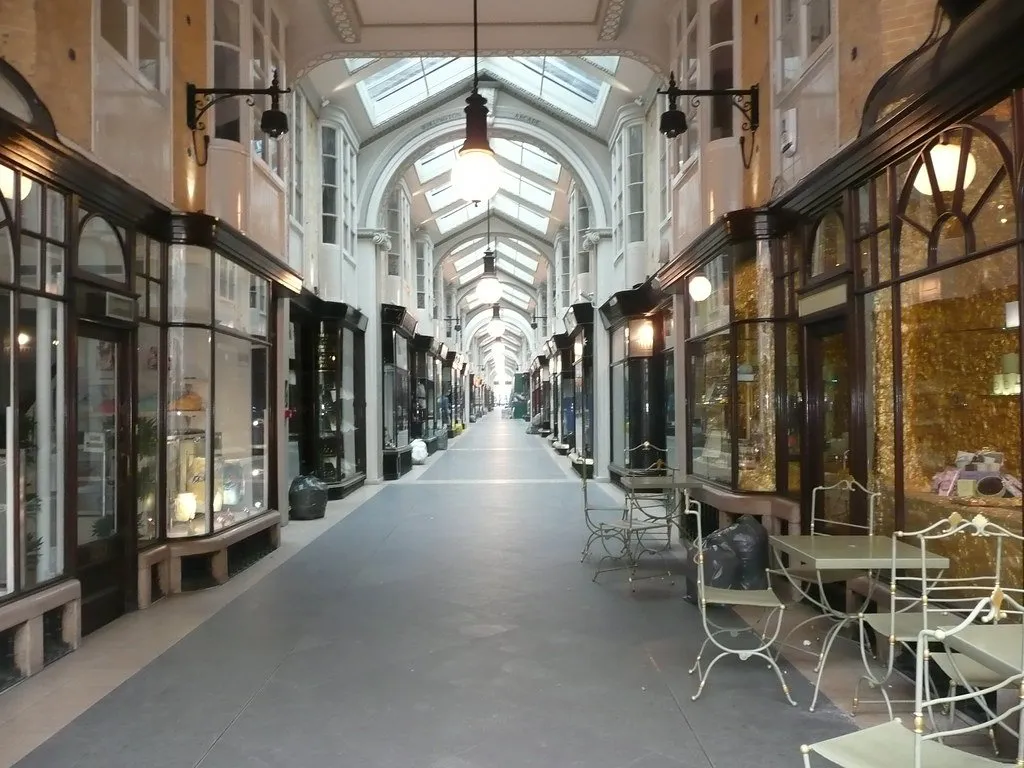
Burlington Arcade. Photo: Reading Tom, CC BY 2.0.
Key streets and micro-districts
Bond Street
Old Bond Street at the Piccadilly end, New Bond Street running north to Oxford Street, and one continuous run of flagship fashion and jewellers between them. It is the most expensive retail street in Europe and it does not pretend otherwise.
Sotheby’s at 34–35 New Bond Street is the free one. Auction viewings are open to the public, no ticket and no appointment, in the days before a sale — you can walk in off the street and stand in front of things that will sell for millions. Over the door is a black granite Egyptian statue of Sekhmet, around 1320 BC, the oldest outdoor object in London and older than anything in the British Museum’s frontage.
Allies, the bench sculpture of Roosevelt and Churchill mid-conversation, sits halfway along, and you can sit down between them.
It is a weekday street. The galleries and auction houses keep office hours and close at weekends, when only the shops are open. Bond Street station is at the north end, Green Park at the south.
The arcades and Piccadilly
Four covered Victorian shopping arcades within a few hundred metres — Burlington, Piccadilly, Princes and Royal — plus the Royal Academy between them. All free to walk through and all roofed, which makes this the best rainy hour in Mayfair.
Burlington Arcade opened in 1819 and is the oldest and grandest. It is still patrolled by Beadles in top hats and frock coats, the oldest small police force in the world, and they enforce the original rules: no running, no whistling, no singing, and no opening an umbrella inside. They will stop you, politely.
The Royal Academy is through the courtyard next door. It is closed on Mondays, open Tuesday to Saturday 10am to 6pm and until 9pm on Fridays, and the free Fine Rooms also open on Sundays, 11am to 4pm. Its exhibitions are ticketed but the courtyard, the shop and parts of the building are free to enter.
Cecconi’s at 5A Burlington Gardens is the all-day Italian at the back of the arcade, and it takes bookings — most of Mayfair at this end does not do walk-ins well.
Cork Street and Savile Row
Two parallel streets doing two different trades, both free to walk down, and both far more welcoming than they look from outside.
Cork Street is commercial art galleries, one after another, showing work at museum quality with no admission charge and no crowd. You are allowed to walk in. Nobody will ask what you want, the price list is on the desk if you care, and looking without buying is entirely normal — this is the same argument as White Cube in Bermondsey, at a fraction of the distance from Piccadilly.
Savile Row is bespoke tailoring, and the shopfronts are worth the walk even if a suit is not: Huntsman at number 11 supplied the Kingsman films with their entire premise. Gieves & Hawkes at number 1 has been at that address since 1912.
Come on a weekday. Galleries typically run Tuesday to Saturday. Henry Poole opens Monday to Friday only and Huntsman shuts at 3pm on Saturdays, though Gieves & Hawkes at No. 1 opens every day. Green Park and Piccadilly Circus are each about five minutes.
Shepherd Market
A pocket of narrow lanes and small squares between Curzon Street and Piccadilly, built on the site of the May Fair the district is named after. No chains, no flagships, and a completely different scale from the streets around it — two-storey buildings and pavement tables where everything else is six floors of plate glass.
It is the one part of Mayfair that feels like a village, and it is thirty seconds off Piccadilly through an easily-missed archway.
The pubs are the point. Ye Grapes and the Shepherd’s Tavern both put tables out, and the whole square fills with drinkers on a warm evening — the closest thing central Mayfair has to a beer garden.
Green Park is three minutes away and Hyde Park Corner about five. Go in the early evening; at lunchtime it is quiet and at eleven it is shut.
Mount Street and Berkeley Square
The quietest handsome walking in Mayfair. Mount Street is a run of pink terracotta and red-brick Victorian Gothic — deliberately ornate, built by the Grosvenor estate in the 1880s — and now the address for a particular kind of very expensive small shop.
Berkeley Square’s plane trees were planted in 1789 and are among the oldest in central London. The square is a public garden, free, open in daylight and locked overnight. Annabel’s, the members’ club at No. 46, opens its staircase and principal rooms to public tours on set days; our members’ clubs guide has the dates, the fees and the dress codes.
Eat on Mount Street rather than around the square. Bacchanalia at 1–3 does Greek and southern Italian under a ceiling of classical sculpture; The Guinea Grill at 30 Bruton Place, in the mews behind, is a chophouse that has been there since the 1950s and is the least Mayfair thing in Mayfair.
Mount Street Gardens, tucked behind the street beside the Jesuit church, is the secret one — a walled garden of benches and London planes, free, and almost never busy. It is the best place to sit down in W1.
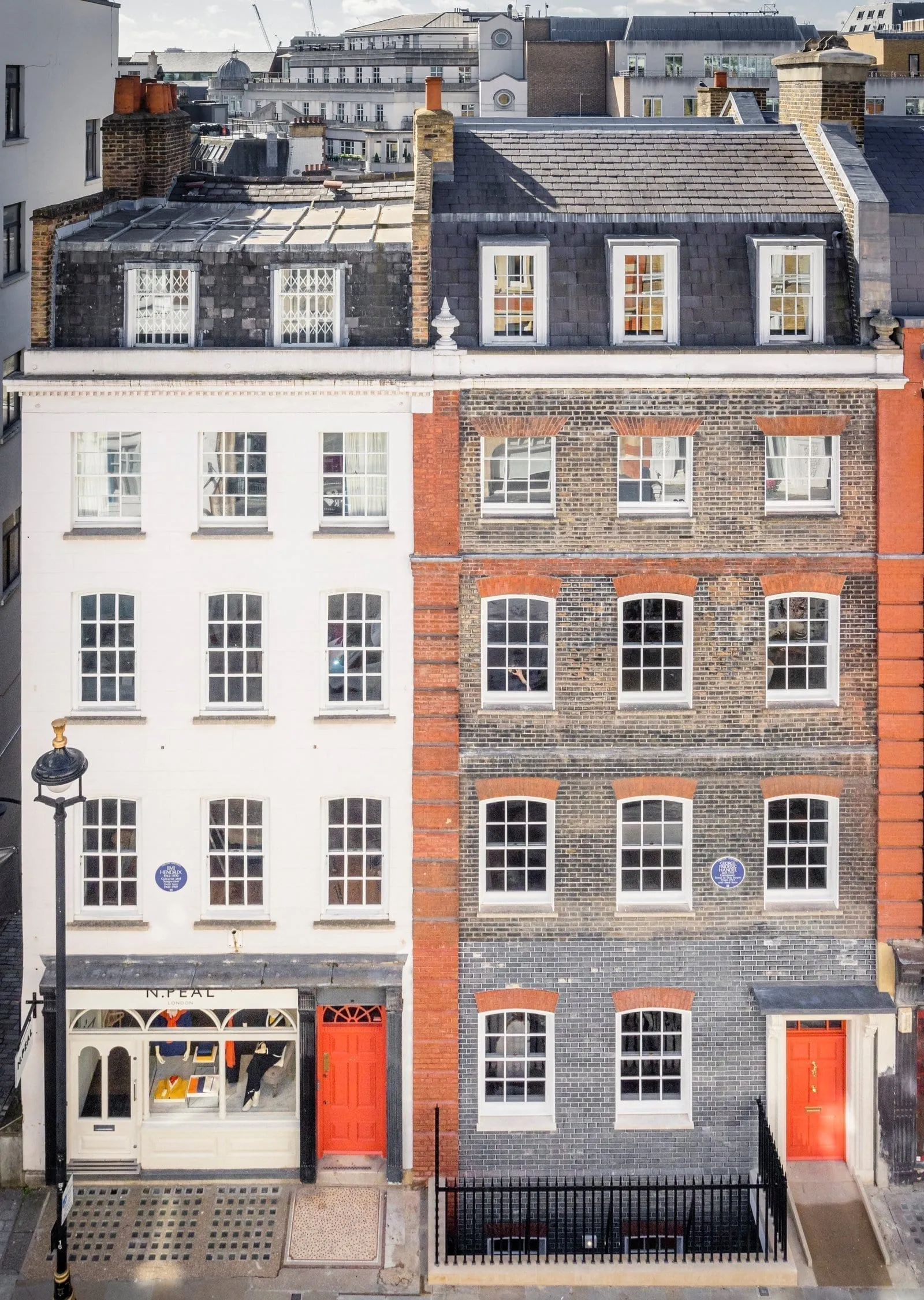
Handel and Hendrix, next door. Photo: HandelandHendrix, CC BY-SA 4.0.
Where to eat and drink
| Spot | Style | Price | Why go |
|---|---|---|---|
| The Guinea Grill | Historic pub and grill | ££ | Bruton Place; a pub since 1423, famous for its pies |
| Ye Grapes | Pub | £ | Shepherd Market; unpretentious, in the middle of Mayfair |
| The Audley | Restored pub | ££ | Mount Street; ornate Victorian interior, restored |
| Mercato Mayfair | Food hall | ££ | Inside a deconsecrated Victorian church on North Audley Street |
| The Wolseley | Grand cafe | £££ | Piccadilly, in a former car showroom; book for breakfast |
| Sketch | Modern European | ££££ | Conduit Street; the Gallery and the egg-pod toilets |
Bar des Prés on South Audley Street is the French chef Cyril Lignac’s French-Japanese restaurant. It is in our fusion restaurants guide.
See all 65 places to eat and drink in Mayfair
Getting there
By Tube. Green Park (Piccadilly, Victoria, Jubilee) is best for the arcades and the Royal Academy. Bond Street (Elizabeth line, Central, Jubilee) is best for the north. Oxford Circus serves the north-east corner.
Best exit. From Green Park, take the Piccadilly North exit and Burlington Arcade is four minutes east along Piccadilly.
On foot. Ten minutes to Soho, twelve to Marylebone, twenty through Green Park to Buckingham Palace.
How long to spend, and when to go
| If you have | Do this |
|---|---|
| Two hours | The arcades, the Royal Academy courtyard and Cork Street |
| Half a day | Add Shepherd Market, Mount Street and Berkeley Square |
| A full day | Add Handel Hendrix House and a Royal Academy exhibition |
Best time: Tuesday to Friday, in the daytime. The Royal Academy shuts on Mondays, the galleries mostly on Sundays, and Henry Poole opens on weekdays only.
Note: The Summer Exhibition runs roughly June to August and is the busiest the Royal Academy gets.
Map of Mayfair
Open the map81 places: 58 places to eat · 6 things to do · 10 hidden spots · 7 places to stay
The map loads when you open this section.
Eat & drinkThings to doHidden LondonStay
What's on in Mayfair
Limited runs and the annual fixtures. Anything already finished is removed automatically.Links marked ad are affiliate links. If you book through one we may earn a commission, at no extra cost to you. It never affects what goes on this list.
Painting the French Riviera
Not open yetOver 160 works - Picasso, Matisse, Cezanne, Renoir - organised with the Cleveland Museum of Art, so this exact loan list will not reassemble.
RA Friends preview 29 September to 1 October; free for Friends throughout.
Peggy Guggenheim in London: The Making of a Collector
Not open yetThe collector's story rather than the collection's greatest hits - the right show for anyone who has already done the Venice museum.
Runs the whole winter; overlaps French Riviera in the same building through January.
Coming up near Mayfair
Gigs, shows and exhibitions in the next fortnight at venues closest toGreen Park, Bond Street, Oxford Circus. See everything on the What's On page.
Thursday22 October
-
19:30Inala
House of Sisters Grimm · Oxford Circus Zone 1
-
20:00Akaash Singh - Generational Triumph Tour
London Palladium · Oxford Circus Zone 1
Tuesday27 October
-
18:30Leo Sayer
London Palladium · Oxford Circus Zone 1
Wednesday28 October
-
19:30The Proclaimers
London Palladium · Oxford Circus Zone 1
Things to do in Mayfair
Beyond eating and drinking. Free things are listed first.Links marked ad are affiliate links. If you book through one we may earn a commission, at no extra cost to you. It never affects what goes on this list.
Brown Hart Gardens
FreeA raised stone terrace built on the roof of a working Edwardian electricity substation, two minutes off Oxford Street and almost always empty.
Free and open daily. Steps up on both sides, though there is a lift. There is a cafe on the deck if you want a reason to sit.
Cork Street Galleries
FreeA single street of dealers - Waddington Custot, Hamiltons, Sims Reed - with museum-standard work on the walls, and every one of them free to walk into.
They are shops, not museums, and nobody will mind you looking. Closed Sundays and often Mondays. Gagosian, Hauser & Wirth and White Cube are a few streets away on the same terms.
Mount Street Gardens
FreeA walled garden so sheltered that Australian mimosa and Canary Island palms survive in it, hidden behind Mount Street and lined with benches donated by American visitors.
Free, and the quietest place to sit in Mayfair. Read the bench plaques - most were given by Americans who loved the garden, and they are the best thing in it.
The Faraday Museum
FreeFaraday's actual magnetic laboratory, preserved in the basement of the Royal Institution, where the electric motor and the transformer were worked out. Ten elements were first isolated in this building.
Free and one of the very few free things in Mayfair. Weekdays only in practice - check before a weekend trip.
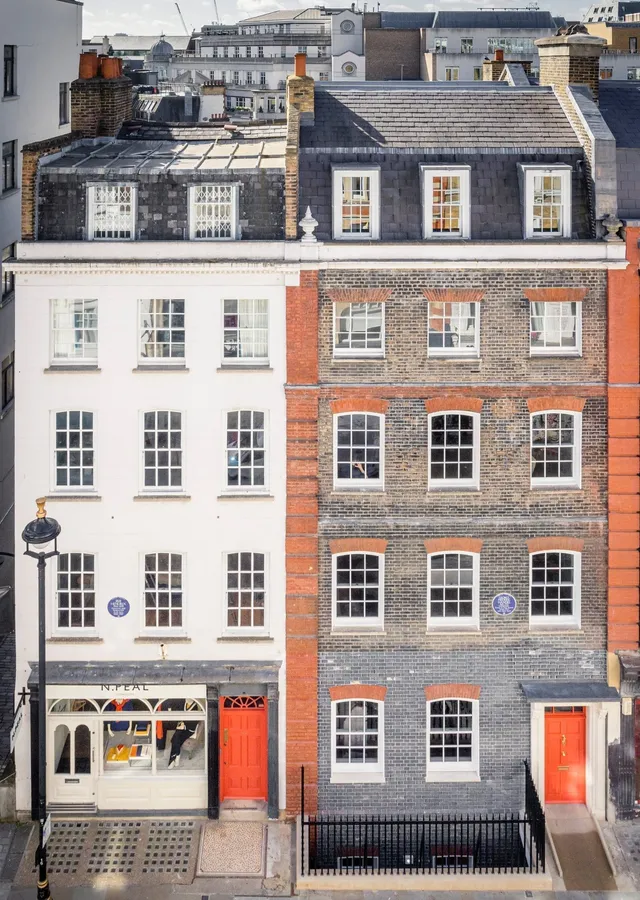
Handel Hendrix House
Handel lived at 25 Brook Street from 1723 until he died there in 1759; Jimi Hendrix lived in the upstairs flat next door in 1968. Both rooms are restored and you walk between them.
A Georgian townhouse over several floors with no lift, so it is not step-free. Small - an hour is genuinely enough.
Race Across The World: The Experience
The television format played outdoors - checkpoints, a budget and a clock, run through streets you would otherwise just be walking down.
Partly outdoors, so dress for weather. Two London routes exist and they are different games, not the same one twice.
Royal Academy of Arts
Britain's first art school, founded 1768 and still artist-run, putting on the biggest exhibitions in London plus the Summer Exhibition, which anyone at all can submit to.
The courtyard, the Collection Gallery and the Weston Studio are FREE - you only pay for the temporary shows. Most visitors do not realise there is anything free here at all.
Hidden Mayfair
Free, self-guided and easy to walk past without knowing it's there.
Disraeli's Last Home
Blue plaqueBenjamin Disraeli (1804–1881), Prime Minister
Disraeli died here in 1881, having twice served as Prime Minister - one of several PM plaques within a short walk of each other in Mayfair.
A private residential building - viewable from the street only.
Florence Nightingale's Mayfair Home
Blue plaqueFlorence Nightingale (1820–1910), founder of modern nursing
Nightingale lived here for the last decades of her life, having already reformed nursing practice after the Crimean War.
A private residential building - viewable from the street only.
Grosvenor House Hotel
Filming locationSexy Beast (2000) - Gal in Mayfair under an alias
Where Ray Winstone's retired villain stays while the London job is on. Park Lane luxury as the reward at the end of the criminal career, which the film is deeply sceptical about.
A working hotel; public bars and restaurants are open to non-residents. Free to look. Marble Arch or Hyde Park Corner, ten minutes either way.
Handel's House
Blue plaqueGeorge Frideric Handel (1685–1759), composer
Handel lived and composed here for 36 years, including Messiah. The house is now Handel & Hendrix House, a museum with two eras under one roof.
The house is a paid museum, not just a plaque - the interesting bit is that Jimi Hendrix lived next door two centuries later.
Jimi Hendrix's Flat
Blue plaqueJimi Hendrix (1942–1970), musician
Hendrix lived here 1968-69, next door to where Handel lived 200 years earlier - the two plaques sit a few feet apart on the same street.
Combined with Handel's House as Handel & Hendrix House, a paid museum covering both.
Kingsman's Tailor Shop (Huntsman)
Filming locationKingsman: The Secret Service (2014) and sequels - the Kingsman shop exterior
Huntsman & Sons, tailoring on this spot since 1849 and once dressed Winston Churchill, is the real shop behind Kingsman's fictional tailors - the exterior in every film is genuine, even though the interior was rebuilt on a soundstage because the real shop was too small to film in.
A working bespoke tailor, not a museum - a small gold "Kingsman" plaque by the door is the only nod to the films. Expect selfie-taking fans outside.
Love Actually's Wedding Chapel
Filming locationLove Actually (2003) - Juliet and Peter's wedding
A working 18th-century chapel, tucked just off South Audley Street, used for the wedding that opens Mark and Juliet's storyline.
An active place of worship - respect service times; open to visitors outside them.
Notting Hill's Dinner Date (Nobu Old Park Lane)
Filming locationNotting Hill (1999) - William and Anna's restaurant date
Where William takes Anna Scott to dinner - Nobu Old Park Lane is a genuine, still-trading restaurant (already on this site as a place to eat), and the film scene is a different reason to know the address, not a duplicate of that listing.
A working, bookable restaurant - see the Restaurants section for how to book.
P.G. Wodehouse's Mayfair Home
Blue plaqueP.G. Wodehouse (1881–1975), writer, creator of Jeeves and Wooster
Wodehouse lived here before the Jeeves and Wooster novels made him one of the most quoted comic writers in English.
A private residential building - viewable from the street only.
South Molton Street
Filming locationLove Actually (2003) - the Christmas lights montage
The pedestrianised street used in the film's opening montage of London at Christmas. Narrow, Georgian and hung with lights every December, which is precisely why it was picked.
Free, always open, pedestrian only. Two minutes from Bond Street. Worth timing for late November onwards when the lights go up.
The Beatles' Rooftop Concert (3 Savile Row)
MusicThe Beatles' final public performance, 30 January 1969
The Beatles played their last ever public set on this roof - a 42-minute performance from the top of their Apple Corps headquarters that stopped traffic on Savile Row until the police arrived and asked them to turn it down.
The roof is not accessible and the building is in private commercial use - this is a look-up-from-the-pavement stop. A few doors from the Kingsman tailor at number 11.
The Ziggy Stardust Cover Site
MusicDavid Bowie, The Rise and Fall of Ziggy Stardust and the Spiders from Mars (1972)
Bowie posed under a streetlamp here on a wet January night in 1972 for the Ziggy Stardust sleeve. The K. West furrier's sign behind him is long gone, but a black plaque marks the exact spot - black rather than blue because the Crown Estate put it up, not English Heritage.
Free, on a pedestrianised street now full of restaurant tables. The plaque is at pavement level and easy to walk straight past.
Where to stay
The most expensive hotel district in London, and the quietest central one at night.
- Mayfair proper — Claridge’sad, the Connaughtad, the Ritzad on the Piccadilly edge. Landmark hotels at landmark prices.
- Marylebone — Twelve minutes north, considerably better value, same Elizabeth line access at Bond Street.
- Soho and Covent Garden — East, cheaper, and far more open in the evening.
Our Mayfair hotel guide compares the grand hotels and the few cheaper beds.
Cheapest first. Prices are a typical starting rate per night, not a quote.Links marked ad are affiliate links. If you book through one we may earn a commission, at no extra cost to you. It never affects what goes on this list.
Zedwell Underground Hotel Park Lane
££HotelAccessible roomsA Park Lane address at Zedwell money, seven minutes from Marble Arch, and the brand's newest and most design-led property. Underground like Tottenham Court Road, so the windowless format is a fact of the building rather than a choice.
Windowless by design and entirely below ground, and the newest thing Zedwell has built. A Mayfair address at Knightsbridge money: a Cocoon 2 sleeping two at £90 to £207 depending on the night - within a pound of Knightsbridge on a quiet night and about £50 under it on an October Saturday. A Cocoon 4 sleeps four. Seven minutes from Marble Arch. The catch is that it is barely reviewed yet, so there is little to go on beyond the rate.
1 Hotel Mayfair
££££HotelThe sustainability-first hotel brand's first London house, on Berkeley Street - reclaimed materials, heavy planting, and a green agenda carried far enough that it shapes the rooms rather than just the marketing.
45 Park Lane
££££HotelForty-five rooms and suites and, on the operator's own account, every one of them overlooks Hyde Park, with the higher floors taking in the rest of London. Wolfgang Puck's CUT is the house steak restaurant and Sushi Kanesaka holds its Michelin star behind a separate door.
The Dorchester Collection's small London house rather than its grand one, and it sits across Park Lane from The Dorchester itself. The site offers guest access to a subterranean spa and Park Lane's longest pool without saying which building holds it, so confirm at booking.
Brown's Hotel
££££HotelAccessible roomsOpened 1837 and generally called London's first hotel - Kipling wrote here, Bell made the first British telephone call from it, and Agatha Christie set At Bertram's Hotel on it.
A Michelin Key. The Drawing Room afternoon tea is open to non-residents and is the traditional way in.
Claridge's
££££HotelAccessible roomsThe art deco hotel other London hotels are measured against, and the only London property on Conde Nast Traveller's 2026 Gold List.
Afternoon tea books months ahead and is the affordable way to see the building without a room. Dress code is enforced in the public rooms.
Four Seasons Hotel London at Park Lane
££££HotelThe rooftop spa is the thing - a glass box on the tenth floor looking over Hyde Park, which almost no London hotel can offer because almost none has the height in Mayfair.
Not to be confused with Four Seasons at Tower Bridge, which is a separate hotel.
Mandarin Oriental Mayfair
££££HotelAccessible roomsOnly fifty rooms, which makes it the most intimate of the recent Mayfair openings, on Hanover Square a minute from Oxford Circus.
Small by design and sold out far ahead. The group's original Hyde Park property is a different hotel entirely - check which one you are booking.
Native Mayfair
££££AparthotelAccessible roomsOn a mews off Grosvenor Square, under ten minutes from Bond Street and its Elizabeth line platforms - a kitchen in the middle of Mayfair, which is close to unheard of.
The most expensive of the Native addresses and the one where the apartment format saves the most, because eating out nearby is Mayfair money.
No.5 Maddox Street
££££Serviced apartmentEvery unit is a whole apartment with a kitchen - the smallest 27 sq m, the largest a three-bed of 79 sq m with outdoor space - on a quiet side street a minute off Regent Street, which is a rare thing to book in Mayfair for either two nights or two months.
Not a hotel product any more, despite how it is often listed: the operator sells serviced apartments with a concierge team, housekeeping and preferential rates at a nearby gym, not rooms with a front desk and a restaurant. Some apartments have private terraces and some do not, and the operator marks that with an asterisk rather than by room type. Run by Living Rooms, the same operator as The Laslett in Notting Hill.
The Beaumont Mayfair
££££HotelAccessible roomsTwo Michelin Keys, an art deco building on Brown Hart Gardens - and ROOM, an Antony Gormley sculpture bolted to the facade that you can book and sleep inside.
ROOM is a genuine Gormley artwork containing a bedroom, priced far above the standard rooms and booked months out. The rest of the hotel is a straightforwardly excellent deco five-star.
The Chancery Rosewood
££££HotelEero Saarinen's former American Embassy on Grosvenor Square, reopened in 2025 as an all-suite hotel - the building is a listed piece of mid-century diplomacy and the conversion is the reason to go.
Four guides, and a first-hand line on r/FATTravel: "Chancery Rosewood is the best of the list in my opinion and great location too". Rosewood's second London house - not to be confused with Rosewood London in Holborn.
The Connaught
££££HotelAccessible roomsThe Connaught Bar has repeatedly been ranked the best bar in the world, and the Aman Spa in the basement is the quietest room in Mayfair.
The bar is open to non-residents and is the reason most people come. Book it - walk-ins at peak are turned away.
The Dorchester
££££HotelAccessible roomsAlain Ducasse at The Dorchester is one of the very few three-Michelin-star restaurants in the country, and it is in the building.
Five restaurants on site. The Promenade afternoon tea is the accessible one; Ducasse needs booking months ahead and is a separate proposition entirely.
The Mayfair Townhouse
££££TownhouseFifteen Georgian townhouses on Half Moon Street run as one hotel, with a dandy-and-Wilde theme carried through the bar - Green Park is at the end of the street.
Three guides. Same group as Cliveden and Chewton Glen, so the service standard is the group's rather than a one-off.
The Ritz London
££££HotelThe one everybody has heard of, and it still holds up - Louis XVI interiors, a Michelin-starred dining room, and a dress code that is enforced rather than suggested.
Jacket and tie in most public rooms, and no trainers - it catches people out.
The Twenty Two
££££TownhouseA members' club with thirty-one rooms above it on Grosvenor Square - guests get the club, which is the point of staying rather than the rooms themselves.
The restaurant and club are members-first, so a guest's access is not the same as a member's.
Make a day of it
Combine Mayfair with
Walking times are from the centre of Mayfair. Each of these works as an afternoon once you have finished here.
Soho
10 min walkEast across Regent Street for Chinatown, Carnaby Street and dinner.
Marylebone
12 min walkNorth across Oxford Street for the village high street and the Wallace Collection.
Westminster
20 min walkSouth through Green Park to Buckingham Palace and Whitehall.
Covent Garden
15 min walkEast along Piccadilly for the Piazza and the theatres.
Walking routes
A Walk from Fitzrovia to Mayfair →
Our full route comes down from Fitzroy Square through Savile Row, both arcades, Grosvenor Square, Mount Street and Shepherd Market to Green Park: eleven numbered stops, 5.6km, with a map, a Google Maps walking link and the day-by-day of what is open. The Royal Academy is shut on Mondays; the arcades and Gieves & Hawkes open on Sundays.
The short version, if you only have two hours
- Start: Green Park station, Piccadilly North exit.
- Burlington Arcade: East along Piccadilly, then through the arcade.
- Royal Academy: Next door. The free courtyard and Fine Rooms.
- Cork Street: North through the commercial galleries.
- Bond Street and Mount Street: West and north past Sotheby’s.
- Finish: South to Shepherd Market for a pub, or Green Park.
Common mistakes to avoid
- Assuming everything costs money. The arcades, the RA courtyard and nearly every commercial gallery are free.
- Coming on a Sunday. Galleries shut and the area empties.
- Whistling in Burlington Arcade. Against the rules, and the Beadles will say so.
- Missing Shepherd Market. Two minutes off Piccadilly and completely unlike the rest of Mayfair.
- Eating on Bond Street. Walk to Shepherd Market or Mercato Mayfair instead.
- Expecting evening life. Mayfair is offices and embassies after dark. Soho is ten minutes east.
Common questions
Is there anything free to do in Mayfair?
More than you would expect. The **Burlington Arcade** and the other Victorian arcades are free to walk through. The Royal Academy's courtyard and its Fine Rooms are free, with only the main exhibitions ticketed. Almost all of Mayfair's commercial art galleries — and there are dozens on Cork Street and around — are free to walk into. Green Park and the Georgian squares cost nothing.
What are the Beadles in Burlington Arcade?
The arcade's own uniformed guards, in place since 1819 and still enforcing its original rules: no running, no whistling, no singing, and no opening of umbrellas. They are believed to be the oldest small police force in the world. The rules are enforced politely but firmly.
Did Handel and Jimi Hendrix really live next door to each other?
Yes, at 25 and 23 Brook Street, though 200 years apart. Handel lived at number 25 from 1723 until his death in 1759 and wrote *Messiah* there. Hendrix rented the top floor of number 23 in 1968. Both flats are now a single museum, Handel Hendrix House, which is ticketed.
Is Mayfair worth visiting if I am not shopping?
Yes, for the architecture and the galleries. It is the best-preserved Georgian grid in central London — laid out from the 1720s — and the density of free commercial art galleries is unmatched anywhere in the city. Shepherd Market in the middle is a genuine surprise: a small, scruffy village of pubs in the most expensive postcode in Britain.
What is the Royal Academy Summer Exhibition?
An open-submission show held every year since 1769 — the longest-running of its kind in the world. Anyone can submit, and the accepted works hang salon-style, floor to ceiling, alongside Royal Academicians. It runs roughly June to August and is ticketed.