In this guide
There are thousands of commemorative plaques across Greater London — small round markers noting that someone notable lived, worked or died in a particular building. Most people walk past them without knowing who put them there, why they come in different colours, or what a person has to do to get one.
This guide covers how they work. For the ones worth making a trip for, see the plaques worth walking to.
🗺️ Explore every one on our interactive map →. Search any name, inscription or organisation. Filter by colour or subject. See exactly which plaques are near you — free, and nothing else in London covers this many.
💡 The Short Version: English Heritage runs the official scheme, but it is only one of many: about a quarter of London’s plaques are official ones. The rest come from the City of London Corporation, borough councils and dozens of independent trusts and societies — which is why the colours vary so much.
Where the scheme started
The official scheme is the oldest of its kind in the world, and English Heritage did not start it. The Society of Arts did, after the MP William Ewart proposed the idea in Parliament in 1863. The scheme was founded in 1866 and the first plaques went up in 1867.
Responsibility passed between bodies as London’s government changed: to the London County Council in 1903, the Greater London Council in 1966, and English Heritage in 1986. Plaques from all three eras are still on the walls, which is part of why they do not all look the same.
The early ones were not blue. Makers used brown, terracotta, green, bronze, lead and stone. Blue ceramic only became standard in 1921, and the simplified design still used today was drawn in 1938 by an unnamed student at the Central School of Arts and Crafts.
Who puts them up
| Scheme | What it covers |
|---|---|
| English Heritage | The official scheme. Greater London outside the City. People only, dead at least 20 years |
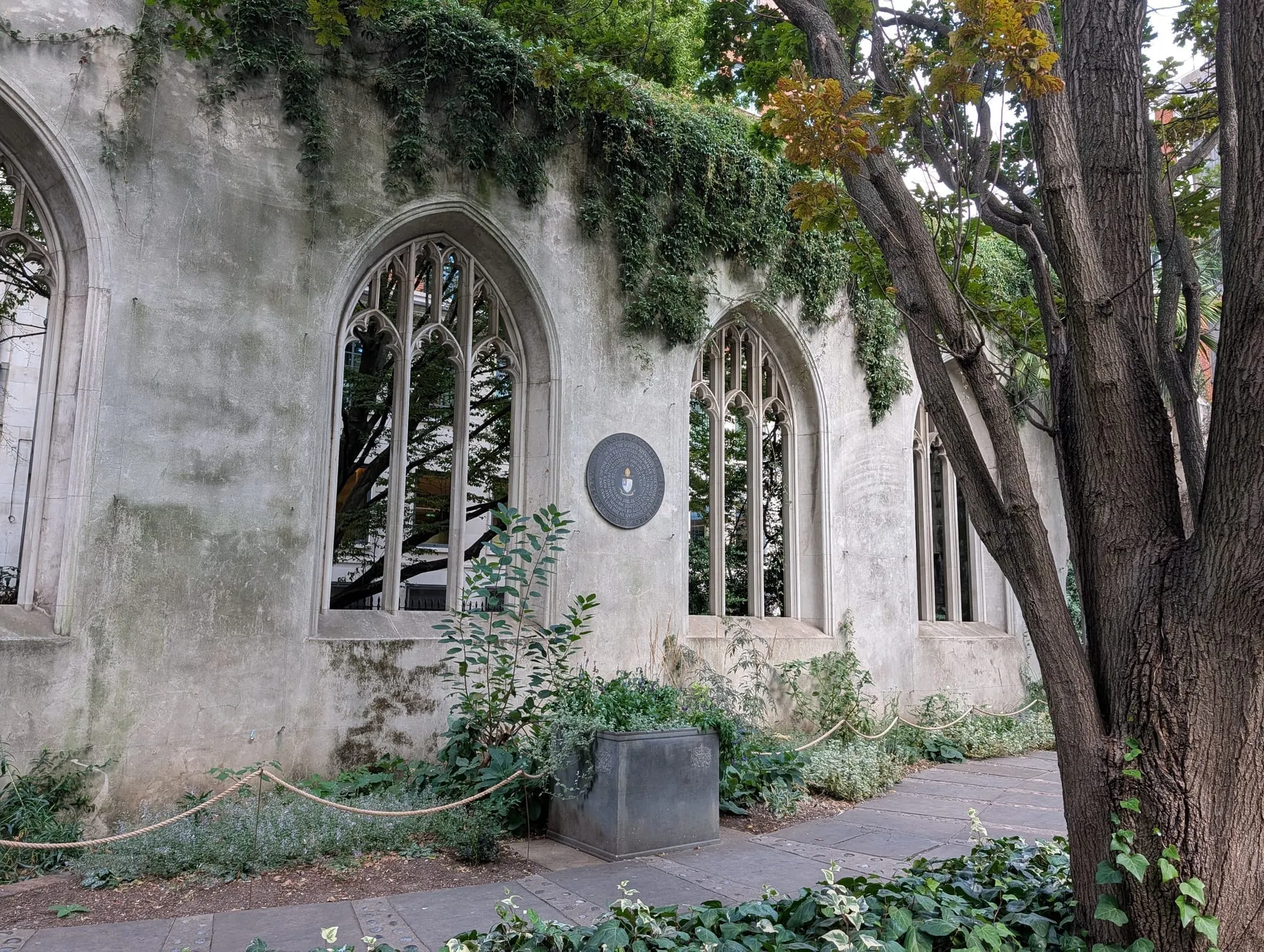
| City of London Corporation | The Square Mile, which is excluded from the English Heritage scheme. Commemorates lost buildings as well as people |
| Borough councils | Much looser criteria — buildings, businesses and events all qualify, and the subject has not always died |
| Nubian Jak Community Trust | Black and minority-ethnic history. The first was Bob Marley at County Hall in 2006 |
| Heritage Foundation | Entertainers — comedians, actors and TV names |
| Specialist trusts | The British Film Institute, the Police Memorial Trust, the Transport Trust, the Institution of Mechanical Engineers and others, each covering their own field |
| Private and museum plaques | Anything at all. The 221B Baker Street Sherlock Holmes plaque is the museum’s own |
All of these are genuine. The difference is in the rules each one sets, and those differences are the reason a plaque for a nightclub or a living musician exists at all.
Historic England’s National Blue Plaque Scheme is a separate thing again. It covers England outside London, so nothing in this guide overlaps with it.
What the colours mean
Colour generally tells you which organisation put the plaque up, not what it commemorates. Some colours belong almost entirely to one body; others are shared.
| Colour | In London | Usually indicates |
|---|---|---|
| Blue | 2,045 | The official scheme, but also the City of London, Nubian Jak, the Heritage Foundation and several boroughs |
| Green | 296 | Borough schemes, above all the City of Westminster |
| Black | 291 | No single scheme — the Hampstead Plaque Fund and Westminster are the biggest users |
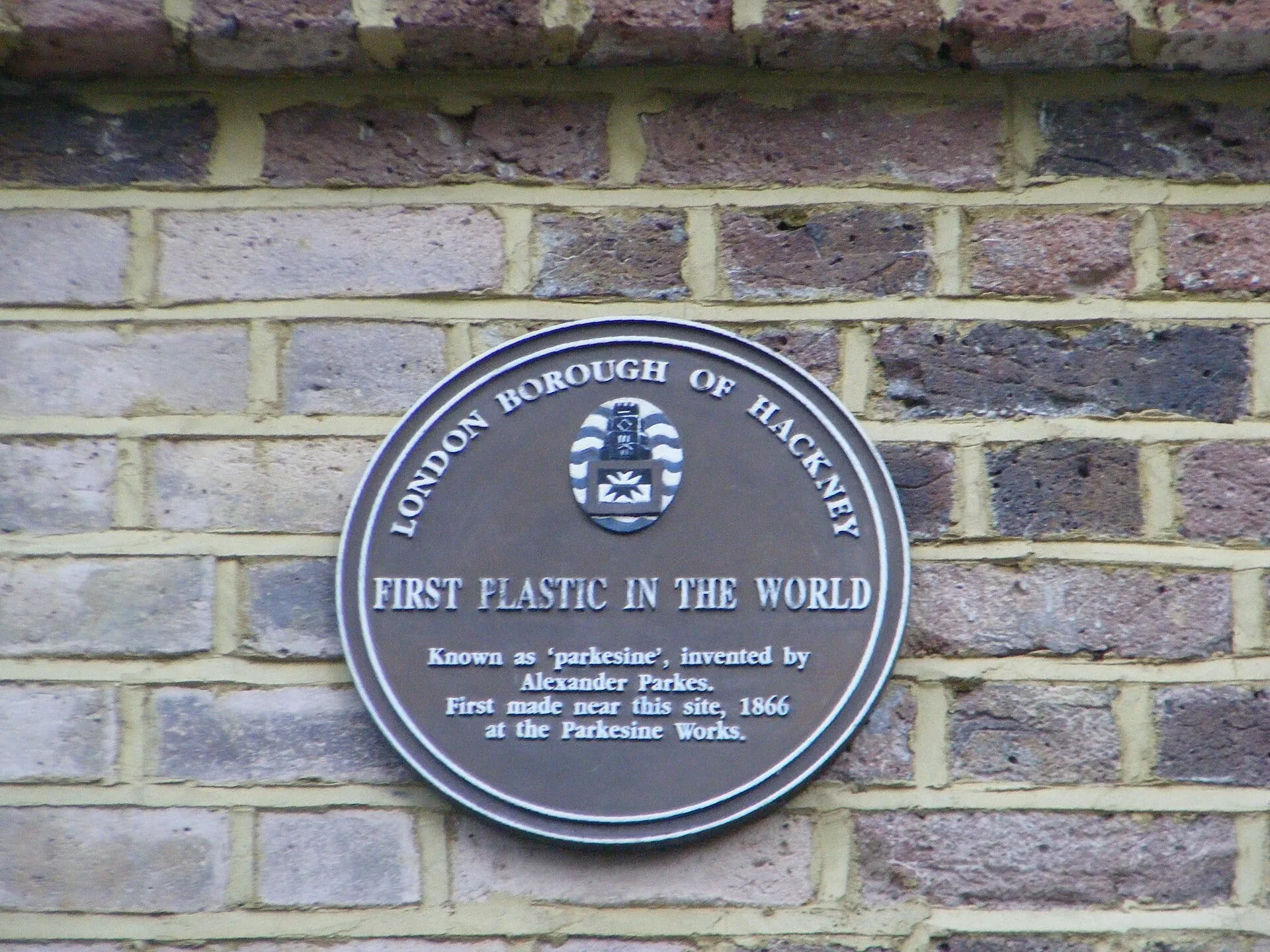
| Brown | 175 | Hackney’s scheme today; the Victorian originals before 1921 |
| Bronze, stone, white, grey | 384 combined | Mostly one-off and institutional plaques |
| Film cell (a strip of celluloid) | 29 | The British Film Institute, for people in film |
| Maroon | 27 | The London Borough of Lewisham |
| Marble | 12 | Often the Police Memorial Trust, for officers killed on duty |
| Red and black | 8 | The Institution of Mechanical Engineers |
| Pink | 8 | Highgate Heritage — all eight of them |
Blue
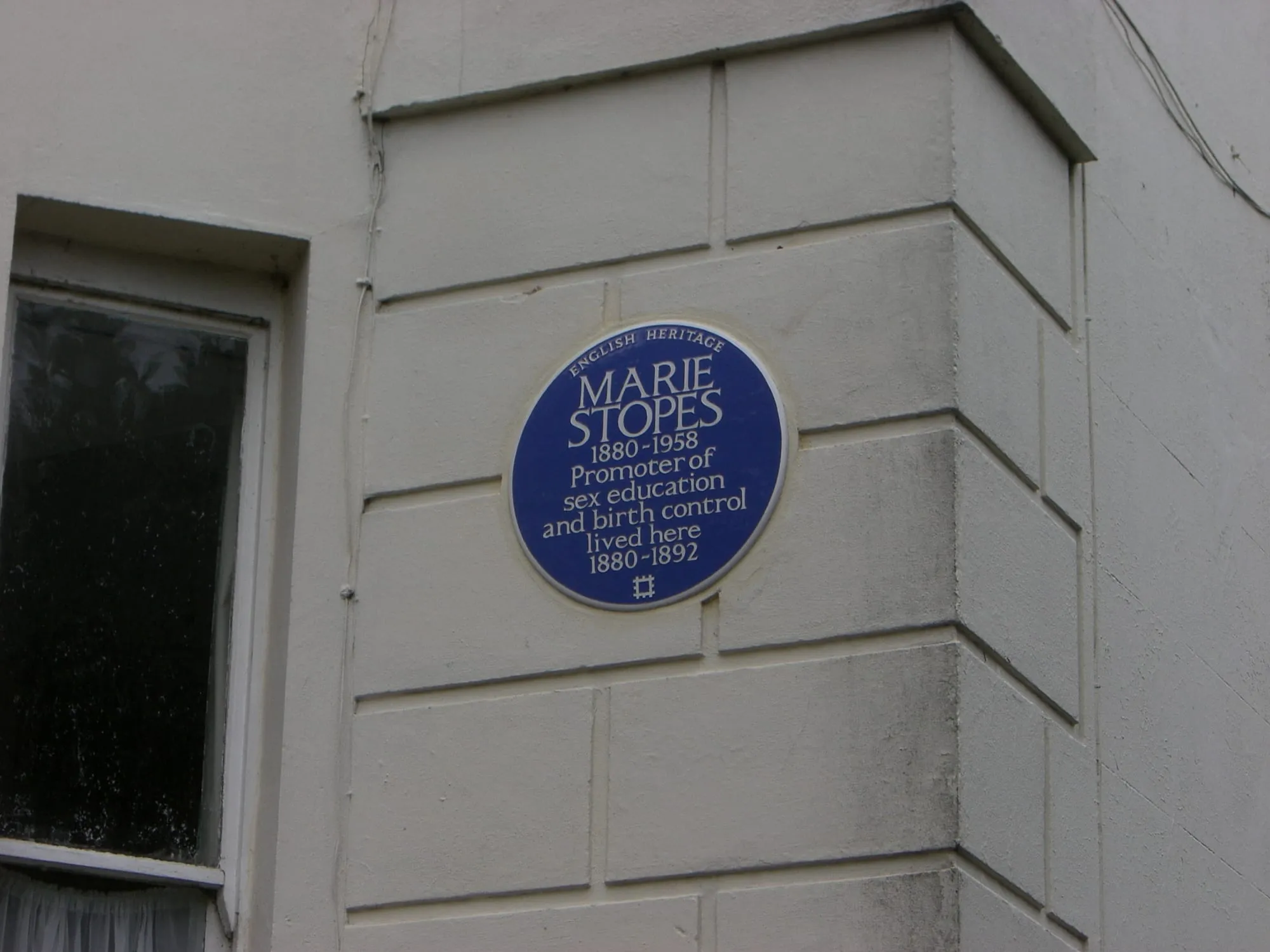
Blue is much the most common colour, and the official scheme uses it — but several other organisations use it too. Of London’s 2,045 blue plaques, 905 come from the official scheme and the councils that ran it before. The City of London Corporation accounts for 158, the Heritage Foundation 36 and the Nubian Jak Community Trust 34, with borough schemes making up much of the remainder. Camden’s are blue and are easily mistaken for official ones.
A blue plaque is therefore worth reading rather than assuming, and the organisation’s name is usually written on the plaque itself.
Green
Green is the clearest signal in London, because one scheme dominates it. Of 296 green plaques, 114 belong to the City of Westminster, with the London Borough of Islington (43) and Ealing Civic Society (13) behind it.
Brown
Brown is not only Hackney’s. The London Borough of Hackney’s own, modern scheme accounts for 43 of the 175. The old official scheme before 1921 adds 23 from the London County Council and 15 from the Royal Society of Arts, the body that began the scheme in 1866 — Dr Samuel Johnson’s plaque at 17 Gough Square is the best-known example, put up in 1876, and the only official-scheme plaque inside the City of London. The remaining 94 are split across a long tail of local trusts, councils and heritage groups, Harrow Heritage Trust and Transport for London the largest of them at ten each, and around thirty have no issuer recorded in the data at all.
The official scheme’s other colours
84 official plaques are not blue at all — 37 brown, 15 black, 9 stone, 7 grey, 7 bronze, 5 white, 3 green and 1 brass. These are the pre-1921 survivors, made before the blue ceramic standard existed.
The specialist colours
A few colours belong almost entirely to one organisation, which makes them easy to identify:
- Film cell — shaped like a strip of celluloid rather than a roundel. 25 of the 29 are the British Film Institute’s. This is a shape rather than a colour, which is why it catches people out.
- Maroon — 20 of 27 are Lewisham’s.
- Marble — the Police Memorial Trust.
- Red and black — the Institution of Mechanical Engineers.
- Pink — Highgate Heritage, and all eight are theirs.
- Red — no single owner, but the Transport Trust is the largest user.
- Purple and orange — one plaque each, from the Geological Society of London and the Joint Council for the Welfare of Immigrants.
Rainbow plaques, marking LGBTQIA+ heritage, are unmistakable when you see one and are a recent addition to the city.
How a plaque gets put up
The official scheme has the strictest rules of any on this page. To qualify:
- At least 20 years since the subject died
- A surviving building in Greater London, outside the City
- The building must survive in a form the person would recognise
- It must be visible from a public highway
- One plaque per person, and no more than two on any one building
Churches, schools and theatres are not normally considered, on the grounds that too many people passed through them. Anyone can nominate someone.
The two-per-building rule is modern, so older plaques predate it — Gandhi has two, and Palmerston, Gladstone and Thackeray have three each.
Only 15% of London’s official plaques commemorate women. Since 2016, more than half of new awards have gone to women, which is the scheme correcting a hundred and fifty years of arithmetic.
Telling them apart on the street
The quickest guide is the subject rather than the colour:
- A person, twenty or more years dead — could well be official.
- A building, a business, a band or an event — a borough or society plaque. English Heritage does not commemorate these.
- Somebody still alive — not official. Several other schemes allow it.
- A fictional character — never official. The Sherlock Holmes plaque belongs to the museum.
The organisation’s name is normally on the plaque, so the reliable answer is simply to read it.
Seeing them
Every plaque in this guide is on a public street and free to look at.
🗺️ Find one near you on our interactive map →. All of them, searchable by name, inscription or organisation, filterable by colour and subject.
Nearly all are on private homes, but four addresses are open to the public as museums: Handel Hendrix House in Mayfair, the Charles Dickens Museum in Bloomsbury, Keats House in Hampstead and the Freud Museum.
Prefer a guide who already knows which plaques are worth the detour and which are a dead end.
About these numbers
The counts here come from the Open Plaques dataset, which is public domain, filtered to a Greater London bounding box — the same data behind our map.
Two caveats worth stating. It is a 2021 snapshot, so plaques erected since then are not counted, rainbow plaques among them. And organisation records are incomplete: several hundred plaques have no issuing body recorded, which is why this guide says “usually” and “mostly” rather than giving absolutes. The pattern is reliable; the totals are a floor rather than a ceiling.
Continue planning your London trip
- 🔵 London Blue Plaques: The Ones Worth Walking To
- 🗺️ Every plaque in London on one map
- 🎨 London Street Art
- 🕵️ Hidden London
- 🎪 Free Things to Do in London
Common questions
Who puts up the plaques in London?
Several different organisations. English Heritage runs the official scheme, which is the oldest of its kind in the world. The City of London Corporation runs its own inside the Square Mile, most boroughs run their own, and specialist bodies like the Nubian Jak Community Trust, the British Film Institute and the Police Memorial Trust cover their own subjects. All of them are legitimate; they simply have different rules.
What do the different colour plaques mean in London?
Colour usually indicates which organisation put the plaque up rather than what it commemorates. The official English Heritage scheme uses blue, but so do the City of London Corporation, the Nubian Jak Community Trust and several boroughs. Green is mostly the City of Westminster, brown is mostly Hackney, and a long tail of colours belongs to individual trusts and societies.
Are all blue plaques official English Heritage plaques?
No. Blue is the most common colour and the official scheme uses it, but other organisations use blue too. Of London's 2,045 blue plaques, 905 come from the official scheme and the councils that ran it before. The rest are from the City of London Corporation, borough councils and independent trusts.
Why are some old plaques brown or terracotta rather than blue?
Because blue was not standard until 1921. The scheme began in 1866 under the Society of Arts and the early plaques were made in whatever the manufacturer could supply — brown, terracotta, green, bronze, lead and stone all survive. Dr Samuel Johnson's 1876 plaque at 17 Gough Square is brown for exactly this reason.
How do you get a blue plaque?
Anyone can nominate someone for the official scheme. English Heritage require that at least 20 years have passed since the subject died, that a building associated with them survives in Greater London outside the City, that it survives in a form they would recognise, and that it is visible from a public highway. Only one plaque goes up per person, and no more than two on any one building.