In this guide
London’s Royal Parks alone cover more than 5,000 acres, and in autumn nearly all of it turns — though not on the same day, and not even the same species turning together. This guide is about the colour specifically: which trees, in which named spot inside each place, and when to go before or after the crowd finds it. For the city’s green spaces more broadly — the swimming ponds, the free houses inside them, Richmond Park as a deer park rather than an autumn one — see our guide to London’s best parks and gardens.
💡 The Short Version: Seven of the fifteen sources name Richmond Park, for the Isabella Plantation’s Acer Glade and the deer. Kew Gardens, named by six, has the widest range of named trees and is the only entry that charges. Richmond and Bushy Park are also where the deer rut runs, from late September to early November — keep 50 metres back. St James’s Park (five sources) and Greenwich Park (four) are the free, central options. In 2026 many trees are dropping leaves early after May’s record 35C heatwave, the Guardian reported on 1 September, so check a park’s own update before a special trip.
📊 The evidence behind this guide. 15 independent sources carrying 60 citations across 28 named places, of which 11 are named by two or more independent sources. Newspapers, magazines, local reporting, blogs and video, counted per creator. Hours, prices, rutting rules and named trees come from each place’s own operator, which is never counted as a source for a park it runs. How we rank →
Where they are
| If you are near… | Where to go |
|---|---|
| Central | St James’s Park, Green Park, Hyde Park, Kensington Gardens, Regent’s Park & Primrose Hill |
| Kensington & Chelsea | Holland Park & the Kyoto Garden, Kynance Mews, Chelsea Embankment |
| Westminster | Victoria Tower Gardens |
| Richmond & west | Richmond Park & the Isabella Plantation, Bushy Park, Ham House |
| Hampstead | Hampstead Heath, Big Wood (Hampstead Garden Suburb) |
| Greenwich & south east | Greenwich Park, Oxleas Wood, Blackheath, Lesnes Abbey Woods, Beckenham Place Park |
| East | Victoria Park, Tower Hamlets Cemetery Park, Epping Forest |
| South | Brompton Cemetery, Nunhead Cemetery, Battersea Park, Fulham Palace |
| Further out | Osterley Park |
Named by four or more sources
Richmond Park and the Isabella Plantation — the Acer Glade and the deer
Richmond, then bus or a walk · Cited by 7 sources · Free
Seven sources name it, and each for a different reason: Londonist, Solosophie, The Tab, Metro, BBC News, the Independent and a YouTube walk. Londonist calls it “London’s quintessential autumn spot”; Solosophie says it “may well be the best spot of all” in the city; Metro highlights the Tamsin Trail, a seven-mile walking and cycling loop around the park’s perimeter with woodpeckers and green parakeets to spot along the way. Inside it, the Isabella Plantation has its own dedicated feature: Japanese maples turning “brilliant shades of scarlet, orange and gold” through what’s known as the Acer Glade, among tupelo, swamp cypress and dawn redwood planted together for the display.
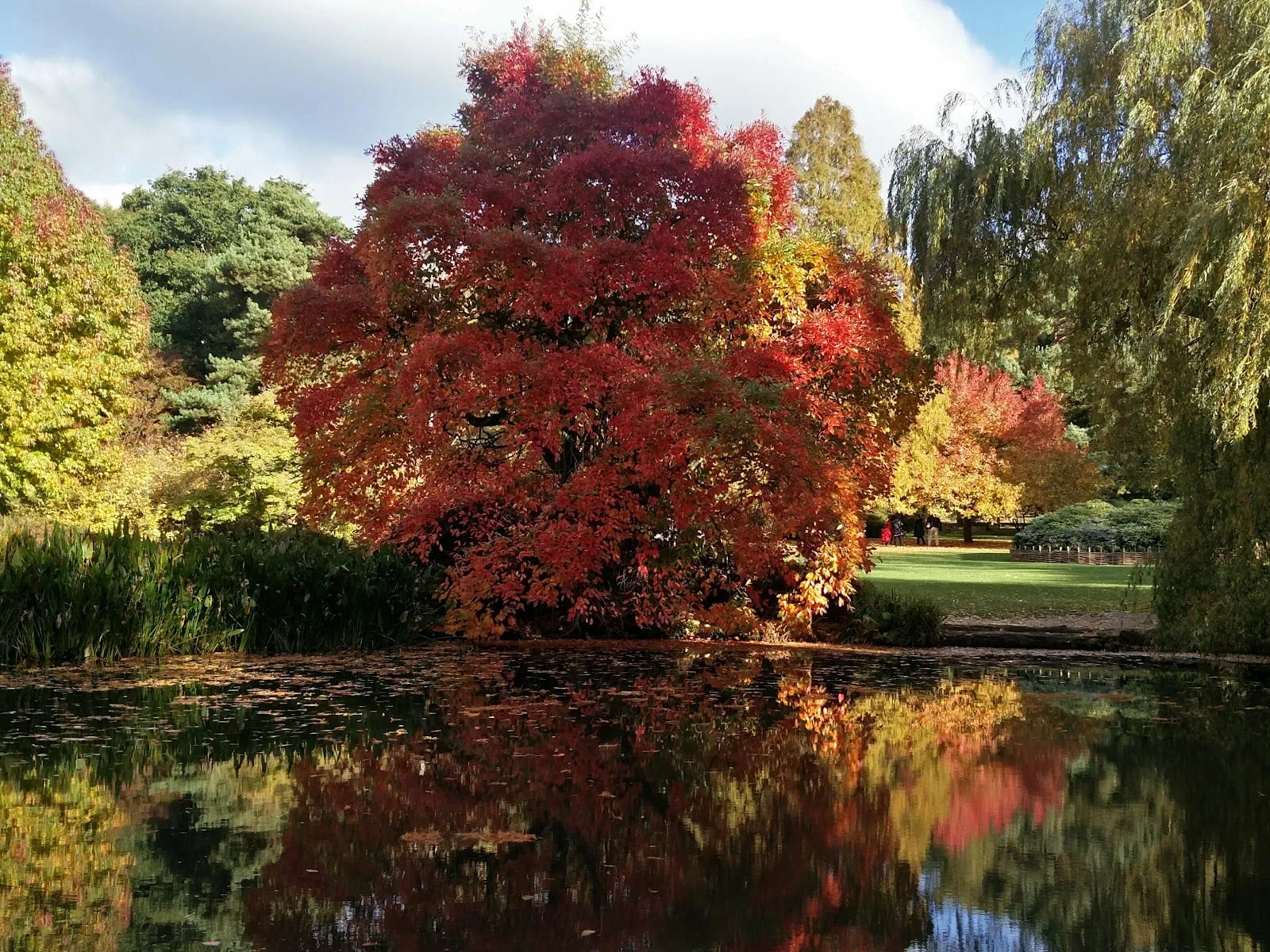
Seven of this guide’s fifteen sources name Richmond Park, most of them for the Isabella Plantation.
This is also rutting season. See “Richmond and Bushy: the deer rut,” below, before visiting. Free, open dawn to dusk, and Pembroke Lodge has the park’s largest car park.
Kew Gardens — the widest range of named trees, and the only one that charges
Kew Gardens, District line and Overground · Cited by 6 sources · £25–£28 peak, £17–£20 off-peak
Kew’s own Arboretum holds 11,000 trees — 2,700 of them oaks — and autumn is when the entry fee earns itself back. The Independent picks out specifics few visitors find alone: the red oak (Quercus robur) puts on “a flashy show of crimson along the Riverside Walk,” and russet-leaved pin oaks (Quercus palustris) grow near the Treetop Walkway. The Evening Standard adds Kew’s deciduous conifers — golden larch and fiery orange swamp cypress by the lake — which few free London parks grow at all.
The Guardian reported on 1 September 2026 that Kevin Martin, Kew’s head of tree collections, is “really worried about this autumn”: after May’s 35C heatwave, “the whole growing season this year has been under stress”, and he expects heat and drought to kill trees at Kew and across the south-east. Peak pricing runs 2 September to 31 October 2026 — £25 online, £28 at the gate — then drops to £17 online from 1 November. Every Tuesday from 8 September to 29 December 2026, entry is £10. Hours shorten the same week the clocks go back: 10am–6pm, last entry 5pm, through 24 October, then 10am–4pm, last entry 3pm, from the 25th.
St James’s Park — the view from the Blue Bridge
St James’s Park, District and Circle lines · Cited by 5 sources · Free
The Evening Standard’s own favourite spot: “the Blue Bridge that crosses the lake in St James’s Park. The trees reach down to the water, providing a perfect reflection on a still day.” Londonist adds that the view from the lake bridge looking east towards Horse Guards “turns technicolour around September/October, with the London Eye and cream coloured government buildings peeking over the tops of clouds of fire-coloured leaves.” St James’s Park is the oldest of the Royal Parks and the most central, so the bridge gets crowded on a clear weekend; a weekday morning is quieter.
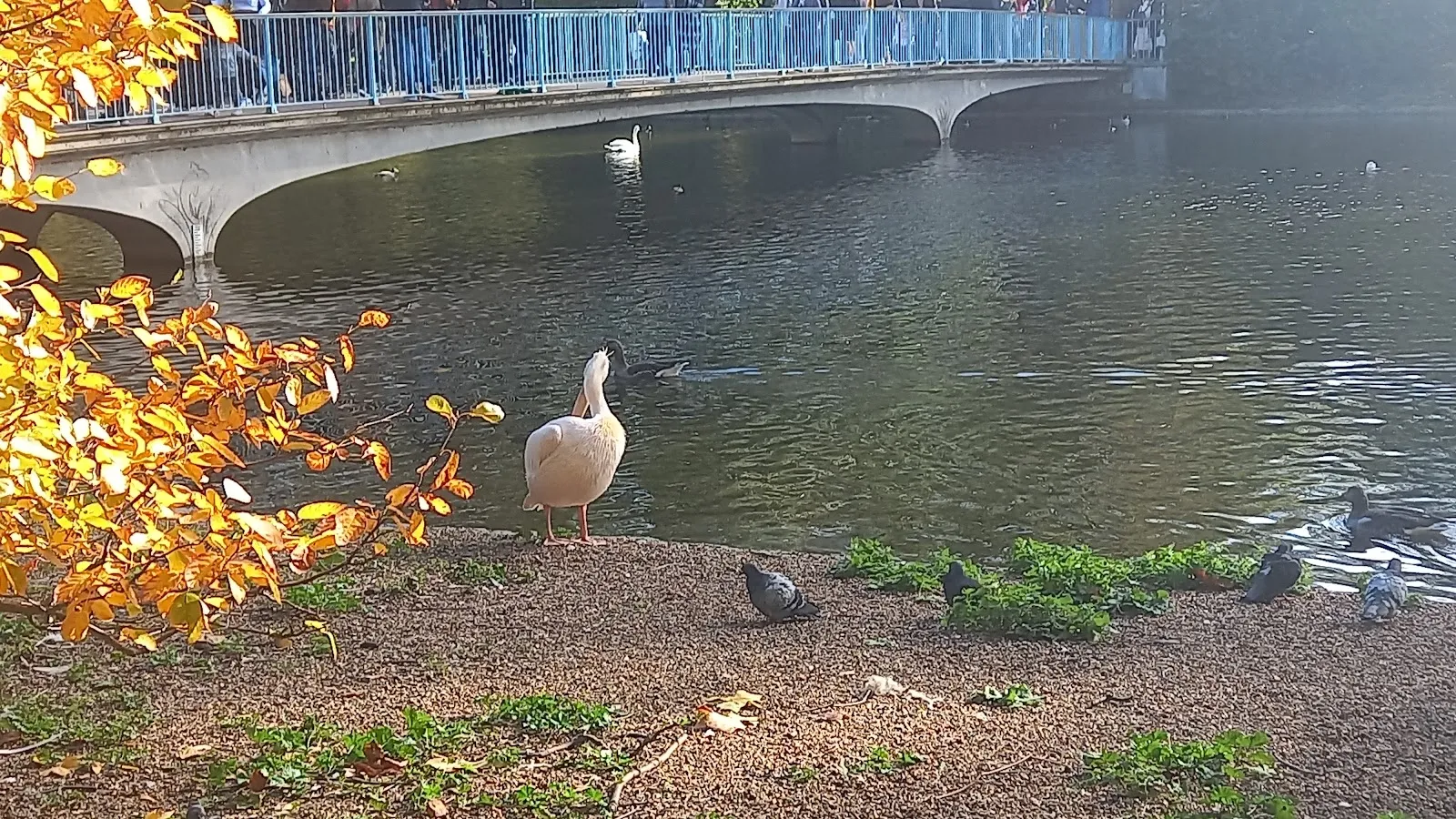
This is the Blue Bridge, looking towards Horse Guards — the view Londonist says “turns technicolour” every autumn.
Free, open 5am to midnight, and the bridge is a two-minute walk from St James’s Park station.
Greenwich Park — 400-year-old chestnuts and a 750-year-old oak
Greenwich or Blackheath, DLR and National Rail · Cited by 4 sources · Free
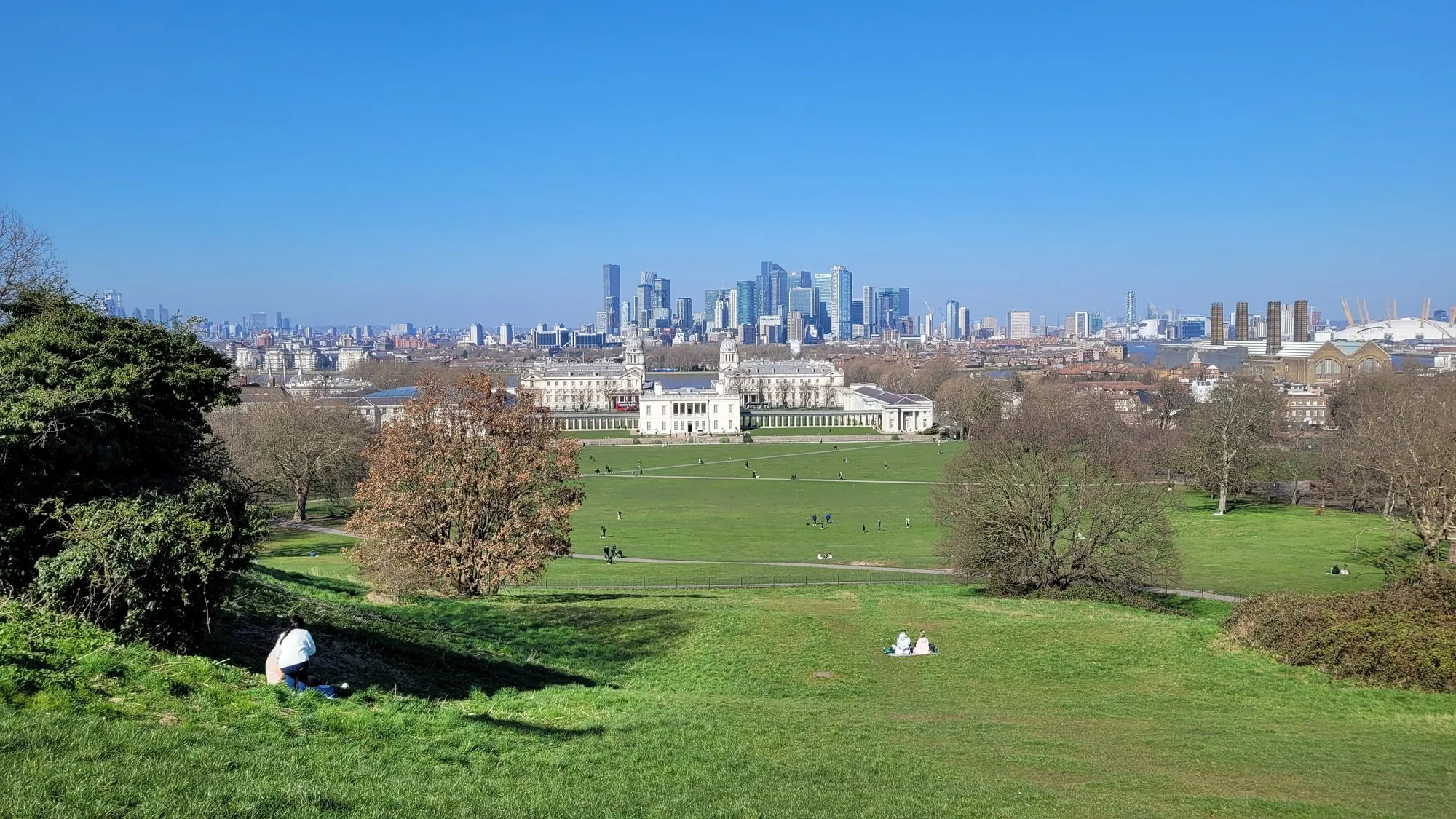
London’s oldest enclosed royal park has some of the oldest trees on this list. Time Out points to avenues of Spanish sweet chestnuts planted around 400 years ago, which drop edible nuts in autumn, and to the Queen Elizabeth Oak, dated at 750 years old. News Shopper’s local reporting adds specifics: “rows of Japanese Maple and Sweet Chestnut trees that turn red and orange in autumn, along with its London skyline views and historic buildings like the Observatory and Pavilion Café.” Londonist’s own pick is Blackheath Avenue, which gets the same “golden tunnel” treatment as Regent’s Park’s Broad Walk.
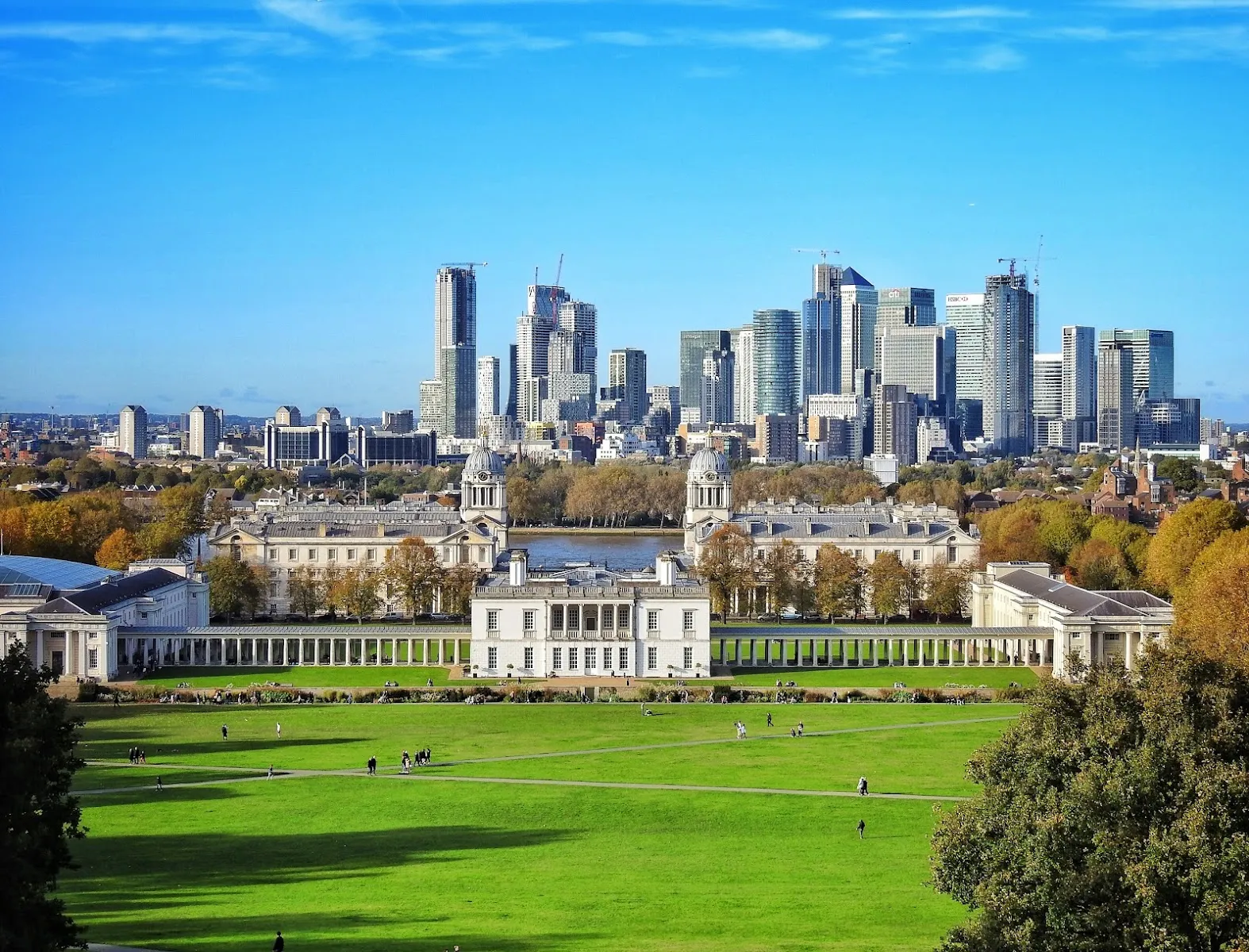
The Queen Elizabeth Oak here is dated at 750 years old.
Free, open 6am to dusk, and the climb to the Observatory gives the view over all of it — though the Observatory building itself is closed for a refurbishment until summer 2027.
Regent’s Park and Primrose Hill — a golden tunnel down the Broad Walk
Baker Street, multiple lines · Cited by 4 sources · Free
The Broad Walk, the wide north–south avenue through the park, becomes what Londonist calls “a golden tunnel” as its trees turn. Two independent YouTube walks, filmed a year apart, both chose this park over any other in London to film in autumn — one describing it simply as “even more beautiful with autumn colours.” Brogan Abroad, a named travel blogger, lists it among her top parks for the season too. From the top of Primrose Hill, at the park’s northern edge, the skyline shows the season changing across the treetops below.
Free, open 5am to dusk (later in summer). Frieze Sculpture, a free outdoor art exhibition, runs in the park’s English Gardens from mid-September to early November most years, so autumn colour and outdoor art overlap here.
Named by three sources
Hyde Park — 4,000 trees along the Serpentine
Hyde Park Corner, Marble Arch or Lancaster Gate · Cited by 3 sources · Free
More than 4,000 trees, per Time Out, with the beeches, limes and chestnuts along the Serpentine’s avenues turning “buttery yellows and fiery oranges.” Solosophie recommends the lake specifically, for renting a rowboat to see the colour reflected from the water rather than the path. Metro’s own London walking guide routes a loop through here too, as part of a longer trail linking four of the Royal Parks.
Free, open 5am to midnight.
Green Park — the corridor between the palaces
Green Park, Piccadilly or Jubilee lines · Cited by 3 sources · Free
Named independently by a YouTube walking channel, a travel blogger and Metro’s own London walking guide — the last of which uses it as the starting point for a longer loop through four Royal Parks, on to St James’s Park, Buckingham Palace, Hyde Park and Kensington Gardens. It is smaller and plainer than its neighbours, without a lake or a formal garden, which is exactly why it works as a quick, tree-lined cut-through between Piccadilly and the Palace rather than a destination to linger in.
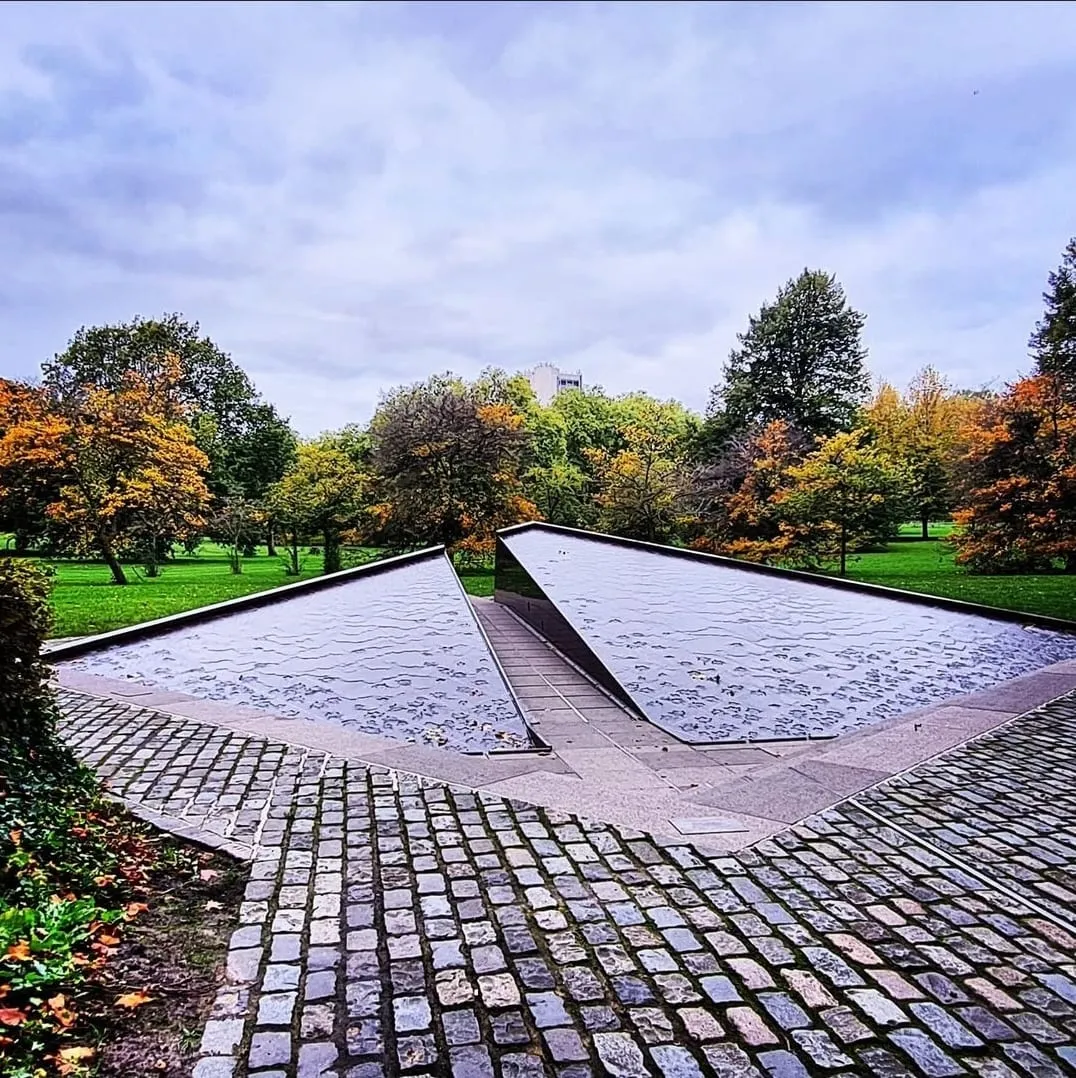
The Canada Memorial’s granite is inset with 506 bronze maple leaves, with water running over them. Metro uses Green Park as the start of a longer loop through four Royal Parks.
Free, open 5am to midnight.
Hampstead Heath — 800 acres of ambers, golds and deep reds
Hampstead Heath Overground, or Hampstead, Northern line · Cited by 3 sources · Free
Time Out describes the Heath’s “meadows and magical woodland areas, all tinged in ambers, golds and deep, majestic reds,” and Condé Nast Traveller calls it the corner of the city that “takes on its best colours in autumn,” with its three swimming ponds offering a last cold-water dip before winter shuts them to all but the hardy. Metro’s own Hampstead Circular walk takes in “a mix of oak-lined trails and open meadows,” starting from Hampstead village and running up past the Holly Bush pub before reaching the Heath itself. A full route through it, taking in Kenwood House and Parliament Hill, is in our Hampstead Heath to Primrose Hill walk.
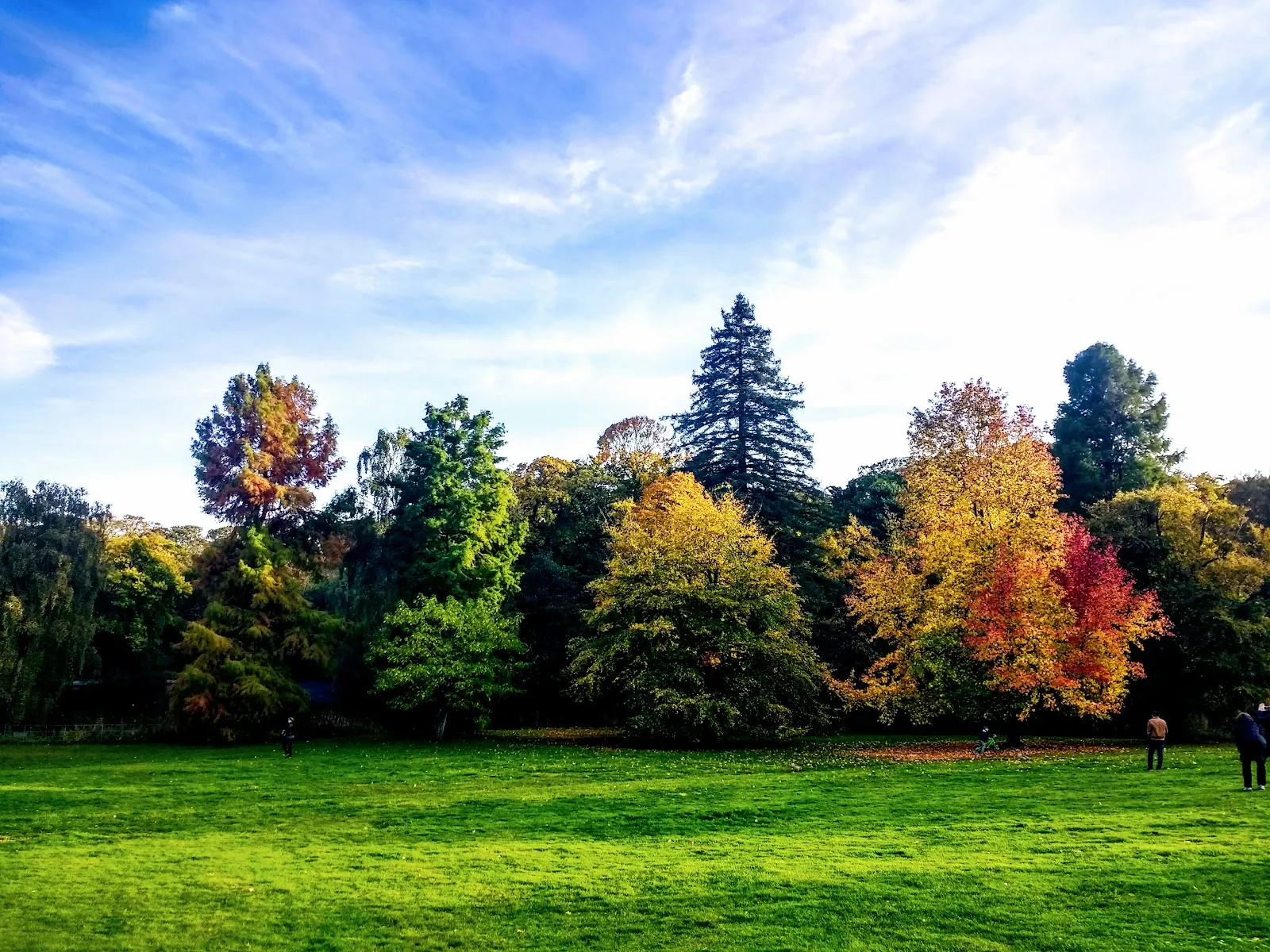
Its three swimming ponds offer a last cold dip before winter closes them to all but the hardy.
Free, open all year, and the ponds keep swimming right through autumn.
Holland Park and the Kyoto Garden — a Japanese garden fringed in orange
Holland Park, Central line · Cited by 3 sources · Free
A 1991 gift from the Chamber of Commerce of Kyoto, with a waterfall, a bridge and koi carp, sitting inside the wider 54-acre Holland Park. Time Out and Solosophie both single it out: its edges turn “fringed with orange leaves” as its Japanese maples change, and it stays one of the more reliably photogenic corners of the park even when the wider grounds are still green. Brogan Abroad adds that the neighbourhood’s own front gardens keep colour going long after the park’s trees are bare, with “fiery red ivy” over the houses around it.
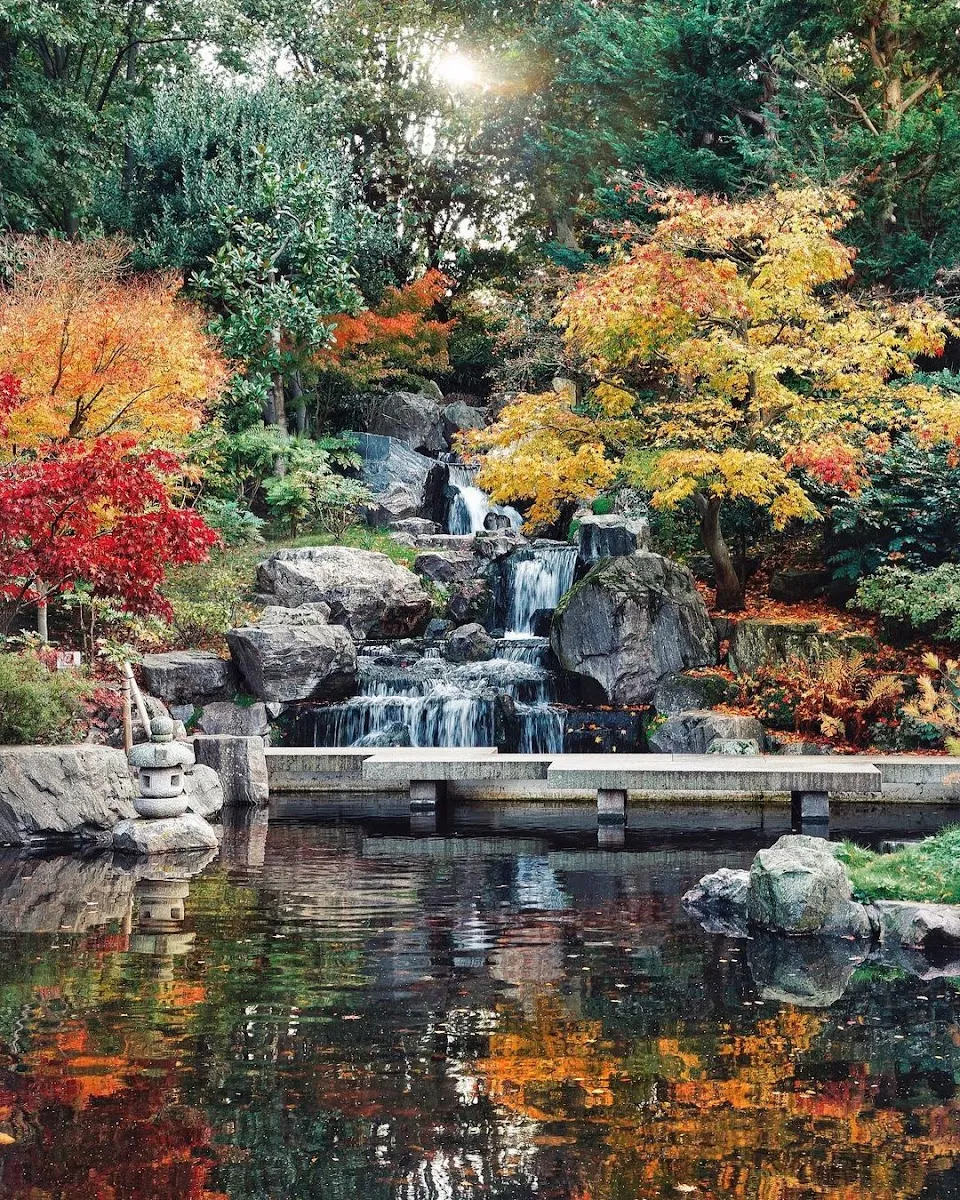
Brogan Abroad says the ivy on houses around the park turns “fiery red” long after its own trees are bare.
Free, and busiest for photos on a clear weekend afternoon — go early to see the koi pond without a queue for it.
Richmond and Bushy: the deer rut, and how to watch it safely
Richmond Park and Bushy Park are London’s only two parks with free-roaming deer — red and fallow, over 1,000 of them between the two. BBC News quoted both parks’ own managers on the rut in 2025: Paul Richards at Richmond said “the rut is a fascinating natural event, but please don’t forget these are wild animals, pumped full of testosterone and can be unpredictable,” while Phil Edwards at Bushy put the safety advice plainly — “keep at least 50 metres away from the deer, and even further if they are active.” The rut itself runs from late September to early November, when stags compete for hinds by roaring and clashing antlers.
The danger is real, not theoretical. The Independent reported a person taken to hospital by London Ambulance Service after being hurt by a deer inside Richmond Park, and Royal Parks said it was “shocked and alarmed” by videos and photos online of visitors approaching deer in nearby Bushy Park. Keep well back, keep dogs on a lead, and never place yourself between two rutting stags.
Bushy Park — the quieter deer park, and the start of the Hampton Court Barge Walk
Hampton Court or Teddington · Cited by 3 sources · Free
Named alongside Richmond by BBC News and the Independent for its own rutting deer, and by Metro as the starting point for the Hampton Court Barge Walk, a riverside route down to Hampton Court Palace past Ravens Ait and Thames Ditton Island. Bushy Park holds roughly half of the more than 1,000 deer it shares with Richmond between them, and is generally easier to watch the rut in without the weekend crowds Richmond draws for the same reason.
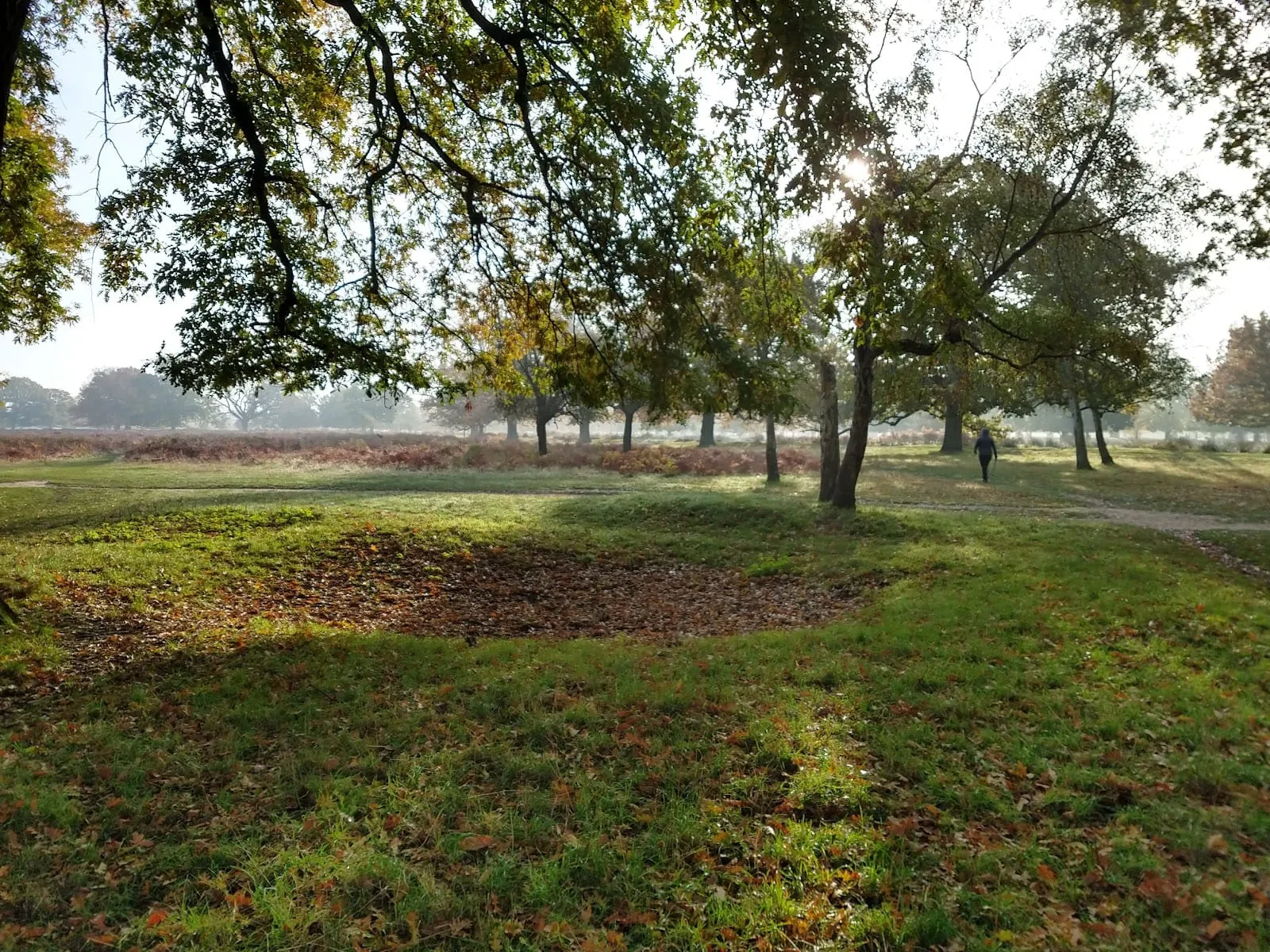
Metro names Bushy Park as the start of the Hampton Court Barge Walk, past Ravens Ait and Thames Ditton Island.
Free, open dawn to dusk.
Cemeteries: quieter, and free
Brompton Cemetery — a Victorian graveyard turned quiet walk
West Brompton or Earl’s Court · Cited by 1 source · Free
One of London’s “Magnificent Seven” Victorian cemeteries. Londonist describes the effect as “autumn leaves settle on the ground among imposing tombs and in front of the iconic domed chapel” — a moodier, more architectural version of an autumn walk than any open park on this list offers.
Free, open dawn to dusk, and quietest on a weekday morning.
Nunhead Cemetery — a hilltop view to St Paul’s through the leaves
Nunhead, Overground · Cited by 1 source · Free
The second of the Magnificent Seven on this list, and Londonist’s specific reason is the view: climb to the top and, as the cemetery’s own trees shed their leaves, the skyline opens up towards St Paul’s Cathedral in a way it doesn’t the rest of the year. It is a genuine climb rather than a flat stroll, and considerably quieter than Highgate or Brompton on the same weekend.
Free, open every day, and the climb is worth timing for late-afternoon light.
- Tower Hamlets Cemetery Park, Mile End — a disused Victorian cemetery turned into the borough’s only woodland, 33 acres of wild planting with pumpkin-carving, bat walks and storytelling events through the season, per Time Out. Free. Cited by 1 source.
South east London’s ancient woodland
News Shopper’s own local reporting, cross-checked against the sources above, adds four further sites — all inside a few miles of Greenwich Park and less written up nationally than the big parks, but genuinely ancient rather than planted for effect.
- Oxleas Wood, Shooters Hill — one of London’s oldest woodlands, dating back more than 8,000 years, with hornbeam, oak and hazel; the rose garden at Jack Wood and the historic Severndroog Castle terrace sit inside it. Free. Cited by 1 source.
- Blackheath, next to Greenwich Park — open grassland ringed by Georgian and Victorian houses rather than woodland as such, but grouped with its neighbour on the same list. Free. Cited by 1 source.
- Lesnes Abbey Woods, Abbey Wood — 88 hectares of ancient woodland around the ruins of a 12th-century abbey. Free. Cited by 1 source.
- Beckenham Place Park — ancient woodland, a lake and a historic Georgian manor, with a marked Woodland Wander trail through the trees. Free. Cited by 1 source.
Epping Forest and the wider royal parks
Epping Forest — ancient beech and hornbeam at the end of the Central line
Chingford, Overground, or Leytonstone, Snaresbrook and Wanstead, Central line · Cited by 1 source · Free
Epping Forest runs 13 miles from east London into Essex, and the part inside Greater London is genuinely reachable on the network: five minutes on foot from Chingford station to the Visitor Centre and Queen Elizabeth’s Hunting Lodge, then on to Connaught Water via the Willow Trail. From Leytonstone or Snaresbrook on the Central line, the Hornbeam Trail and Wanstead Park’s Chestnut Trail reach the Forest’s ancient hornbeam and oak pollards. The Independent reported in April 2026 on an over-300-year-old crab apple tree found here — the real-life original behind the Crabapple Cottage illustration in the children’s book series Brambly Hedge, now the start of a themed trail through the Forest.
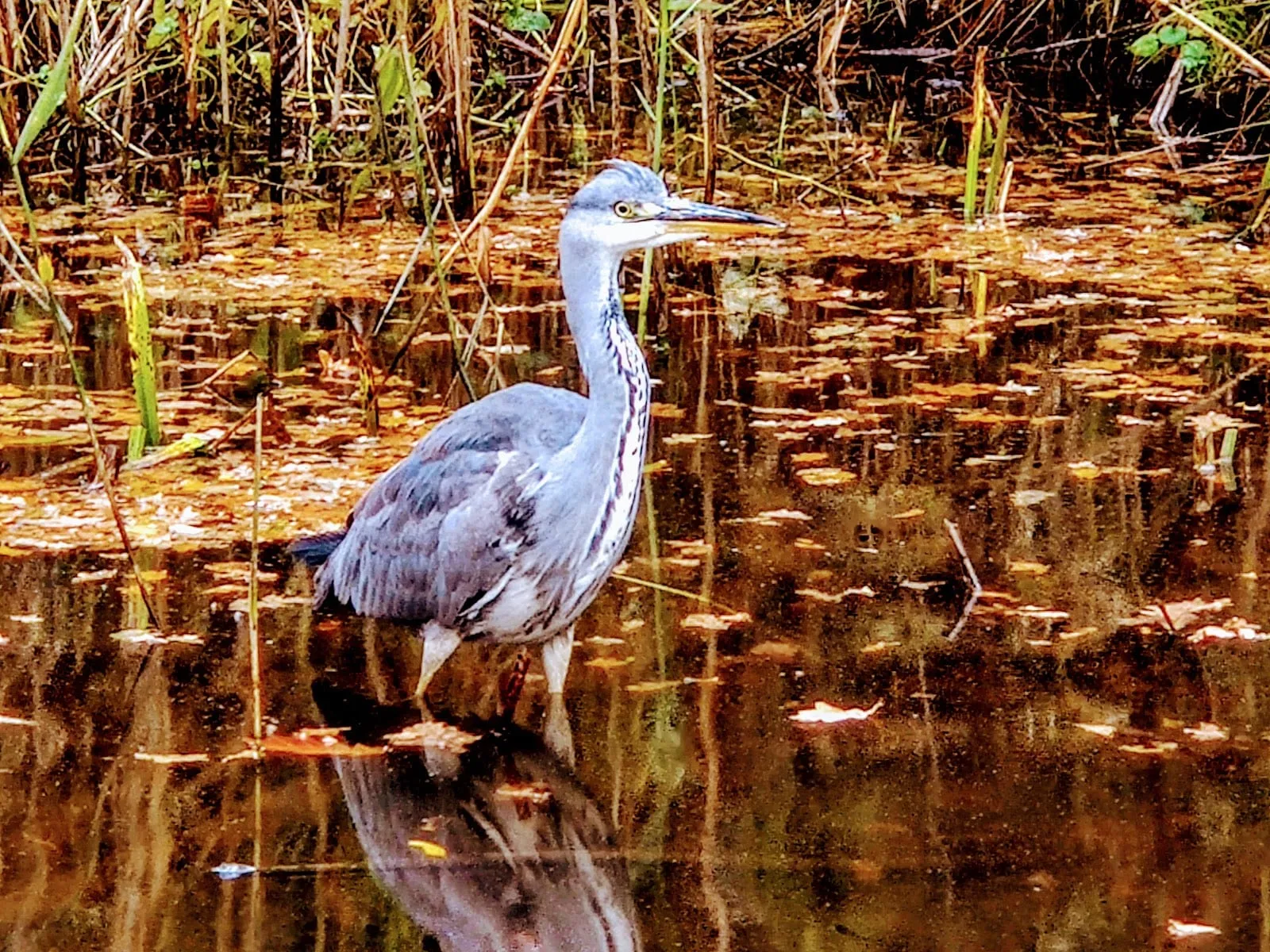
Five minutes on foot from Chingford station reaches the Visitor Centre, then the Willow Trail on to Connaught Water.
Free, open all year. The Forest’s northern half continues into Essex, outside this guide’s scope.
- Kensington Gardens, next to Hyde Park — Queen Anne’s Alcove, the Italian Gardens fountains and the Diana, Princess of Wales Memorial Playground sit inside it, all part of a longer Royal Parks walking loop Metro maps out from Green Park. Free. Cited by 1 source.
- Victoria Tower Gardens, Westminster — the line of plane trees beside the Houses of Parliament, best seen from across the river on the Albert Embankment, per the Evening Standard. Free. Cited by 1 source.
Historic houses further out
- Ham House, Richmond — a National Trust house on the Thames, a short riverside walk from Richmond Park, where Solosophie independently calls the gardens’ colour “lovely golden hues.” Grounds free; house ticketed. Cited by 1 source.
- Osterley Park, Isleworth — a Georgian estate with more than 350 acres of parkland and rolling lawns, remodelled by Robert Adam, per Time Out’s own venue guide. Grounds free; house ticketed. Cited by 1 source.
Also worth the trip
- Victoria Park, Bethnal Green/Hackney Wick — the East End’s own royal-park-sized green space, where Time Out singles out the silver birches, planes, oaks and a rare purple-leaved Norway maple. Free. Cited by 1 source.
- Battersea Park — a hybrid strawberry tree, red-barked and still fruiting into late autumn, stands out among the more usual oaks and willows, per Time Out. Free. Cited by 1 source.
- Fulham Palace — flame-coloured leaves around the former Bishop of London’s palace, with pumpkins for sale from the walled kitchen garden. Free to the grounds. Cited by 1 source.
Streets and smaller corners
Kynance Mews — creeper over the arches
Kensington · Gloucester Road, District, Circle and Piccadilly lines · Cited by 2 sources · Free
A cobbled mews off Kynance Place, where ivy and Virginia creeper turn into what Londonist calls “a waterfall of vermillion” over its two stone arches. Go early on a weekday: the arch is one of the most photographed doorways in Kensington and a queue forms for it by mid-morning.
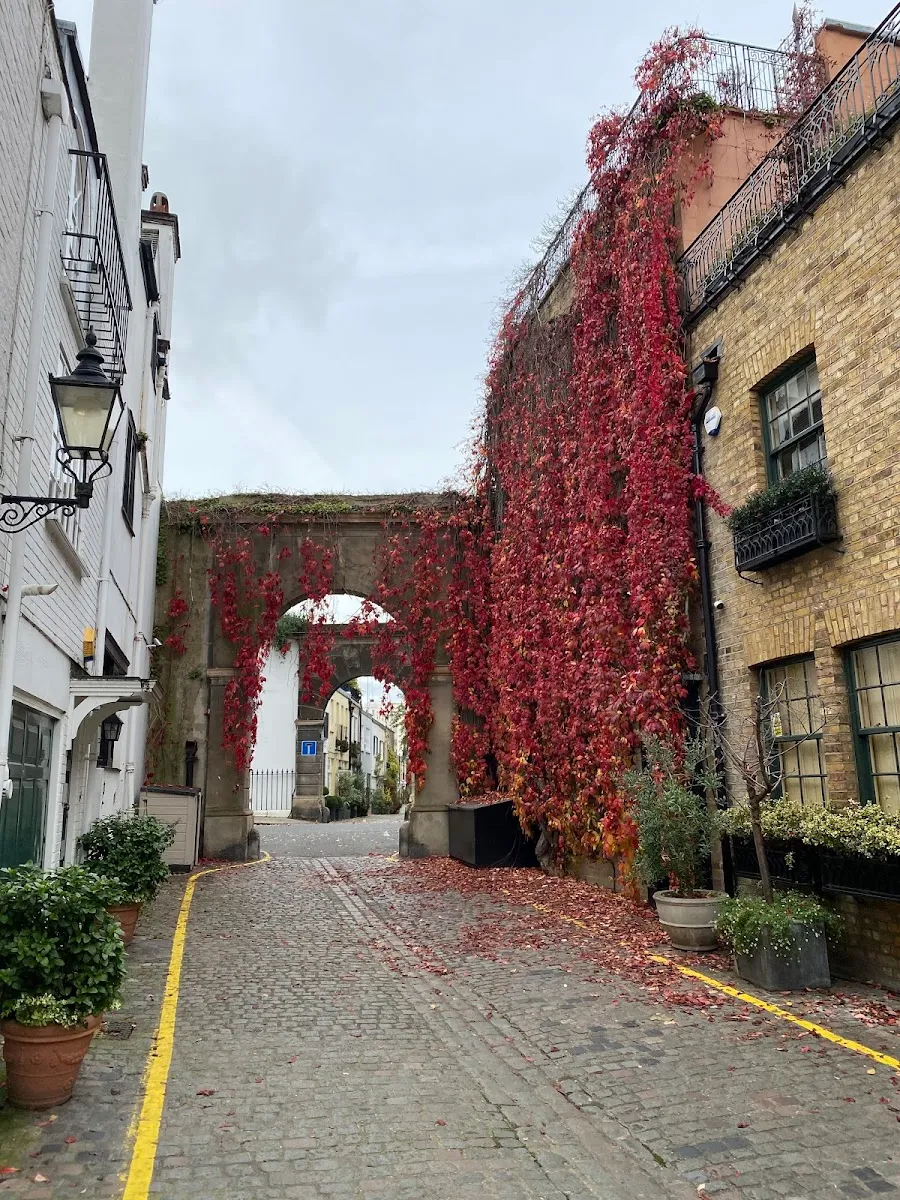
The creeper turns weeks after the parks do, so this is one to save for the back end of the season.
The rest of the streets
- Chelsea Embankment — golden plane trees arching over the riverside path, with sphinx-headed benches to sit on while the leaves come down, per Londonist. Free. Cited by 1 source.
- Big Wood, Hampstead Garden Suburb — two small ancient-woodland pockets, including a genuine rarity: the wild service tree (Sorbus torminalis), which the Evening Standard says turns “a deep copper-orange” this time of year. Free. Cited by 1 source.
When to go
The sources here agree on a shape most years: the earliest trees turn from September, most of London peaks in October, and by mid-November it is over for everything except a handful of late colourers. 2026 is not most years. The Guardian reported on 1 September 2026 that many trees across England are losing their leaves early to cope with the heat, after a May heatwave that reached 35C. Experts in the same report warn that autumn storms linked to El Niño could hit trees already weakened by heat and drought.
| Period | What’s happening |
|---|---|
| September | The most drought-stressed trees drop leaves early without full colour — a “false autumn,” per Kew. Other trees are making the most of the still-warm weather to recover, which could mean good colour later if the weeks ahead stay cool and dry. |
| Late September–early November | The deer rut runs in Richmond and Bushy Parks. |
| October | Peak month across most of London in a typical year, per Kew’s own month-by-month guide — but 2026’s Kew was reporting no clear peak date at the start of the month, because different trees are on very different timetables this year. |
| Sunday 25 October | Clocks go back at 2am. Parks don’t close earlier by rule, but daylight does — and Kew’s own hours cut by two hours overnight, from a 6pm close to 4pm. |
| November | Kew names ginkgo, swamp cypress and American smoke-tree as its latest colourers most years, “at their strongest” this month. |
Practical tips
- Check a park’s own social media before a special trip in 2026. With trees on very different timetables this year, a plan built around “late October” could be a week too late for some species and too early for others.
- Weekday mornings are quietest everywhere on this list. St James’s Park’s Blue Bridge, the Isabella Plantation and Kynance Mews all draw a weekend photography crowd; the same spot at 8am is usually empty.
- The clocks go back at 2am on Sunday 25 October 2026. Plan an afternoon visit for before 3–4pm from that date; Kew’s own hours cut to a 4pm close, 3pm last entry, the same day.
- Richmond and Bushy Parks have free-roaming deer in rut from late September to early November. Keep 50 metres back — see “Richmond and Bushy,” above.
- Only Kew Gardens charges. Everywhere else on this page is free, open dawn to dusk or later, and needs no ticket or booking.
Just outside London
Three places regularly top national “best autumn colour” lists but sit outside Greater London, out of this guide’s scope — a short signpost for anyone extending the trip.
- Westonbirt, The National Arboretum, Gloucestershire — run by Forestry England and built around one of the country’s biggest Japanese maple collections, with a dedicated Acer Glade. Nearest station Kemble, on the line from Paddington, then a taxi.
- Wakehurst, West Sussex — Kew’s second garden, with autumn colour through Westwood Valley, Bethlehem Wood and Horsebridge Wood. Nearest station Haywards Heath, on the line from Victoria or London Bridge, then a bus or taxi.
- Sheffield Park and Garden, East Sussex — a National Trust garden planted specifically for autumn colour by its early-20th-century owner, Arthur Soames: 25 species and 240 specimens of acer, and the country’s largest single-site collection of Nyssa sylvatica (tupelo). Grade I listed for the planting alone. Adult entry £19, free for National Trust members; nearest station Haywards Heath or East Grinstead.
Booking
Nothing on this page needs booking except Kew, where buying online is cheaper than the gate and is the only way to get the discounted Tuesday price. Everywhere else is walk-in, any day, with no ticket required.
Continue planning your London trip
- 🌳 The Best Parks and Gardens in London
- 🍂 Things to Do in London in October
- 🚶 The Hampstead Heath to Primrose Hill Walk
- 🦌 Richmond Area Guide
- 👀 The Best Views in London
- 🎃 Halloween in London
- 📅 Best Time to Visit London — where autumn sits against the rest of the year
Common questions
When is the best time to see autumn leaves in London?
Most years, colour builds through October and peaks in the last week of October and the first two weeks of November — Kew Gardens names October as the month its whole garden is at its most colourful. 2026 is unusual: the Guardian reported on 1 September that many trees are dropping their leaves early after May's record 35C heatwave, and Kew's head of tree collections, Kevin Martin, said he is 'really worried about this autumn'.
Where can I see autumn leaves in London for free?
Nearly everywhere on this page. Richmond Park, Bushy Park, Hyde Park, Regent's Park, St James's Park, Greenwich Park, Green Park, Hampstead Heath, Kensington Gardens, Victoria Park, Holland Park, Epping Forest and every cemetery here are free, open dawn to dusk or later, and need no ticket. Kew Gardens is the one paid entry.
Is Kew Gardens worth paying for in autumn?
It has the widest range of autumn colour of anywhere on this list — the Arboretum alone holds 11,000 trees, 2,700 of them oaks, including maples, sweet gums and ginkgoes, plus deciduous conifers few free London parks grow at all, such as swamp cypress and larch. Peak entry (2 September to 31 October 2026) is £25 online or £28 at the gate; from 1 November it drops to £17 online. Every Tuesday from 8 September to 29 December 2026, tickets are £10.
Where can I see the deer rut near London in autumn?
Richmond Park and Bushy Park, the only two London parks with free-roaming deer — over 1,000 between them. The rut runs from late September to early November, and BBC News has quoted both parks' own managers warning visitors to keep at least 50 metres back; the Independent has reported real injuries from people getting closer. Both parks are free.
What happens to London's parks when the clocks go back in October 2026?
Closing times get earlier overnight, not gradually. The clocks go back at 2am on Sunday 25 October 2026, and Kew Gardens' own hours show the effect precisely: it closes at 6pm (last entry 5pm) through 24 October, then at 4pm (last entry 3pm) from the 25th.
Which London park is named by the most independent sources for autumn?
Richmond Park, named by seven of this guide's fifteen independent sources — for the Isabella Plantation's Acer Glade, the wider park's deer and its Tamsin Trail. Kew Gardens is second, with six.