In this guide
Japanese food in London splits cleanly by format, not by price. A seven-seat sushi counter, a charcoal yakitori grill, an izakaya built for drinking and a ramen shop are four completely different evenings, and knowing which one you want settles most of the decision before you look at a single menu.
The city has the deepest omakase scene outside Japan, and a much thinner budget end.
💡 The Short Version: Sushi Tetsu is the hardest table in London and worth the effort. Sushi Atelier is the best-value serious counter. Roka and Zuma invented the London izakaya template and still do it best. Jin Kichi in Hampstead is the value pick nobody writes about enough. Umu is the only proper Kyoto kaiseki in the city.
📊 The evidence behind this guide. 12 sources carrying 163 citations across 116 named restaurants. 27 restaurants are named by two or more independent sources; 5 hold a Michelin star. Built on: the Michelin Guide; The Infatuation, Time Out and Country & Town House; ramen, omakase and izakaya specialists. Evidence rebuilt 30 August 2026 · How we rank →
Where they are
| If you are near… | Where to eat |
|---|---|
| Mayfair & Green Park | The Araki, Sushi Kanesaka, Umu, Nobu Old Park Lane |
| Knightsbridge | Zuma, The Aubrey |
| Fitzrovia & Marylebone | Roka, Sushi Atelier, Nobu Portman Square, TOKii |
| Clerkenwell | Sushi Tetsu |
| Soho & Piccadilly | Engawa |
| Chelsea & Kensington | Dinings SW3, Akira at Japan House |
| The City | SUSHISAMBA |
| Bloomsbury & Holborn | Koya Ko, Cocoro |
| Islington & north | Jin Kichi (Hampstead), Monohon Ramen |
| Covent Garden | Kanada-Ya |
| South London | Kurisu Omakase (Brixton) |
Price guide: £ under £20 · ££ £20–£45 · £££ £50–£90 · ££££ £120+.
The omakase counters
Omakase means the chef chooses. You sit at the counter, courses arrive in sequence, and you are paying for sourcing and for proximity rather than for a long menu.
Sushi Tetsu, Clerkenwell
££££ · seven seats · the hardest table in London · Cited by 3 sources
Seven seats at a pale hinoki counter in a Clerkenwell alley, run by Toru Takahashi and his wife Harumi — and only them. He cures, cuts and serves; she runs the room. That two-person arrangement is why it is the hardest table in London to get.
Edomae omakase: nigiri served one piece at a time, the rice at body temperature, the fish aged to Takahashi’s timing rather than the market’s. He tells you what each piece is and when to eat it, and the pace is his.
Booking opens in windows and goes almost immediately — set a reminder, refresh, and expect to fail several times. ££££, and there is no walk-in list.
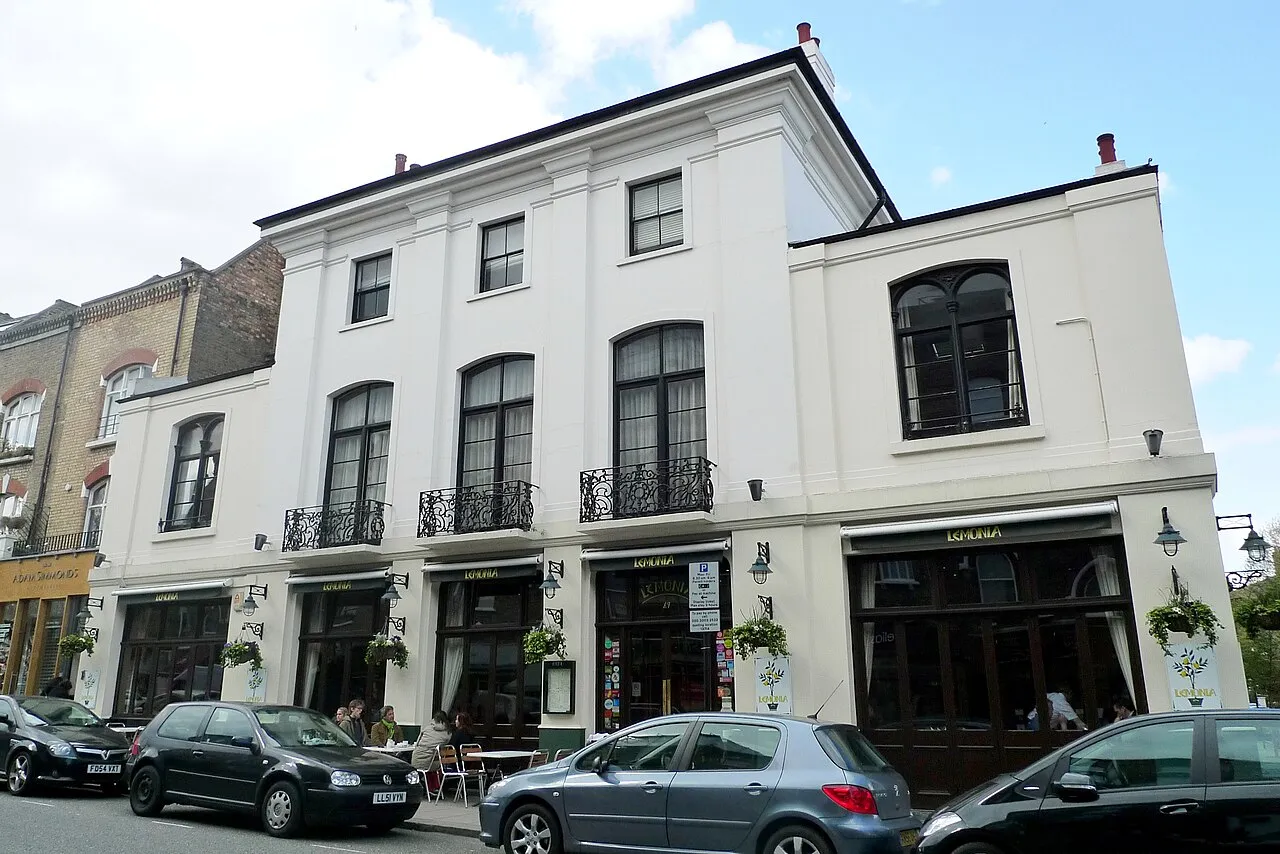
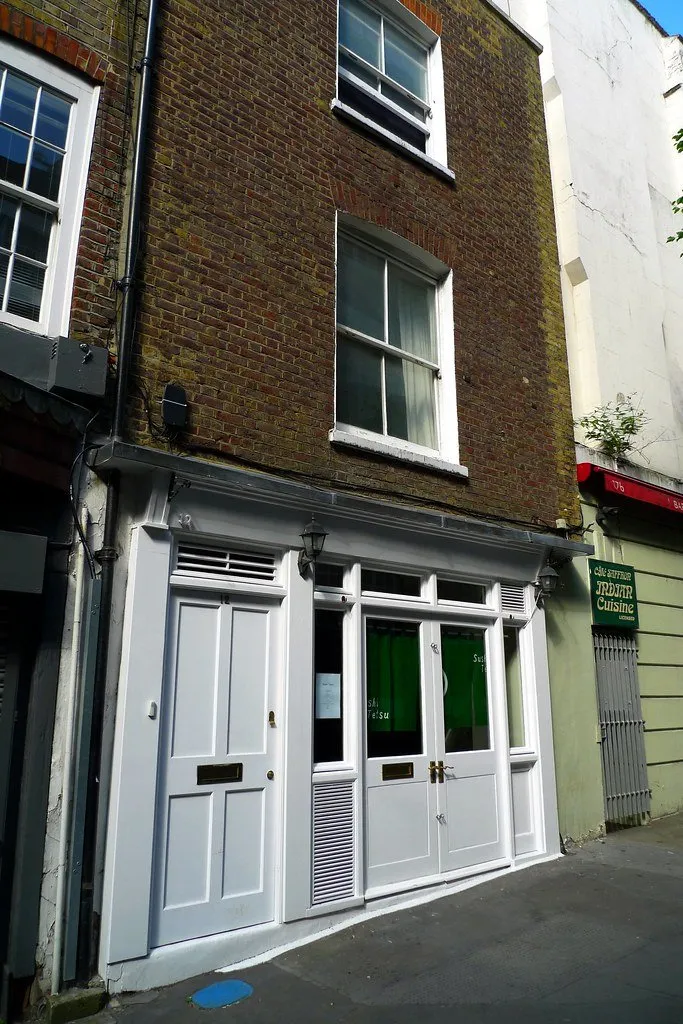 Sushi Tetsu, Clerkenwell. Photo: Ewan-M, CC BY-SA 2.0.
The Araki, Mayfair
££££ · around £310 · two sittings a night · Cited by 2 sources
A no-choice menu at around £310, built on rare ingredients and served in two sittings a night to a handful of people — the most expensive meal in this guide and among the shortest menus.
Edomae sushi in the strictest sense: nigiri only, aged and cured to the chef’s timing, served piece by piece across a counter with no substitutions and no à la carte. What arrives depends entirely on what the kitchen has been ageing.
Tuesday to Saturday only, two sittings a night, closed Sunday and Monday, and it books months ahead. ££££. The narrowest proposition on this page and it does not pretend otherwise.
Sushi Kanesaka, Mayfair
££££ · 45 Park Lane · thirteen covers · Two Michelin stars, 2026 guide · Cited by 4 sources
Thirteen covers inside 45 Park Lane — nine at the counter, four in a private room — doing omakase only, brought over from the Tokyo original, which opened here in July 2023.
No à la carte at all. The chef sets the sequence and the pace: nigiri built on fish flown in and aged on site, rice seasoned to the Tokyo house style, served one piece at a time across the hinoki counter.
££££, closed Sunday and Monday, and it books weeks ahead. Sit at the counter rather than in the private room — the private room misses the point of the format.
Sushi Atelier, Fitzrovia
£££ · 7 min from Oxford Circus · the value pick · Cited by 3 sources
Repeatedly named the best-value serious omakase in central London — the same counter discipline as the Mayfair rooms at a fraction of the outlay, which is why it turns up in three separate guides.
Omakase nigiri built the same way it is a mile east at four times the price: fish aged to the right point, rice at body temperature, and a chef who talks you through each piece. There is an à la carte if you want to eat more cheaply still.
£££, closed Sunday and Monday, book weeks ahead. Seven minutes from Oxford Circus, and the entry to recommend to anyone meeting the format for the first time.
Kurisu Omakase, Brixton
££££ · eighteen courses · Cited by 1 source
Eighteen courses in Brixton, where chef Chris Restrepo runs Japanese technique through his Thai-Colombian background — the least likely omakase address in London and one of the best.
The sequence holds to omakase structure but the seasoning does not: Japanese cures and knife work meeting South American and Thai flavours, across eighteen courses served to a small counter. Nothing else in this guide cooks like it.
££££, open Tuesday to Friday only — closed Saturday, Sunday and Monday — and it books weeks ahead.
Kaiseki and fine dining
Umu, Mayfair
££££ · 7 min from Green Park · One Michelin star, 2026 guide · Cited by 3 sources
Kaiseki in the Kyoto tradition — a fixed seasonal progression rather than a sushi counter, which makes it the odd one out among Mayfair’s Japanese rooms and the only place in London doing the format at this level.
Kaiseki is a sequence with rules: a set order of preparations — raw, simmered, grilled, steamed — following what is in season, built to a structure rather than a chef’s whim. Expect charcoal-grilled fish, delicate dashi, and vegetables treated as seriously as the protein.
££££, closed Sunday, and it books weeks ahead. Seven minutes from Green Park. The most formal Japanese meal in the guide.
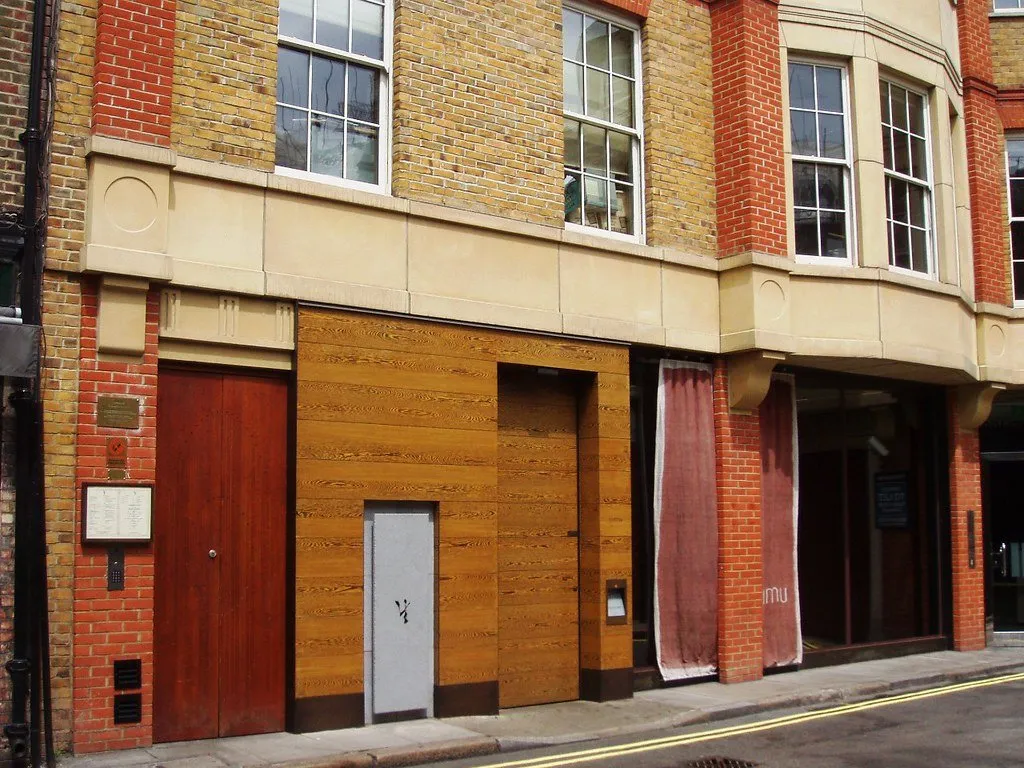 Umu, Mayfair. Photo: Ewan-M, CC BY-SA 2.0.
Engawa, Soho
££££ · 2 min from Piccadilly Circus · Cited by 2 sources
Built around certified Kobe beef, which very few London kitchens are licensed to serve — the sushi is good and the beef is what to book it for.
Kobe is served several ways across a set menu: seared on a hot stone at the table, as sukiyaki, and in sushi. Certification is the difference: most London “Kobe” is wagyu from elsewhere, and this room can show you the papers.
££££, closed Monday and Tuesday, books weeks ahead. Two minutes from Piccadilly Circus.
Dinings SW3, Chelsea
££££ · the most-cited Japanese room in London · Cited by 5 sources
The most-cited Japanese room in London across these sources — izakaya-scale plates done at sushi-counter precision, and with a courtyard.
The format is small plates rather than a set sequence: tar tar chips — spicy tuna on crisp discs — seared scallops, black cod, and nigiri from the same kitchen. It reads as a bar menu and eats like a tasting one.
££££ and it books weeks ahead. Ask for the courtyard in summer; it is the best outdoor Japanese table in the city.
Izakaya
The Japanese pub format — small plates and grilled skewers, ordered across the table.
Roka, Fitzrovia
££££ · 5 min from Goodge Street · Cited by 1 source
The robata grill sits in the middle of the room and everything comes off it — open since 2003 and still the reference point for the format in London, with every table arranged to look at the fire.
The signature is black cod on a hoba leaf, grilled over charcoal and served on the leaf it cooked on. Around it, robata-grilled lamb, skewers and a sushi counter, ordered as small plates across the table rather than as courses.
££££ and it books weeks ahead. Five minutes from Goodge Street. Ask for a counter seat at the grill — the tables are a lesser version of the same meal.
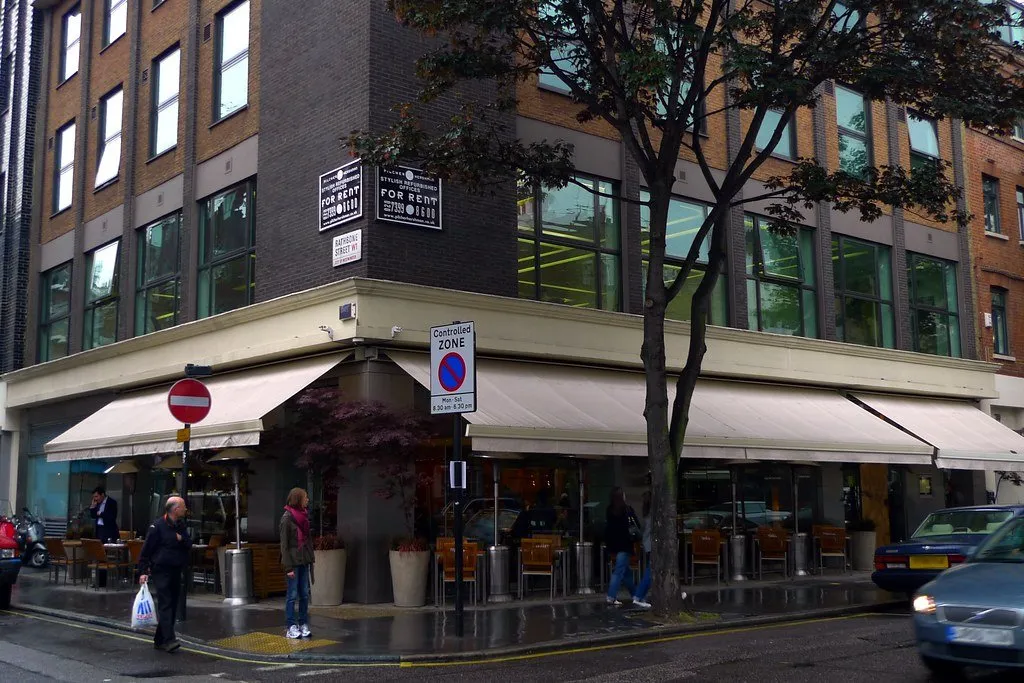 Roka, Fitzrovia. Photo: Ewan-M, CC BY-SA 2.0.
Zuma, Knightsbridge
££££ · 2 min from Knightsbridge · Cited by 2 sources
Opened in 2002 and effectively invented the London template for informal, izakaya-inspired Japanese dining — since exported to 27 sites across four continents, which is either the achievement or the objection.
Three kitchens work at once: robata grill, sushi counter and main kitchen, and the menu is built to be ordered across all three. The miso-marinated black cod and the robata-grilled lamb chops are the dishes that travelled worldwide.
££££ and it books weeks ahead. Two minutes from Knightsbridge, and still louder and better than most of the rooms that copied it.
The Aubrey, Knightsbridge
££££ · inside the Mandarin Oriental · Cited by 2 sources
A maximalist take on a Ginza night out inside the Mandarin Oriental — closer to a bar with exceptional food than to a hotel dining room, and decorated to within an inch of its life.
Izakaya plates and robata off the grill, built to be eaten alongside a serious cocktail and sake list. The wagyu skewers and the sushi are the food to order; the room and the drinks are what you are paying for.
££££ and it books weeks ahead. Go late and treat it as a bar that feeds you.
Jin Kichi, Hampstead
£££ · 2 min from Hampstead · Cited by 1 source
A small family-run izakaya on Heath Street doing charcoal yakitori at prices that have never caught up with the postcode — which is why it has survived on Hampstead regulars for decades.
Yakitori is the order: skewers grilled over binchōtan charcoal, and the whole bird used — thigh, skin, liver, heart, tail — rather than just breast. Sushi and sashimi alongside, and a short list of izakaya plates.
£££, closed Monday, and book weeks ahead — it is small and Hampstead has known about it for forty years. Two minutes from Hampstead station.
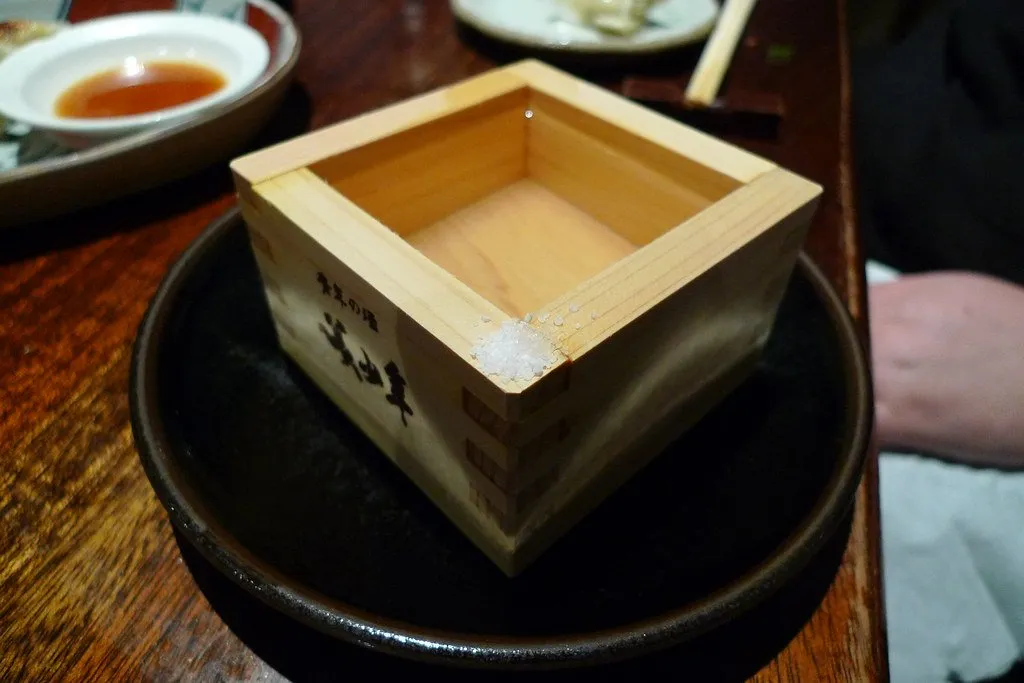 Jin Kichi, Hampstead. Photo: Ewan-M, CC BY-SA 2.0.
Nobu, and the London-Peruvian thread
Nobu Old Park Lane, Mayfair
££££ · the original · Cited by 2 sources
The original London Nobu, and the room that put miso black cod on menus worldwide — co-founded by Nobu Matsuhisa with Robert De Niro, which makes it the celebrity-owned restaurant in London that is about the food.
Black cod with miso is the dish, marinated for three days and grilled until it flakes — copied by every hotel restaurant on earth and still better here. Yellowtail with jalapeño and the new-style sashimi are the other originals.
££££ and it books weeks ahead. The Old Park Lane room is the first one; the newer sites are slicker and less interesting.
SUSHISAMBA, City of London and Covent Garden
££££ · 39th floor · Cited by 2 sources
An orange tree growing through an open-air terrace on the 39th floor of Heron Tower — the highest outdoor dining in the City, with the glass lift ride up the outside of the building as part of the experience.
Japanese-Peruvian-Brazilian cooking: sushi and robata alongside ceviche and churrasco skewers, which sounds scattered and works because the three cuisines share a history. Order across all of them.
££££ and it books weeks ahead. Ask for a terrace table specifically — inside is a different and lesser proposition. A second, ground-level site in Covent Garden has the food without the view.
Los Mochis, Notting Hill
££££ · Japanese-Mexican · Cited by 1 source
Sashimi and maki on the same menu as ceviche, tiradito and tacos. It sounds like a gimmick and is not — Japanese-Mexican cooking has a real lineage on Mexico’s Pacific coast, and the kitchen treats it seriously.
Order across the divide: tuna tostadas, sashimi dressed with chilli and lime, and tacos built with Japanese cures. The Notting Hill room is the original; a City rooftop site followed.
££££ and it books ahead, particularly at weekends. Loud, and designed for a night out rather than a quiet dinner.
Ramen and noodles
The part of Japanese London that has improved most in the last decade, and the part you can eat on any budget.
Kanada-Ya, Covent Garden
£ · no bookings · Cited by 4 sources
Tonkotsu broth simmered for eighteen hours and no bookings, which is why there is usually a queue on St Giles High Street — the broth recipe was worked out in Fukuoka before the first London site opened.
Order the tonkotsu ramen: pork-bone broth boiled until it turns opaque and heavy, thin Hakata-style noodles cooked to your stated firmness, and chāshū on top. Order the noodles barikata if you like them firm; the kitchen will do it.
£, walk-in only. The queue is shortest before noon and after 2pm — it is longest at exactly the hour you would normally go.
Monohon Ramen, Old Street
£ · walk-in · Cited by 4 sources
The specialist’s choice, doing a lighter, cleaner broth than the tonkotsu shops — and taken seriously enough by ramen obsessives that it is named by four independent sources.
The house style is shoyu and shio rather than the heavy pork-bone broth everyone else leads with: clearer, more savoury, and easier to finish. Noodles are firmer than the chains serve, and the toppings are restrained on purpose.
£, walk-in only. Old Street, and quieter than the Covent Garden ramen queues at almost every hour.
Koya Ko, Bloomsbury
£ · udon · Cited by 2 sources
Hand-cut udon rather than ramen, in a broth made to order — thicker, chewier and considerably more interesting than the noodles most people mean by Japanese noodle soup.
The udon is made in-house and cut by hand, and the classic order is kake udon — the plainest bowl, hot dashi and nothing else — which is how you judge whether a udon shop is any good. Kamatama, the raw-egg version, and a walnut miso are the two to try after it.
£, walk-in. There are several Koya sites; this one and the Broadway Market outpost have the same noodles without the Soho queue.
Cocoro, Bloomsbury
££ · Japanese home cooking · Cited by 2 sources
Neither sushi counter nor ramen shop — everyday Japanese home cooking, and open since 2006. The sort of place Japanese office groups and families actually eat, which is the strongest recommendation a Japanese restaurant in London can have.
Donburi and set meals are the format: rice bowls topped with grilled fish, katsu or beef, with miso soup and pickles. Sushi and sukiyaki are on the menu too, and the tonkotsu ramen punches well above the room.
££, walk-in, and cheap for Bloomsbury. Lunch sets are the best value on the page.
Everyday and best value
Omakase counters get the attention, but the everyday end of Japanese London is where most of the eating happens — and it is cheap.
Under £15
- Kanada-Ya, Covent Garden — a bowl of eighteen-hour tonkotsu for less than a central London sandwich.
- Koya Ko, Bloomsbury — hand-cut udon, and the breakfast service is cheaper still.
- Marugame Udon — a canteen where you walk the line watching the noodles being cut, under £12, with sites across London.
- Monohon and Tonkotsu — both consistent, both around the same money.
Markets and food halls
- Seven Dials Market, Covent Garden — Japanese counters in a two-floor food hall, and the best way to eat one good dish without committing to a restaurant.
- Arcade Food Hall at Centre Point and Battersea Power Station carries several Japanese and Japanese-adjacent counters, generally around £10–£14 a dish.
- Japan Centre, Panton Street — as much a food shop as a restaurant. The bento and onigiri counter is the cheapest authentic Japanese food in the West End, and the supermarket behind it is where Londoners buy the ingredients.
Worth the money rather than cheap
- Jin Kichi, Hampstead — charcoal yakitori, and the best value-for-quality on this page.
- Cocoro — home-style set meals, the category London under-serves.
- Akira at Japan House, Kensington — sourcing directly from Japan, with bento and donburi built on produce nowhere else here has.
- Lunch sets at the omakase counters run at a fraction of dinner for the same fish. This is the biggest saving in this guide.
What to know
- Book omakase weeks ahead. Sushi Tetsu releases in batches; set a reminder.
- Lunch is materially cheaper at almost every counter here, for the same kitchen.
- Izakaya is for sharing and ordering in waves, not for a starter and a main.
- The budget end is thin. If you want cheap Japanese food in London, ramen and udon are the answer.
- Service charge of 12.5% is discretionary and standard.
Continue planning your London trip
- 🔀 The Best Fusion Restaurants in London — Japanese-Italian, Mexican-Japanese and the Nikkei rooms
- 🇵🇪 The Best Peruvian Restaurants in London — the Nikkei rooms, and the Peruvian side of that menu
- 🍽️ Eat in London: Restaurants, Food Markets & Quick Food Hub
- 🥟 Best Chinese and East Asian Restaurants
- 💷 Cheap Eats in London
- 🍕 The Best Pizza in London
- 🏙️ City of London Area Guide
- 🍜 Soho Area Guide
Common questions
What is the best Japanese restaurant in London?
Depends on the format. Sushi Tetsu in Clerkenwell has seven seats and is the hardest table in London to get. The Araki in Mayfair is the most expensive at around £310. For the best value serious counter, Sushi Atelier in Fitzrovia is repeatedly named as the one to book.
How much does omakase cost in London?
From about £60 at Sushi Atelier to around £310 at The Araki. Sushi Kanesaka inside 45 Park Lane and Sushi Tetsu sit between. Omakase means the chef chooses — you are paying for sourcing and for a counter seat, not a long menu.
Where can I eat Japanese food in London cheaply?
Jin Kichi in Hampstead does charcoal yakitori at prices that have never caught up with its reputation. Marugame Udon is a canteen where you watch the noodles being cut, and Tonkotsu does ramen across London. All come in well under £20.
What is the difference between izakaya and a sushi restaurant?
An izakaya is a Japanese pub — small plates, grilled skewers, drinking food, ordered across the table. Zuma and Roka built the London template for it. A sushi counter is a fixed progression served by one chef in front of you.
Do I need to book Japanese restaurants in London?
For any omakase counter, yes, and often weeks ahead — Sushi Tetsu releases tables in batches and they go in minutes. Ramen shops and Marugame are walk-in.