In this guide
“British food” is not one thing, and most of what a visitor actually eats in London on a given night — a curry, a bagel, a bowl of ramen — is British only in the sense that London made it its own. This is a guide to the older, narrower list: the dishes a foreign visitor has usually heard named and never actually seen — a Scotch egg, a Cornish pasty, a plate of pie and mash — explained plainly, with a real, currently-trading place in London to try each one.
Four of these already have a full guide of their own on this site, so there is no point repeating a hundred venues here. Afternoon tea, the full English breakfast, the Sunday roast and fish and chips are explained below and linked out to the long version. Everything after that is new ground: the pies you eat standing up, the pastry sold from every high street bakery, the dinners that never made it onto a “best of” list because nobody has ranked them, and the puddings.
🍽️ At a glance. This guide covers fifteen things. Four — afternoon tea, the full English, the Sunday roast and fish and chips — are explained here and linked to their own guide. The other eleven are new: pie and mash, pork pies, sausage rolls and pasties, the Scotch egg, bangers and mash, steak and kidney pudding, shepherd’s and cottage pie, Welsh rarebit, sticky toffee pudding, treacle tart, and spotted dick with sherry trifle.
The four everyone asks about first
Afternoon tea
Tiered stands of finger sandwiches, warm scones with clotted cream and jam, then pastries, over a pot of tea — a sit-down ritual usually traced to the 1840s and the Duchess of Bedford’s long gap between lunch and a late dinner. The Langham in Marylebone claims the version anyone could book: it opened in 1865 as the first hotel in the world to serve it. Prices run from around £30 in a museum café to £95 at a Mayfair hotel. The full afternoon tea guide compares 25 of them — sittings, dress codes and all.
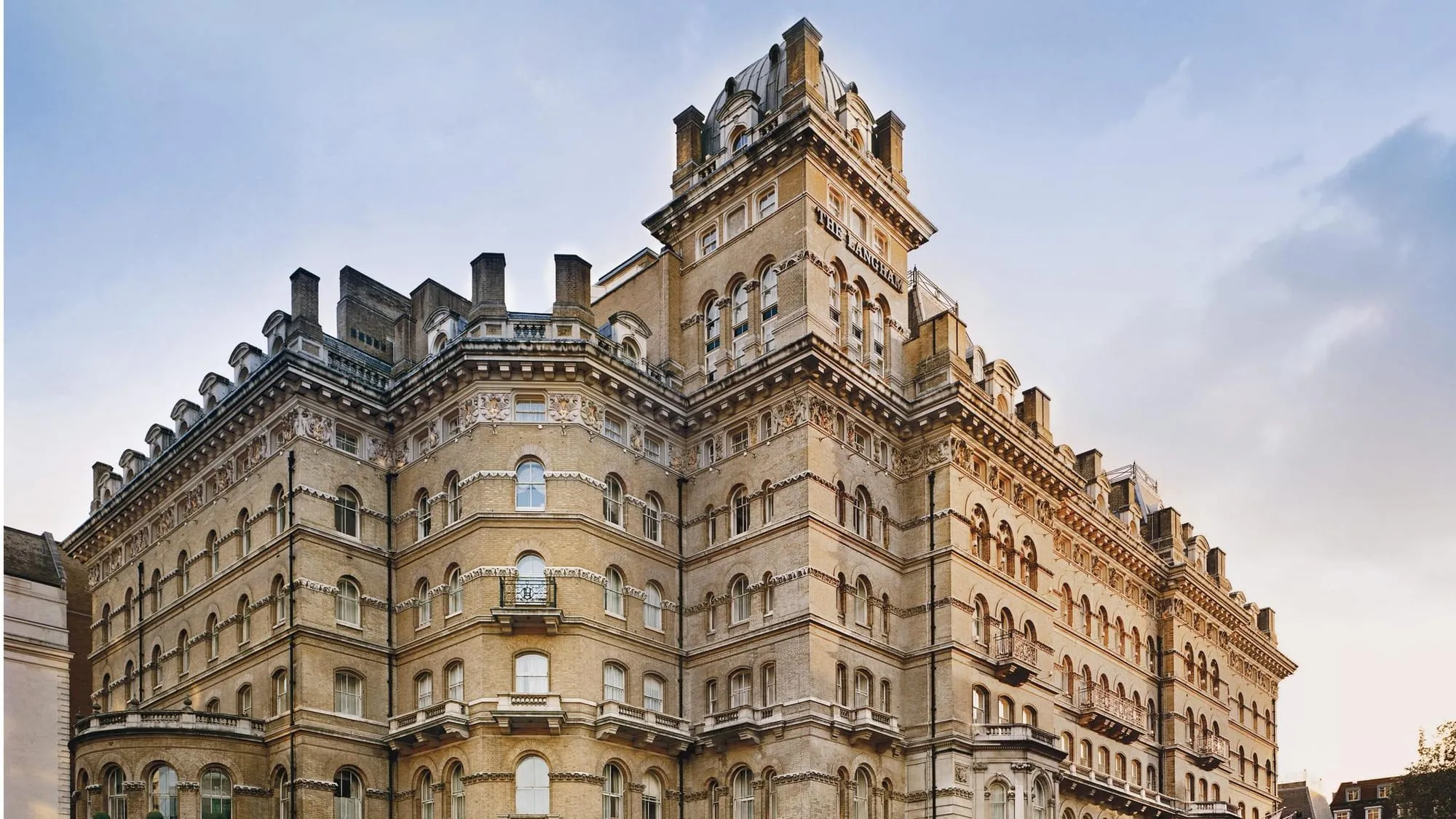
The Langham opened in 1865 as the first hotel in the world to serve afternoon tea.
The full English breakfast
Eggs, bacon, sausage, baked beans, a grilled tomato and mushroom, and toast or fried bread, sometimes with black pudding or a hash brown alongside — fried to order rather than assembled, and usually just called a “fry-up.” The same plate goes by a full Scottish, Welsh or Irish depending which side of which border you’re on, with small local swaps to the supporting cast. London does it anywhere from a cheap caff to a Michelin-starred kitchen; the breakfast and brunch guide covers both ends, plus where to get one at three in the morning.
The Sunday roast
A joint of meat — beef most classically, but lamb, pork or chicken too — roasted for hours and carved at the table, with a Yorkshire pudding, potatoes roasted in the fat, vegetables and a jug of gravy over all of it. It is served for one afternoon a week, in pubs as often as restaurants, and the good ones sell out. The Sunday roast guide places sixteen of them by how many independent sources actually name each pub.
Fish and chips
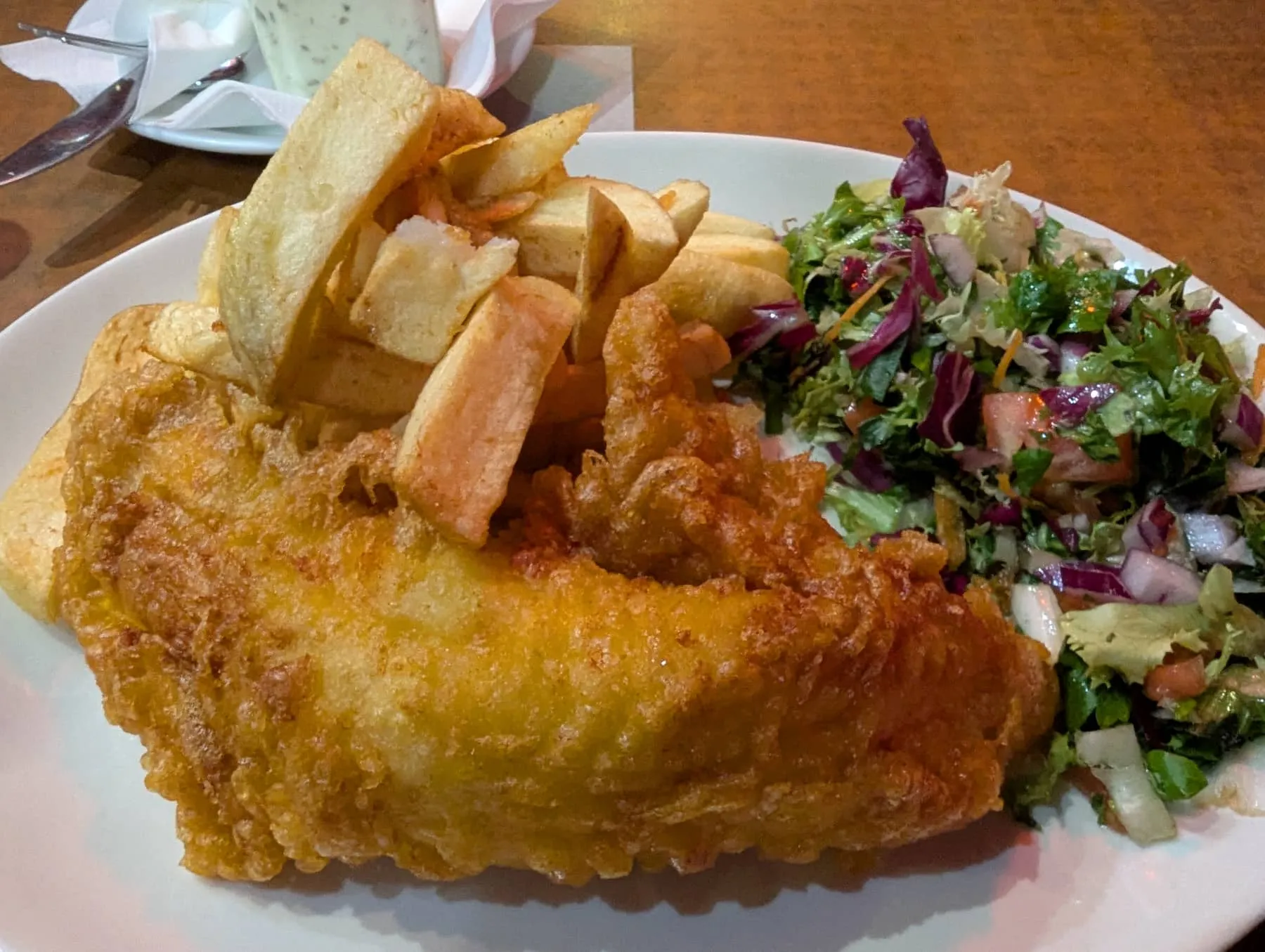
Battered white fish — cod or haddock, usually — deep-fried and served with thick-cut chips, traditionally wrapped in paper and eaten with a small wooden fork, mushy peas or curry sauce on the side. A “chippy” is the shop, and whether it should fry in beef dripping or vegetable oil is an argument that has never actually been settled. The fish and chips guide compares 58 of them, from the Bloomsbury shop that still uses dripping to the one that fries in matzo meal instead of batter.
Pies, pastries and the things you eat with your hands
Pie and mash
Minced beef in a pastry pie, mashed potato, and a ladle of “liquor” — a bright green parsley sauce, not a drink, traditionally made with the water eels were stewed in. This is London’s own fast food, older than the chip shop and specific to the docks and the East End, and jellied eels usually sit on the same counter for anyone who wants the fuller version. M Manze, at 87 Tower Bridge Road in Bermondsey, has served it since 1902 and is the oldest surviving pie and mash shop in London; Goddards at Greenwich, in Greenwich Market since 1890, is the other one worth the detour. Both shut by mid-afternoon and neither opens for dinner — this is lunch, not a dinner reservation.
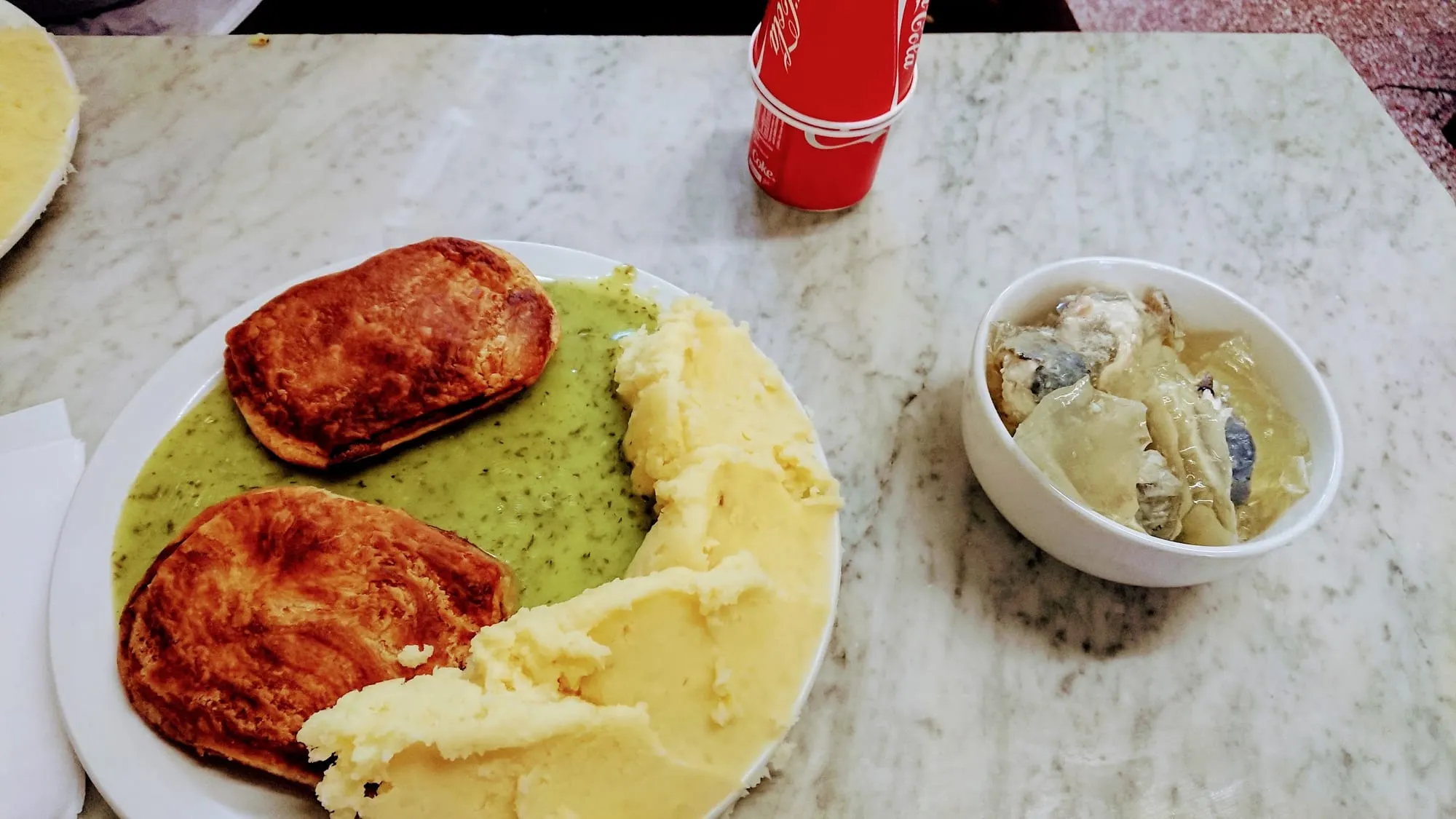
Pie, mash and liquor, with a bowl of jellied eels alongside for the fuller version.
Pork pies
Cold hand-raised pork in a firm, free-standing pastry shell — no tin, no hoop — with a layer of savoury jelly between the meat and the crust, eaten as it comes rather than heated through. The style is Melton Mowbray’s, a Leicestershire pork pie with its own protected geographical status since 2009, and Mrs King’s Pork Pies at Borough Market trades under a family recipe dating to 1853. The Ginger Pig — the butcher with a stall at Borough Market and a shop on Marylebone’s Moxon Street — makes its own pork and sage version alongside the meat counter.
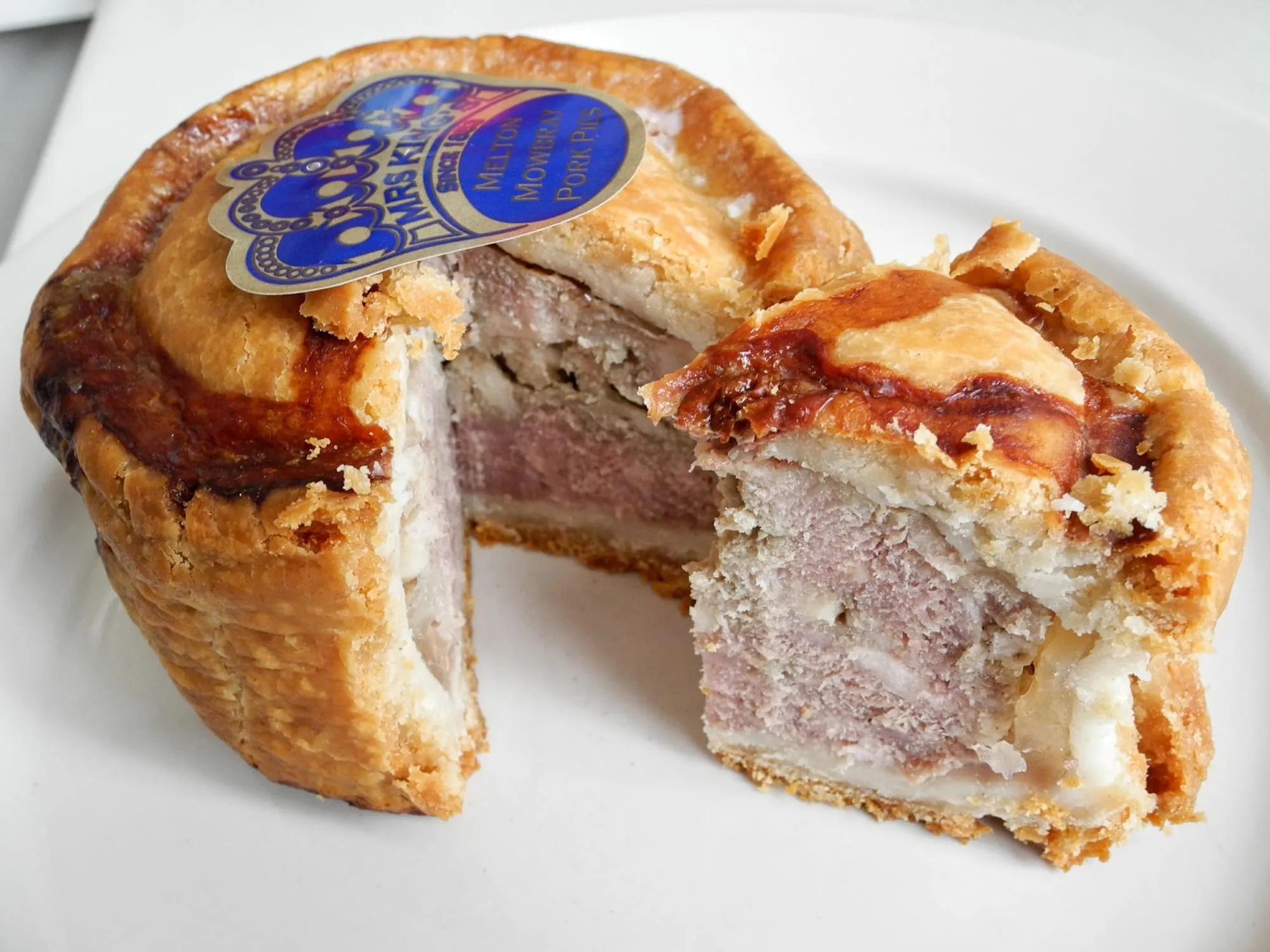
The layer of savoury jelly between meat and crust marks this out as a proper hand-raised pork pie.
Sausage rolls, steak bakes and pasties
Sausage meat rolled in puff pastry is a sausage roll; the same idea with diced beef in gravy instead is a steak bake; a Cornish pasty is a D-shaped, crimped parcel of beef, potato, swede and onion that Cornish miners’ wives once packed as a self-contained hot lunch — the crimped edge was originally a handle, held with hands dirty from the mine and thrown away rather than eaten. All three are ordinary lunch food, sold hot from the same kind of shop on every high street in London, and the honest answer for where to try one is Greggs — more than 2,700 branches across the UK and dozens across London, selling all three by the till. For the Cornish pasty specifically, West Cornwall Pasty Co. has counters inside Victoria, Liverpool Street, King’s Cross, Waterloo and St Pancras stations, so it’s often the first hot food a visitor arriving by train walks past.
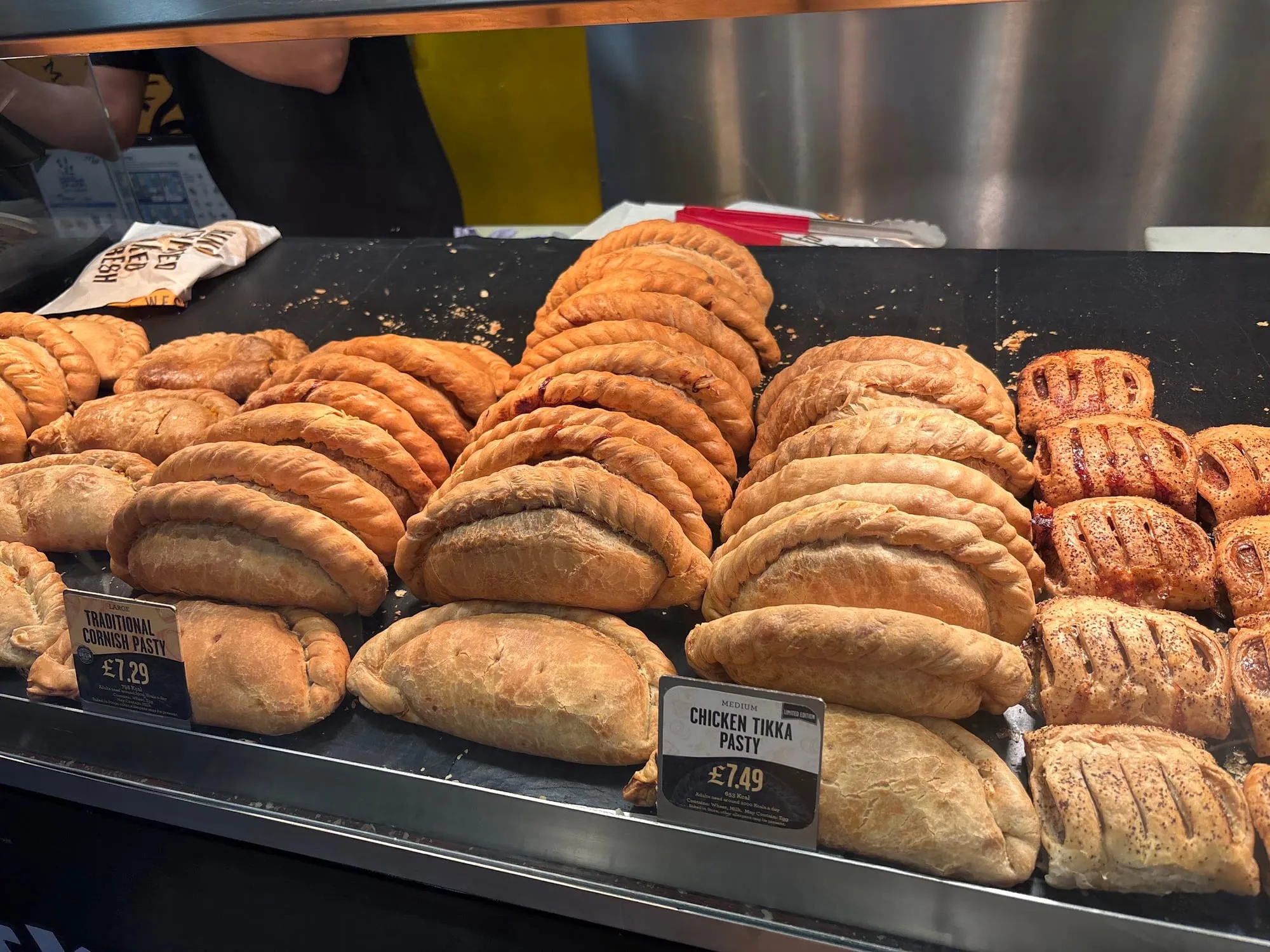
The crimped edge, visible here, was originally a handle for miners eating with dirty hands.
The Scotch egg
A boiled egg wrapped in sausage meat, coated in breadcrumbs and fried — cold, it’s picnic food; hot, with a soft yolk, it’s a different dish entirely. Fortnum & Mason says it invented the Scotch egg in 1738, as something portable for the mail coaches leaving Piccadilly, and still sells a “Traditional Scotch Egg” in its food hall today — though the claim is disputed. Food historians also point to a Yorkshire version coated in fish paste and sold by a Whitby fishmonger, and to Mughal spiced eggs that may have reached Britain via colonial India; nobody has settled it. For the dressed-up version, the Harwood Arms in Fulham — already covered in our Sunday roast guide — makes its Scotch egg with venison from the owners’ own stalking, and it has been the pub’s signature dish for years.
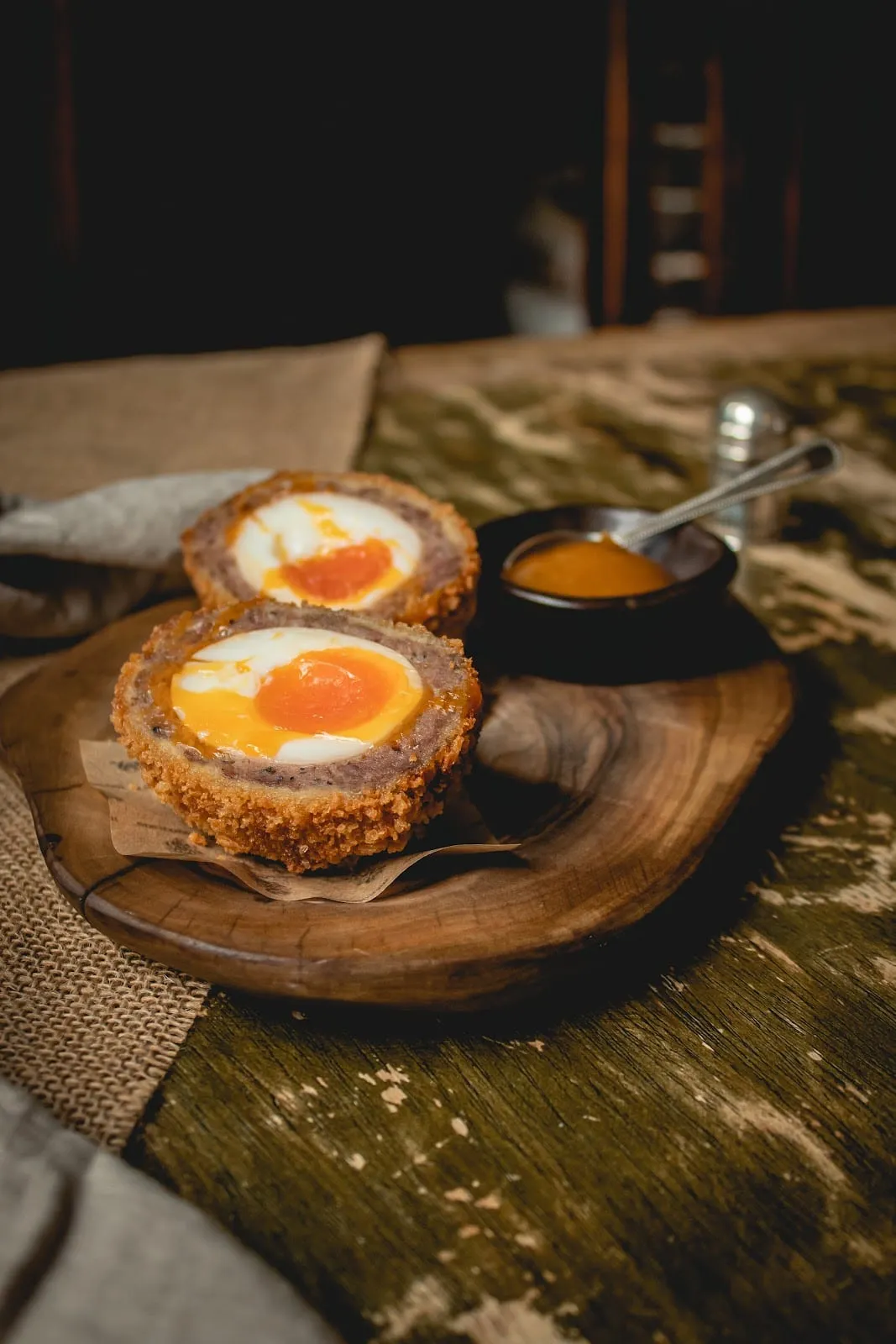
Served hot, with the soft yolk that sets this version apart from the picnic kind.
Bangers and mash
Sausages and mashed potato under onion gravy — the least complicated dish in this guide, and one most London pubs serve as a matter of course. “Banger” is usually traced to the world wars, when sausages were bulked out with water to stretch scarce meat, and the water made them spit and pop in the pan. Mother Mash on Ganton Street in Soho is a whole restaurant built around the combination, with a choice of British sausages, several mashes and a handful of gravies to mix and match.
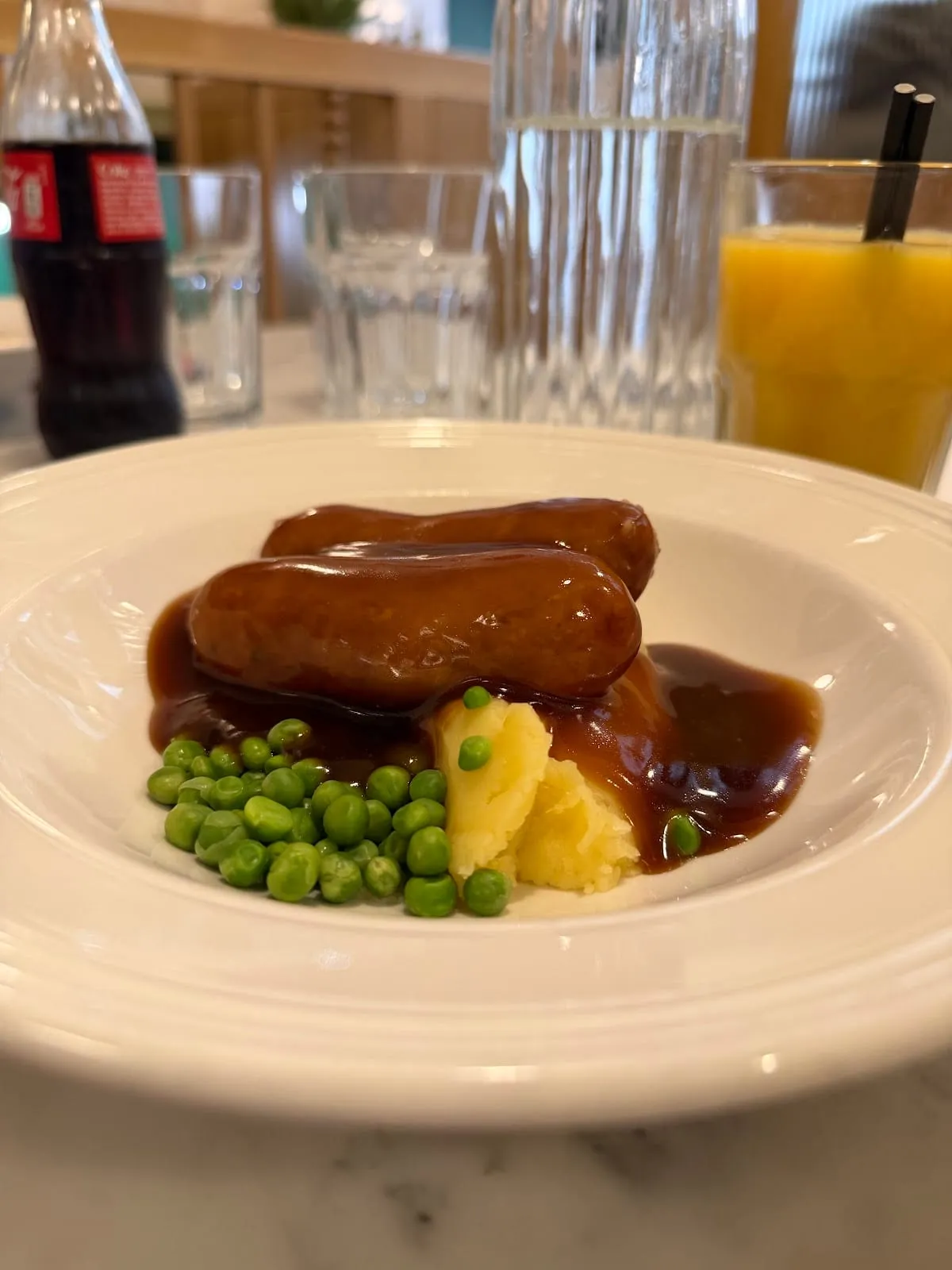
Bangers and mash at Mother Mash, a restaurant built entirely around the combination.
Steak and kidney pudding
Not a pie — a pudding: steak and kidney in gravy, sealed inside a suet crust and steamed in a basin for hours rather than baked, so the pastry comes out soft rather than crisp. Rules on Maiden Lane — open since 1798 and the oldest restaurant in London — keeps it on the menu alongside a separate steak and kidney pie for anyone who wants the baked version, made with beef from the restaurant’s own Pennines estate.
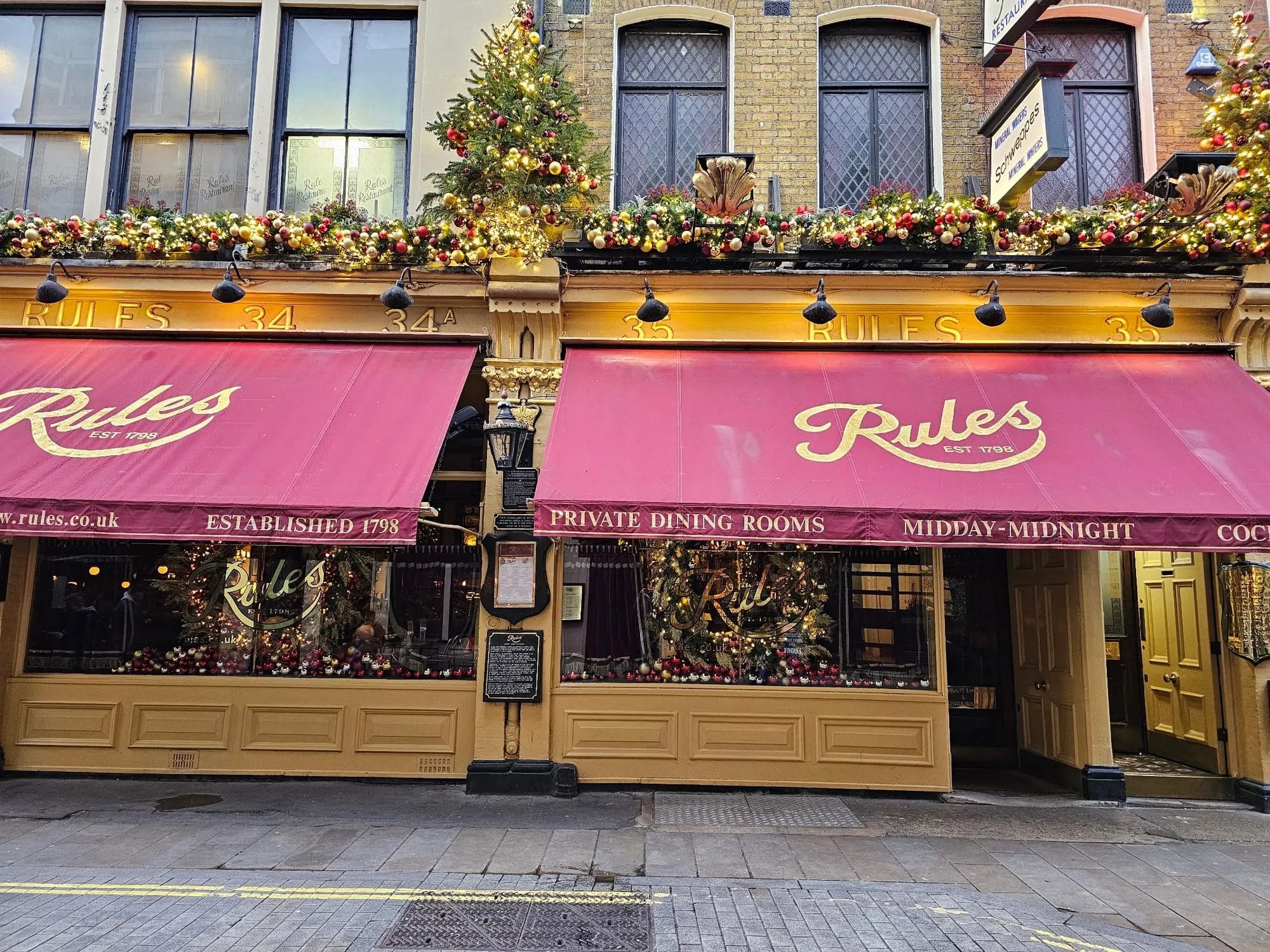
Rules has traded from this address on Maiden Lane since 1798.
Shepherd’s pie and cottage pie
Minced meat under a layer of mashed potato, baked until the top browns. Shepherd’s pie is made with lamb, cottage pie with beef, and the two names are not interchangeable no matter how often a menu gets it wrong. The Ivy on West Street in Covent Garden — the original, dating to 1917 and in this building since 1929 — sidesteps the argument entirely with a version made from equal parts lamb and beef mince, served in a disc on a pool of gravy, and it’s one of the restaurant’s best-known dishes.
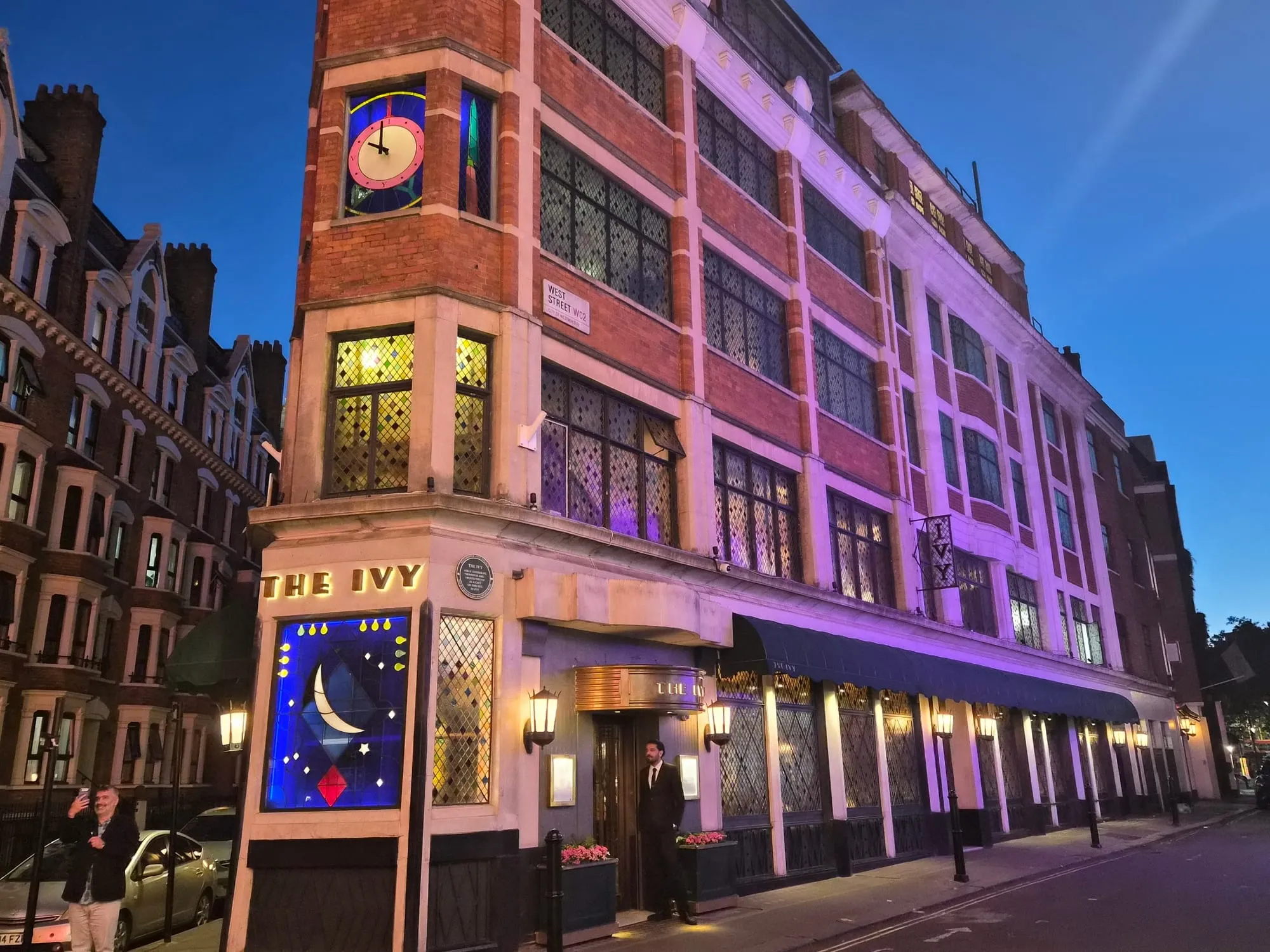
The Ivy has occupied this West Street building since 1929.
Welsh rarebit
Cheese on toast in name only: a thick, savoury sauce of melted cheddar, egg yolk, mustard and usually beer, grilled onto bread until it browns, rather than a slice of cheese dropped under the grill. J Sheekey in Covent Garden — the most-cited seafood restaurant in London by our own seafood guide — makes its version with cheddar, egg yolk, Worcestershire sauce, mustard, Guinness and double cream, a recipe well-known enough to be printed in the restaurant’s own cookbook, and sells it at the bar for about £5.
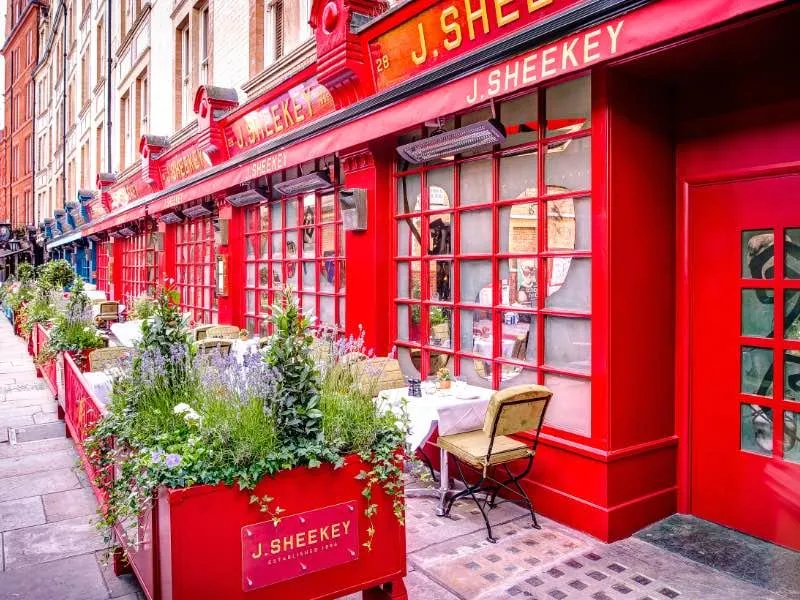
J Sheekey sells its Welsh rarebit at the bar for about £5.
Puddings
“Pudding” in British usage just means dessert — asking “what’s for pudding” is asking what’s for dessert, not requesting anything steamed specifically. These four are the ones worth knowing by name.
Sticky toffee pudding
A moist date sponge soaked in hot toffee sauce, served with cream or custard — one of the few dishes in this guide recent enough to have a datable origin, usually placed at a Lake District hotel in the 1970s. Rules keeps both a sticky toffee pudding and a golden syrup sponge on the menu as standing items, and both have been recommended in write-ups going back years.
Treacle tart
Shortcrust pastry filled with golden syrup, breadcrumbs and lemon juice and baked until set — golden syrup rather than treacle proper, despite the name, and sweeter than it looks. St. JOHN in Smithfield — Fergus Henderson’s nose-to-tail restaurant, open since 1994 and Michelin-starred since 2009 — is known for its version nearly as much as for the bone marrow that made the restaurant’s name.
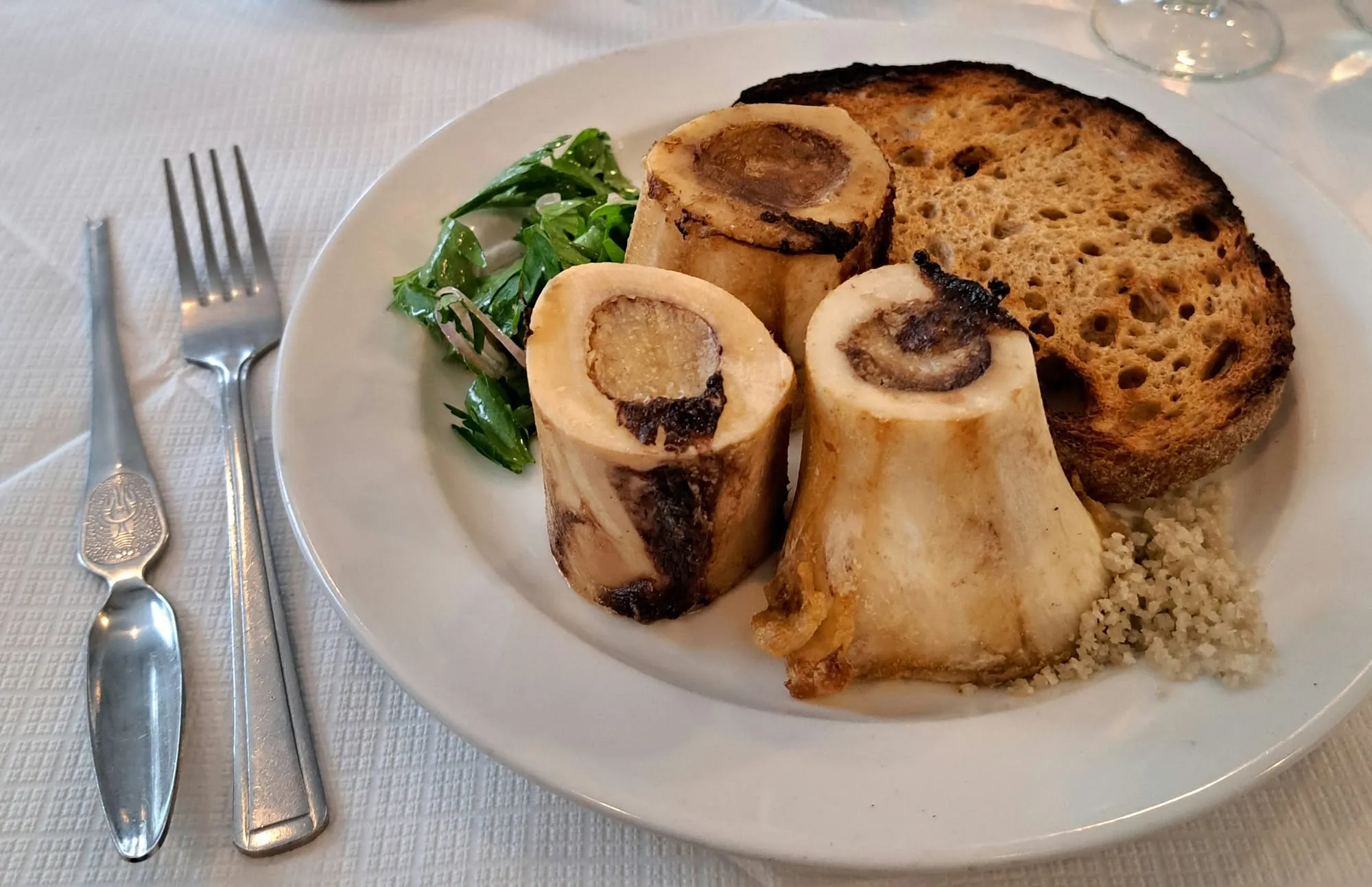
St. JOHN is known for its treacle tart nearly as much as for this dish, the bone marrow that made the restaurant’s name.
Spotted dick and sherry trifle
Spotted dick is a suet sponge studded with dried fruit, steamed and served with custard; sherry trifle is layers of sponge soaked in sherry, fruit, custard and cream, built in a glass bowl so the layers show. Simpson’s-in-the-Strand, a Strand institution since 1848 and still known for the silver trolleys its meat is carved from at the table, keeps both on the menu.
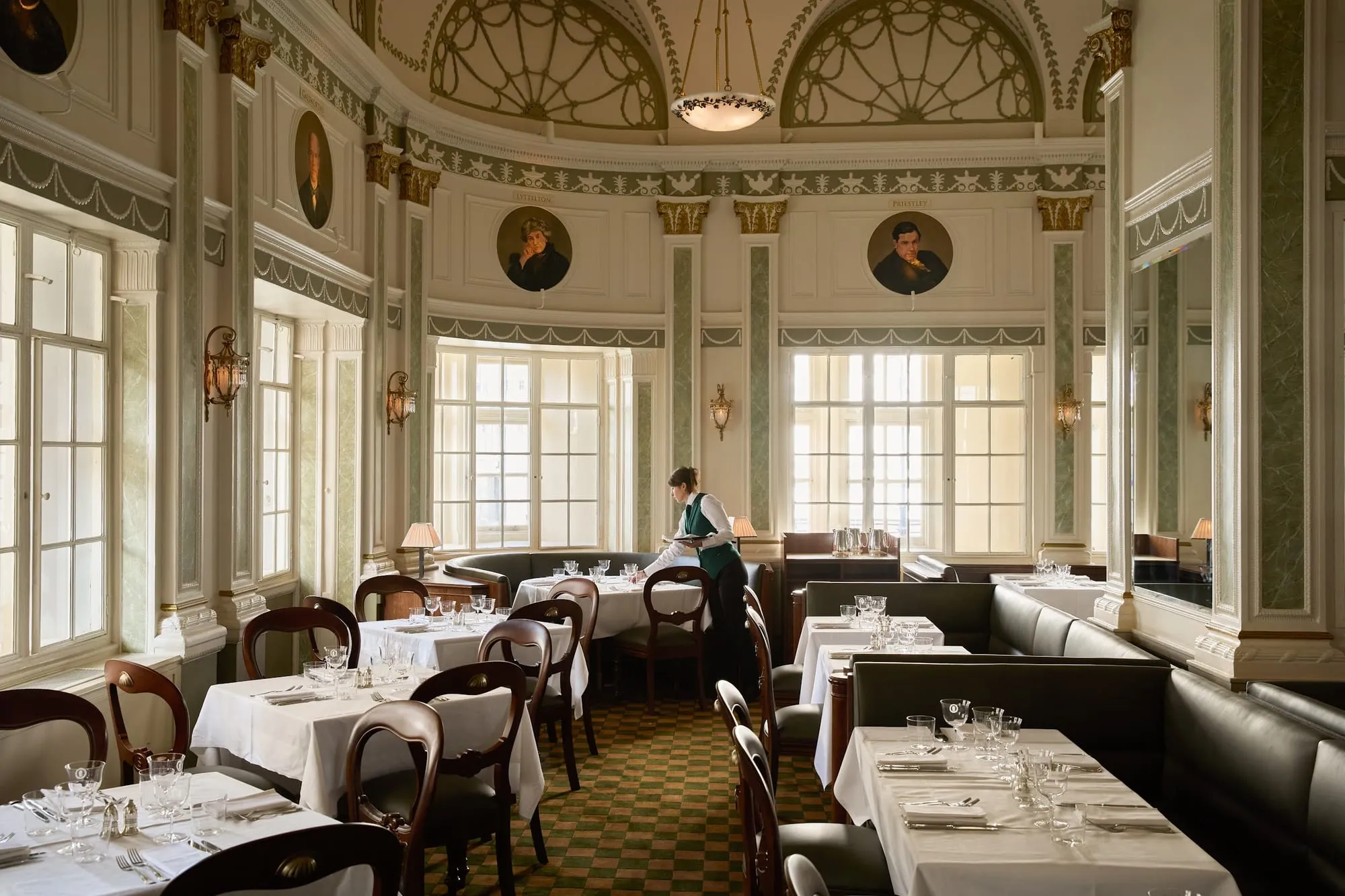
Simpson’s-in-the-Strand has been on the Strand since 1848.
What to know
- Several of the new venues above sit within a few minutes of each other. Rules, The Ivy, J Sheekey and Simpson’s-in-the-Strand — steak and kidney pudding, shepherd’s pie, Welsh rarebit and spotted dick — are all around Covent Garden and the Strand, so one afternoon can cover four dishes on foot.
- Pie and mash shops keep lunch hours. M Manze and Goddards both close by mid-afternoon and neither serves dinner.
- “Liquor” is a sauce, not a drink, and “pudding” means dessert in general — both catch visitors out on a menu.
- Greggs, Wetherspoons and the museum cafés are the cheap, reliable versions of most of this. For a full English or a Sunday roast at a fraction of the restaurant price, see our Wetherspoons guide — several branches open specifically for breakfast from 7 or 8am.
- A good gastropub often covers several dishes on one menu — a pie, a Sunday roast and a steamed pudding are a common combination, so you rarely have to choose just one venue.
- Several of London’s oldest pubs put a proper pie or pudding on the menu too, alongside the building itself being the reason to visit — see our historic pubs and dining rooms guide.
Continue planning your London trip
- 🫖 The Best Afternoon Tea in London
- 🍳 The Best Breakfast and Brunch in London
- 🥩 The Best Sunday Roast in London
- 🐟 The Best Fish and Chips in London
- 🍺 The Best Wetherspoons in London
- 🍽️ Eat in London: Restaurants, Food Markets & Quick Food Hub
Common questions
What counts as classic British food?
The dishes that were on English and Welsh tables before the cuisines London has since absorbed and made its own — roast dinners, pies, fish and chips, and a short list of steamed and baked puddings. It doesn't stretch to cover curry or the dozens of other food cultures Londoners eat just as often; those get their own guides on this site.
What is the difference between shepherd's pie and cottage pie?
The mince. Shepherd's pie is made with lamb — a shepherd herds sheep — and cottage pie with beef. Both are topped with mashed potato and baked. Menus mix the two names up constantly; The Ivy in Covent Garden sidesteps the argument by serving a version made with both meats at once.
What does 'liquor' mean on a pie and mash menu?
A bright green parsley sauce, traditionally made using the water eels were stewed in. Order pie, mash and liquor and that's what gets ladled over the top — nothing alcoholic about it.
Who actually invented the Scotch egg?
Nobody can prove it either way. Fortnum & Mason claims 1738, as a portable snack for coach travellers leaving London. Food historians also point to a Yorkshire version coated in fish paste and sold in Whitby, and to Mughal spiced eggs that may have reached Britain via colonial India. All three explanations are still in circulation.
Where do I get a full English breakfast, a Sunday roast or afternoon tea in London?
Each has its own full guide on this site: breakfast and brunch, Sunday roast and afternoon tea, plus fish and chips separately — all linked in this guide, with what to expect at each and a real venue to book.