In this guide
London’s independent cinemas are mostly buildings that survived by being useful for something else — a bingo hall, a snooker club, a shoe factory — and were bought back by the people who live around them.
Several are cheaper than the chains, and one is where film was first shown in Britain.
💡 The Short Version: The Prince Charles is the cult cinema of London, with 35mm and all-night marathons. Regent Street Cinema is where the Lumières first showed film in Britain in 1896. Electric Portobello opened in 1911, is London’s oldest purpose-built cinema, and has armchairs, sofas and front-row beds. Peckhamplex shows current releases for £6.99. And Screen on the Canal is free.
📘 How we choose these (editorial note). No paid placements. These are drawn from a wide spread of sources - the food and travel press, the big listings sites, independent blogs and specialists, video, and what Londoners recommend themselves - and cross-referenced against each other. No chains, except where a chain operates a historic building. Programmes change weekly — check the cinema’s own listings rather than an aggregator.
Where they are
| If you are near… | Where to go |
|---|---|
| Leicester Square & Covent Garden | Prince Charles Cinema, The Garden Cinema |
| Oxford Circus | Regent Street Cinema |
| South Bank | BFI Southbank, BFI IMAX |
| Notting Hill | Electric Portobello |
| White City | Electric White City |
| Hackney & Clapton | Rio Cinema, The Castle Cinema |
| King’s Cross | Everyman Screen on the Canal |
| Peckham | Peckhamplex, Rooftop Cinema Club |
The famous ones
Prince Charles Cinema, Leicester Square
Off Leicester Square
The cult cinema of London — 35mm and 70mm prints, quote-alongs, sing-alongs and all-night marathons, with a membership that pays for itself in about two visits.
The building itself has had an odder run than most: opened in 1962 as a theatre, it hosted a young Judy Garland filming The Jack Paar Program in 1964, then spent decades as an arthouse cinema notorious for the UK’s longest continuous run of Emmanuelle, and gave Hellraiser its world premiere in 1987 before a 1991 takeover turned it into the repertory house it is now. Two screens, 300 velvet seats downstairs and 104 leather seats upstairs.
The programming is cult and classic film: this is where you see The Thing at midnight, not a new release.
Regent Street Cinema, Oxford Circus
Since 1896
Where the Lumière brothers’ Cinematographe had its first British showing in late February 1896 — the birthplace of cinema in Britain, still operating as one. The building itself is older still, opened in 1848 as part of the Royal Polytechnic Institution on Regent Street, now the University of Westminster.
It carried on making history rather than just holding onto it: in 1951 it became the first cinema in Britain to show an X-rated film. Then it closed as a cinema altogether in 1980 and spent 35 years as a university lecture theatre, until a three-year, £6.1 million restoration — a third of it funded by the Heritage Lottery Fund — reopened it in 2015 with 185 seats, a restored 1936 John Compton organ, and the ability to project 16mm, 35mm, Super 8 and 4K.
Electric Portobello, Notting Hill
191 Portobello Road, W11 2ED · opened 1911
London’s oldest purpose-built cinema, opened on 27 February 1911 with 564 seats. The first thing shown on the screen was a twenty-minute silent film of Henry VIII starring Sir Herbert Tree — a film now lost, with no known copy anywhere.
It is older than the Phoenix, and it has been closed and reopened so many times that the Phoenix keeps the “continuously operating” title. The sequence:
- Became the Imperial Playhouse in 1919, and by the 1960s was the local fleapit.
- Reborn in the 1970s as the Electric Cinema Club, west London’s answer to the National Film Theatre.
- Closed 31 October 1983 with a Powell and Pressburger double bill.
- Reopened five months later as the Electric Screen, then closed again in May 1987 despite a 10,000-signature campaign backed by Audrey Hepburn, Anthony Hopkins and Julie Christie.
- Reopened in September 1993 as a centre for Black independent cinema, funded by Choice FM and The Voice.
- Closed once more, and reopened 22 April 2002 as Soho House’s first public cinema.
The 2002 refit is what people come for: 98 leather armchairs, some with footstools, two enormous leather sofas across the back row, and double beds in the front row. There is a full bar and no popcorn.
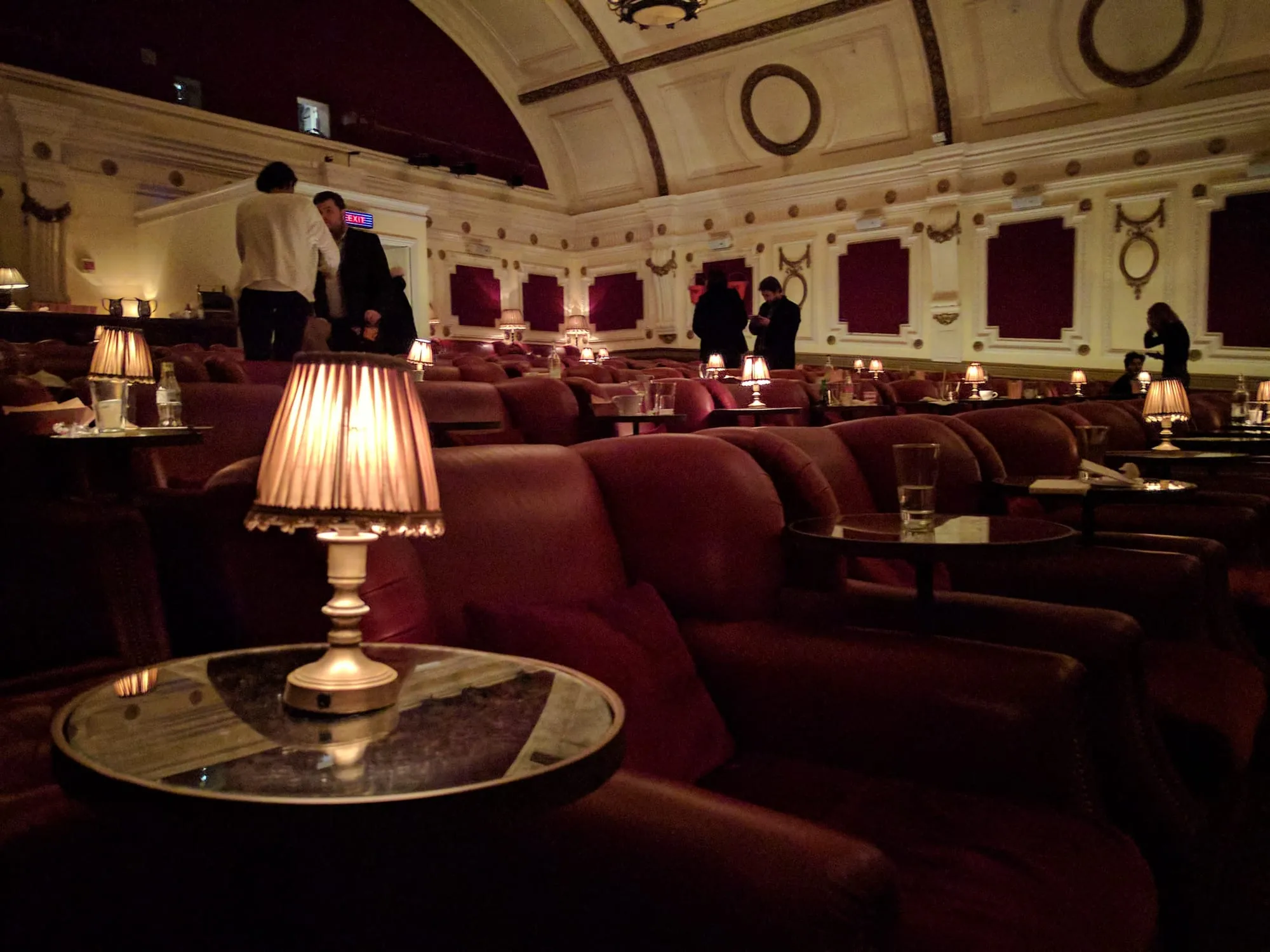
The armchairs at Electric Portobello.
It is not one price. A non-member armchair is £25 on Friday evening and all weekend, £20 on weekday evenings, and £15 before 5pm Monday to Friday — the same chair for £10 less if you go in the afternoon. Front-row beds are £30–£40 and back-row sofas £40–£50, both sold for two people. Children are £10 at any time.
Electric White City
2 Television Centre, 101 Wood Lane, W12 7FR
The second Electric, inside BBC Television Centre — the building that made Top of the Pops, Doctor Who and Blue Peter between 1960 and 2013, with artwork on the walls drawn from that history.
Same armchair-and-sofa format as Portobello, a proper kitchen rather than a snack counter, and far easier to get into — which is the practical reason to choose it. The Portobello original sells out days ahead; this one rarely does.
Book a specific seat rather than a ticket. Armchairs, sofas and double beds are priced differently, and the layout is more varied than in a normal cinema.
2 Television Centre, W12 7FR, five minutes from White City on the Central line and about the same from Wood Lane.
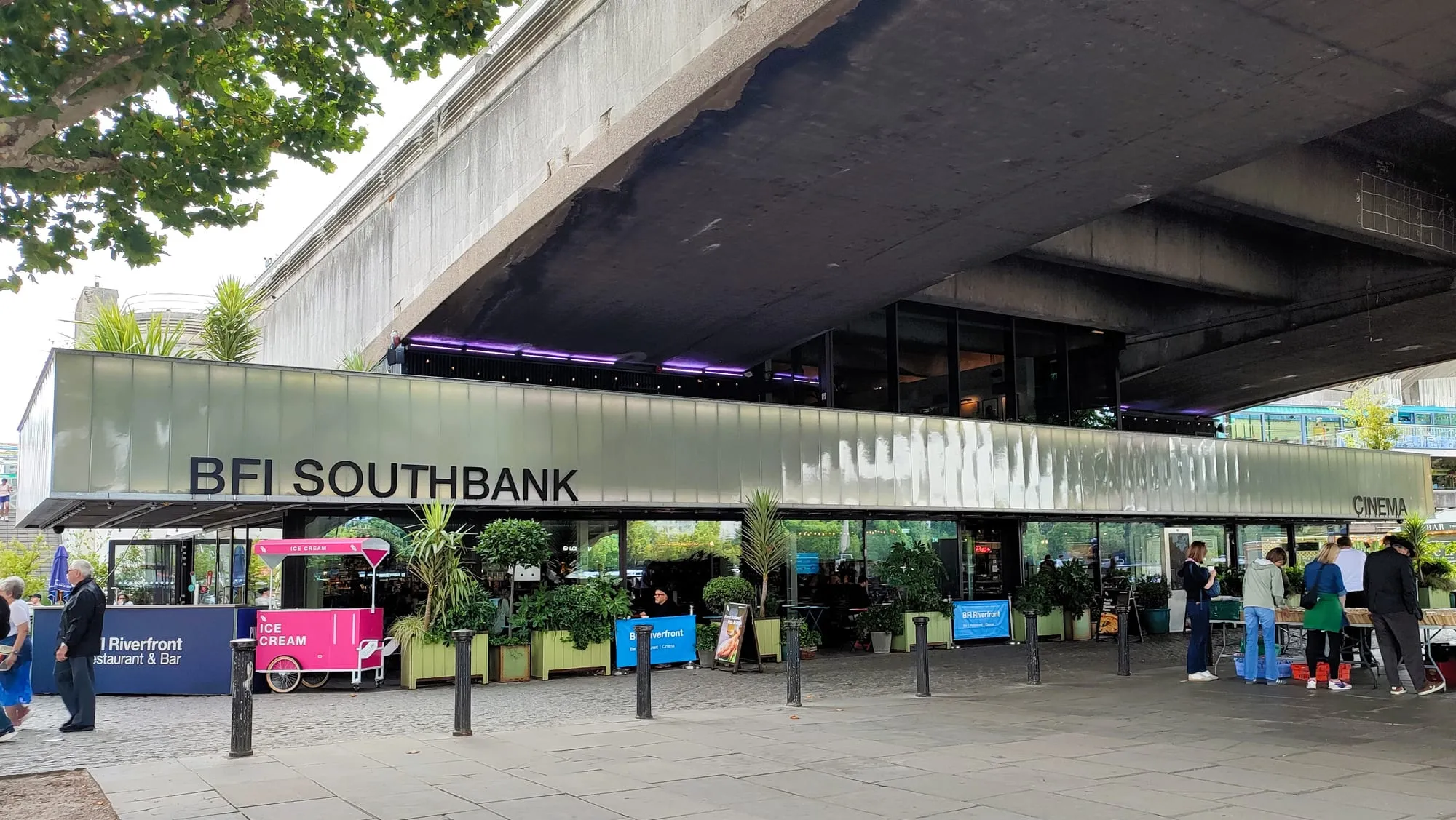
BFI Southbank
South Bank
The national film archive’s own cinema, with the deepest repertory programme in the country and a Mediatheque where you can watch archive material free. It began life as the National Film Theatre — a temporary building at the 1951 Festival of Britain, moved to this site in 1957, and expanded from one screen to four when it was relaunched as BFI Southbank in 2007. Each October it is one of the venues for the BFI London Film Festival.
It is also the only cinema in the UK licensed to publicly screen nitrate film, the highly flammable stock used until the early 1950s — a genuine rarity that most repertory cinemas cannot offer at any price.
BFI IMAX, Waterloo
South Bank · the biggest screen in Britain
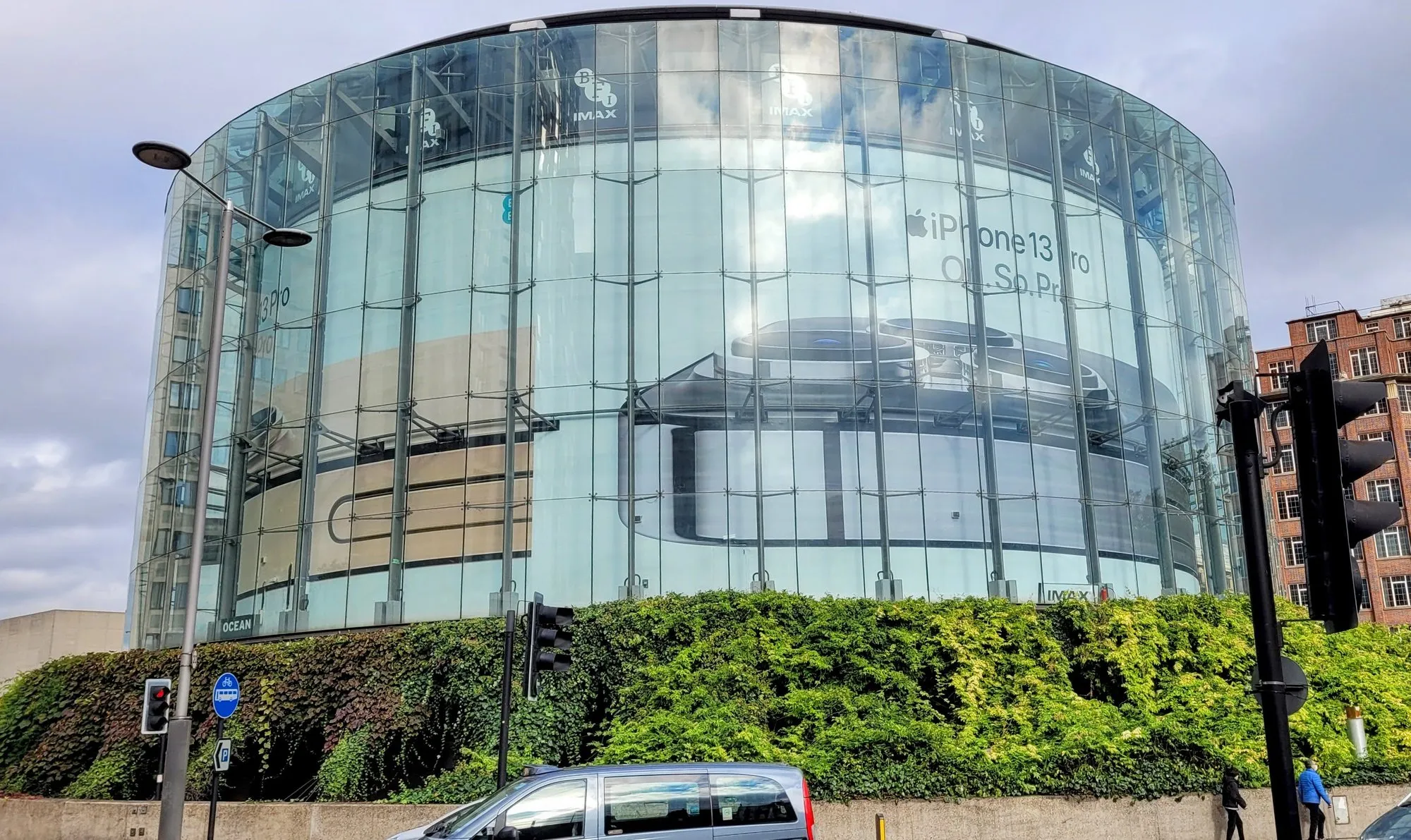
A freestanding glass drum on the roundabout north of Waterloo station, and the largest cinema screen in the UK by the BFI’s own measure — one of only three cinemas in the country that can still project genuine 70mm IMAX film rather than digital.
That distinction sets it apart. Most screens marketed as IMAX are digital and a fraction of the size; this one runs the real format when a film is released in it, which is a handful of titles a year.
Sit further back than feels right. The screen is over twenty metres high and the front third of the auditorium is too close to take it in.
It sits on an island in the middle of the roundabout, and the only way in is through the pedestrian subways that run underneath it. There is no direct link from Waterloo station — you come out of the station, find a subway entrance on the roundabout’s edge, and go under. Do not try to cross the road; there is no crossing.
Saved by their neighbourhoods
Rio Cinema, Hackney
Kingsland High Street
A century of continuous operation, under several different names. It opened as the Kingsland Empire in 1915, designed by the architect George Coles, and was rebuilt in Art Deco style by F. E. Bromige in 1937 as the Classic Cinema Dalston — the Grade II-listed auditorium still standing today. It became the Rio in 1976, when local businessman Paul Theodorou took it over, and a second, smaller screen was added in the basement in 2017.
Run as a registered charity, with regular Classic Matinees for over-60s and a long-running queer film club, Pink Palace.
The Castle Cinema, Clapton
Crowdfunded back
A 1913 cinema that became a bingo hall, a shoe factory and a snooker club before Clapton crowdfunded it back into existence. Co-founders Dee and Ash started the project in 2015 and ran their first test screenings in December 2016 with a single screen, no proper coffee machine, and evening-only opening.
It has since built a second screen, a kitchen and an all-day café, and runs on a locally sourced, largely vegan bar menu — a small point of principle for a cinema that also refuses to run adverts before its films.
The Garden Cinema, Covent Garden
Between Holborn and Covent Garden
One of London’s newest independents, opened in 2022 on Parker Street, a back street between Holborn and Covent Garden rather than in either. Three screens (40, 60 and 70 seats) run curated seasons alongside new releases from around the world, with regular post-screening discussions with filmmakers.
Membership is £25 a year and includes a free screening every fortnight — which pays for itself in about three visits and is one of the cheaper ways into a repertory programme this deep anywhere in London.
There is a bar downstairs open to anyone, ticket or not, which is unusual for an independent this size and makes the building usable without a booking.
Parker Street is hard to find, tucked between Kingsway and Drury Lane. Holborn and Covent Garden stations are each about five minutes, and neither signposts it.
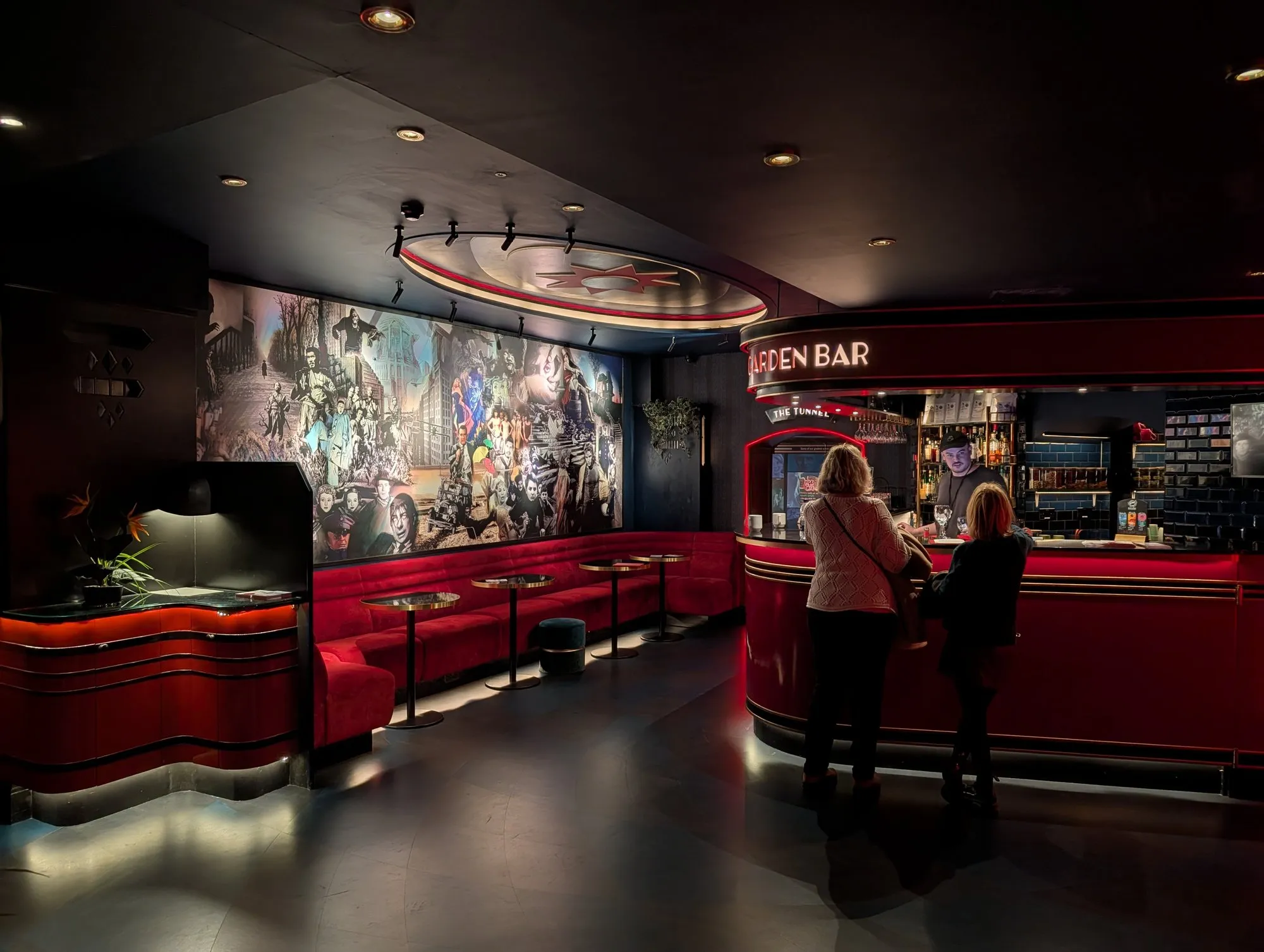
The Garden Cinema’s art deco bar.
The ones that still project film
The real dividing line between an independent cinema and a small multiplex is whether it can run actual film. These can.
Close-Up, Shoreditch
40 seats · 35mm and 16mm · Sclater Street
Forty seats, reel-to-reel 35mm and 16mm, and behind it a lending library of 19,000 titles — early cinema, world cinema, experimental film and video art, including prints held nowhere else in the country.
The most serious film institution in London that most Londoners have never heard of.
The library is the part people miss. It is a genuine lending library you can join and borrow from, not an archive you look at — which makes this the only entry here you can use without buying a ticket.
Forty seats means it sells out, and the programme is repertory and one-off rather than runs, so a film you want may screen once. Book when you see it listed.
On Sclater Street, two minutes from Shoreditch High Street and five from Brick Lane.
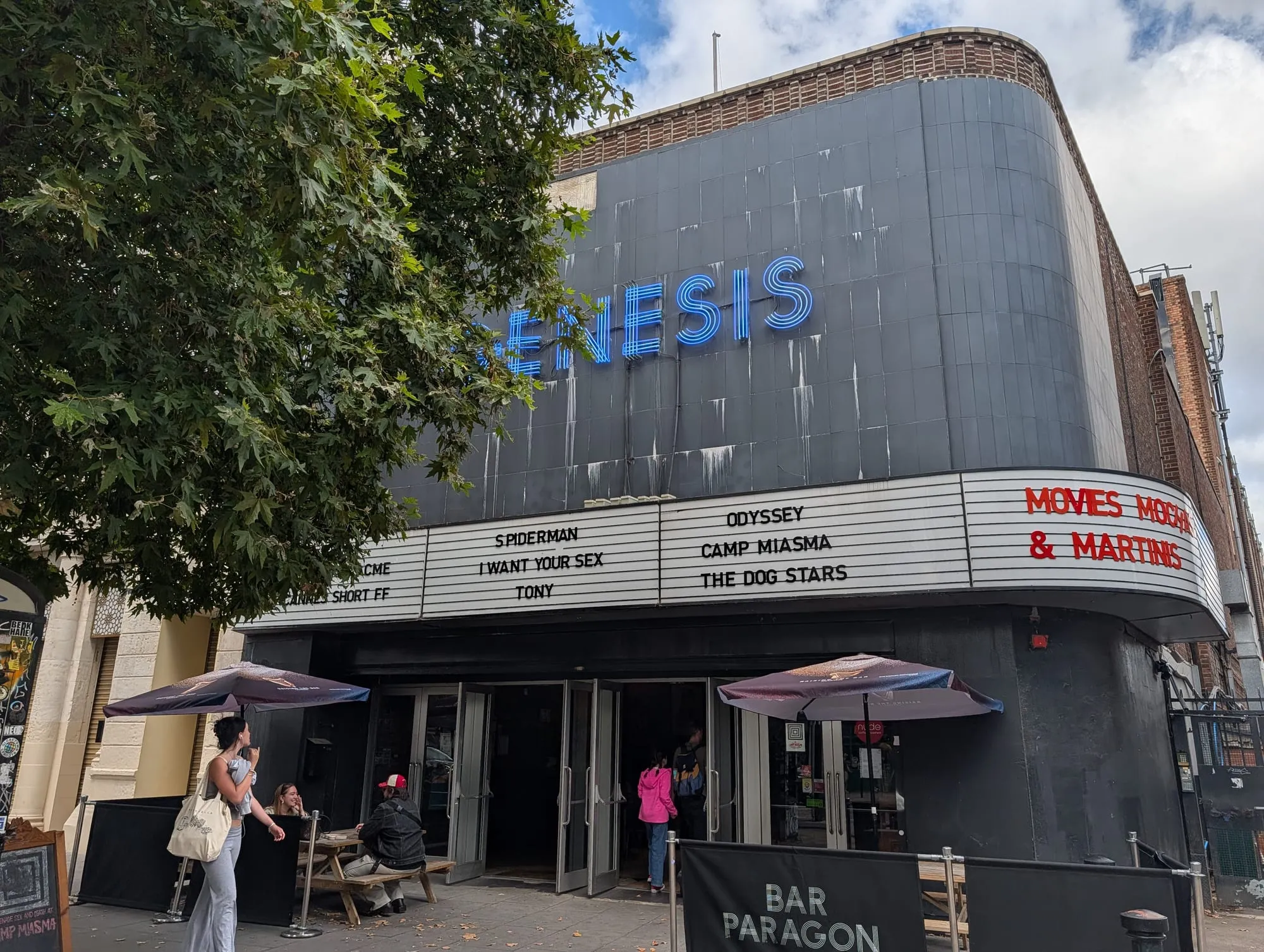
Genesis Cinema, Mile End
5 screens · £4.99 Monday to Wednesday
Built on the site of Frank Matcham’s 1885 Paragon Theatre, converted at a cost of £3m and reopened as a five-screen cinema in 1999, with a dedicated 35mm strand.
Tickets are £4.99 Monday to Wednesday on the standard screens — the cheapest cinema ticket in this guide by a distance, and it is not a stripped-back experience: five screens, a bar, and a dedicated 35mm strand.
Plan around a weekday for the £4.99. Thursday to Sunday it prices normally, so the same film in the same seat costs considerably more three days later.
It has a bar and a cafe that operate independently of the screenings, so you can use the building without a ticket — unusual outside the Barbican and the BFI.
Mile End is five minutes away on the Central, District and Hammersmith & City lines, which makes it far easier to reach than its east London address suggests.
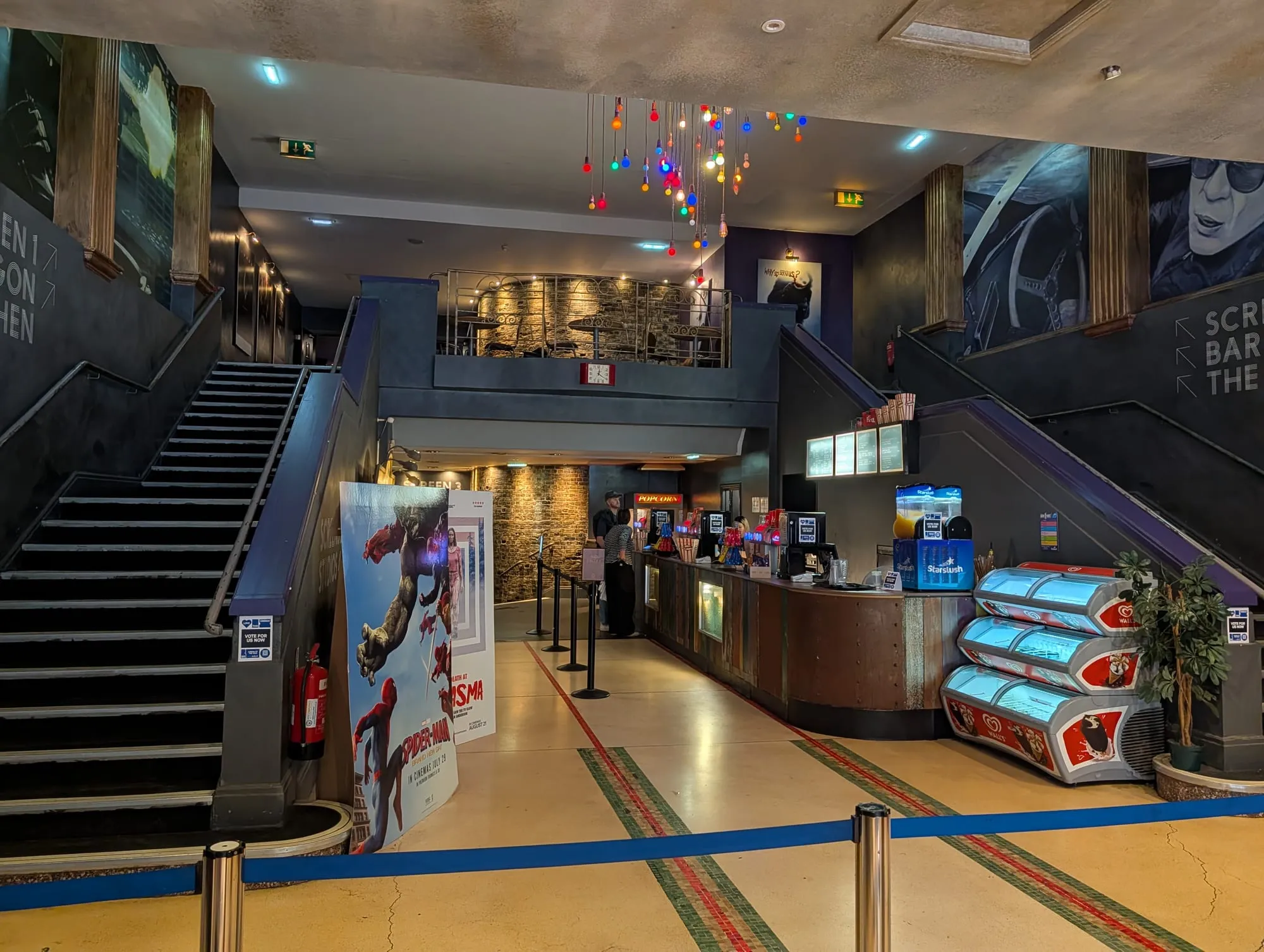
The foyer at Genesis Cinema.
Barbican Cinema, City of London
3 screens · 35mm · £6.50 Mondays
Three screens split between the Centre itself and Beech Street, seating 288, 156 and 156, inside a Grade II-listed brutalist complex the City of London gave to the nation at a cost of £161 million, opened by the Queen in 1982.
The Barbican runs one of the most ambitious repertory programmes in London, tagging the 35mm prints in its listings — rarer than it should be, and it means you can filter for film rather than digital before booking.
Mondays are £6.50, and there are pay-what-you-can screenings alongside a members’ series.
⚠️ The three screens are in two different buildings. Cinema 1 is inside the Centre; Cinemas 2 and 3 are on Beech Street, a few minutes away through the estate. Check which is on your ticket, because finding the second pair from the first is not quick.
Follow the yellow line painted on the pavement from Barbican station — the estate is difficult to navigate and the line exists because of it.
Phoenix Cinema, East Finchley
Opened 1912 · a registered charity
London’s oldest continuously operating cinema, opened as the East Finchley Picturedrome on 11 May 1912 and running ever since — an Edwardian barrel-vaulted ceiling, fourteen Art Deco panels, and a large neon side sign.
Two things worth being precise about. It is often called Britain’s oldest, and it is not: the Duke of York’s in Brighton opened in September 1910, and the Phoenix’s own website makes no such claim. And Electric Portobello opened in 1911, earlier — the Phoenix keeps the London title only because the Electric has closed and reopened repeatedly since, and the Phoenix never has.
Saved from demolition in 1983 and now run as a registered charity.
The Lexi, Kensal Rise
2 screens · a social enterprise
Seventy-five seats, opened in 2008, and run largely by volunteers under a legal covenant to donate 100% of distributable profits to the Sustainability Institute in South Africa. Not a percentage, not the profits they choose to give — all of them, by covenant.
The most straightforwardly good thing on this page, and a proper cinema besides.
Seventy-five seats is small, so popular screenings go, and the programme mixes new releases with one-off events rather than running films for weeks.
Kensal Rise is the station, on the Overground, about five minutes’ walk — it is not on the Tube, and from central London it is a change at Willesden Junction or a bus.
Ciné Lumière, South Kensington
2 screens · inside the Institut français
French and world cinema, usually subtitled, inside the Institut français on Queensberry Place — the best place in London to see a French release without waiting for a UK distributor, and often the only place a given title screens at all.
You do not need to speak French. Almost everything is subtitled in English, which people assume otherwise and stay away.
The building has a cafe and a French bookshop open to anyone, so it works as a stop rather than only as a booking.
Two minutes from South Kensington station and about the same from the V&A and the Natural History Museum — the easiest cinema in this guide to fold into a museum day.
⚠️ Mid-refurbishment. A three-stage renovation runs across the summers of 2026, 2027 and 2028, closing the building for several weeks each time. Check before travelling in July and August.
Olympic Studios, Barnes
3 screens · the former recording studio
The Olympic recording studio in Barnes — where the Rolling Stones, Led Zeppelin and Hendrix all recorded, and where the Stones cut Sympathy for the Devil — converted into a cinema with a 17-seat members’ screening room.
The most expensive on this page: £15 for a weekday matinee, rising to £18.95. For that you get a dining room, a bar and armchair seating rather than a screen and a queue.
It is the hardest to reach in this guide. Barnes is south-west and not on the Tube — mainline from Waterloo to Barnes Bridge, then a walk — so this is a destination trip rather than a drop-in.
Weekday matinees are the value, and the building is worth seeing whether or not you care what was recorded in it.
The Ritzy, Brixton
5 screens · opened 1911
Opened on 11 March 1911 as the Electric Pavilion with over 750 seats, and now five screens on Brixton Oval — one of the oldest continuously running cinemas in Britain.
Happy Mondays runs all day every Monday outside bank holidays, and all child tickets are £3 every day, which makes it much the cheapest family option in this guide.
The cafe and bar are open to anyone without a ticket and run late with live music some nights, so the building works as a venue rather than only a cinema.
Brixton station is two minutes away on the Victoria line, and the market arcades are directly opposite — which makes this the easiest cinema here to build an evening around.
Cheap and outdoors
Peckhamplex, Peckham
£6.99 a seat
An independent showing current releases for £6.99, plus a 60p booking fee — in central London the same money barely buys a drink. It has been undercutting the chains for years and shows no sign of stopping.
The price is flat. No peak pricing, no weekend surcharge, no premium seats — £6.99 is £6.99 on a Saturday night, which makes it remarkable rather than merely cheap.
It is a proper multiplex rather than an arthouse, showing what everyone else is showing, so this is where you see a blockbuster.
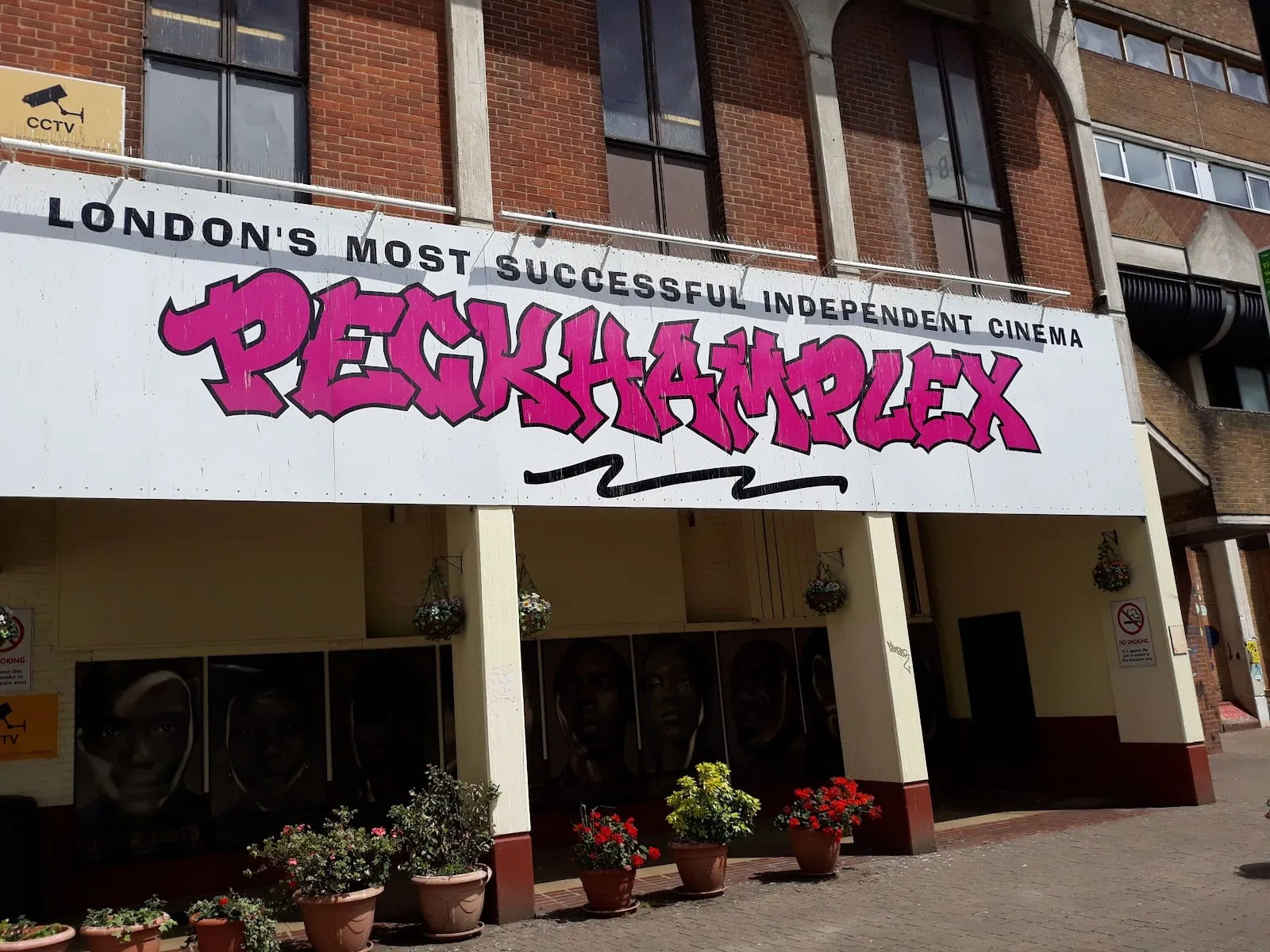
Peckhamplex, Rye Lane.
Peckham Rye is five minutes away, and Rye Lane, Frank’s Cafe and Old Spike are all within ten — so it slots into a Peckham afternoon rather than needing one of its own.
Everyman Screen on the Canal, King’s Cross
Free · summer
Films projected beside the canal in summer, watched from the canal steps below Granary Square, for nothing. The rare free outdoor cinema — no ticket, no booking, no minimum spend.
Bring something to sit on. The steps are stone, they get cold, and there is no seating provided — which is the trade for it being free.
It runs in summer only and the programme is announced a few weeks ahead rather than months, so check close to the date.
King’s Cross St Pancras is five minutes, and the steps are the best free seat in the area even when nothing is being shown.
Rooftop Cinema Club, Peckham
Ticketed · seasonal
A working open-air cinema on top of the Bussey Building on Rye Lane, a couple of minutes from Peckham Rye station, open May to September. New releases and cult favourites from deckchairs, with headphones rather than a PA system, and themed nights beyond the standard listings — a Sex and the City mini-marathon, a Trainspotting screening paired with a Sofar Sounds set.
Popular slots sell out and a waitlist opens once a screening does, so a full listing is not necessarily the end of it.
Dress for it. This is a roof in the open air with deckchairs and blankets rather than a heated room, and a warm May evening turns cold by the time the credits run — the headphones keep the sound but not the weather off.
May to September only, and it is on the same building as the Bussey Building’s other venues, so there is somewhere to go afterwards. Peckham Rye is a couple of minutes away.
What it costs, and how to pay less
Cinema in London runs from £4.99 to nearly £19 for the same film, so this is one of the few things here where the research saves money.
The cheapest tickets
- Genesis, Mile End — £4.99 Monday to Wednesday. The cheapest verified standard adult ticket in London.
- BFI Southbank — £4 for anyone aged 16 to 25, any film, any time. The best deal in London cinema if you qualify.
- Peckhamplex — current releases for £6.99 plus a 60p booking fee, and the reason south London has not lost its cinema-going habit.
- Barbican — £6.50 on Mondays booked online in advance.
- The Ritzy — Happy Mondays all day, and £3 for children every day.
- The Garden Cinema — £8.50 for a weekday matinee before 5pm, and weekend family films are pay-what-you-can.
Memberships that pay for themselves
- The Prince Charles — £15 a year, and it is the best value in London cinema. It buys at least £2.50 off every ticket, £8 weekday matinees, and access to regular £1 screenings. Six visits and it has paid for itself, before the £1 screenings are counted at all. Concession £12.50, buyable at the box office only.
- The Garden Cinema — £25 a year, including a free screening every fortnight.
- The Castle Cinema — from £35, with £6 Mondays and bring-a-friend-free on weekday daytimes.
- BFI membership from £44, with two free tickets a year and £6 member screenings.
General
- Matinees are materially cheaper at almost every cinema here, often by £5 or more.
- Book direct. The aggregators add a fee and the independents keep less of the money.
What to know
- The Prince Charles membership costs a few pounds and pays for itself almost immediately.
- Peckhamplex is that cheap and shows the same films as the West End.
- The Electric charges accordingly — you are buying the armchair, not the film. Going before 5pm on a weekday takes a non-member armchair from £25 to £15, which is the biggest saving on this page.
- Soho House and Soho Friends members pay less at both Electrics all week, and under-27 members get a further discount on Mondays, bookable only at the box office.
- BFI Southbank’s Mediatheque is free and lets you watch archive film with no ticket at all.
- Screen on the Canal is summer only and weather-dependent.
- Check the cinema’s own site. Repertory programmes change weekly and aggregators miss them.
Continue planning your London trip
- 💷 The Best Cinema Deals in London
- 🎬 London Filming Locations
- 🎪 Free Things to Do in London
- 🎵 The Best Live Music Venues in London
- 💷 Cheap Eats in London
- 🎨 Peckham Area Guide
- 🏙️ South Bank Area Guide
Common questions
What is the best independent cinema in London?
The Prince Charles off Leicester Square is the cult one — repertory prints, quote-alongs, sing-alongs and all-night marathons. Electric Portobello opened in 1911, is London's oldest purpose-built cinema, and has 98 leather armchairs, back-row sofas and double beds in the front row. Its sister site sits inside BBC Television Centre at White City.
Where is the cheapest cinema in London?
Peckhamplex shows current releases for £6.99 plus a 60p booking fee, which in central London would barely buy you a drink. It is an independent showing mainstream films and has been undercutting the chains for years.
Where was the first film shown in Britain?
Regent Street Cinema, where the Lumière brothers' Cinematographe had its first British showing in 1896. It still operates as a cinema and calls itself the birthplace of British cinema.
Can I watch films outdoors in London?
Everyman Screen on the Canal at King's Cross projects films beside the water in summer and is free — watched from the towpath steps. Rooftop Cinema Club runs a ticketed seasonal programme in Peckham and elsewhere.
Which London cinemas show old films?
The Prince Charles, the Garden Cinema in Covent Garden, the Rio in Hackney and the BFI Southbank all run repertory programmes. The Prince Charles is the only one regularly projecting 35mm and 70mm.