In this guide
London has several rail systems that appear together on Transport for London maps. They have different names, trains and fare boundaries, but Oyster pay as you go works on most journeys within London.
The short answer: Oyster is accepted throughout the London Underground, Docklands Light Railway and London Overground. It is accepted on the Elizabeth line as far west as West Drayton, but not between Iver and Reading. It is also accepted on National Rail at stations inside London’s Oyster pay-as-you-go area. Contactless payment extends beyond the Oyster boundary on some routes.
If you are choosing between Oyster and your own bank card, start with the complete Oyster card and contactless guide. If you are new to the network, How to Use the London Underground explains touching in and out, fare zones, interchanges and common first-time mistakes.
What the ratings mean
The comfort and crowding ratings in this guide are editorial estimates, not official TfL scores. They are intended to help a visitor compare a typical journey:
- Comfort: 1/5 means older, hotter or more cramped trains; 5/5 means spacious, smooth and air-conditioned.
- Crowding: 1/5 is usually quieter; 5/5 can be extremely busy on central sections or at commuter times.
Conditions vary by section, direction, disruption and time of day. A train rated 3/5 for crowding can still be packed after a major event.
Official London rail and Tube map
The embedded map below is TfL’s current London’s Rail & Tube services map. It is more useful for Oyster questions than the standard Tube map because it includes National Rail services and marks the edge of the pay-as-you-go area.
Open or download the official TfL map. TfL’s map artwork remains TfL copyright; this page links to the current file rather than reproducing it.
London Underground
Oyster pay as you go is accepted at every London Underground station. All 11 Tube lines are included below, arranged by likely usefulness to a typical visitor rather than as an official TfL ranking; the Elizabeth line, DLR and London Overground are separate railway systems and follow in their own sections.
This visitor-first order is an editorial guide based on coverage of major sights, central-London reach, airport and interchange relevance, and typical visitor itineraries. It is not official TfL usage data.
Piccadilly
- Oyster
- Yes
- Typical crowding
- 5/5
- Comfort
- 2/5
- Air-conditioning
- Existing fleet: no. New fleet: yes
- Visitor likelihood
- Very likely — Heathrow, the Museum Quarter and the West End.
Major visitor attractions
- V&A South Kensington — South Kensington
- Natural History Museum — South Kensington
- Buckingham Palace — Green Park
Useful to know
Direct to Heathrow but awkward with luggage at busy times.
Watch out for
Check whether a Heathrow train is for Terminal 4 or Terminal 5.
Jubilee
- Oyster
- Yes
- Typical crowding
- 5/5
- Comfort
- 3/5
- Air-conditioning
- No
- Visitor likelihood
- Very likely — South Bank, Westminster and major interchanges.
Major visitor attractions
- London Eye and South Bank — Waterloo
- Buckingham Palace — Green Park
Useful to know
Fast and frequent; the modern eastern stations are roomy, but trains get very busy.
Watch out for
Allow extra time at busy interchange stations, especially Waterloo and London Bridge.
Victoria
- Oyster
- Yes
- Typical crowding
- 5/5
- Comfort
- 2/5
- Air-conditioning
- No
- Visitor likelihood
- Very likely — Buckingham Palace, Victoria station and a central north-south route.
Major visitor attractions
- Buckingham Palace — Victoria
- Tate Britain — Pimlico
Useful to know
Extremely frequent and usually fast, but hot and intensely busy at peak times.
Watch out for
Victoria is a large interchange: follow signs carefully for the right line and exit.
Central
- Oyster
- Yes
- Typical crowding
- 5/5
- Comfort
- 2/5
- Air-conditioning
- No
- Visitor likelihood
- Very likely — Oxford Street, the West End and fast east-west travel.
Major visitor attractions
- British Museum — Tottenham Court Road
- Kensington Palace — Queensway
Useful to know
Very fast east-west route, but frequently hot and crowded through Zone 1.
Watch out for
Some trains use the Hainault branch; check the destination on the front and platform displays.
District
- Oyster
- Yes
- Typical crowding
- 4/5
- Comfort
- 4/5
- Air-conditioning
- Yes
- Visitor likelihood
- Likely — South Kensington, Westminster and the Tower of London.
Major visitor attractions
- Tower of London — Tower Hill
- V&A South Kensington — South Kensington
- Kew Gardens — Kew Gardens
Useful to know
Spacious trains and many branches.
Watch out for
Check the destination before boarding; not every train goes to every branch.
Circle
- Oyster
- Yes
- Typical crowding
- 3/5
- Comfort
- 4/5
- Air-conditioning
- Yes
- Visitor likelihood
- Likely — a useful orbit of central sights and key interchanges.
Major visitor attractions
- Kensington Palace — High Street Kensington
- V&A South Kensington — South Kensington
- Tower of London — Tower Hill
Useful to know
Modern walk-through trains.
Watch out for
It shares tracks with other lines and is not a simple closed loop.
Northern
- Oyster
- Yes
- Typical crowding
- 5/5
- Comfort
- 2/5
- Air-conditioning
- No
- Visitor likelihood
- Likely — Camden, Leicester Square and central north-south journeys.
Major visitor attractions
- Camden Market — Camden Town
- London Eye and South Bank — Waterloo
- British Museum — Tottenham Court Road
Useful to know
Useful for central north-south journeys.
Watch out for
Check both the central route and final destination: the line has several branches.
Bakerloo
- Oyster
- Yes
- Typical crowding
- 3/5
- Comfort
- 2/5
- Air-conditioning
- No
- Visitor likelihood
- Likely — Paddington, the West End and Waterloo.
Major visitor attractions
- Madame Tussauds — Baker Street
- London Eye and South Bank — Waterloo
Useful to know
Useful between Paddington, the West End and Waterloo.
Watch out for
It can get hot through central London.
Metropolitan
- Oyster
- Yes
- Typical crowding
- 3/5
- Comfort
- 4/5
- Air-conditioning
- Yes
- Visitor likelihood
- Less likely — useful for Baker Street, the Barbican and outer north-west London.
Major visitor attractions
- Madame Tussauds — Baker Street
- Barbican Centre — Barbican
Useful to know
Comfortable trains and faster outer-London services.
Watch out for
Check whether a train is fast, semi-fast or all-stations.
Hammersmith & City
- Oyster
- Yes
- Typical crowding
- 3/5
- Comfort
- 4/5
- Air-conditioning
- Yes
- Visitor likelihood
- Less likely — useful for the Barbican and parts of the City.
Major visitor attractions
- Barbican Centre — Barbican
- Whitechapel Gallery — Aldgate East, exit 3
Useful to know
Modern walk-through trains; useful across the northern edge of central London.
Watch out for
It shares tracks with the Circle line for part of its route.
Waterloo & City
- Oyster
- Yes
- Typical crowding
- 5/5 at peak
- Comfort
- 2/5
- Air-conditioning
- No
- Visitor likelihood
- Less likely — it runs only between Waterloo and Bank.
Major visitor attractions
- London Eye and South Bank — Waterloo
- Bank of England Museum — Bank
Useful to know
A two-stop commuter shuttle between Waterloo and Bank.
Watch out for
Check its operating days and hours before relying on it.
The Circle, District, Hammersmith & City and Metropolitan lines use modern S-stock trains with walk-through carriages and air-conditioning. The deep-level lines generally use forced ventilation rather than passenger air-conditioning. Piccadilly line fleet replacement is beginning in 2026, so the train you receive will depend on the rollout.
Elizabeth line
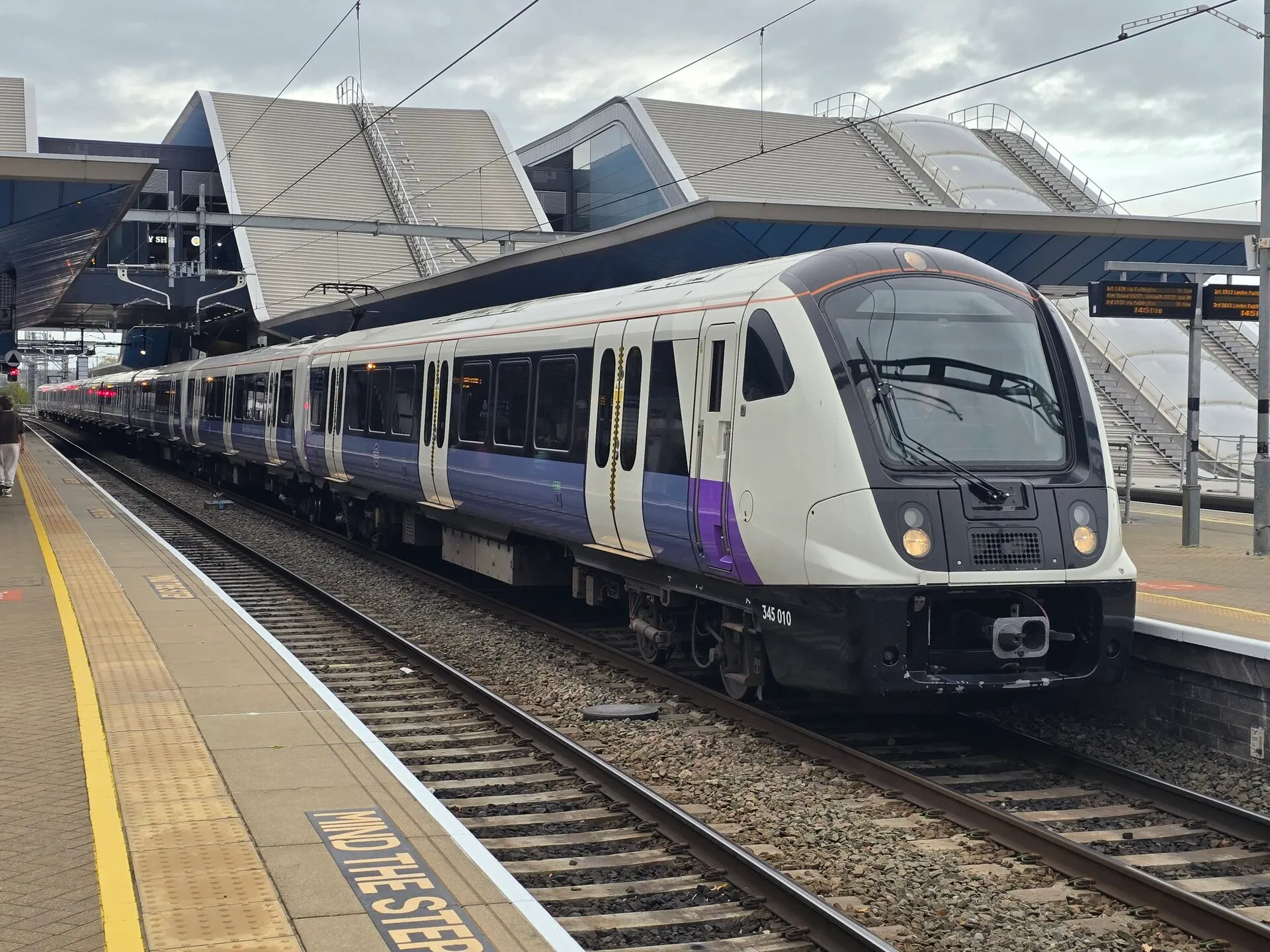
The Elizabeth line is shown in purple. It crosses London from Shenfield and Abbey Wood in the east through the central tunnels to Heathrow and Reading in the west.
- Oyster: Yes between Shenfield or Abbey Wood and West Drayton, including Heathrow. No from Iver to Reading.
- Contactless: Accepted across the full line to Reading.
- Typical crowding: 4/5, rising to 5/5 on the central section at peak times.
- Comfort: 5/5.
- Air-conditioning: Yes.
- Other advantages: Long walk-through trains, generous luggage space and step-free access from street to platform at every Elizabeth line station. Boarding is level at the new central stations and Heathrow.
The main photograph shows a train at Reading. That is useful here because you may use contactless for that journey, but not Oyster. If you are travelling to Heathrow, Elizabeth line and Piccadilly line fares and journey times differ, so use the complete Heathrow Airport transport guide alongside TfL’s Single Fare Finder.
Docklands Light Railway
The DLR serves the City, Canary Wharf, the Royal Docks, London City Airport, Stratford, Woolwich and Lewisham. Its trains are automated, although a passenger service agent is normally on board.
- Oyster: Yes across the whole DLR.
- Typical crowding: 3/5 overall and 4/5 around Canary Wharf at commuter times.
- Comfort: 3/5 during the fleet transition.
- Air-conditioning: Older trains: no. New B23 trains: yes.
- Other advantages: Every DLR station has step-free access from street to platform. The front seats give an excellent driver’s-eye view when available.
TfL is replacing the older fleet with spacious, walk-through B23 trains. The new trains have air-conditioning and charging points, but the proportion in service will vary during the rollout.
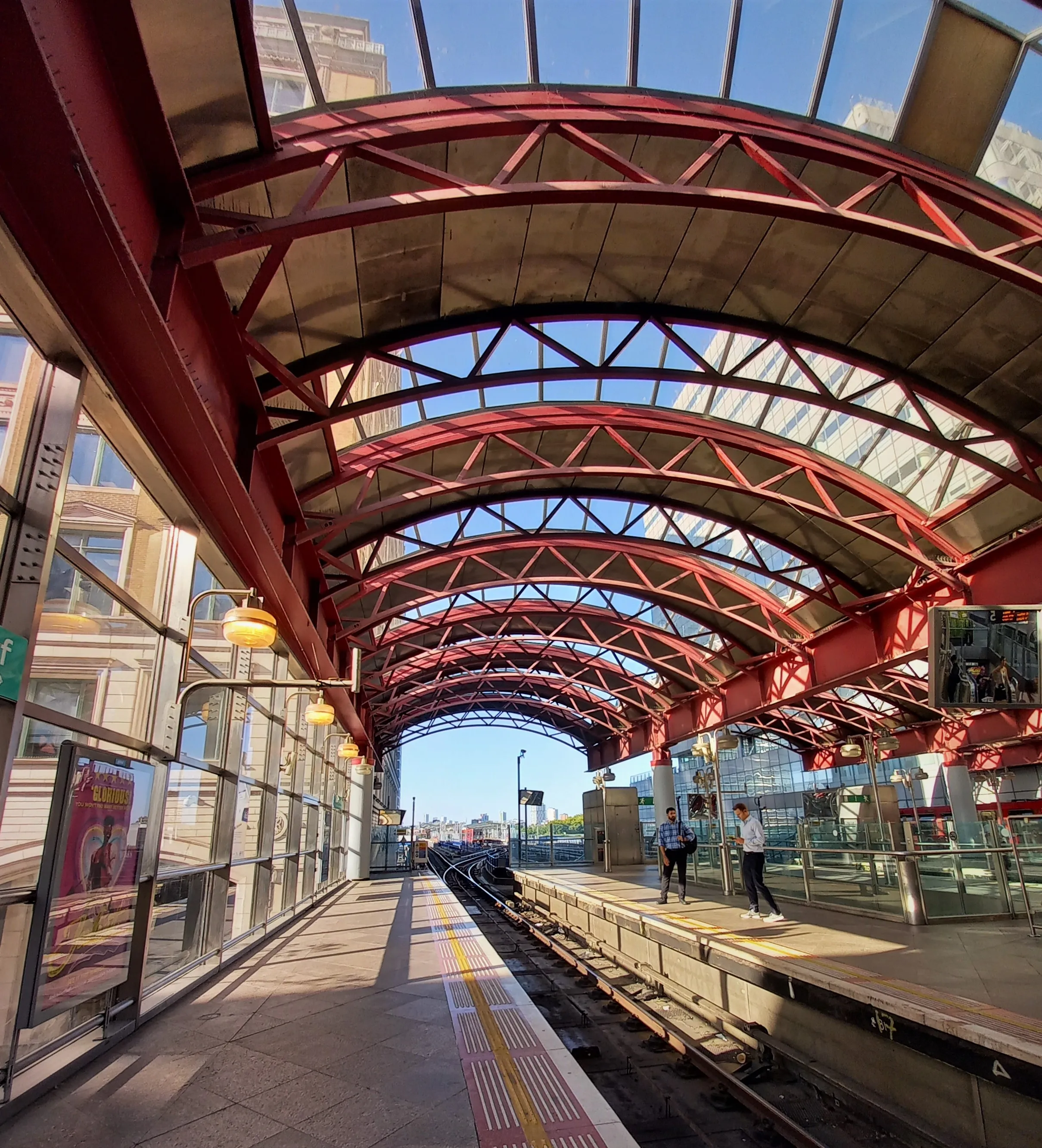
Canary Wharf DLR station. Photo: It’s No Game, CC BY 2.0.
London Overground
London Overground is the orange network that circles and crosses inner and outer London. Its six routes now have individual names. Oyster is accepted at every station on the network.
| Overground line | Main route | Oyster | Typical crowding | Comfort | Air-conditioning |
|---|---|---|---|---|---|
| Liberty | Romford–Upminster | Yes | 2/5 | 4/5 | Yes |
| Lioness | Euston–Watford Junction | Yes | 4/5 | 4/5 | Yes |
| Mildmay | Stratford–Richmond or Clapham Junction | Yes | 4/5 | 4/5 | Yes |
| Suffragette | Gospel Oak–Barking Riverside | Yes | 3/5 | 4/5 | Yes |
| Weaver | Liverpool Street–Enfield Town, Cheshunt or Chingford | Yes | 4/5 | 4/5 | Yes |
| Windrush | Highbury & Islington–New Cross, Clapham Junction, Crystal Palace or West Croydon | Yes | 5/5 | 4/5 | Yes |
All London Overground trains are walk-through and air-conditioned. Several lines divide into branches, so the new line name does not remove the need to check the train’s destination.
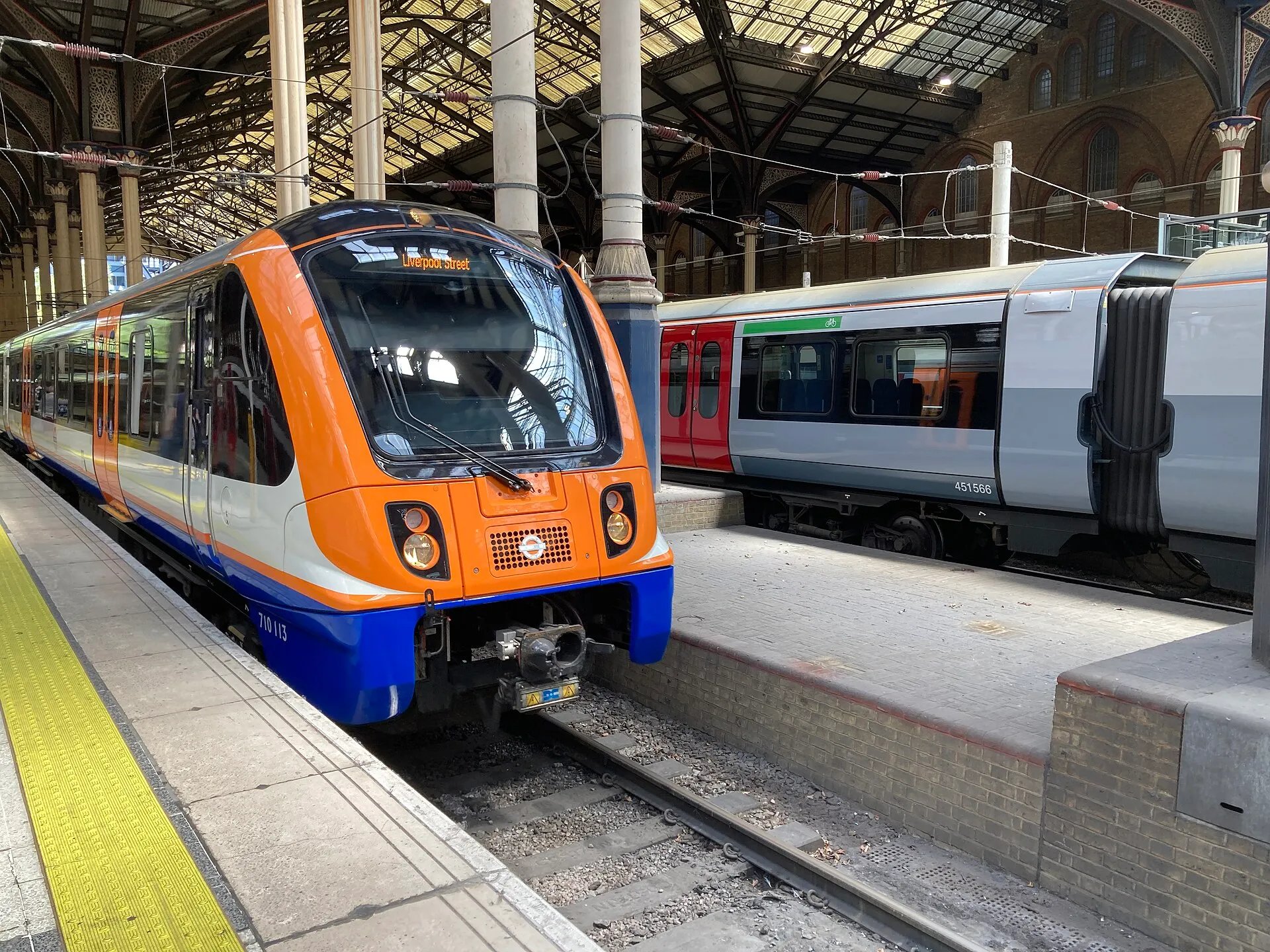
A Class 710 London Overground train at Liverpool Street. Photo: Matt Brown, CC BY 2.0.
National Rail services within London
National Rail is not one single London line. Several operators run suburban and regional trains through the Oyster area. Oyster is valid only for journeys where both stations and the permitted route are inside the pay-as-you-go boundary; it does not become valid across an operator’s entire network.
The current TfL rail map shows services from these operators:
| Operator | London examples | Oyster guidance |
|---|---|---|
| Chiltern Railways | Marylebone, Wembley and routes towards Amersham | Yes within the marked Oyster area; outer destinations are not covered. |
| c2c | Fenchurch Street and east London towards Upminster | Yes within the marked Oyster area. |
| East Midlands Railway | St Pancras and limited north London calls | Check the exact journey; contactless extends farther than Oyster on this corridor. |
| Gatwick Express | Victoria–Gatwick Airport | Oyster and contactless can be used to Gatwick, but airport fares are not ordinary zonal fares. |
| Great Northern | Moorgate or King’s Cross and north London | Yes within the marked Oyster area. |
| Great Western Railway | Paddington and west London | Yes only where the station and service are inside the Oyster area. |
| Greater Anglia | Liverpool Street, Stratford and routes into east London | Yes within the marked Oyster area. |
| Heathrow Express | Paddington–Heathrow | Oyster and contactless are accepted, with a premium Heathrow Express fare. |
| London Northwestern Railway | Euston and northwest London | Yes within the marked Oyster area, including Watford Junction. |
| South Western Railway | Waterloo and southwest London | Yes within the marked Oyster area. |
| Southeastern | Charing Cross, Cannon Street, Victoria and southeast London | Yes within the marked Oyster area. |
| Southeastern high speed | St Pancras International–Stratford International | Check the exact fare before travel; special fares apply. |
| Southern | Victoria, London Bridge and south London | Yes within the marked Oyster area, including Gatwick Airport. |
| Thameslink | Cross-London services via St Pancras, Farringdon and Blackfriars | Yes within the marked Oyster area; contactless continues farther on some routes. |
For this reason, an operator name alone is not enough. For example, a Southern train can accept Oyster for part of a journey but continue beyond the Oyster area later on its route.
How to check a journey before travelling
- Find both stations on the official rail and Tube map.
- Look for an Oyster boundary note or a section marked contactless only.
- Enter the exact stations in TfL’s Single Fare Finder.
- Use the same Oyster card throughout the journey and touch in and out, including at standalone pink route validators when your route requires one.
- If either station is outside the Oyster area, use contactless or buy the correct rail ticket instead.
Contactless is often more flexible at the outer edge of London, but foreign card fees and card acceptance can make Oyster preferable for some visitors. Do not assume that the same geographic boundary applies to both.
Best choices for comfort
Where a visitor can choose between routes:
- Elizabeth line is generally the most comfortable option for longer east-west journeys and airport luggage.
- Sub-surface Tube lines are cooler than the deep Tube because their modern trains have air-conditioning.
Examples:
- Circle
- District
- Hammersmith & City
- Metropolitan
- London Overground is comfortable and air-conditioned, but the Windrush and Mildmay lines can be exceptionally busy.
- DLR is scenic and accessible; seek the front seats outside peak time.
- Deep-level Tube lines are often fastest for central journeys, but can be hot and crowded in summer.
Speed, step-free access and interchange walking time can matter more than the train itself. Consider the whole journey rather than choosing purely by the ratings above.
When walking between stations is simpler
In central London, stations that look separate on the Tube map can be close together at street level. A short walk can be quicker or simply easier than changing lines once you allow for finding the interchange, stairs or escalators, long passageways and waiting for the next train. TfL’s station-to-station walking map is a useful starting point.
Useful walking alternatives for visitors include:
- Covent Garden and Leicester Square — Roughly 400 metres apart on foot, or around five minutes. Leicester Square is on the Piccadilly line, so getting off there for Covent Garden can be the simpler choice, particularly when a change of line would be involved.
- Waterloo and Southwark — about four minutes on foot. This can be handy between the South Bank, Waterloo and the Tate Modern side of the river.
- Monument and London Bridge — about five minutes on foot. It is a practical option when moving between the City and London Bridge or Borough Market.
- Embankment and Waterloo — about eight minutes on foot along the river. Consider it for the South Bank, the London Eye or a connection at Waterloo rather than an extra change.
- Tower Hill and Tower Gateway — roughly three minutes on foot. This is useful for changing between the District or Circle lines and the DLR near the Tower of London.
Information checked on 28 July 2026. Fare boundaries, train fleets and services change. Confirm a time-sensitive journey with Transport for London before travelling.